The original text comes from Bitwise
Compiled by | Odaily Planet Daily Qin Xiaofeng(@QinXiaofeng888)

Editor's Note: The crypto asset management company Bitwise recently released its Q2 report for 2026.
The report states that the Bitwise Top 10 Market Cap Cryptocurrency Index fell by 15.4%, with 8 out of its 10 components recording negative returns; $4.9 billion flowed out from spot Bitcoin ETFs, marking the worst quarterly performance on record; on-chain transaction activity, trading volume, and DeFi assets all saw a decline, while the correlation between cryptocurrencies and stocks increased.
Of course, there were also highlights in the market. The open interest in prediction markets reached a historical high of $1.8 billion, with quarterly trading volume hitting $43 billion; the market for tokenized real-world assets reached $33 billion in the second quarter, up 45% from the beginning of the year; and cryptocurrency stocks performed well, with the Bitwise Crypto Innovators 30 Index rising by 30.6%, primarily benefiting from Bitcoin mining companies related to AI.
"Overall, the situation is severe. Worse, this sense of difficulty is also very real. While there is no statistical indicator to measure 'sentiment', the current atmosphere in the crypto industry is one of the worst I have seen in my eight years in the field. One reason is that this is our third consecutive quarter of negative returns, marking the longest streak of losses since 2022 (when there were four consecutive quarters of negative returns).” wrote Bitwise Chief Investment Officer Matt Hougan.
Here are some key data charts extracted from the report, Enjoy~
——————————
Top 10 Key Events in Q2
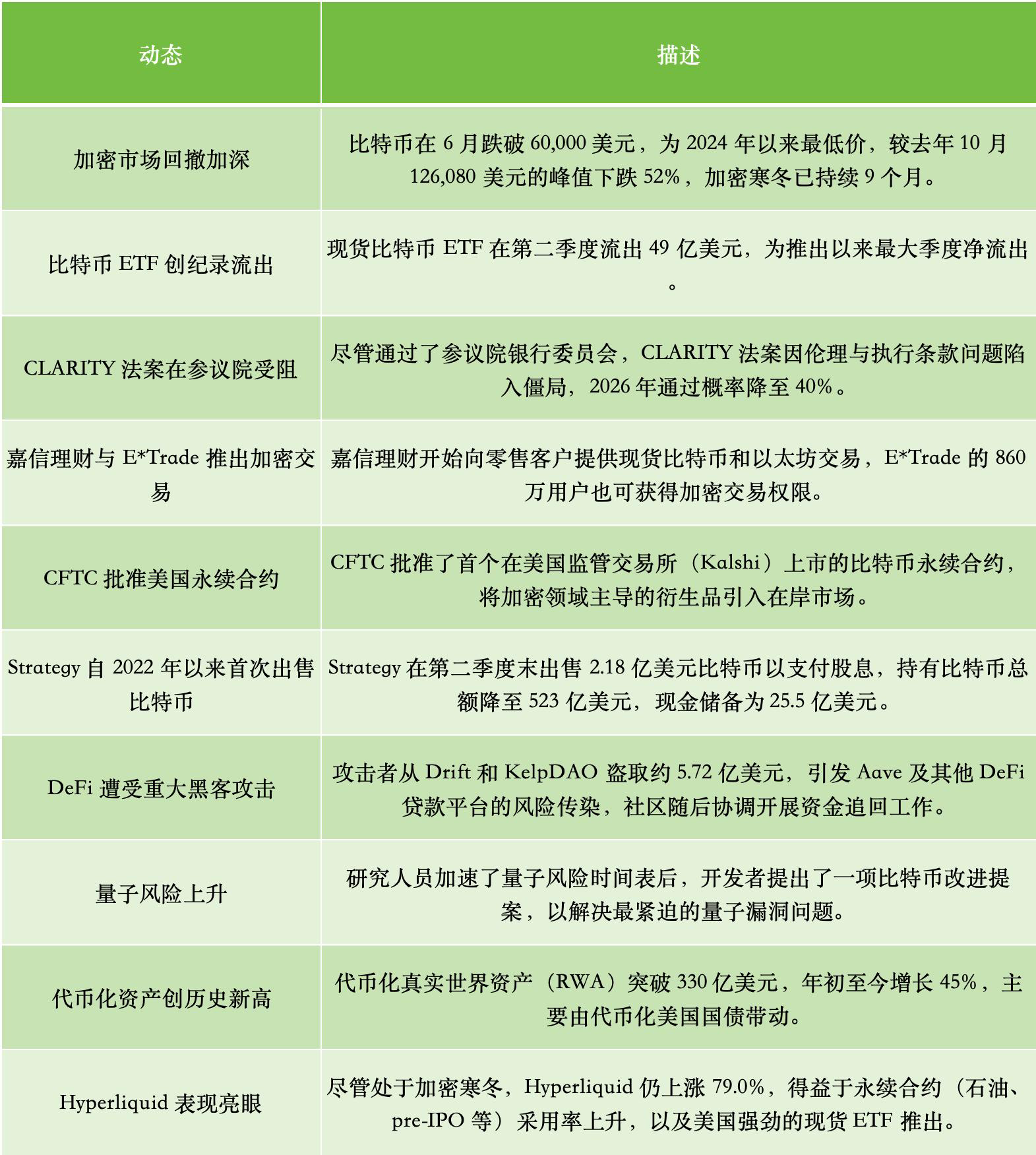
In the second quarter, we saw a strategy that claimed to "never sell" sell Bitcoin, first conducting small tests and finally selling $218 million in Bitcoin at the end of June to pay dividends.
Due to the related selling activities, Bitcoin fell below $60,000 in June, reaching its lowest price since 2024 and down 52% from its peak of $126,080 (last October), with the crypto winter lasting 9 months. At the same time, spot Bitcoin ETFs experienced a net outflow of $4.9 billion in the second quarter, representing the largest quarterly net outflow since their launch.
On the policy front, the "CLARITY Act," which has been a focus of attention, has not progressed well in the Senate, getting stalled due to ethical and enforcement clause issues, with the probability of passing in 2026 dropping to 40% on prediction markets.
Here are the top 10 crypto events summarized by Bitwise for Q2:
Q3 Quarter Outlook
The third quarter is key for the success or failure of the CLARITY Act. This market structure bill passed the Senate Banking Committee in Q2 but has stalled due to ethical clauses related to crypto interests of the President's family. Prediction markets show its probability of passing in 2026 is close to 40%, down from 75% in mid-May, and we believe the possibility of passage before the midterm elections in November is low. However, bills with such probability often manage to pass, so we think there is still a chance for CLARITY. If the bill passes, we believe it could mark the bottom of this bear market; if it fails, volatility is expected in the short term, but uncertainty will gradually dissipate as the industry continues to push forward under a supportive SEC and CFTC for crypto.
Stablecoin expansion after the GENIUS Act. July marks the final sprint phase before the GENIUS Act takes effect in January 2027, with regulators needing to finalize the rules in Q3. We expect a number of large enterprises to announce stablecoin projects before the official launch, such as the recently announced OpenUSD supported by Stripe, BlackRock, Visa, Coinbase, and about 140 other companies. The supply of stablecoins has remained close to $300 billion since last fall, showing resilience during the crypto market sell-off. We believe that as the January effective date approaches, the acceleration in stablecoin growth will become a catalyst for public chains like Ethereum and Solana in Q3.
Leadership of the Federal Reserve under Kashkari. The Federal Reserve has welcomed new Chair Kevin Waller, and the market knows little about his governance style. The first signals will be released in Q3: the FOMC meeting in July and the Federal Reserve's annual meeting held in Jackson Hole in late August. So far, Waller has kept interest rates unchanged and hinted that there is no rush to cut rates. By the end of the quarter, we should have a clearer understanding of the Federal Reserve's direction than we do now. It is still too early to judge the direction of interest rates, but the Federal Reserve sets the tone for all risk assets, and any outcome will be quickly digested by the market.
A Quiet Reevaluation of DeFi. In the past month, Bitcoin has fallen about 22%, while Bitwise's DeFi Index has only dropped 4%. DeFi typically experiences much more volatility than Bitcoin, so such resilience is rare and has received almost no attention. We believe DeFi is undergoing a quiet reevaluation: improvements in token economics, and the gap between usage and token value is narrowing, with real institutions building on protocols like Morpho and Jupiter, and Aave alone has generated about $900 million in revenue over the past year. We expect DeFi's strong performance to continue in Q3, and this shift often goes unnoticed by the market.
Cryptocurrency Stocks Show Significant Divergence from Crypto Assets
By mid-2026, cryptocurrency asset prices have fallen 36%. The only other major asset class that recorded a decline is gold, which fell by 7%, while the rest rose. This is also one reason why this crypto winter has been particularly tough—it's a lonely winter.
Interestingly, cryptocurrency stocks had a return rate of 23% in the first half of the year, outperforming all major asset classes except emerging market stocks. In fact, the Bitwise Crypto Innovators 30 Index, which tracks the 30 largest publicly listed crypto economy companies, has a return rate that is more than double that of US stocks.
This shows that even in a bear market, investment opportunities in the crypto space continue to emerge. Bitcoin mining companies are benefiting from tailwinds brought by AI; stablecoin issuers and tokenization platforms are riding the wave of Wall Street adoption; and the connection between traditional finance and the crypto world is growing closer. Although I expect crypto assets to rebound in the second half of the year, the first half reinforced an important recognition: crypto is not a single entity but a diverse and dynamic field that should be viewed from a broader perspective.
Performance of cryptocurrencies compared to major asset classes:
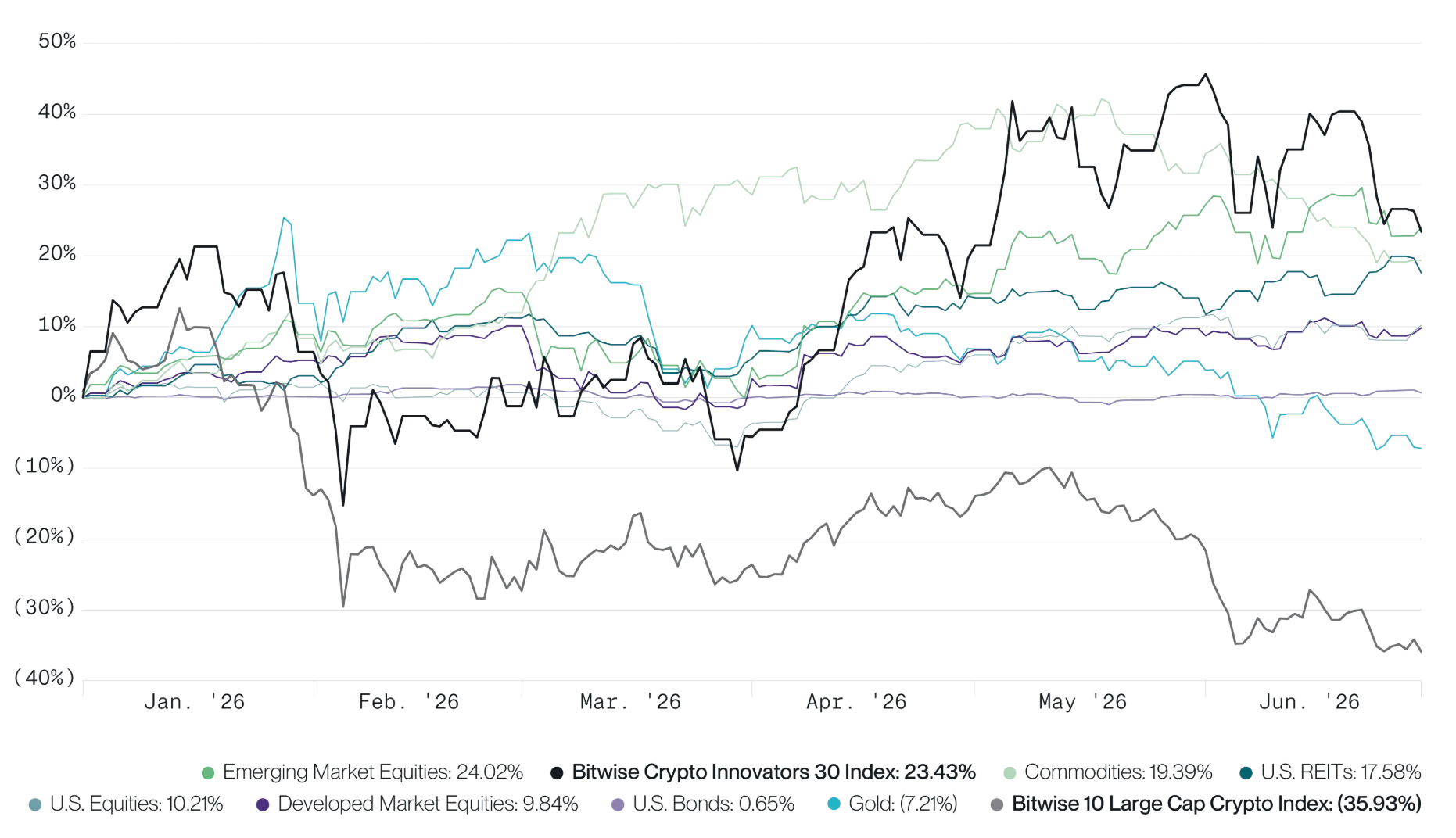
Data from Bloomberg. Data as of June 30, 2026
Crypto Applications Generate Substantial Revenue
In the past 12 months, the top ten crypto applications collectively generated $5.9 billion in revenue. The top three (PancakeSwap, Hyperliquid, and Aave) each generated close to $1 billion. These are all well-operated businesses that earn fees from trading, lending, and staking—even in a bear market.
The top ten crypto applications ranked by revenue are shown below:
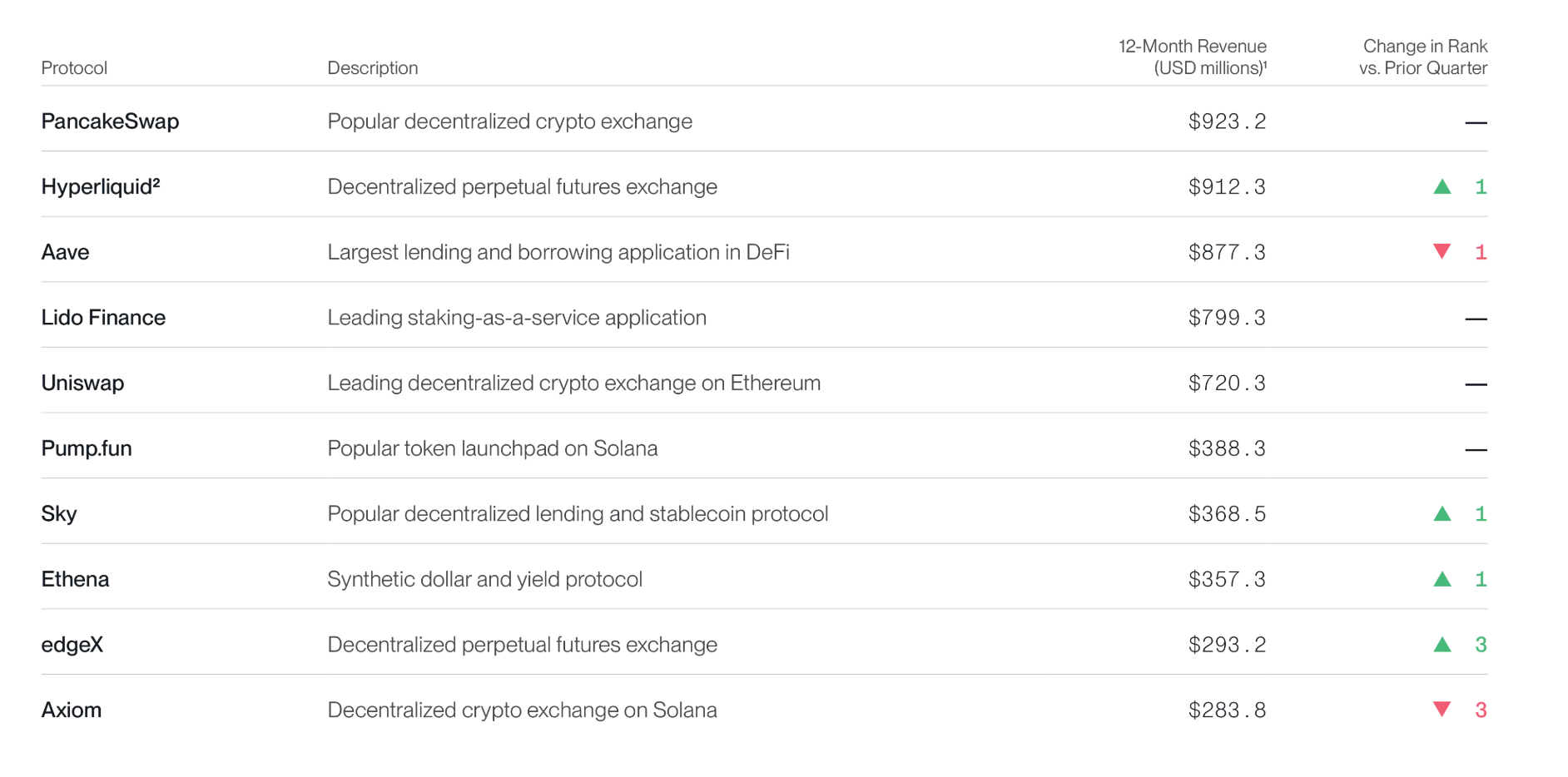
Data from Token Terminal, for the period between January 1, 2025, and June 30, 2026
(1) Revenue consists of total fees paid by users; (2) Hyperliquid revenue excludes HyperEVM fees
Bull Market for Real World Assets (RWA)
US Treasury Secretary Scott Accorsi himself stated just weeks ago: “Digital assets, stablecoins, tokenization, and new payment systems will help shape the future of currency.”
In a sense, the future he describes is already here. The tokenization of real-world assets (RWA) reached a record $33 billion in Q2, with a quarterly increase of 12% and a year-to-date increase of 45%, particularly rapid growth seen in tokenized US Treasuries, corporate credit, stocks, and venture capital.
When I see this chart, I notice that the world's largest asset management companies are rapidly migrating assets to the blockchain, which is worth noting.
The scale of tokenized real-world assets (RWA) is shown below:
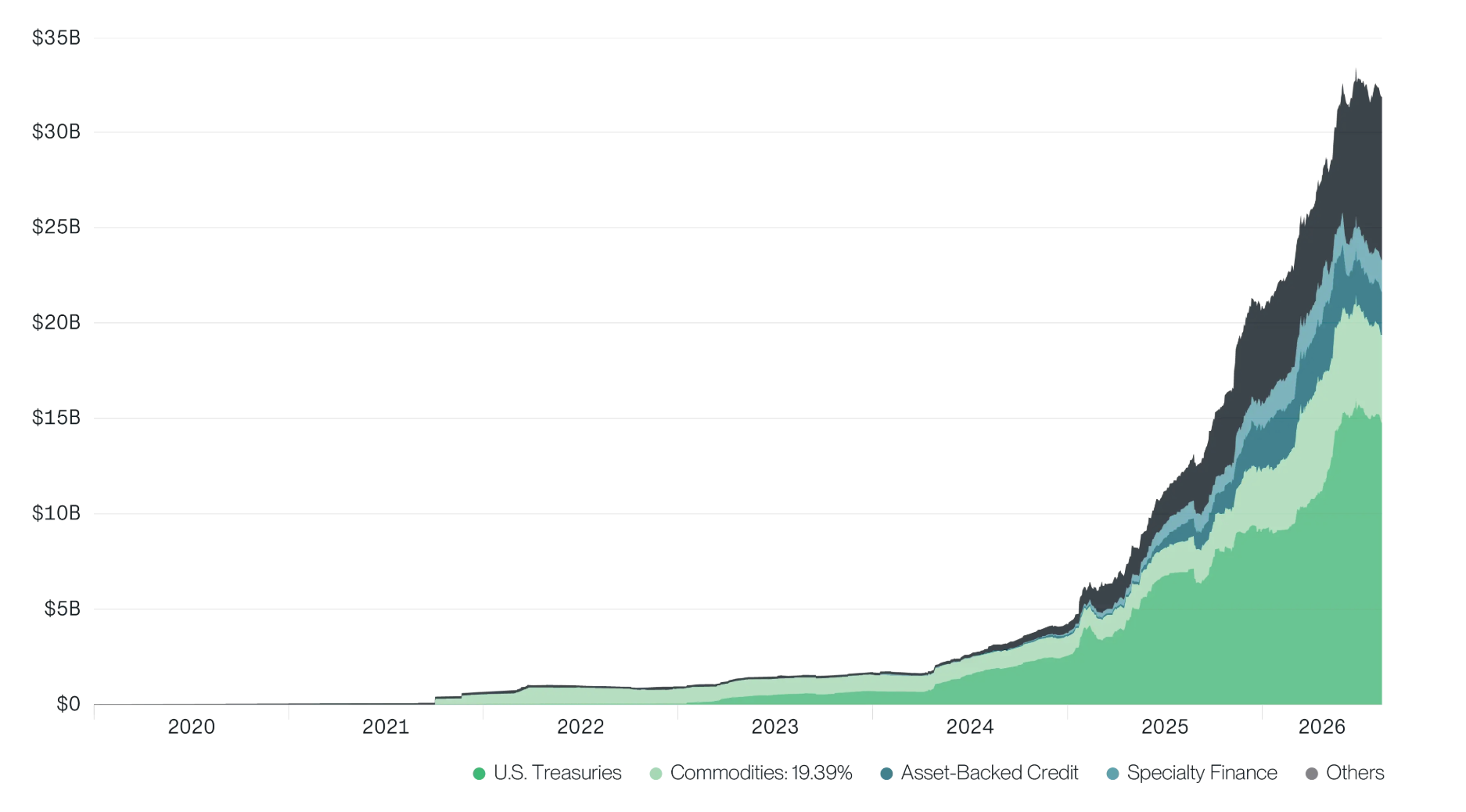
Data from RWA.xyz, data from January 1, 2020, to June 30, 2026
Note: The above chart omits stablecoin issuers like Circle and Tether
Prediction Markets Continue to Expand
The open interest in prediction markets reached a historic high in Q2, hitting $1.8 billion, with the sports category becoming the largest segment. Quarterly trading volume also set a record at $43 billion.
Applications like Polymarket demonstrate the subtlety of retail users adopting cryptocurrencies: millions are using crypto infrastructure to trade the outcomes of real-world events, but most are unaware or unconcerned that crypto provides the underlying technology.
As the US midterm elections draw near, this year's trading volume and open interest in prediction markets will likely set multiple new historical highs. After all, politics is the category that will bring prediction markets into the public eye in 2024, and since then the market size has doubled.
Open interest in prediction markets is shown below:
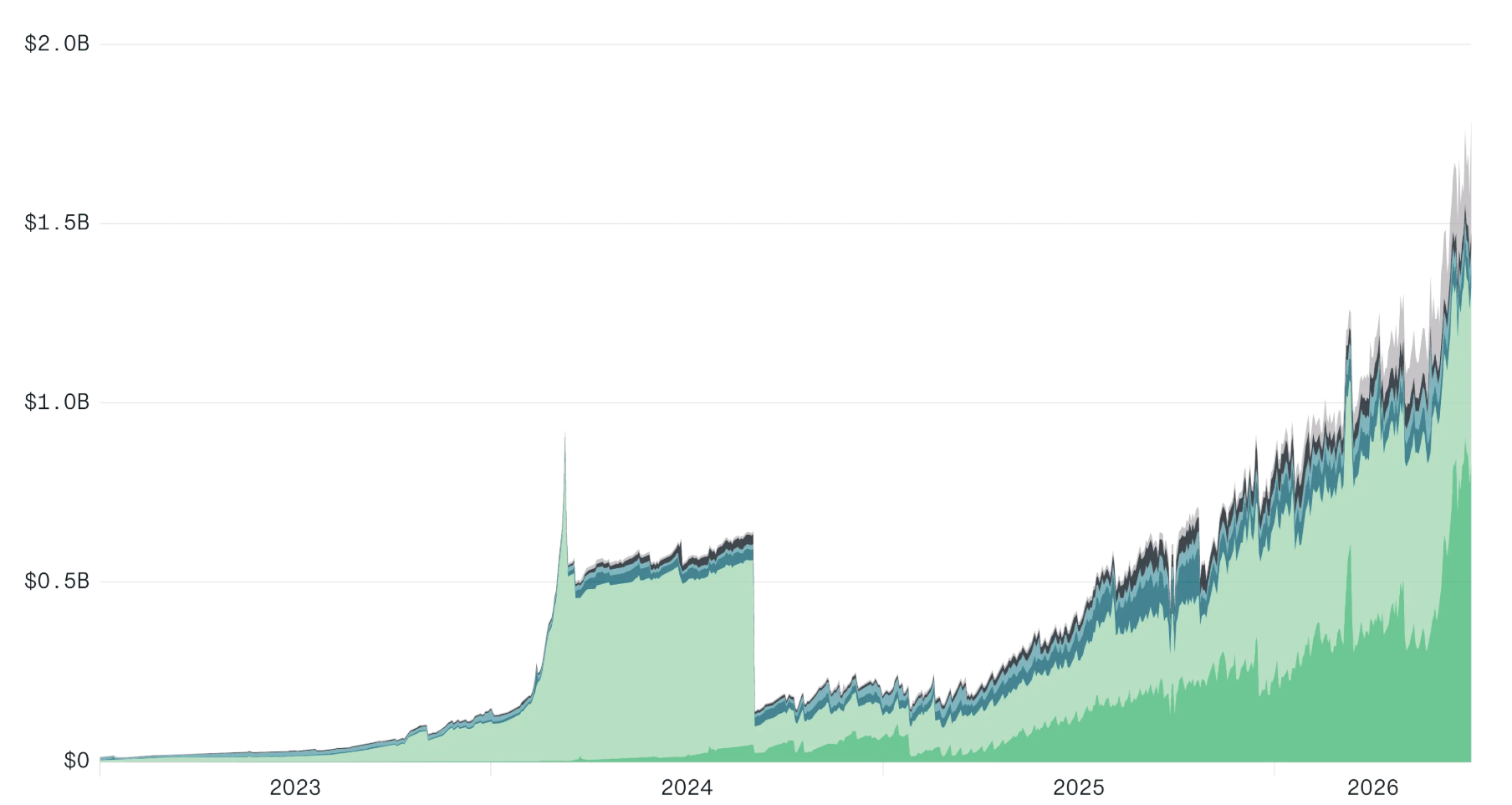
Data from Blockworks Research, data from January 1, 2023, to June 30, 2026
Low Correlation of Crypto Stocks with Major Assets
Returning to crypto stocks, one of the most interesting charts is the 90-day rolling correlation of the Bitwise Crypto Innovators 30 Index with other major asset classes. Notably, compared to US stocks, this index has lower correlation with almost every other category: including developed market stocks, emerging market stocks, US REITs, US bonds, and gold. (The only exception is commodities, where both have negative correlations.)
In other words: in the first half of 2026, the return rate of crypto stocks is more than double that of US stocks, while having lower correlation with almost all other assets in a portfolio. This characteristic of high returns and diversification is enough to excite investors.
Correlation of selected assets and asset classes (90-day rolling) is shown below:
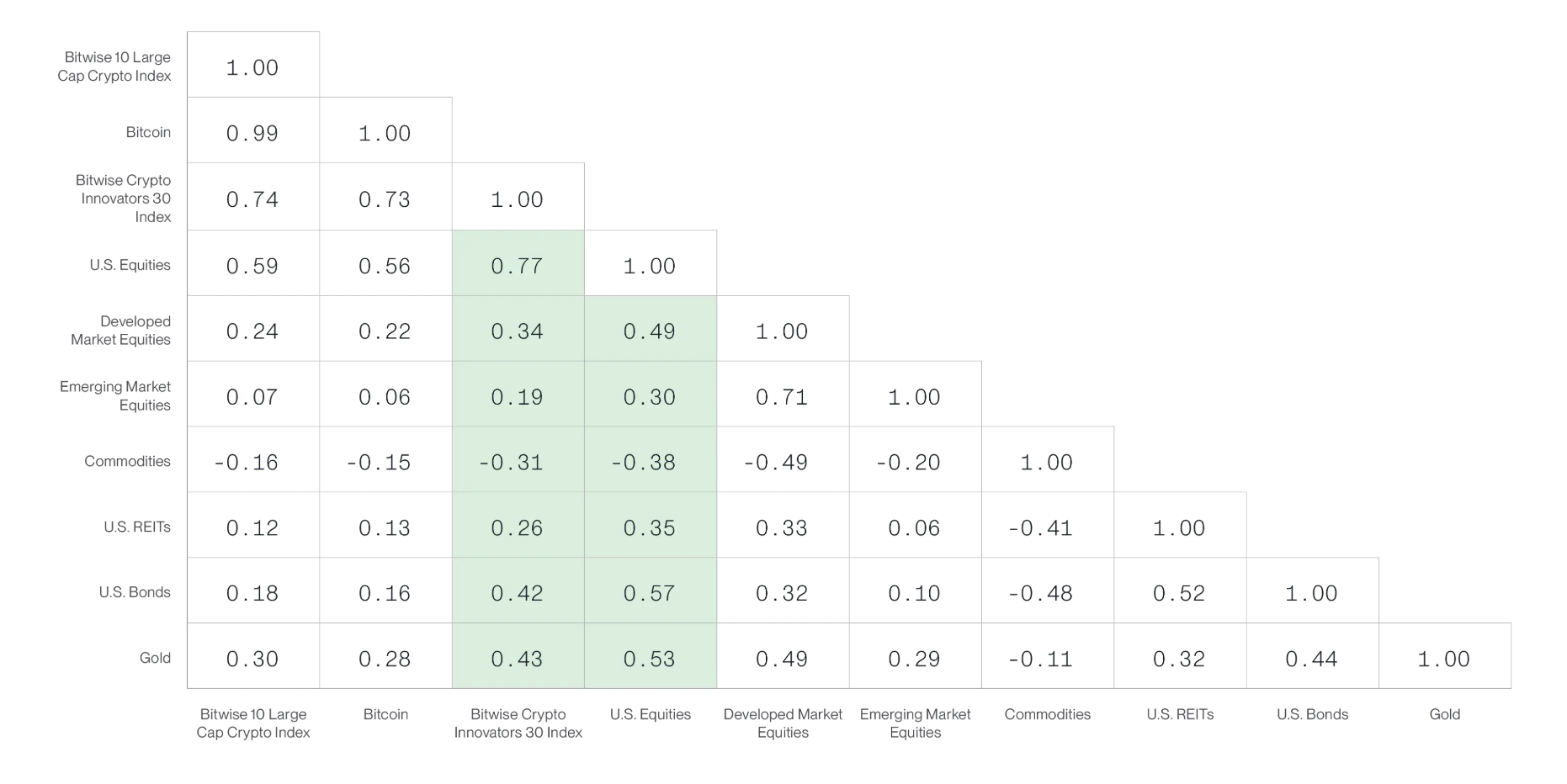
Data from Bloomberg, data as of June 30, 2026
Conclusion
As you flip through these pages, please take a close look at the charts. Almost all indicators—prices, on-chain activity, trading volumes—are far from their historical peaks. Given that prices have fallen more than 50% from their peak last October, this is not surprising.
However, if the same data is compared to the last bear market bottom—2022—the picture is completely different. Ethereum's trading activity grew about 13 times compared to Q2 2022. The value locked in DeFi increased by more than 60%. The stablecoin scale has roughly doubled. It seems that the only thing that hasn’t kept up is the price.
I think this precisely reflects where we truly stand today: the market is pricing an industry that is already twice the size of the last cycle's bottom at bear market prices—an industry with deeper liquidity and stronger fundamentals, and Wall Street has finally stepped onto the chain.
This foundation may not prevent the cold winter, but it determines what will grow in the spring.
That concludes my interpretation of this quarter. Of course, these more than 50 charts cannot answer the question we have been asked the most recently: “Have crypto prices hit the bottom?” But they do point to the resilient fundamentals of the crypto space—a space where usage, revenue, and adoption rates are still growing in a bear market.
For me, this is precisely an area of great interest—and it serves as the foundation upon which the next cycle will be built.
免责声明:本文章仅代表作者个人观点,不代表本平台的立场和观点。本文章仅供信息分享,不构成对任何人的任何投资建议。用户与作者之间的任何争议,与本平台无关。如网页中刊载的文章或图片涉及侵权,请提供相关的权利证明和身份证明发送邮件到support@aicoin.com,本平台相关工作人员将会进行核查。


