🧐 Tokenized stocks are not difficult, what's difficult is unifying the liquidity!
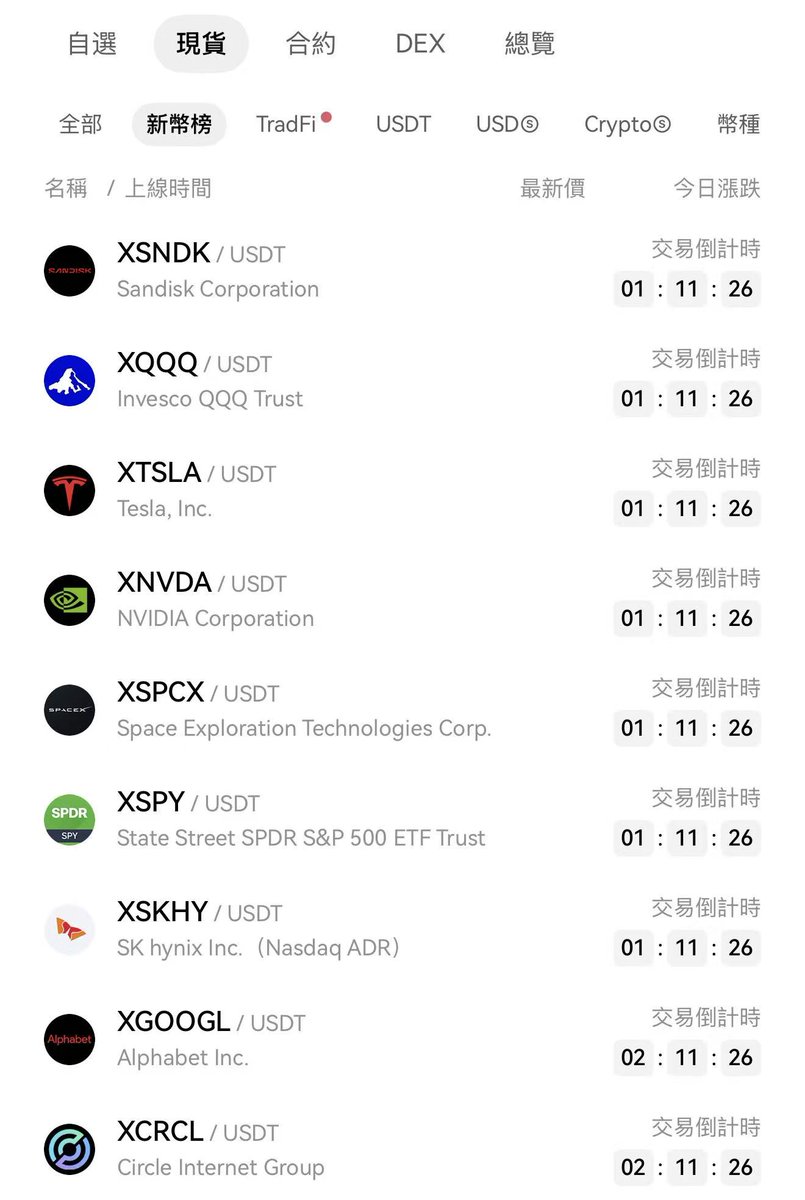
I just updated the OKX App to version 6.180 and switched to the Traditional Chinese version in the settings,
then I saw the entry for purchasing U.S. stocks under the new coins!
Currently, there are over 40 tokenized U.S. stocks and ETFs available, such as XNVDA and XCRCL,
and the first reaction people might have is:
There’s another channel to purchase U.S. stocks, allowing everyone to trade Apple, NVIDIA, Tesla, and NASDAQ ETFs using USDT, 24/7.
But what’s truly worth noting is not just another entry point to buy U.S. stocks; what OK is focusing on this time is unifying the tokenized stock market.
What does that mean?
In the past, the same Apple stock could be tokenized by different institutions, but everyone's token name, issuance ratio, custodian, blockchain, and order book were different.
This is equivalent to fragmentation, causing the liquidity to be split into many small pools.
What OKX wants to do now is to hide the issuer layer in the background; in the future, no matter which supported issuer’s Apple stock token is deposited, OKX will convert it into a unified share of Apple stock,
for instance, displayed as XAAPL in the front end, and then trade it in the same order book.
This is somewhat like gold certificates issued by different banks, which are eventually all calculated and traded by “grams.”
This is what Lao Xu @star_okx wrote on Twitter: creating a more efficient market through global access, continuous liquidity, and programmable settlement.
However, currently, only xStocks is truly integrated,
and the benefits of this model are very straightforward:
1️⃣ Liquidity is no longer chopped up by different issuers, making the order book deeper, and theoretically, the spread and slippage are better.
2️⃣ Users do not need to study the token ratios and technical standards of each issuer; they can trade directly with USDT without having to transfer money back and forth between brokers, banks, and exchanges.
3️⃣ New issuers do not have to cultivate a market from scratch but can tap into an existing order book; the issuers are responsible for the underlying assets, while OKX manages the unified trading entry.
I think this logic might change the boundaries of cryptocurrency exchanges: in the future, exchanges might compete not just based on how many coins they offer, but who can integrate stocks, ETFs, commodities, and crypto assets into the same account to facilitate global trading with stablecoins.
If this model can work, institutions issuing tokens should gradually retreat to the background, while trading platforms that manage unified standards, order books, and liquidity will become the new entry point.
The tokenization of stocks is never just about turning stocks into a token; the real challenge is unifying standards, unifying liquidity, and clearly explaining custody, redemption, and legal rights.
This is a significant update!
免责声明:本文章仅代表作者个人观点,不代表本平台的立场和观点。本文章仅供信息分享,不构成对任何人的任何投资建议。用户与作者之间的任何争议,与本平台无关。如网页中刊载的文章或图片涉及侵权,请提供相关的权利证明和身份证明发送邮件到support@aicoin.com,本平台相关工作人员将会进行核查。


