Original Author: Jia Liu
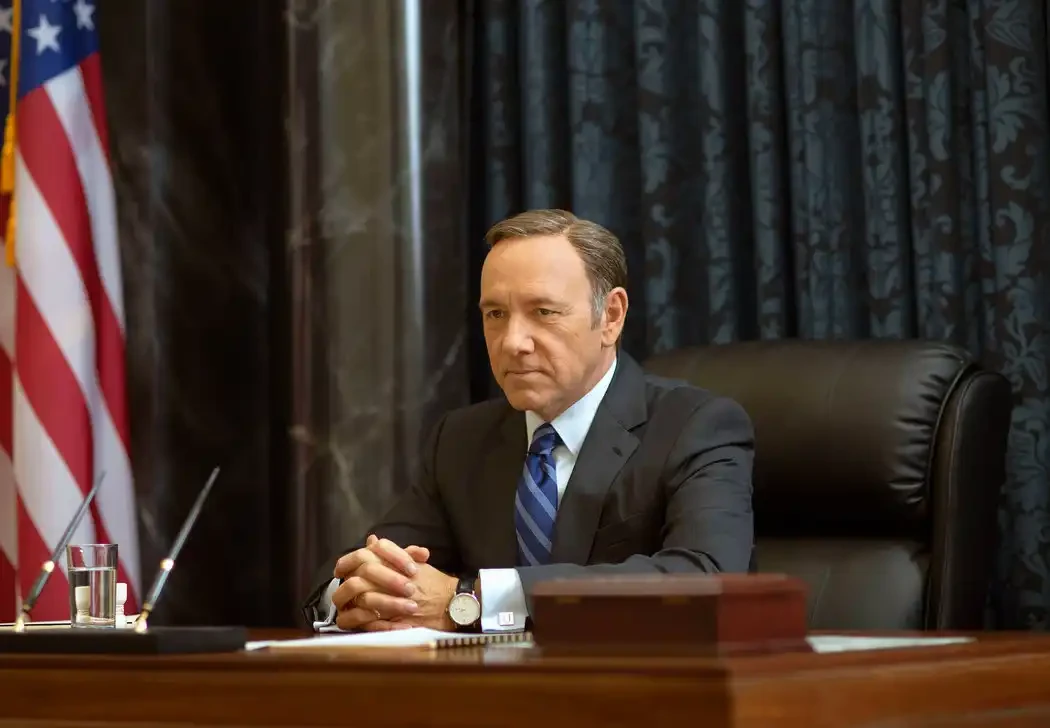
On the 250th anniversary of the founding of the United States, Trump is transforming America into a fund.
Last Monday, just minutes before the U.S. stock market opened, Trump sat in the Oval Office with a camera in front of him. The opening bells of the NYSE and Nasdaq were connected to the White House, allowing him to ring them remotely. As the bell rang, he said to the camera, with the opening bell ringing, these accounts will grow alongside our booming economy, and just this week, $800 million in new capital will be invested in the stock market for America's children.
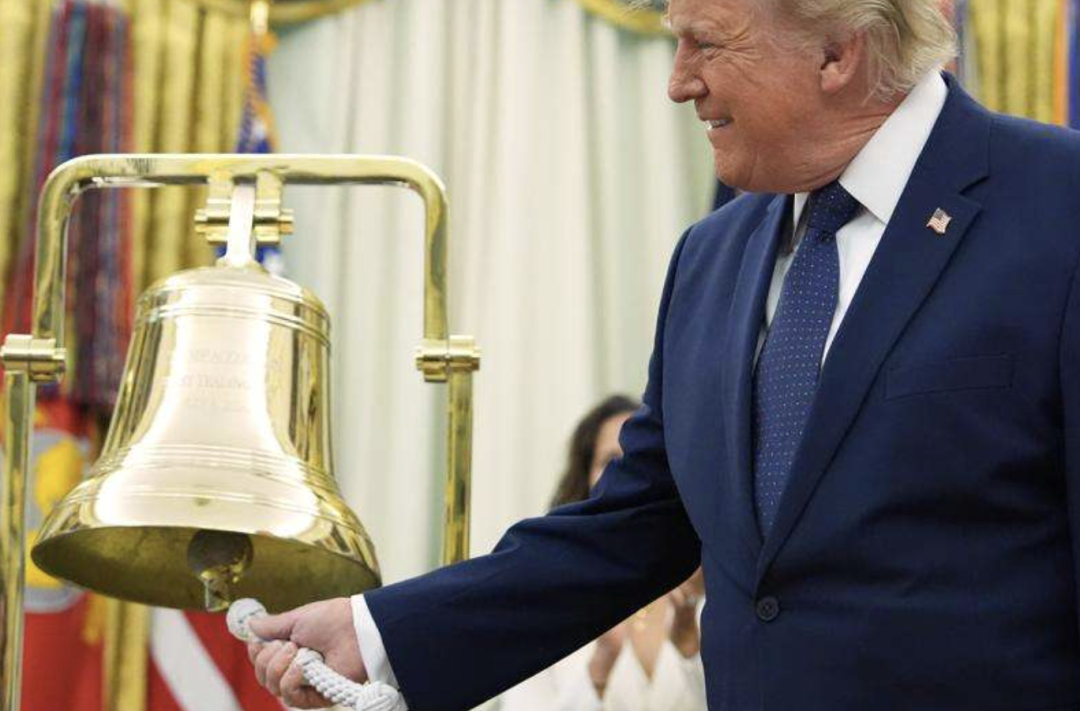
This is the first trading day after the launch of the "Trump Account." Two days earlier, on July 4th, the 250th anniversary of the founding of the United States, he gave new newborns across the nation a birthday gift: an investment account named after him, containing $1,000 that automatically buys U.S. stocks. Six million children had completed their registrations before the launch.
In the same week, his Treasury Department was handling another matter: $39 trillion in national debt, with over $1 trillion in interest payments due in the fiscal year 2026, averaging $170 million daily. Each day, the Treasury has to find ways to pay off the interest accrued from yesterday.
In the past 18 months, this president, who came from a real estate background, has done three superficially unrelated things: government directly investing in enterprises, opening investment accounts for newborns, and securing equity in AI companies, but they all point to the same goal: deeply binding the U.S. stock market to the national destiny of America.
The $39 Trillion Debt of the Hawk
The starting point of this game is not ambition, but anxiety.
As of May 2026, the total U.S. national debt has exceeded $39 trillion, approaching $40 trillion. The debt size has already surpassed the entire economy of the United States, with the debt-to-GDP ratio at about 123%. New national debt accumulates at about $5 billion each day. The Congressional Budget Office predicts that in the fiscal year 2026, interest payments alone will exceed $1 trillion, accounting for nearly 14% of total federal expenditures, higher than the defense budget. For every $1 the federal government collects, it spends $1.33. Huatai Securities estimates that the deficit in the fiscal year 2026 may reach $2.2 trillion, raising the deficit rate to 7%.
There are three traditional solutions to the anxiety surrounding U.S. national debt: increasing taxes, cutting spending, and inflating the debt, which means allowing prices to rise to dilute the real debt.
The first two solutions, before the midterm elections, would be political suicide, and the Trump administration will definitely not consider them. The third solution requires cooperation from the central bank, the Federal Reserve, to lower interest rates, but even under threat from Trump, former chairman Powell has consistently refused to yield, and current chairman Waller would find it particularly unfashionable to announce interest rate cuts under the current economic conditions.
So Trump needs to find a new path.
We all know that Trump has always drawn his problem-solving ideas from his long experience in business. Real estate developers look at balance sheets differently than politicians: if the liability side cannot move, then expand the asset side. On the American government's past balance sheet, the $39 trillion in liabilities is quite clear, while the asset side is murky, with almost no financial assets that could be valued at market prices under federal ownership.
Thus, Trump's solution is to take the power that the government has: subsidies, appropriations, government orders, export controls, and regulatory powers as costs and bargaining chips to obtain low-priced shares from large companies.
The first company that Trump extracted benefits from was Intel.
On August 22, 2025, the U.S. government announced that it would pay $8.9 billion for a 9.9% stake in Intel, one of the world's largest semiconductor manufacturers, at $20.47 per share, making it the largest single shareholder of this chip giant. The clever part of the deal lies in the source of the funds: $5.7 billion comes from the Chip Act, a semiconductor industry subsidy bill passed in 2022, which was originally intended for Intel, and $3.2 billion comes from federal funding for a security chip project. In other words, the government did not spend any new money but traded "checks that were supposed to be given for free" for significant equity.
Trump himself was very proud; he announced on his social media platform Truth Social in all capital letters, "I paid zero for Intel, which is worth about $11 billion, all belonging to America."
Later, during a public event discussing this deal, he mentioned the negotiation process with Intel's CEO Pat Gelsinger. Gelsinger, an American of Malaysian Chinese descent, took over as CEO of Intel in March 2025 after serving as CEO of chip design software company Cadence for 12 years. Trump said Intel agreed too quickly, "It should have been more." Some criticized this approach as shameful; his response was, "It's not shameful; it's called business." When asked if government equity in private companies would become the norm, he replied, "Aren't tariffs a norm too?"
Perhaps to commemorate this good start, White House economic advisor Hassett even named this transaction "the down payment for a sovereign wealth fund."
A sovereign wealth fund, in this context, means an institution where the government invests public funds as long-term capital. Countries like Singapore and Abu Dhabi have them, typically funded by oil or resource revenues, but the U.S. has not had one. In February 2025, Trump signed an executive order requiring Commerce Secretary Rainey and Treasury Secretary Basent to come up with a formation plan within 90 days, but due to legal, financial, and political obstacles, the grand narrative version of the so-called "U.S. Sovereign Wealth Fund" was shelved.
However, the transaction with Intel clearly sends a signal: the shell of the U.S. sovereign fund has not been "cleverly named," but "the bullets are still flying."
The U.S. Government Acquired Shares in At Least 20 Companies for Zero Dollars
Trump's stake in Intel quickly proved effective. After the deal was completed, Intel's stock price rose by over 50%, and by early 2026, the value of the government's holdings ballooned to between $35 billion and $63 billion. Trump transformed a subsidy that was supposed to be spent into hundreds of billions in floating profits.
After completing "bold hypotheses" and "cautious verification," the next conclusion for a businessman is to replicate.
After Intel, Trump's ordering speed exceeded everyone's expectations:
The Department of Defense took a 15% stake in MP Materials, the only U.S. company with the complete capacity for rare earth extraction and processing, making the Department of Defense its largest shareholder. A startup company, American Lithium, developing lithium mines in Nevada, having no revenue at the time, also ceded 10%, binding a $2.26 billion federal loan restructuring. Trilogy Metals, a Canadian-listed mining company developing copper and zinc mines in Alaska, gave up 10% plus 7.5% in warrants, which means the government has the right to buy more shares in the future at an agreed price, costing $35.6 million in investment. When U.S. Steel was acquired by Japan's Nippon Steel, it submitted a "golden share" that provides a veto on closing factories, relocating headquarters, or shifting production overseas. L3Harris, a large U.S. defense technology company, exchanged its rocket engine business for $1 billion in equity, covering military communications, satellite, and missile systems. Nvidia and AMD, the two largest chip design companies, are somewhat special; they submitted not equity but a 15% share of sales revenue from chips sold to China. By the end of January 2026, another U.S. rare earth company, USA Rare Earth, had also joined the ranks.
According to the Cato Institute, a well-known free-market think tank, this administration has already acquired equity, warrants, or golden shares in over 20 companies.

In May 2026, Trump's strategy further scaled up. The government announced a one-time investment of $2 billion in nine quantum computing companies in exchange for equity. IBM received $1 billion, while GlobalFoundries (one of the world's major semiconductor foundries), D-Wave, Rigetti, Infleqtion, and other quantum startups shared the remaining portion. On the day of the announcement, the sector collectively soared: Infleqtion surged over 33%, D-Wave rose 33%, Rigetti increased by 30%, and even IonQ (another publicly listed quantum computing firm not on the list) saw a 12% increase. Rainey stated in the announcement that the Trump administration is leading the world into a new era of American innovation.
On the Prediction Market, traders began to focus on "who will be the next company to have government equity." Currently, IonQ is at 32%, defense AI unicorn Anduril Industries (a defense technology company founded by Oculus VR creator Palmer Luckey, focused on AI-driven military unmanned systems) is at 31%, and Micron (one of the world's largest memory chip manufacturers) is at 28%.
Altman Voluntarily Offered $42.6 Billion in Equity
Aside from the military, chips, and quantum computing sectors, "White House stock god" Trump naturally will not overlook the hottest sector: AI.
The most interesting thing is that this time it was OpenAI CEO Altman himself who proactively presented the offer to Trump.
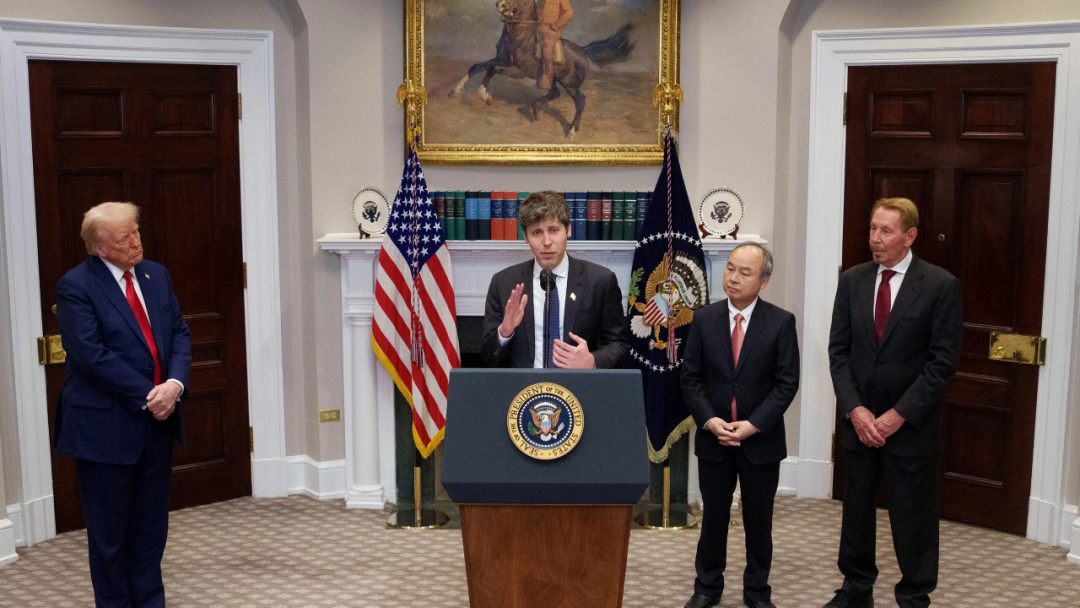
Altman speaking at the White House/government event
According to reports from U.S. political news site NOTUS and the Financial Times, as early as the beginning of 2025, Altman proposed the idea of the government holding shares in major AI companies to Trump, and continued to regularly discuss the matter with senior government officials. By early June 2026, negotiations were officially unveiled. In early July, it was reported that OpenAI proposed to cede 5% of its shares to the government, valuing this "gift" at approximately $42.6 billion based on a record-breaking financing round valuation of $852 billion in March.
Moreover, Altman's complete plan is even larger: not just OpenAI, but every top AI company in the United States would submit 5% to a government platform institution. The list may include Anthropic, founded by former core team members of OpenAI and the fastest-growing developer in the enterprise AI market, as well as Google, Facebook's parent company Meta, and Musk's AI company, xAI. The revenue model would follow the Alaska Permanent Fund, a public fund set up by the state of Alaska using oil revenue, which distributes dividends to every resident of the state each year; Altman hopes the AI version could also provide dividends to the public.
Why would a company preparing for one of the largest IPOs in history proactively offer $42.6 billion?
Silicon Valley venture capitalist Chamath, one of the hosts of the All-In podcast, pointed out in a recent episode that the economics of AI is fundamentally different from that of the internet. During the internet era, acquiring an additional user had almost no cost; in the AI era, each new user necessitates real GPUs, memory, power, and infrastructure. None of these can be provided by venture capital; all are controlled by Washington.
This means that AI companies' reliance on national-level infrastructure is structural, not temporary. The more they rely on national resources, the heavier their bargaining chips at the negotiation table.
Thus, the relationship between AI companies and the government is no longer as simple as "startups wanting to minimize regulation." They cannot do without government resources, and the government knows this. The past negotiations involved: you get subsidies, you build factories and hire people, and pay taxes. The current negotiation has transformed into: you get computing power, electricity, orders, and policy certainty; what does the public get?
Industry insiders refer to this 5% as a "regulatory insurance policy." Using shares in exchange for a looser environment and preemptively mitigating the risks of nationalization or forced breakups while allowing Altman and others to be deeply embedded in the regulation of AI. The precedent set by Intel is clear: after the government invested in the company, Nvidia's $5 billion investment, the co-construction of the Texas chip factory with Musk, and its partnerships with Apple successfully materialized, leading to soaring stock prices.
Government shareholders are not a cost; they are the toughest backing.
Of course, not everyone thinks like Altman; there is a noticeable absentee from the list, Anthropic, which seems less willing. According to insiders, Anthropic has not discussed offering equity to the government to date.
However, Trump certainly needs to apply pressure to those not submitting their insurance policy.
Defense Secretary Hegseth announced on X that Anthropic was tagged as a "supply chain risk," a label previously only used for foreign hostile supplier companies and never applied to American firms; all defense contractors must provide written assurances not to use Claude. Following this, Trump posted on Truth Social, ordering all federal agencies to "immediately stop" using Anthropic's technology. Anthropic didn’t back down, and on March 9, simultaneously filed lawsuits in San Francisco and Washington, alleging that the blacklist was unconstitutional retaliation.
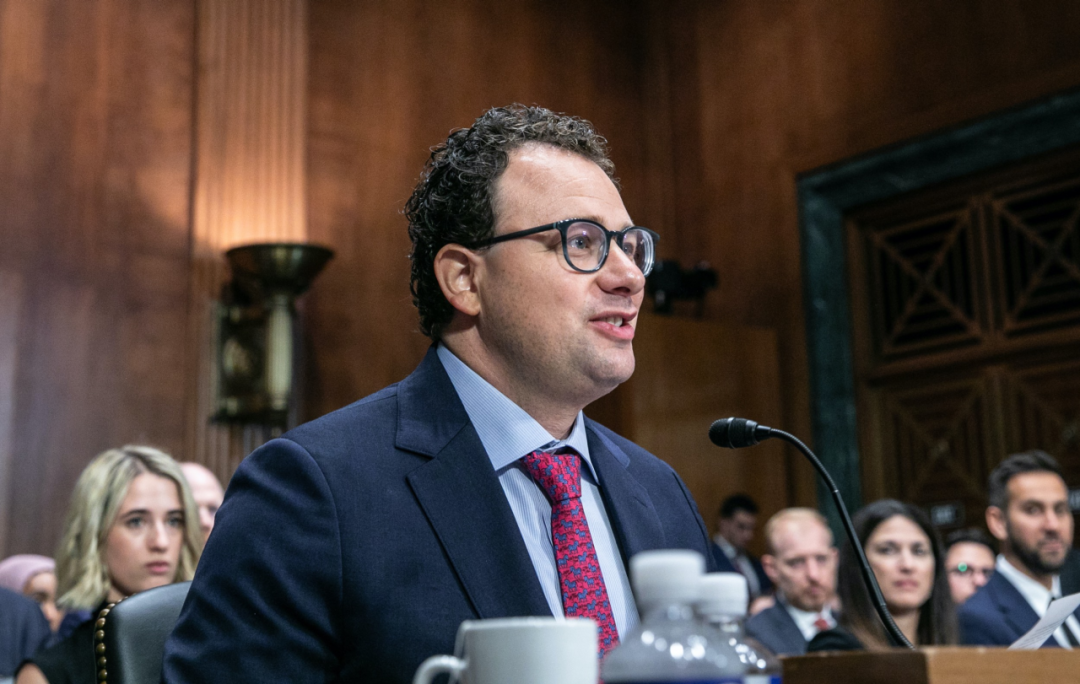
Anthropic CEO Amodei at a congressional hearing
With Intel's template, the mass replication of quantum companies, and the 5% proposal actively submitted by OpenAI, "who will be the next company to receive equity" has become a tangible trading theme on Wall Street. Following the government's stock selection logic, three tiers can be outlined.
The first tier consists of cutting-edge AI model companies. This is a batch directly named in Altman's proposal. Besides OpenAI itself, there are Anthropic, xAI, Google, and Meta. Google and Meta are publicly listed companies, where governmental shareholding is technically easier to manage, but the political perception is more sensitive. The variable with xAI lies with Musk himself. His relationship with Trump soured after last year’s budget cuts on the DOGE project and fell apart, but they recently repaired their relationship. SpaceX completed an $86 billion IPO, with a market cap of $2.2 trillion. When Trump was asked in a CNBC interview whether Musk would donate SpaceX stock to the Trump account, he replied, "I think he will." A week later, SpaceX President Gwynne Shotwell announced donations of one share to each of the accounts of over 2 million children, approximately worth $320 million.
The second tier includes the foundational companies of AI. Analysts point out that if private capital cannot support the growing funding needs of AI, the government will next consider holding shares in data center companies that provide computing power and supporting energy infrastructure companies. Although these companies may not have as attractive names as model companies, they represent the most concentrated realization of government resources, such as land, power grids, and nuclear energy approvals, and they also represent the most straightforward area for the "subsidy for equity" logic.
The third tier consists of companies that are already in transactions or on the trading block. After the quantum group, the Prediction Market points to IonQ, Anduril, and Micron. Anduril is one of the highest-valued startups in the defense AI field; Micron just donated $250 million to the Trump account. In this game, donations themselves serve as a form of bidding, sending a clear signal: I’m on board, so take care of me.
When U.S. Stocks Become a Faith
Looking back at this infant fund.
Newborns in the United States born from 2025 to 2028 will have $1,000 automatically deposited by the Treasury upon their parents opening an account. This money is mandated to be invested in index funds that track the S&P 500, with the default being State Street's lowest-cost S&P 500 ETF fund, SPYM. Optional choices include IVV, VTI, SPTM, ITOT, all of which are U.S. large-cap or total market trading platform funds with a maximum annual fee of 0.10%. Families can contribute up to $5,000 per year, pre-tax deductible, similar to pensions, with contributions from employers, relatives, or charities counted separately. The funds cannot be accessed until the child turns 18, at which point the account automatically converts into a common long-term retirement savings tool, the IRA (Individual Retirement Account). The custody is handled by the Bank of New York Mellon, and the accompanying app was designed with the participation of one of the largest zero-commission brokers in the U.S., Robinhood.
According to nonpartisan fiscal oversight organization "Committee for a Responsible Federal Budget," this program is estimated to cost about $17 billion by 2028. The government's own estimate is that the $1,000 will become at least $6,000 by the time the child turns 18.
The response from businesses is more intriguing than the policies themselves. Dell Technologies founders, the Dell couple, donated $6.25 billion, covering about 25 million children under 10 in low-income zip codes, with each receiving $250. Micron contributed $250 million. Intel and Robinhood made matching contributions for employees' children. The world’s largest asset management company, BlackRock, and Bank of America are matching employee donations. Then there are the 200 million shares of SpaceX stock mentioned earlier by Shotwell. The Treasury then announced it would accept substantial charitable donations in the form of publicly listed company stocks.
The Trump account does not directly inject cash into AI companies. What it does is something slower and deeper: nurturing a generation with a vested interest in the U.S. stock market.
This money may not change a child's destiny. But from the day this child is born, they become a holder of American assets. Twenty years from now, when this child looks at the U.S. stock market, they will not see it as a casino for the wealthy, as their first property is already contained within it. When the market rises, their account increases; when the market falls, their money shrinks.
This will greatly cultivate a generation's faith in "American growth."
Although this is not the starting point of a new story. American families' assets have long been welded to the U.S. stock market. The American corporate retirement savings plan 401(k) allows employees to automatically deduct a portion of their salary invested in an investment account each month, combined with pensions, mutual funds, and decades of indexed investment trends, has already strung together the retirement funds, children’s education funds, and home equity of many middle-class families along the lines of the S&P 500. But Trump has planted this faith in every American's heart in advance.
Assuming that in the future Washington can actually acquire 5% of 30 companies at the level of OpenAI, based on an OpenAI valuation of $852 billion, this portfolio would be worth $12.78 trillion at birth. This is already enough to cover the interest on U.S. national debt for a year.
However, what if the goal is not to pay interest but to fill in the principal debt? Then the story suddenly becomes nearly sci-fi: these 30 companies would have to increase 25 to 31 times in total. In other words, each one must grow from today’s OpenAI into a colossal economy with a value of over $20 trillion.
Previously, crazy rises and falls in AI primarily belonged to founders, venture capitalists, and Wall Street. Now, he wants to share the benefits of the rise more broadly. The cost is that if there truly is a significant retraction in the future, the volatility may be more widely transmitted into public finances, household accounts, and political sentiment.
In this way, the U.S. stock market is no longer just a barometer of the American economy; it is the very essence of America's national destiny.
And this, should be the most proud transaction of Trump's life.
免责声明:本文章仅代表作者个人观点,不代表本平台的立场和观点。本文章仅供信息分享,不构成对任何人的任何投资建议。用户与作者之间的任何争议,与本平台无关。如网页中刊载的文章或图片涉及侵权,请提供相关的权利证明和身份证明发送邮件到support@aicoin.com,本平台相关工作人员将会进行核查。


