On July 14, 2026, within a single day, four seemingly unrelated "battlefields" around the globe ignited: the .me registry, affiliated with the Montenegrin government, placed the core short link t.me of Telegram, which carried countless redirects and community entries, directly into serverHold, erasing it from the global DNS registry, severing all requests at the root; in the Strait of Hormuz, the Iranian Islamic Revolutionary Guard Corps claimed to have attacked and destroyed two foreign tankers accused of "violations," citing reasons such as ignoring warnings and shutting down navigation systems, immediately rewriting the safety expectations of this crucial global oil passage; in the world of code and data, following privacy controversies triggered by the complete code library of Grok Build being uploaded to a public repository, xAI announced the implementation of a zero data retention mode, emptying previously synchronized user data, and would no longer retain call records for team users utilizing Grok Build via API keys; meanwhile, in Singapore, the Monetary Authority issued an MPI license to Cumberland's Singapore subsidiary, allowing it to provide digital payment tokens and cross-border remittance services, continuing its previous licensing path with institutions such as Circle and Ripple, turning compliance frameworks into a new "credit endorsement." The root zones of domain names, critical shipping channels, AI data control, and financial licenses were collectively reset or strengthened on the same day, pointing to the same theme: who is qualified to define "trustworthy" across networks, seas, models, and ledgers? For all involved in cryptocurrency and digital assets, this felt more like a global trust stress test across levels—old dependencies are revealing vulnerabilities, while a new trust architecture is being explored and formed.
t.me pulled offline: A wake-up call for domain sovereignty
On July 14, the "oil route" within the information infrastructure was also momentarily shut off. According to publicly available single-source information, the .me registry directly marked the Telegram core short link domain t.me with a serverHold label, removing it from global DNS. Technically, this means the issue is no longer a matter of a single operator or a single country's blockage, but rather a suspension at the registry level—no longer being resolved at all—when users enter t.me, the browser doesn't even know which IP to ask, and access requests are truncated before reaching the "phonebook" of the internet. At that moment, who truly controls this phonebook, and who can make a global information gateway vanish from the map, was laid bare.
For the crypto world, what was pulled was not just a short link, but an entire set of information distribution veins. t.me is the core domain used by Telegram for sharing channels, groups, and bot entries; nearly all project announcements, risk control alerts, OTC matchmaking, and bot trading configurations ultimately rely on these few characters. When it disappears from the global DNS, even if only temporarily, it means that countless community entry points relying on link redirects are simultaneously stripped of a layer, forcing the information flow back to its original state of "manual group searching" and "mutual ID exchanges," quickly amplifying the market sensitivity toward "what can we still trust" and "who has the final say." More glaring is the subject: the .me registry is under the jurisdiction of the Montenegrin government, and this small-to-medium country, along with its authorized registrant, can press the switch at the registry level, silencing a node that carries global crypto community traffic in an instant. This is the real meaning of "domain sovereignty"—on-chain can be decentralized, funds can flow across borders, but the entry points are still in the hands of a few sovereigns and registries; every seemingly innocuous short domain is a forced inquiry into how much centralization single-point risk the crypto ecosystem can still bear.
Renewed fire in the Strait of Hormuz and erosion of trust in oil routes
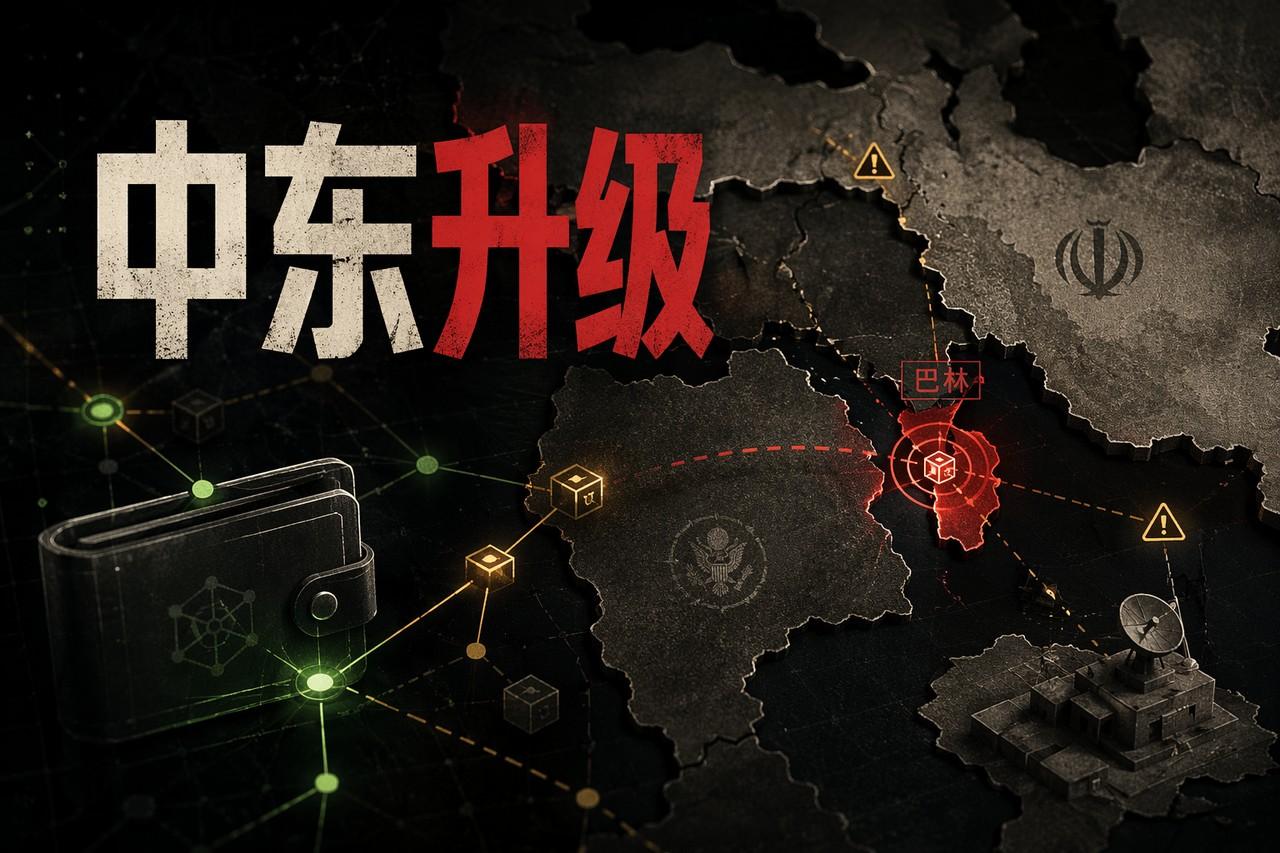
On the same day, another global traffic artery was constricted: the oil route. The Iranian Islamic Revolutionary Guard Corps publicly claimed to have "attacked and destroyed" two foreign tankers accused of "violations" in the Strait of Hormuz, citing the tankers' disregard for warnings and shutting down navigation systems as "abnormal behaviors" (according to a single source). The responsibility was quickly categorized as the other's violation in their announcement, but the nationality of the destroyed tankers, the background of the shipowners, casualties among the crew, and even the debris locations were all kept secret, with no independent footage or radar records to corroborate. For those familiar with these waters, this is not an isolated incident—Iran has previously detained tankers in the Strait of Hormuz, using the security of these shipping lanes as a bargaining chip in geopolitical maneuvers and sanctions confrontations. With each seizure and each missile launch, a question accumulates: how long can this strait remain a "predictable" trade route?
The Strait of Hormuz is one of the world's most critical oil transport chokepoints; vast amounts of Middle Eastern crude must be squeezed out of this narrow channel to reach distant refineries and terminal markets. When military action impacts tankers directly, it magnifies not only the losses of these two vessels but also the imagined continuity of energy supply—whether insurance rates will rise, whether shipping companies will reroute, and whether oil-producing and consuming countries will stockpile in advance, all will be anticipated by the market with higher risk premiums. The problem is that this incident is currently based entirely on a single party's narrative, with key information missing and unable to be cross-verified; the public sphere will soon see diametrically opposed versions emerge: one party emphasizing "law enforcement," while the other accuses "attack." Meanwhile, shipping companies, energy traders, and funds holding risk assets can only rush to price between these fluctuating narratives. News related to shipping and energy channel risks will heighten risk-averse sentiment, dragging global risk assets, commodities, and even crypto assets into volatile ranges, while what is truly eroded is the remaining trust of the international community in official statements and key shipping lane safety.
After Grok Build controversy, xAI seeks trust through zero data retention
On the same day, another "invisible route" also erupted in a trust incident: Grok Build, a code generation and AI development tool for developers, was found to have had its complete code repository uploaded to a public repository, accessible to anyone. The focal point of the controversy is not just the source code itself, but whether this implies that project codes interacted with it, calling practices, and potential business logic could also be exposed in uncontrolled spaces. For teams relying on it to write contracts, build backends, and connect to business systems, this moment of loss of control was enough to shake their fundamental judgment of whether they can "safely hand over code to xAI," leading many to reassess the costs and risks of further deep integration.
xAI's response was a rare "seeking more with less" negotiation: after the privacy controversy escalated, it announced the implementation of zero data retention (ZDR) mode for teams using Grok Build via API keys and erased previously synchronized user data (according to a single source). On the surface, this appears to be a case of "self-defeating their own effectiveness" in the tech stack—long-term retention of call records has been discarded, meaning that a large portion of the real usage samples available for continuously refining models have been intentionally cut off; but on the trust ledger, it attempts to exchange the promise of "what you write for me, I will no longer retain long-term." Interestingly, the official did not disclose the specific scope of "previously synchronized data" or the timeline for complete deletion, which led some developers to view ZDR as a necessary but insufficient relief measure, leaving the question "what exactly was the data used for?" as an unresolved mystery.
For the Web3 and crypto developer community, which is accustomed to building trust through transparency and verifiability on-chain, the symbolic significance of this shift is particularly pronounced: who will save what data, for how long, and how it will be used, is transitioning from hidden background configurations to a decision-making dimension that stands alongside performance and price when selecting solutions. The Grok Build controversy has brought a topic once seen as "an internal black box of an AI company" to the forefront—when your contract frameworks, transaction logic, and even development rhythm all have to pass through the AI tools, what data footprints these tools leave off-chain will, together with verifiable records on-chain, form the trust puzzle of the next generation of infrastructure.
Cumberland secures trust anchor in Singapore with new MPI license
On the same day that the vulnerabilities of domains, oil routes, and AI data were exposed, Cumberland's Singapore subsidiary obtained a rare institutional chip—the MPI license from the Monetary Authority of Singapore. As an institution deeply engaged in crypto trading and liquidity provision, it can now legally conduct digital payment token-related services in Singapore and handle cross-border remittance business, facilitating positions and transferring funds for global clients within regulatory boundaries. This license embeds business that originally relied on counterparty reputation and on-chain records into a compliance framework led by MAS, effectively adding a layer of accountable, auditable "safety net" within the high-frequency flow of crypto finance, ensuring that trust between institutions no longer entirely rests on technical claims and past relationships.
This safety net does not exist in isolation. Singapore had previously issued payment or digital payment token licenses to institutions like Circle and Ripple, gradually consolidating different types of crypto businesses under the same regulatory framework and shaping a new global crypto finance landscape: who holds which license and what business they can conduct in Singapore is beginning to determine how capital flows across borders, where positions are aggregated, and who absorbs the risk. Therefore, in a world where t.me can be "pulled offline" by registries at the click of a button, the Strait of Hormuz can suddenly become a capacity choke point, and the data footprints of AI tools off-chain remain unclear, licenses like MPI have become trust anchors at the institutional level—they cannot eliminate technical and geopolitical uncertainties but can provide a clear boundary and sustainable expectations for compliance pathways for capital willing to operate within the rules.
On the same day, four storms redraw the global trust landscape
These four seemingly disparate events on July 14, 2026, in essence, simultaneously tightened the trust neural lines of networks, geopolitics, data, and regulation: the .me registry's serverHold instantaneously severed t.me's existence in the global DNS, exposing the high concentration of information entry points in the domain system; the Iranian Islamic Revolutionary Guard Corps' attack on "violating" tankers in the Strait of Hormuz again brought the safety uncertainties of the world's most critical oil shipping lane to the forefront; xAI's shift to zero data retention post the Grok Build code leak controversy, and the clearing of existing user data was an attempt to trade "less data" for trust on the tool side; while Cumberland's acquisition of the MPI license from the Monetary Authority of Singapore sought to gain institutional and regulatory trust balances through "more compliance." For participants in the crypto industry, the response strategy is becoming clearer: first, to minimize dependence on a single domain or platform, anticipating scenarios where DNS, hosting, and communication layers could be "pulled offline"; second, to incorporate geopolitical and shipping risks into asset and business layouts, acknowledging that the uncertainties of Hormuz-style nodes are market conditions themselves; and third, to maintain continuous sensitivity to the data strategies of AI services and regulatory licenses like MPI, as both technology and institutions are rewriting the boundaries of "trustworthy" through different paths. The crypto industry has repeatedly accelerated both decentralization and compliance in the wake of infrastructure failures and policy shocks, and this time will be no exception: in the coming years, the technological decentralization at the protocol level and the compliance deepening driven by licenses will likely progress in parallel, and the trust map of global digital assets will be redrawn between ongoing sudden shocks and orderly reconstructions.
Join our community to discuss and grow stronger together!
Exclusive Hyperliquid benefits for AiCoin: https://app.hyperliquid.xyz/join/AICOIN88
Exclusive Aster benefits for AiCoin: https://www.asterdex.com/zh-CN/referral/9C50e2
On-chain Telegram community: https://t.me/AiCoinWhaleData
On-chain community: https://www.aicoin.com/link/chat?cid=N6OVMor5g
AiCoin on-chain Twitter: https://x.com/aicoinwhaledata
免责声明:本文章仅代表作者个人观点,不代表本平台的立场和观点。本文章仅供信息分享,不构成对任何人的任何投资建议。用户与作者之间的任何争议,与本平台无关。如网页中刊载的文章或图片涉及侵权,请提供相关的权利证明和身份证明发送邮件到support@aicoin.com,本平台相关工作人员将会进行核查。