On the same day, however, several seemingly unrelated news items popped up on the screen: In Moscow, Central Bank Governor Elvira Nabiullina reiterated that the digital ruble will go live as scheduled on September 1, stating, "Everything is ready"; in Seoul, it was reported that the South Korean Ministry of Science and ICT plans to use about 50 trillion won in excess semiconductor tax revenue to purchase Nvidia's Vera Rubin chips, laying the computational foundation for this "sovereign AI"; in the United States, Trump continued to use Musk as political material in interviews, claiming that the "trillionaire" would donate SpaceX stock to his "Trump account." On this day, monetary sovereignty, computational sovereignty, and political capital were all brought into the spotlight, pointing to a common thread: whoever can control the settlement networks, model foundations, and narrative around ballots in the next cycle has the qualification to rewrite the rules of the game. In stark contrast to this "sovereign upgrade" offensive posture is the cooling risk appetite on the asset side— the crypto market's fear and greed index rose from 19 to 21, seemingly rebounding but still firmly caught in "extreme fear," while the stock price of the global storage chip manufacturer Kioxia once plummeted by 12%, with technology and high-risk assets both under pressure, presenting a contradictory picture of "sovereign defensive leverage, but market risks de-leveraging."
Digital Ruble Hard Cap Sanctions: Moscow Hits the Start Button
If South Korea uses "sovereign AI" to hedge against technological blockades, then Russia’s chosen vehicle for offense and defense is currency itself. Since the launch of its development in 2021, the digital ruble has been designed from the beginning as a complementary form to the fiat ruble: initially accepted only within the financial and credit institution system, it did not attempt to replace cash and non-cash rubles all at once, but steadily held the infrastructure in Moscow's hands around the key pipeline of payment and settlement. Recently, Central Bank Governor Elvira Nabiullina publicly confirmed that the digital ruble will be launched on September 1 as scheduled, with the phrase "Everything is ready" looking more like a timetable declaration with confrontational implications in light of the external environment not having significantly warmed up.
This sense of confrontation has already been written into the labels given by the EU. As early as April 2025, before the digital ruble was to be widely circulated, the EU imposed preemptive sanctions on it, seen as a preventive strike against Russia's digital currency infrastructure—being placed on the sanctions list before it even had a chance to truly take off is tantamount to acknowledging its potential importance in future sanction regimes. Therefore, it is difficult for the market to interpret the September 1 launch as merely a technical upgrade: in the context where traditional financial sanction systems still dominate cross-border settlement rules, the digital ruble is interpreted as Russia’s attempt to proactively build a parallel channel, and this "sovereign digital currency channel" naturally resonates with the cross-border circulation and anti-censorship narratives long told by crypto assets—one backed by the state, the other arising from an open network, both searching for ways to bypass a single financial center. In this tension, the digital ruble is both Moscow’s public response to the sanctions system and a realistic mirror of the narrative around cross-border crypto assets.
South Korea’s 50 Trillion Won Tax to Compete for Computational Sovereignty
If Moscow is rebuilding the "sovereign track" of payment and settlement, then Seoul is targeting the "sovereign high ground" of computational power and models. Recently, it was reported that the South Korean Ministry of Science and ICT plans to use about 50 trillion won in excess semiconductor tax revenues to concentrate on procuring Nvidia's Vera Rubin chips, with the official narrative being to build South Korea's own "sovereign AI," forming a domestic infrastructure with world-class universal model capabilities. This is not a simple industrial upgrade budget but a straightforward examination question answer: South Korea does not want to just be a "user" and "processing plant" of other countries' models in the next technological cycle.
The direct pressure driving this gamble comes from the United States’ export and usage controls on cutting-edge AI models. For a highly export-oriented economy, once the training and inference of core models are locked on foreign platforms, regulation becomes not just a compliance issue, but a "technical valve" that could tighten at any time. Reports indicate that this anxiety over long-term reliance on foreign AI infrastructure is one of the important motivations for South Korea to promote the "sovereign AI" project. Thus, at a time when the global AI arms race has elevated chips and computational power to strategic resources, South Korea has effectively reserved a seat with 50 trillion won in tax: on the one hand, it strengthens domestic demand expectations for high-end chips, adding a layer of safety premium narrative to semiconductor and computational infrastructure assets; on the other hand, it also sends a signal to the capital market—when sovereignty and technology are tied together, the asset imaginative space surrounding chips, computational power, and AI applications is no longer solely determined by a single technological cycle but increasingly shaped by geopolitical games and policy defense logic.
Trump Jokes About SpaceX, Tech Billionaires Drawn into the Mix
In the latest interview, Trump mentioned that he and Musk have not spoken since Musk became a "trillionaire," but then shifted tone to half-jokingly suggest that he "believes Musk will donate SpaceX stock to the Trump account." This statement was subsequently widely interpreted by the media as a joke or an exaggerated expression; there is currently no public evidence showing that such stock donations are happening or have materialized, making it appear more like an exaggerated image thrown out before the camera, rather than a realistic trading structure that could be modeled.
But even if it's just a joke, connecting SpaceX and the "Trump account" in the same sentence is enough to thrust Musk back into the narrative center of the American election and policy games. As the founder and major shareholder of several American technology and aerospace companies, Musk's asset scale and political stance have already been highly magnified by the market. In this context, a joke about stock "donation" is viewed as a symbolic act of exploration and mutual utilization between political figures and tech billionaires: political figures use the imagination of tech tycoons to enhance their own labels of "innovation" and "capital mobilization capability," while tech billionaires are by default seen as having potential influence over regulations, industry directions, and attitudes towards crypto assets. Coupled with investors' memories of previous tech entrepreneurs’ public stances on elections, regulations, and crypto asset issues, this seemingly light-hearted quip instantly opens up the imaginative space regarding "can equity become new political ammunition" and "to what extent can leading tech companies participate in political fundraising and policy exchange," further reinforcing a reality: in the current U.S. political and capital market context, tech billionaires can hardly remain uninvolved.
Fear Index Rides to 21, Tech Stocks and Crypto Cool Down Together
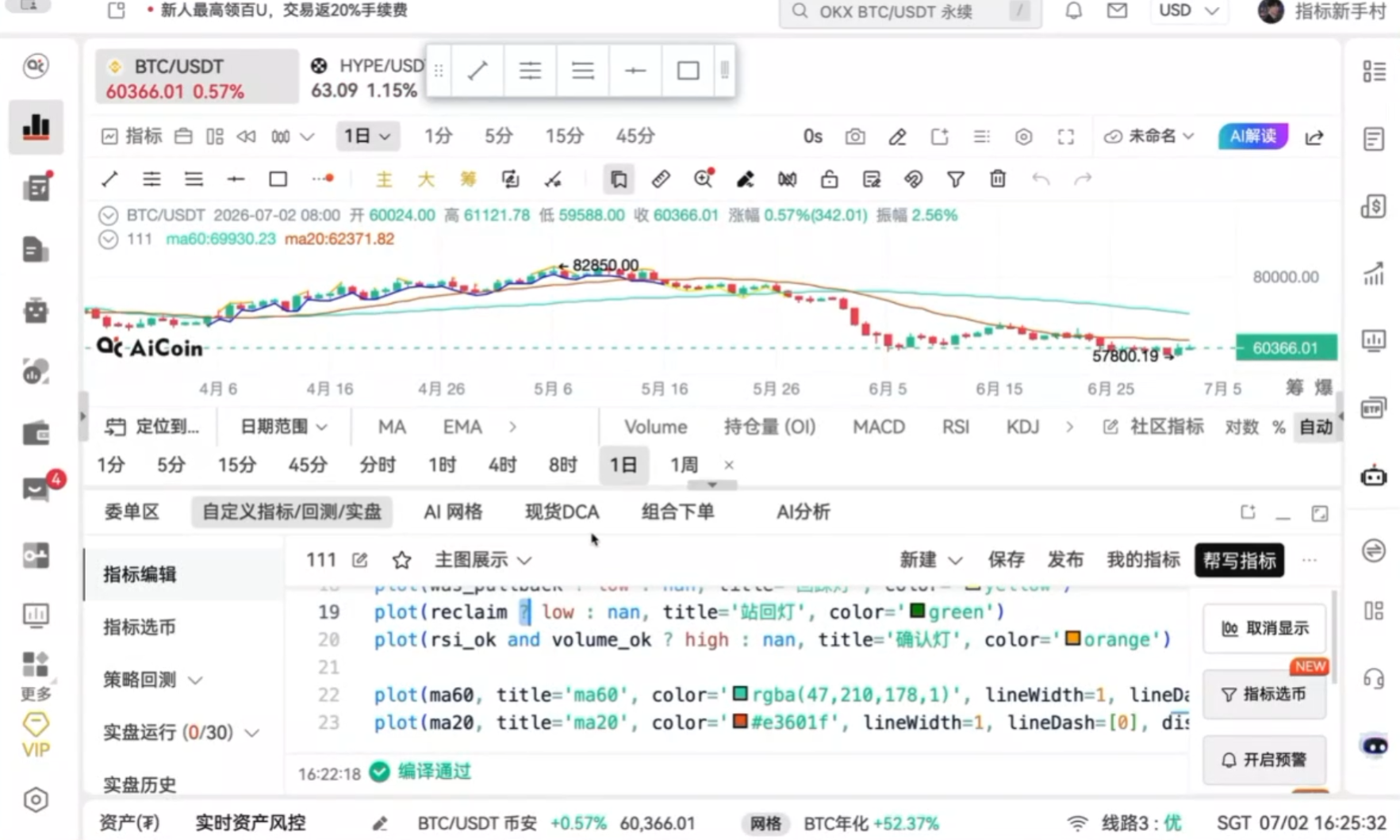
In this context where "tech capital cannot be separate from politics," a recalibration on the emotional level has almost occurred simultaneously. The latest reading of the crypto market's fear and greed index is 21, up from 19 the previous day; on a scale of 0-100, lower values represent greater fear, with both days categorized in the "extreme fear" range. This is not just a brief hit on the brakes but rather a reflection of continuous high-pressure clouds over two days: even if it rises slightly from 19 to 21, it is still far from escaping the fear zone, indicating that funds seem to be merely shifting slightly within the fear interval rather than re-embracing risk.
Almost simultaneously, the share price of storage chip manufacturer Kioxia once fell by 12% during trading, though the specific triggers have not been disclosed. However, as one of the bellwethers of the technology and semiconductor industry, such a drop is interpreted by the market as a microcosm of risk appetite detaching from overall growth and the chip supply chain. Placing these two threads back into the mainline of the text: on one side, Russia insists on pushing the digital ruble online despite the EU's preemptive sanctions; on the other side, South Korea is using trillions of won in taxes to procure chips and build "sovereign AI." The game between sovereign currency and sovereign computational power directly presses macro and regulatory uncertainties onto asset pricing. Investors are worried on one hand that future rules may favor state projects rather than cross-border technology and non-sovereign assets, while on the other hand, preemptively discounting potential policy impediments. Thus, the fear index in crypto and Kioxia's plummeting stock price ultimately point to the same emotional coordinate: in the current context with escalating sovereign power, the market's tolerance for high volatility tech and crypto assets is simultaneously decreasing.
Sovereign Games and Risk Appetite: Where Do Multiple Signals Point?
Looking at these recent signals on the same map: under the premise that the EU has already imposed prior sanctions in April 2025, Russia is still pushing as planned to launch the digital ruble on September 1, directly pressing monetary sovereignty to the settlement level; South Korea prepares to utilize about 50 trillion won in semiconductor excess tax revenue to procure Nvidia's Vera Rubin chips, attempting to use "sovereign AI" to hedge against the structural dependence on overseas models and infrastructure; on the U.S. side, Trump pulls the tech tycoon into the political narrative with the joke, "Musk will donate SpaceX stock to the Trump account," reminding the market of the symbolic status of capital power in the sovereign narrative. Alongside this, the crypto market's fear and greed index swings between 19 and 21, continuously lingering in the "extreme fear" range, and the stock price of Kioxia, as an important storage chip manufacturer, once plummeted by 12%, together sketching the emotional backdrop of high volatility tech and crypto assets being systematically depleted. These signals that appeared on the same day point to a potential path: the financial system and technology stack are accelerating towards fragmentation along geopolitical boundaries, with the state moving from being "rule-makers" to "direct builders" in the forms of currency and AI computational infrastructure. The key observation points worth monitoring moving forward include the pace of integration and actual use of the digital ruble within financial and credit institutions, the deployment progress of South Korea's sovereign AI project around Vera Rubin, and the ongoing feedback of the fear index and tech sector prices to these policy actions, as it is within these implementations and echoes that the next phase of sovereign games will truly reveal how to reshape the framework of global risk asset pricing.
Join our community, let's discuss and grow stronger together!
AiCoin exclusive Hyperliquid benefits: https://app.hyperliquid.xyz/join/AICOIN88
AiCoin exclusive Aster benefits: https://www.asterdex.com/en/referral/9C50e2
On-chain Telegram community: https://t.me/AiCoinWhaleData
On-chain community: https://www.aicoin.com/link/chat?cid=N6OVMor5g
AiCoin on-chain Twitter: https://x.com/aicoinwhaledata
免责声明:本文章仅代表作者个人观点,不代表本平台的立场和观点。本文章仅供信息分享,不构成对任何人的任何投资建议。用户与作者之间的任何争议,与本平台无关。如网页中刊载的文章或图片涉及侵权,请提供相关的权利证明和身份证明发送邮件到support@aicoin.com,本平台相关工作人员将会进行核查。