On June 28, 2026, the South Korean presidential office announced that Samsung Electronics and SK Hynix will unveil a "large-scale, significant investment plan" this coming Monday in South Korea. The meeting will be chaired by President Yoon Suk-yeol at the Cheong Wa Dae guesthouse, reporting to the nation. Currently, the official specifics regarding the amount, project composition, and timeline have not been disclosed. For global macro and tech funding, such a level of semiconductor capital expenditure forecast is first interpreted as a vote of confidence in the medium-term demand for AI and high-end manufacturing, thereby influencing the re-pricing expectations for global growth and the tech cycle through this important South Korean export hub. The Korean won and KOSPI, especially the semiconductor sector, have always been high-frequency windows for Asian risk sentiment, while South Korean retail investors have a high participation rate in the crypto market, preferring high-beta and leverage, coupled with the Asian time zone's weight in crypto spot and derivatives transactions. This means that changes in South Korean semiconductor investment expectations have the opportunity to convey risk preferences and capital flows of assets like BTC and ETH through cross-market capital rebalancing. This article will break down how this investment plan, still in the "forecast stage," can change global growth expectations and tech sector sentiment, and whether the crypto market will see a wave of risk asset re-pricing in resonance with South Korean stocks and the won amidst the backdrop of amplified volatility due to the differences between "expectation and result."
South Korea Bets on Chip Factories: Capital Expenditures Ignite AI Track
Samsung Electronics and SK Hynix are major suppliers of global memory chips and high-end semiconductors. In the context of semiconductors becoming a key pillar of South Korea's exports and economic growth, "large-scale, significant investment" is naturally interpreted by the market as a means to lock in and amplify this comparative advantage. Capital expenditure remaining domestic means that South Korea's production capacity and bargaining power in the memory and high-end chip supply chain are expected to rise further, supporting an upward shift in medium-term export and GDP growth expectations. On the other hand, for global buyers, this represents a direct "vote" from upstream core manufacturers on future demand, signaling that hardware demand for AI servers and data centers will not peak quickly, thus extending the windows of technological and AI boom cycles.
Global investors typically view such semiconductor capital expenditures as a strong confidence signal for AI and tech demand, which corresponds to a decrease in risk premium and an upward shift in tech stock and high-beta asset valuations. Over the past few years, the correlation between AI hardware-related investments and movements in the U.S. tech index has been a typical example. In this logic, if the details of the investment announced on Monday are sufficient to reinforce the consensus that "the AI cycle is still ongoing," the related South Korean companies and KOSPI tech sector may gain re-pricing space, spreading risk sentiment from the tech sector to a broader basket of high-volatility assets, with crypto assets as typical high-beta assets potentially facing an amplified upward elasticity and pullback risk in an environment of narrowed global risk premium and elevated tech sector valuations.
Korean Won and KOSPI Sentiment: The Thermometer of Asian Risk Assets
Before the details are announced on Monday, the Korean won and KOSPI, especially the semiconductor sector, have already become the main battleground for market trading regarding the expectation of this "large-scale, significant investment." The semiconductor and tech weights in KOSPI are quite high, making it highly sensitive to industry policy and capital expenditure news. Once the investment plan is interpreted as a strong signal for AI and high-end semiconductor demand, the semiconductor sector's short-term rise and index elevation will reinforce the narrative that "South Korea continues to bet on the AI cycle." At the same time, the Korean won has long been viewed as a bellwether for Asian risk sentiment and global cyclical assets. If KOSPI and the Korean won strengthen simultaneously, global macro funds often regard it as a sign of warming risk preference, resulting in overall risk premiums for high-beta assets being compressed, making crypto assets easier to gain pro-cyclical price elasticity during this cross-asset sentiment improvement.
For South Korea, the joint strengthening of the stock market and currency also means a typical wealth effect and elevation of risk preferences. South Korean retail investors have historically been highly involved in the crypto market, often seeing local premium phenomena like "kimchi premium," indicating a structural preference for high-volatility assets. When KOSPI, particularly the semiconductor sector, rises and the won strengthens, local investors see increases in their asset values and a higher willingness to take risks. Coupled with the Asian time zone's significant position in global crypto spot and derivatives transactions, it may amplify their willingness to increase holdings in assets like BTC and ETH, driving more volatility in the crypto market during Asian trading hours. Conversely, if the capital market interprets this investment as increasing capital expenditures and raising financial burdens, or is concerned about policy execution uncertainty, the volatility of KOSPI's semiconductor sector and the short-term depreciation pressure on the Korean won will suppress risk sentiment and weaken the impulse for local retail investors to allocate crypto assets. Consequently, the direction of the Korean won and KOSPI in the upcoming period will be a key variable in observing whether Asian risk sentiment is transmitted to the crypto market through the South Korean channel.
From Chips to On-Chain: How AI Narrative Drives Crypto Track Rotation
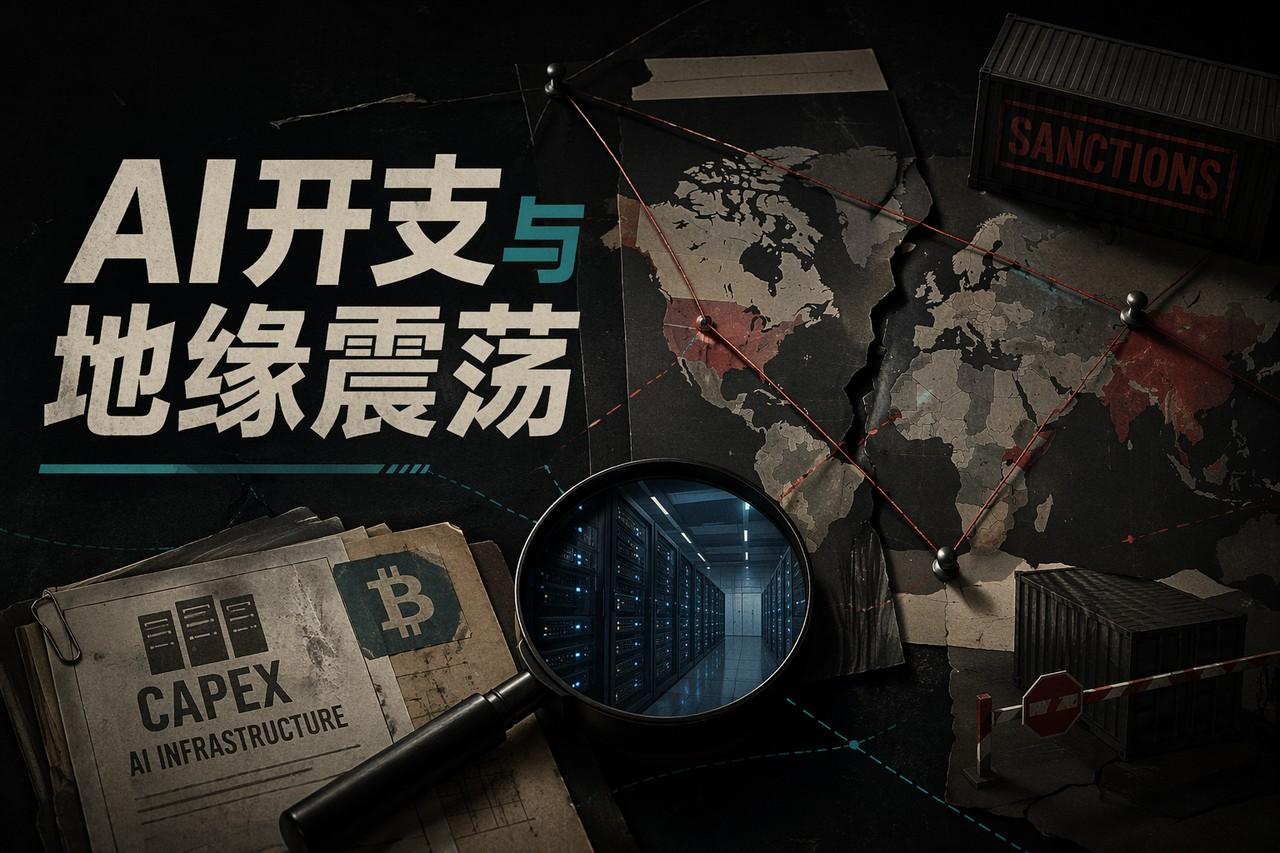
The market directly interprets Samsung Electronics and SK Hynix's large-scale capital expenditures in South Korea as further reinforcement of AI computing infrastructure: demand for high-end storage and logic chips continues to grow for AI computing and large model training, and global investors generally see such large semiconductor capital expenditures as a signal of confidence in AI and tech demand, thereby reinforcing the macro narrative of a "long-term bull market in AI." Once this narrative is strengthened, the pricing focus shifts from short-term profits to betting on future growth curves for computing power, data, and models, expanding the valuation elasticity for tech stocks and other high-risk assets.
On the trading side, "AI trading" has already evolved into cross-asset allocation: over the past few years, whenever traditional markets' AI and semiconductor sectors strengthen, AI-themed related tokens and sectors also appear on-chain. Investors extend from tech stocks to higher beta AI conceptual assets, allocating part of their funds into crypto tokens linked to the AI narrative. In the crypto market, this kind of thematic narrative usually waits for BTC and ETH's volatility to converge and trends to temporarily slow down before being amplified by funds, forming a typical model of "mainstream coins consolidating—narrative heating up—altcoins rotating." At the current stage, this round of expectations regarding South Korean semiconductor investments is viewed as a continuation signal of AI infrastructure expansion. If the plans announced on Monday exceed expectations significantly, it may simultaneously enhance the macro AI story and trigger a new round of games on-chain concerning AI themes, making AI conceptual tokens one of the preferred sectors for funds seeking higher yield elasticity after BTC and ETH stabilize.
Crypto Volatility Dominated by Asian Markets: How Korean Sentiment Amplifies Leverage
Multiple public statistics show that the Asian time zone occupies a significant share of global crypto spot and derivatives transactions, with South Korean investors consistently having high participation rates in both local exchanges and major global platforms, particularly for high-beta assets and high leverage, short-term trades. The "kimchi premium" is a typical manifestation of local capital pricing power's periodic elevation. During periods of rising risk sentiment, the funding rates for BTC and ETH perpetual contracts often show significant changes first in the Asian market before gradually transmitting to European and American periods; at the same time, the volatility of South Korean semiconductor and tech stocks has repeatedly synchronized with the increased activity of South Korean investors in the crypto market, forming a feedback loop that reinforces stock market sentiment and on-chain leverage positions.
Given the current backdrop of large-scale semiconductor investment forecasts, if the Korean won and KOSPI semiconductor sector exhibit a price structure indicating an increase in risk preference due to warmed expectations, local funds are likely to amplify the use of this emotional window by increasing positions in BTC, ETH, and AI narrative-related tokens. This may include concentrating long positions in perpetual contracts during the Asian market, raising leverage multiples, and shortening holding periods, causing overall open interest and funding rates to rise initially in the Asian session. Since the large-scale investment announcement window coincides partially with the Asian trading session, if the specific plans unveiled on Monday significantly exceed or fall below current expectations, it may trigger consistent directional trading and concentrated leverage in the Asian market, amplifying short-term volatility for BTC, ETH, and related sectors, and altering the original price discovery rhythm dominated by European and American markets. Therefore, observing the funding rates, changes in BTC and ETH perpetual contract holdings, and the degree of resonance with the yen and KOSPI semiconductor sector will be key indicators for determining whether Korean sentiment is amplified to the crypto market through leveraged channels.
Expectation Fulfillment or Disappointment: What Crypto Traders Should Watch For
Currently, we only have the verbal forecast that "a large-scale, significant investment will be announced on Monday," and the South Korean government and enterprises have not provided amounts, timetables, or project compositions, meaning the market is currently trading on a “subjective version” of South Korean and global semiconductor prosperity, AI investment intensity, and overall risk preferences, rather than concrete facts. Once the scale, structure, and timeline of capital expenditures announced on Monday deviate from this expectation, it is likely to trigger typical fluctuations "first trading expectations, then trading results" or even "buy the expectation, sell the facts," with this round of volatility primarily reflected in the amplification of prices and transactions in the Korean won and KOSPI semiconductor sector. For crypto traders, this event has not directly changed the regulatory framework or supply-demand structure of the crypto industry; instead, what is re-priced is the confidence in the Asian tech chain and AI cycle. Therefore, attention should be focused on sentiment and cross-asset capital flows: first, track the shifts, volume, and high-frequency volatility of the Korean won and KOSPI semiconductor sector around Monday; second, observe BTC, ETH, and tokens related to the AI narrative for synchronous changes with South Korean stocks, especially the semiconductor sector before and after the news, to determine if they will again be regarded as part of the same trading basket of "high-beta tech assets"; third, consider the strength of these cross-asset linkages to evaluate whether changes in South Korean-led risk preferences are amplified in the Asian time zone and spread to the global market, thus deciding whether to participate in this round of "expectation and result" volatility trading or avoid being passively caught in short-term emotional fluctuations.
Join our community to discuss and become stronger together!
AiCoin Exclusive Hyperliquid Benefits: https://app.hyperliquid.xyz/join/AICOIN88
AiCoin Exclusive Aster Benefits: https://www.asterdex.com/zh-CN/referral/9C50e2
On-Chain Telegram Community: https://t.me/AiCoinWhaleData
On-Chain Community: https://www.aicoin.com/link/chat?cid=N6OVMor5g
AiCoin On-Chain Twitter: https://x.com/aicoinwhaledata
免责声明:本文章仅代表作者个人观点,不代表本平台的立场和观点。本文章仅供信息分享,不构成对任何人的任何投资建议。用户与作者之间的任何争议,与本平台无关。如网页中刊载的文章或图片涉及侵权,请提供相关的权利证明和身份证明发送邮件到support@aicoin.com,本平台相关工作人员将会进行核查。