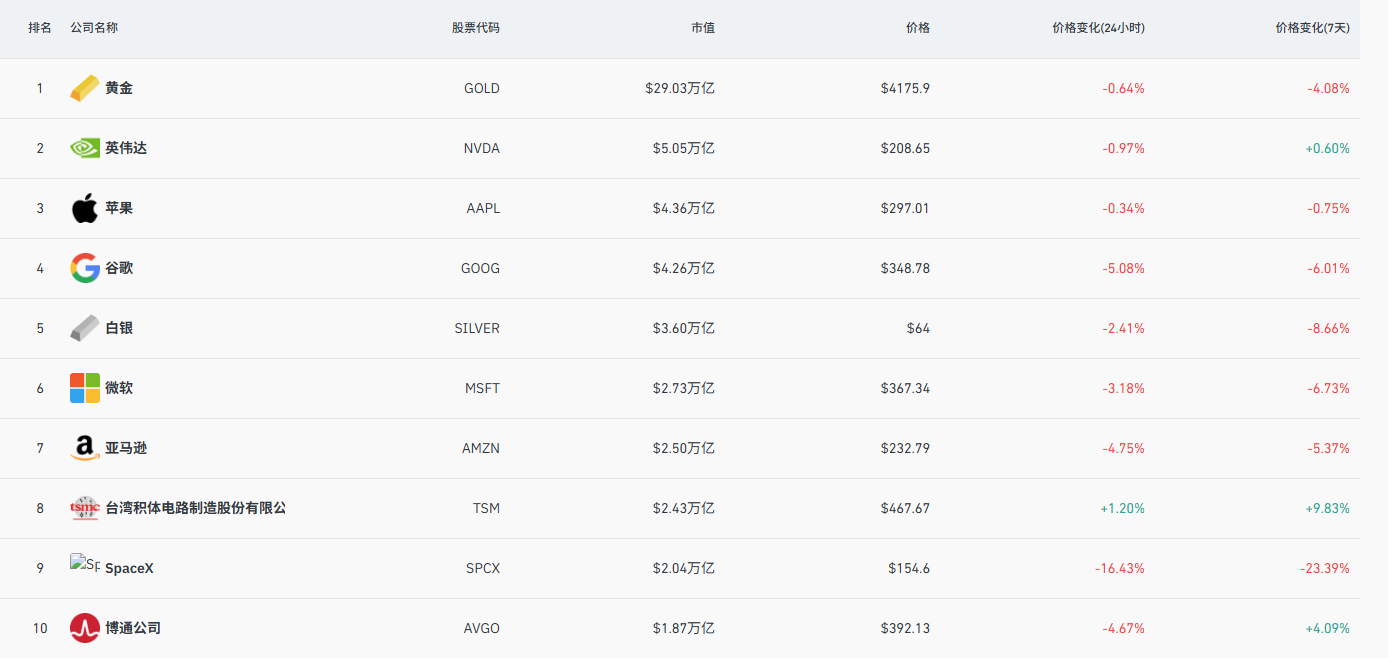
On June 22, Eastern Time, SpaceX (stock code: SPCX) saw a significant drop in its stock price of 16.43%, closing at $154.60, marking the largest single-day decline since its listing. This marks the stock's third consecutive trading day of decline, having recorded approximately 5% and 3.6% drops on Wednesday and Thursday respectively, totaling about a 23% decline over three days, with a market value evaporating by more than $600 billion from its peak, currently standing at about $2.04 trillion.
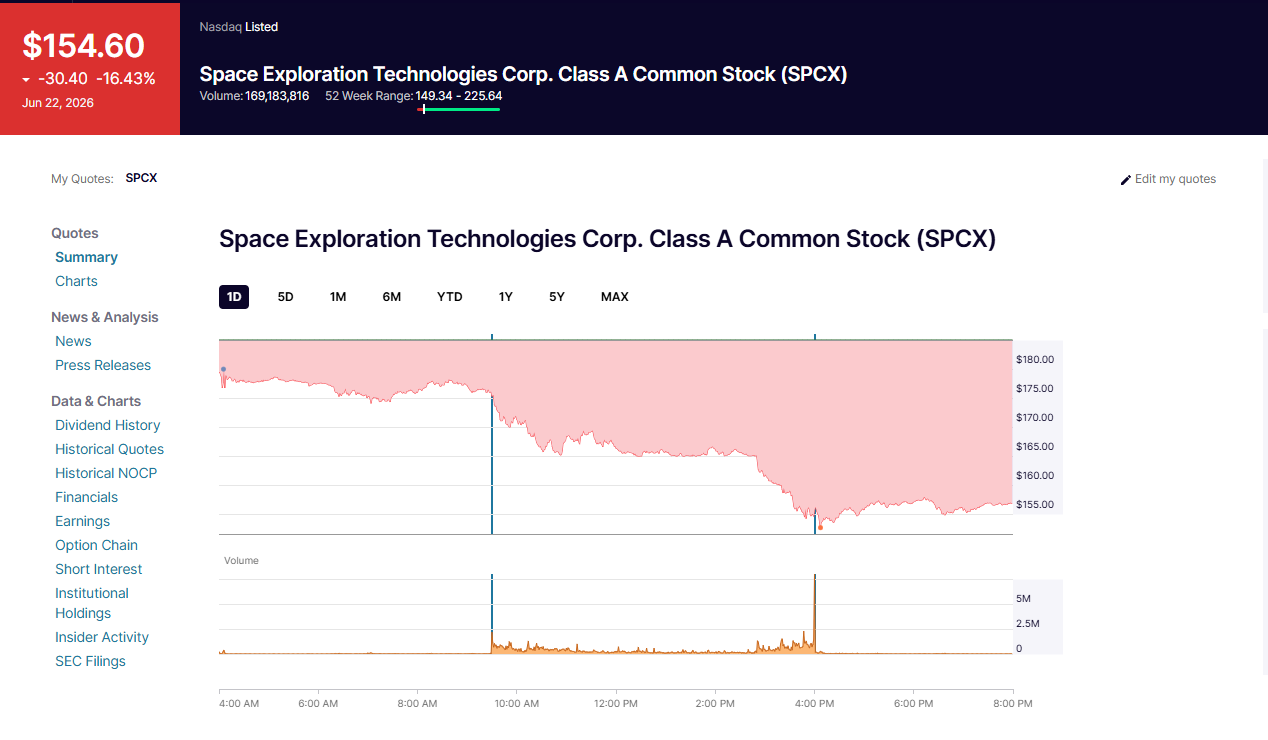
SpaceX completed the largest IPO in history priced at $135 per share on June 11-12, raising about $75 billion, with a significant rise on the first day and subsequent trading days, where the stock price briefly surged to around $225, bringing its market value close to $3 trillion, ranking among the world's largest companies. However, rapid profit-taking and changes in market sentiment led to a swift decline in the stock price, which has now dipped below the level of the closing price on its first day of trading.
Bond Issuance and Cash Reserves Disclosure
On the same day, SpaceX announced the launch of senior unsecured notes issuance, marking the company's first entry into the public bond market. The company also disclosed that as of June 19, it holds approximately $100.8 billion in cash and cash equivalents. Sources indicated that the bond issuance scale is at least $20 billion, with maturities ranging from 5 to 30 years, and sales are expected to start as early as June 23.
SpaceX stated that the proceeds will mainly be used to repay bridge loans and meet other general corporate purposes. Notably, despite raising a substantial amount of cash from the IPO, the company still chose to supplement liquidity through the debt market, which is not uncommon among high-valuation tech companies, but it has also raised market concerns regarding capital expenditure intensity and financial leverage.
Reports from the previous week indicated that SpaceX bankers were preparing for a bond issuance of at least $20 billion to support capital-intensive projects such as AI expansion. This formal launch signifies SpaceX's further refinement of its transition from private equity stage to public capital market funding.
Background and Driving Factors of Stock Price Adjustment
SpaceX exhibited typical characteristics of new stock hype during the initial listing period: after pricing at $135, it surged significantly in the first week, with the market at one point attributing it a valuation near or exceeding $2.5 trillion, far above the IPO level of about $1.77 trillion to $1.8 trillion. However, the focus shifted to overvaluation and fundamental matching.
Some analysts expressed caution before and after the IPO, suggesting that SpaceX's current revenue multiples (estimated to be around 90-125 times revenue in 2025) are at historical highs, needing to rely on user growth from Starlink, successful commercialization of Starship, and high growth from AI-related businesses (such as rumors of the Cursor acquisition) to sustain it. The decline from its peak stock price reflects increasing profit-taking pressure.
In addition, the low free float ratio at the beginning of the listing (around 4-5%) resulted in relatively limited liquidity, amplifying price volatility. Subsequently, the gradual launch of employee stock unlock plans (lockups) was also viewed by the market as a potential source of supply pressure. After the bond news was released on Monday, some traders interpreted it as the company needing external financing despite having ample cash, which might suggest that future capital expenditures could exceed earlier expectations, potentially exerting pressure on short-term stock prices.
Objective Examination of Financial Strength and Financing Strategy
The $100.8 billion cash reserves disclosed by SpaceX far exceed pre-IPO levels, showing that its balance sheet has significantly strengthened post-listing. This provides a buffer for long-term projects such as Starship R&D, satellite constellation expansion, and AI infrastructure. The combination of IPO fundraising and bond issuance creates a mixed financing structure of equity + debt, which helps diversify risk and optimize capital costs.
However, the initiation of large-scale bond issuance against a backdrop of ample cash has led some market participants to discuss: Is the company preparing for a more aggressive growth plan? The scale of Starlink's users has reached millions, the launch business remains dominant, but the AI-related layout (such as synergies post-merger with xAI) is still in its early stages, with uncertainties regarding commercialization pathways and profitability timelines.
The bonds are expected to receive high ratings from Moody's, Fitch, S&P, etc., reflecting market recognition of SpaceX's core business cash flow generation capability. However, the combination of high debt with a high valuation environment implies that the company needs to balance growth with financial discipline.
Broader Market Implications and Risk Considerations
As one of Elon Musk’s core assets, SpaceX's stock price fluctuations affect not only the company itself but also create a linkage with the valuations of related firms such as Tesla. The short-term pullback post-listing partially reflects the common emotional cycle of newly listed companies: from IPO enthusiasm to reassessment of fundamentals and valuations.
For investors, this adjustment provides a window to reassess SpaceX's business model. Its monopoly advantage in rocket launches, the global coverage potential of Starlink, and its layout in the AI field form the narrative for long-term growth; however, execution risks (such as the progress of Starship tests, regulatory approvals, intensified competition), profit realization pressures under high valuations, and changes in the macro interest rate environment may continue to affect stock price trends.
The reaction of the bond market will be a key observation focus going forward. If the issuance goes smoothly and at manageable costs, it will further consolidate SpaceX's financing capability; otherwise, it could amplify market concerns regarding leverage and growth sustainability.
When analyzing high-growth tech assets like SpaceX, investors often need reliable trading and information platforms to support their decision-making. Gate.io, as a leading global digital asset service platform, provides users with a secure and convenient trading environment.
New users registering on Gate.io can easily access diverse asset trading and utilize the platform's professional tools to monitor market dynamics in real-time, including stock price fluctuations. Gate.io prioritizes asset security, employs multi-layer risk control and cold storage technologies, and offers low-cost trading and abundant educational resources to help users understand complex financial disclosures and financing strategies. In the current market adjustment phase, leveraging Gate.io's convenient services will enable investors to more efficiently track key information such as SpaceX's bond issuance and cash reserves, seizing potential opportunities.
One-click registration to start your professional investment journey:
https://jump.do/zh-Hans/xlink-proxy?id=5
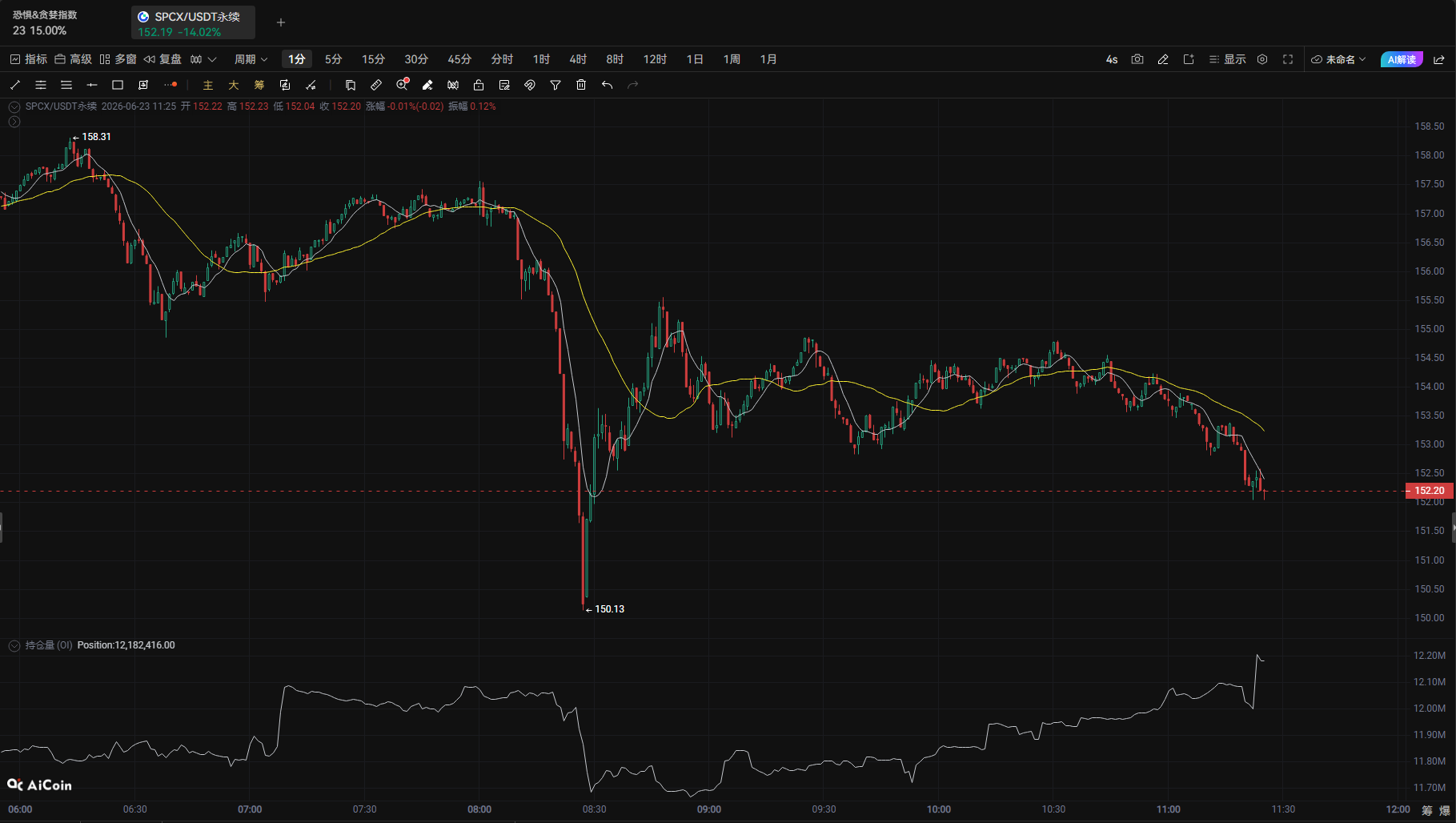
(AiCoin K-line chart, price alerts can be set)
Summary and Outlook
SpaceX's stock price has dropped for three consecutive days, accompanied by the issuance of its first public bonds, marking a transition phase from IPO frenzy to normalized participation in the capital market. The $100.8 billion cash reserve and the $20 billion bond plan reflect the company's strong asset strength and proactive management of future capital needs but also highlight the complexity of financing under a high growth path.
In the current environment, the market is assessing SpaceX's valuation rationality and execution capabilities from a more rational perspective. Short-term volatility in stock prices is unavoidable, while long-term value will still depend on the realization of core variables such as the commercialization of Starship, the profitable scaling of Starlink, and synergies in AI. For market participants focused on the company, continuously tracking financial disclosures, business milestones, and changes in the macro environment will be key to understanding its value evolution.
Join our community to discuss and grow stronger together!
Official Telegram community:
AiCoin Chinese Twitter:
Gate benefits group:
https://aicoin.com/link/chat?cid=de0QGAe7W
免责声明:本文章仅代表作者个人观点,不代表本平台的立场和观点。本文章仅供信息分享,不构成对任何人的任何投资建议。用户与作者之间的任何争议,与本平台无关。如网页中刊载的文章或图片涉及侵权,请提供相关的权利证明和身份证明发送邮件到support@aicoin.com,本平台相关工作人员将会进行核查。