Original|Odaily Planet Daily (@OdailyChina)
Author|Wenser(@wenser2010)
Historically, the insurance industry has held a "ballast" position in the economic system with its monopolistic stance, but with the emergence of prediction markets, this status might undergo a transformation.
At the beginning of June, the NBA Finals concluded, with the Knicks defeating the Spurs 4:1 to win the championship, bringing joy or sadness to countless participants in the betting. Among the happiest, perhaps Andy Freedman, the owner of The Jeffrey bar in New York’s Upper East Side, was one of them. Before the game, he initiated a marketing campaign stating, “If the Knicks win Game 1, all customer drinks that night will be free,” and simultaneously invested $5,000 on the prediction market platform Kalshi for risk hedging. Ultimately, with the Knicks claiming victory in the first game, The Jeffrey bar covered its drink expenses through the prediction bonus, customers enjoyed free drinks, and the story concluded in a "triple win."
This is just a snapshot of how prediction market platforms can function in risk hedging and property insurance. In the current situation where the World Cup has attracted over ten billion dollars in funding, the real-world insurance industry is also facing a "barbarian at the gate.”
Can prediction market platforms also "buy insurance"? Do you believe it?
Yes, you read that right. In a certain sense, prediction market platforms like Kalshi and Polymarket have begun to encroach on insurance companies' turf, not only in regular marketing but also involving sports insurance, weather disasters, and more.
When prediction markets steal sports insurance clients: Kalshi partners with Game Point Capital
In February this year, specialized sports insurance broker Game Point Capital announced its partnership with Kalshi, where the latter will provide performance bonus hedging for NBA teams (such as playoff advancement bonuses).
As a company that issues hundreds of millions of dollars in sports insurance annually, Game Point Capital's changes clearly are not meant to cater to the development of the prediction market industry, but rather made from comprehensive considerations in terms of business and costs.
From the market demand perspective, sports insurance has always existed. Reports indicate that since championship bonuses typically need to be paid by the teams themselves, professional sports teams usually purchase insurance in advance to cover these expenditures. Given the substantial amounts involved, teams generally used to choose traditional insurance companies for support — such as Lloyd’s, Munich, Swiss, and other American traditional insurers.
From the angle of insurance costs, prediction market platforms offer more competitive pricing. Reports indicate that the pricing offered by Kalshi is significantly lower than traditional over-the-counter markets (for instance, a certain bonus hedge at 6% vs traditional 12-13%). It is expected that this platform, through this cooperation, will handle tens of millions of dollars in hedging funds, which serves as a direct example of prediction markets entering traditional insurance and reinsurance fields. Kalshi CEO Tarek Mansour describes it as “a better way for risk hedging and insurance,” emphasizing that “the pricing will be more transparent.”
When prediction markets become "housing price hedging tools": Polymarket teams up with Parcl to launch a "new mode of house speculation"
In January this year, blockchain real estate platform Parcl announced its partnership with Polymarket, bringing Parcl’s daily housing price index into Polymarket’s new real estate prediction market, with the first markets focusing on major U.S. cities (New York, Los Angeles, Miami, Austin, etc.). Users can predict the rise and fall of housing price indices in specific cities on a monthly, quarterly, or annual basis and the threshold results.
Upon this announcement, the Parcl project token PRCL increased by over 100% on the same day. For Americans unable to purchase homes due to high prices, they can now participate in “housing speculation” trading without actually buying properties. Realtor senior economist Joel Berner believes that “besides speculating on housing prices, homeowners and potential buyers can also use these markets to protect their market interests.”
For sellers, if they worry about a drop in housing prices, they can buy into a “price drop” (Under) on Polymarket. If the prices do indeed decrease, the relevant gains can partially offset the actual losses in property, acting as an insurance effect; for buyers, those planning to purchase homes can predict a price increase (Over), and the corresponding earnings can be used to cover purchasing costs.
When NBA games are linked to free drinking: New York bar and Kalshi's cross-industry marketing
At the beginning of June, Kalshi officially announced that The Jeffrey bar in New York invested $5,000 to predict “the Knicks will win Game 1,” proudly stating — “If the New York Knicks win, then the bill for all customers will be covered by the bar.” It is worth noting that the term used in Kalshi’s official statement — “place a $5,000 hedge on Kalshi” (Odaily Planet Daily note: insuring $5,000) emphasizes the insurance value of the prediction market.
In this official press release, Kalshi also exhibited greater ambitions — to become a “small business insurance provider,” offering services such as sports event predictions, weather forecasts, and changes in import-export policies to hotels and inns affected by seasonal fluctuations due to sports events, clothing stores, restaurants, and other commercial locations reliant on imported goods, thus achieving insurance hedging.
Kalshi's business head Nicolas Hull believes, “Small businesses face various real risks every day — weather, political, sports, economic issues, etc. Traditional insurance methods are both expensive and inefficient, which cannot effectively address these operational risks. Kalshi changes this: we provide a liquid and transparent market platform, allowing any business to take corresponding responsive measures against risks that affect their operational results, marking a fundamental shift in how small businesses handle risks.”

Various cases demonstrate that the insurance value of prediction markets can be broadly applied across multiple fields, not just limited to sports events or brand marketing. Moreover, successful cases for traditional sports betting have already emerged.
Old wine in new bottles, but the new bottles are more usable: The insurance value of prediction markets lies in transparency and liquidity
In 2018, home appliance brand Vatti launched a heavily promoted marketing event with the gimmick of “full refunds if the French team wins the World Cup.” Although it ultimately ended in a comedic fiasco of “tight timelines, complicated processes, and coupons offsetting cash,” it still left a profound impact on many regarding “free marketing.”
Coincidentally, similar things have been done before.
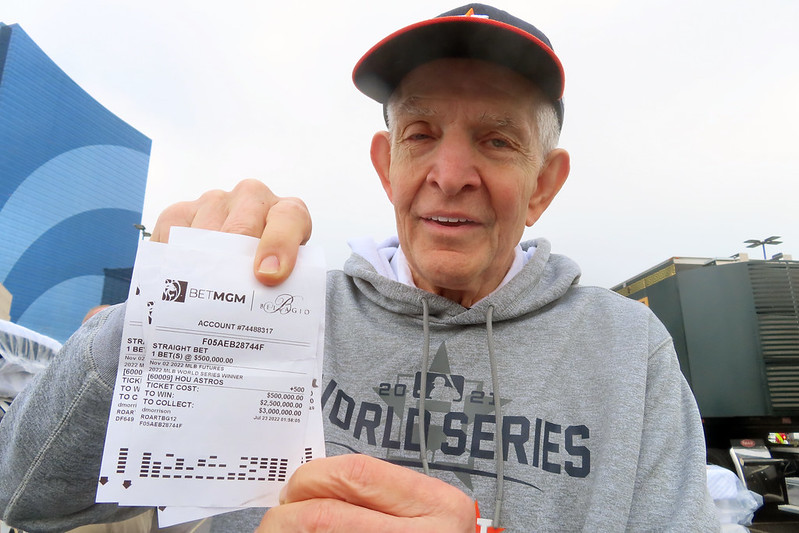
In 2017, Houston home industry tycoon Jim McIngvale (aka “Mattress Mack,” nicknamed “Mattress Mike”) staged a “refund marketing” event with a whopping $12 million gimmick surrounding the “Houston Astros winning the championship.”
Five years later, in 2022, “Mattress Mike” performed a similar act again. Between May and July that year, he invested $10 million across six different bookmakers in Louisiana, Iowa, and Las Vegas to predict the “Astros winning the championship,” stating that “he would refund ‘every penny’ of the winnings to the 3,000 customers who previously participated in the promotional events at his furniture chain.”(Odaily Planet Daily note: This activity was aimed at customers purchasing over $3,000 in furniture, who could receive full refunds or even double refunds based on different participation times.)
In the end, the now 71-year-old “Mattress Mack” once again emerged victorious, winning $72.6 million, setting a record for the largest payout in sports betting history at that time.
However, compared to sports betting, the “insurance” function in prediction markets has undergone significant updates.
First, there's information monetization transformation. This brings two major benefits: (1) A broader market scope, compared to previous one-dimensional and narrow betting options, the “selection range” in prediction markets is much wider; (2) More flexible exit strategies, as opposed to betting activities which may only offer refunds, prediction market events reflect the potential impact of news changes more directly, enabling participants to make instant decisions;
Second, it's the neutral role of the platform. Unlike the “platform,” “bankers,” or “whales” in sports betting events, prediction market platforms exist as neutral platforms, providing transaction channels without directly being the counterpart in trades with users;
Third, it's the transparency of trading information. The odds in sports betting are usually determined by the underlying companies based on their own algorithms and internal information, with many companies even adopting “copy trading” models, directly using odds fluctuations from other major platforms. The changes in odds and order trading information are extremely vague, and the criteria for event determination often involve disputes or insider trading (similar to cleaning up trailing orders);
Fourth, it's the participant admission system. In the U.S., the vast majority of sports betting operators have adopted a “ban or bankrupt” operational mode, which is a business model of “restricting high-win-rate clients from trading, inducing losers and average players to trade.” In 2024, legendary gambler Billy Walters, “Spanky” Kyrollos, and former casino executive Richard Schuetz co-founded a nonprofit advocacy organization named American Bettors Voice (ABV), advocating against the “ban or bankrupt” model, calling for reasonable regulation of betting limits ensuring market fairness.
Compared to traditional sports betting, the insurance value of prediction markets is undoubtedly more attractive and secure. Notable market-making institution SIG CEO Jeff Yass previously mentioned in a Forbes interview: “Prediction markets allow stakeholders to share risks more efficiently based on specific parameters. For instance, when Florida homeowners face hurricane risks, they can choose to purchase contracts that are 'guaranteed to be effective,' based on the latest meteorological data. When wind speeds exceed a specified threshold, homeowners receive insurance protection. This method is more effective in addressing potential property loss risks compared to purchasing annual insurance.
Of course, as of now, the insurance value of prediction markets has yet to be perfected and widely promoted, facing the following challenges:
- Insufficient liquidity. A broad selection range does not imply sufficient market trading depth;
- Ambiguous regulatory boundaries. Whether platforms like Kalshi and Polymarket can continue to assume insurance functions remains to be recognized by regulators;
- The risk of decentralized democracy. Previous incidents, like using hair dryers to influence observation machines for profit in Polymarket weather prediction events, serve as examples. Sometimes, the criteria for event determination may be unpredicted by external forces and various loopholes may exist in the platform's determination rules.
But regardless, the first step has been taken, whether the insurance industry acknowledges it or not, the threat posed by prediction market platforms extends beyond just sports betting platforms, but also affects many traditional insurance businesses.
Recommended Reading
Not speculation but a necessity, the four unique values of prediction markets
The Prediction Markets Are Coming For Risk Markets and Insurance
免责声明:本文章仅代表作者个人观点,不代表本平台的立场和观点。本文章仅供信息分享,不构成对任何人的任何投资建议。用户与作者之间的任何争议,与本平台无关。如网页中刊载的文章或图片涉及侵权,请提供相关的权利证明和身份证明发送邮件到support@aicoin.com,本平台相关工作人员将会进行核查。


