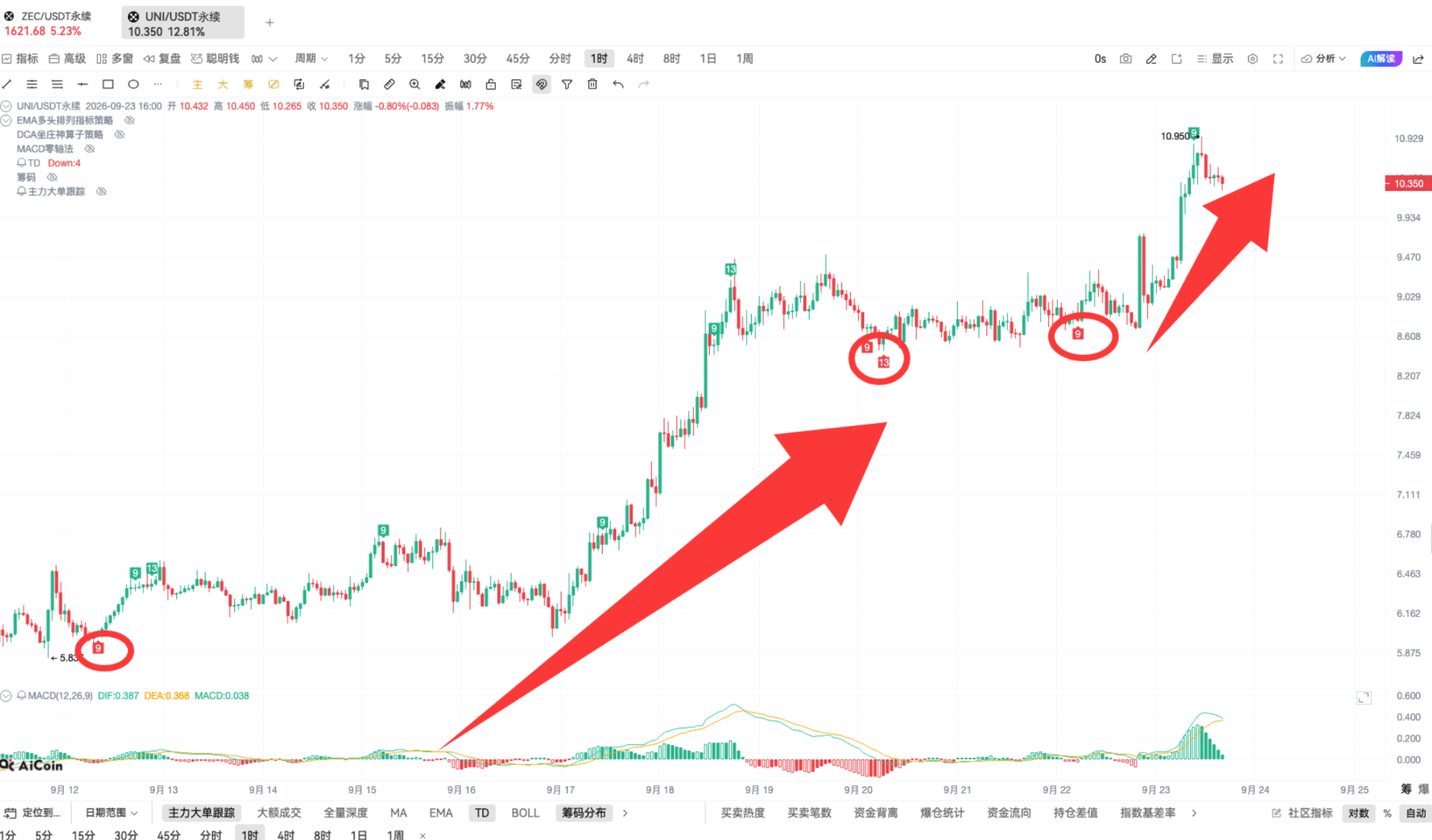
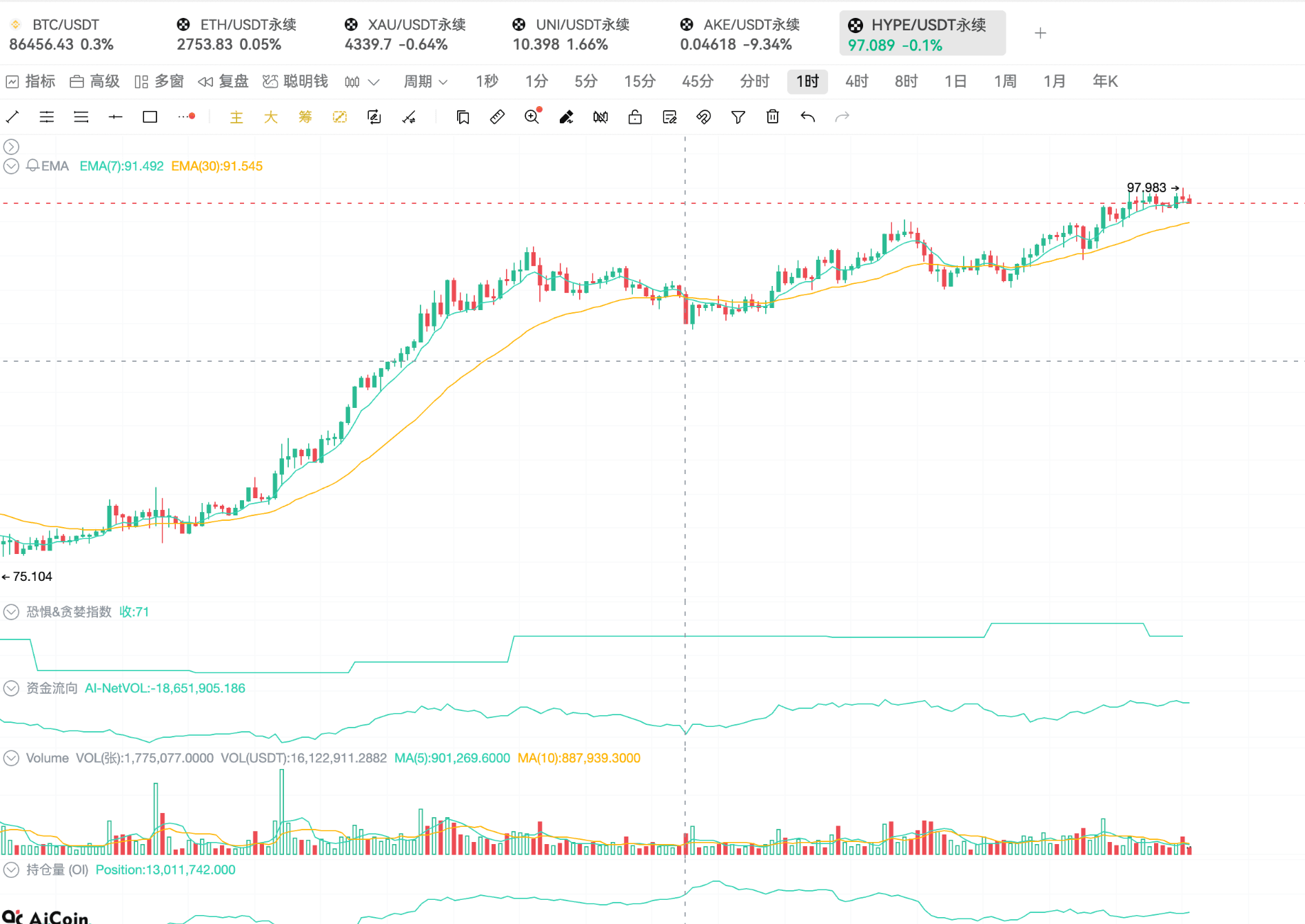
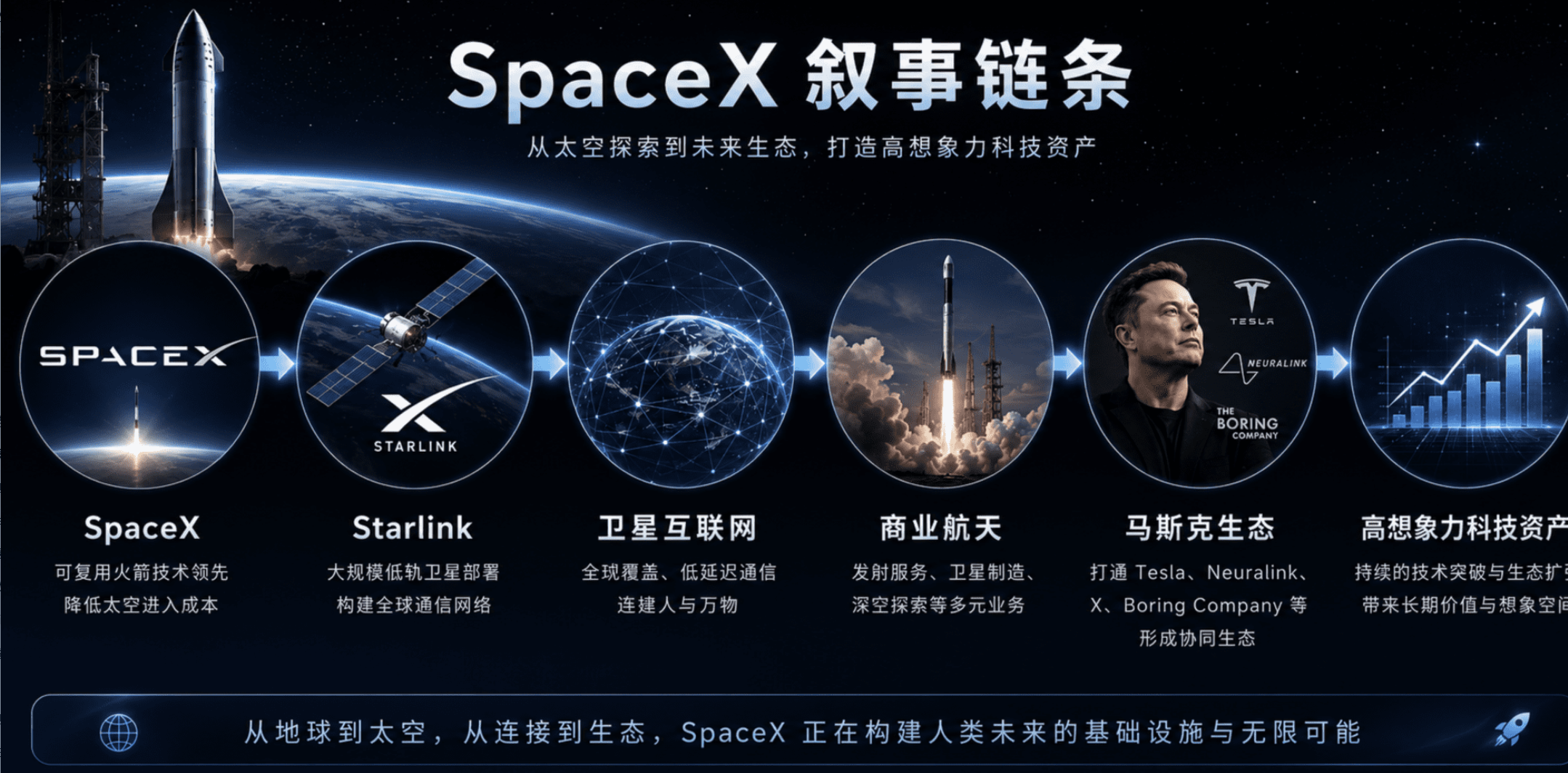
Recently, more and more friends around me are talking about U.S. stocks, and the concept of "U.S. stocks on the blockchain" has become quite familiar to everyone. Many people also tie it to the imaginative space of AI infrastructure. Speaking of the technology sector in U.S. stocks, there are two absolute mainlines that cannot be ignored: one is the future technology narrative ignited by SpaceX, and the other is the AI infrastructure dominated by Nvidia. Nvidia is no longer just a hot stock; it resembles the core gateway of the entire AI era, pulling along a complete, extensive industrial chain involving chips, storage, data centers, cloud services, and AI computing power. Today, we won't discuss topics like "Should we invest in U.S. stocks now?" Instead, let’s talk about something more practical: when tech assets are pushed back into the spotlight by the market, how should ordinary users understand these two mainlines?
Of course, we must first lay some groundwork: such assets have always lacked imagination, but the volatility has never been small. So we won't say "SpaceX will definitely go this way" but will say it deserves a spot on your long-term observation list. Other companies worth watching in the same direction include Tesla, Rocket Lab, and AST SpaceMobile, covering satellite communication, commercial aerospace, and Musk's ecosystem. The emphasis is not on rushing to trade immediately, but on observing whether the market is willing to pay for the "future technology story" again.
Now let’s look at the second line. Nvidia’s growth has never been isolated; it relies on network communication for support, cloud platforms for hosting, and power and cooling for matching, backed by a continuous investment in a complete set of infrastructure. Therefore, when the market speculates on AI trends, it will never only increase Nvidia's stock alone. The upstream will pass on to AMD, Broadcom, Marvell, Micron, Western Digital, and Seagate, while the downstream will extend to cloud platforms and tech giants like Microsoft, Amazon, Google, and Meta.
To summarize the differences between the two tracks for better understanding: SpaceX represents "long-term imagination," betting on the future ceiling of commercial aerospace and space economy; Nvidia represents "current certainty," profiting from the infrastructure construction in the process of AI industries landing. One leans towards long-term narrative while the other focuses on industrial necessities. This distinction applies to many tech stocks.
In the future, when looking at U.S. tech assets, there's no need to frantically chase every piece of news asking "Has it gone up yet?" You can first place your targets within a framework: is it telling a story about the future, or discussing solid infrastructure needs? Many hot topics can be clarified with this logic.
For instance, targets like Coinbase, Circle, and Robinhood are actually more deeply tied to the emotions of the crypto market, belonging to a different logical line. All things considered, there are four categories: imaginative tracks, infrastructure tracks, platform-type companies, and crypto sentiment-related targets. This classification method is much more useful than blindly chasing trends. SpaceX drives the valuation of high-imagination tech assets, Nvidia influences the prosperity of the entire AI infrastructure, and targets like Coinbase reflect the risk preference of the crypto market, each having its own logic and rhythm.
There’s one thing I must clarify: only after you completely understand the rules and risks should you decide whether to participate in trading. Discussing this today is not to encourage everyone to rush in for purchases, but to hope that when viewing the market, you don't just focus on a single candlestick and don't blindly follow what others think is hot. First, understand the underlying logic, then find an appropriate entry for yourself, and finally assess if you can bear the corresponding risks. If you just want to observe and learn first, you can add these targets to your watchlist and slowly observe.
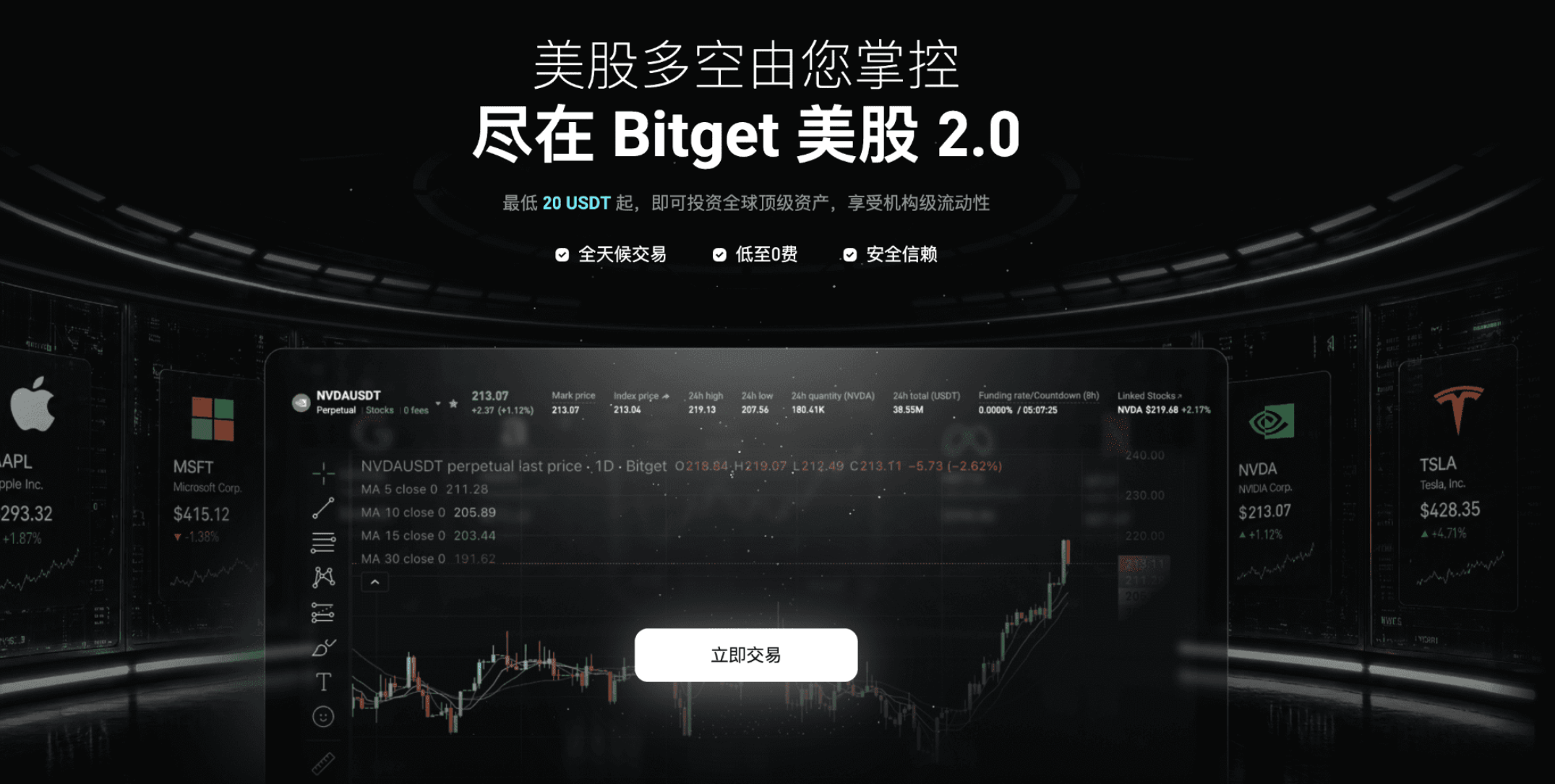
If you are more accustomed to the operational logic of crypto platforms and want to engage with U.S. stocks in a more familiar way, you can also check out Bitget's U.S. stock spot section. Official page: shturl.cc/gw9fFATXOHOfb9CmgQugp9kS84mlh4OxBukklIZj8AxqTcVSmAw
As always: convenience in entry does not mean reduced risks. U.S. stock spots equally experience fluctuations, and the volatility of hot tech stocks will only be greater; investments must be cautious.
Finally, I want to give everyone a heads up about a new activity launching tomorrow. For those who want to understand the Bitget U.S. stock entry, you can conveniently claim the new user benefits. From June 18 to June 25, Bitget will launch a Dragon Boat Festival + Father's Day new user authentication event with very low entry thresholds; no deposit or trading is needed. New users can participate by completing three steps:
- Register a new Bitget account via the exclusive link: https://jump.do/zh-Hans/xlink-proxy?id=6
- Complete KYC real-name certification
- Send your Bitget UID to customer service for registration
All eligible users can participate in the peripheral lottery, with prizes including 1 Labubu gift box and 1 badminton set.
Additionally, friends who register through the exclusive link can also receive a 10-day AiCoin Pro membership and a 10% trading fee rebate qualification, all in one step. If you wanted to understand the Bitget U.S. stock entry and have not registered yet, today you can complete your registration and KYC without spending money on trading; just secure your participation in the event. Registration link: https://jump.do/zh-Hans/xlink-proxy?id=6
After completing your registration and KYC, be sure to remember to send your UID to customer service for registration; participation without registration will not be counted as valid.
To conclude: SpaceX represents high-imagination tech assets, with its core not just about rockets, but also the pricing logic of commercial aerospace, satellite internet, Musk's ecosystem, and the entire future technology; Nvidia represents the mainline of AI infrastructure, with its backing not just about GPUs, but also the investment cycle of chips, storage, data centers, cloud platforms, and the entire AI industry. Ordinary users do not necessarily have to trade U.S. stocks immediately, but they can first establish their own observation lists and understand the logical correspondence of each target, which is far more useful than simply following trends. If you want to observe U.S. tech assets in a more familiar way, you can try Bitget's U.S. stock spot entry. New users who complete KYC registration can also receive 10 days of AiCoin Pro and a 10% rebate, and participate in peripheral lotteries.
A small reminder: all the content today is just an information compilation and does not constitute any investment advice. Both U.S. stock spots and digital assets carry volatility risks, so please make rational decisions.
Remember to tune into the AiCoin live room, where there are exciting content shares every day 👉 https://www.aicoin.com/zh-Hans/live/list?tab=upcoming
This article only represents the author's personal views and does not represent the stance and views of this platform. This article is for information sharing only and does not constitute any investment advice to anyone.
免责声明:本文章仅代表作者个人观点,不代表本平台的立场和观点。本文章仅供信息分享,不构成对任何人的任何投资建议。用户与作者之间的任何争议,与本平台无关。如网页中刊载的文章或图片涉及侵权,请提供相关的权利证明和身份证明发送邮件到support@aicoin.com,本平台相关工作人员将会进行核查。