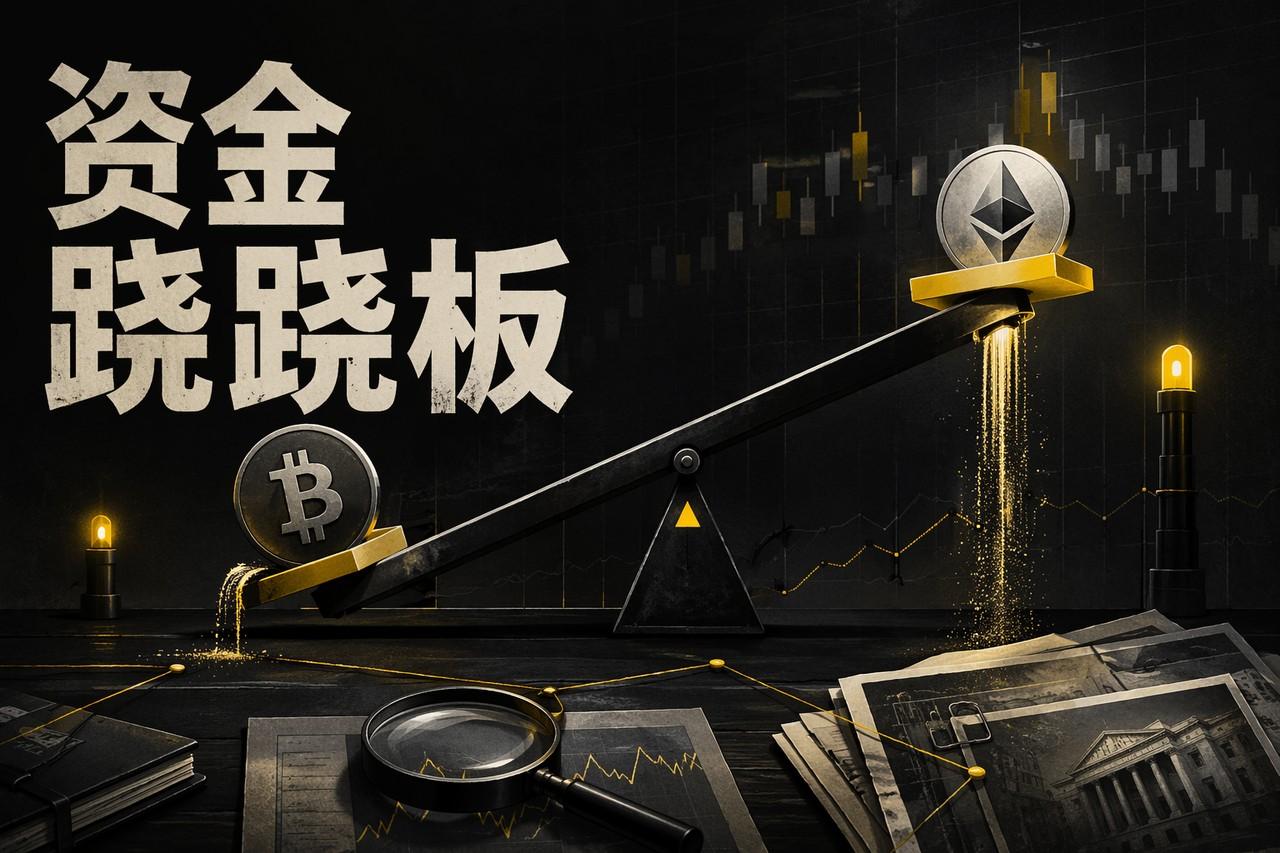
On June 16, 2026, the Bank of Japan raised the short-term policy interest rate from 0.75% to 1.00%, a 25 basis point increase, marking a new high not seen in 31 years since 1995. The board approved this "normalization acceleration" by a vote of 7 to 1. However, almost in the same statement, the central bank handed a "floor check" to the bond market — announcing a suspension of the reduction in government bond purchases starting from July 2027 and reiterating that if long-term interest rates rise "too quickly," they would flexibly increase government bond purchases, even directly implementing fixed-rate purchasing operations if necessary. Nominally, this is a response to inflation risks: the central bank judges that the year-on-year CPI may be significantly above 2%, and there is a danger of core inflation exceeding the target, with oil prices being pushed up by conflicts in the Middle East and the declining yen raising import costs, forcing the policy rate back into positive territory; yet in terms of wording, the Bank of Japan emphasized that "the relaxed financial environment after the interest rate hike is expected to continue," and will "strongly support economic activity." Thus, what appears to be a tightening move of increasing interest rates is diluted by the commitment to "protect bond purchases" and maintain looseness, leaving a new uncertainty regarding Japan's cost of funds, the yield curve, and global liquidity: how will the yen's role as a global financing currency change? Will Japan's massive overseas assets reassess risk and return? This contradictory policy combination is likely to become a new macro variable affecting global risk preferences, leverage structures, and even the flow of funds into BTC and ETH in the next few years.
Interest rate hike to 1%: The narrowing yen interest rate differential and incentives for fund repatriation
Raising the short-term policy rate from 0.75% to 1.00% seems to be just 25 basis points, but under Japan's highest interest rates in about 31 years and the continued "normalization" framework since the first interest rate hike in December 2025, it changes a long-term pattern: the yen is no longer the taken-for-granted "zero interest financing currency." As Japan ends extreme easing and raises domestic interest rates, the interest rate differential relative to major economies like the United States begins to narrow marginally, re-evaluating the previous "zero-cost borrowing of yen to buy global high-yield assets" strategy, and the yield and exchange rate combination that underpinned Japan's massive overseas assets is no longer as stable as in the past several decades.
Narrowing interest rate differentials usually imply two things: first, the passive selling pressure on the yen decreases, leading to a rise in appreciation expectations; second, the relative attractiveness of domestic assets increases, giving Japanese institutions and residents more reason to pull back some funds from overseas bonds and stocks to secure domestic returns and currency safety. This potential repatriation would create an outflow effect on US stocks, overseas bonds, and highly correlated high-risk exposures with US stocks, meaning that the "cross-asset portfolio" holding US tech stocks plus BTC/ETH may likely reduce crypto positions during rebalancing. From a global perspective, a stronger yen and rising Japanese interest rates have the opportunity to suppress the dollar index, providing some valuation support for Bitcoin given the historically negative correlation between BTC and the dollar index; on the other hand, the marginal decline in Japan's risk appetite as a major capital exporter will weaken the inflow of new funds into global high-beta assets, presenting BTC and ETH more as a "liquidity story" gradually shifting into a slow headwind, with the key determinant of the direction being who breaks the critical ranges in the market first — Japanese-US interest rate differentials or the yen exchange rate.
Pause in bond purchase reductions: Japan still supports liquidity under the interest rate hike
On the surface, Japan is raising short-term rates to a new high since 1995, but the decision to pause the reduction in government bond purchases from July 2027 effectively hits the "brakes" on the long end: maintaining a massive balance sheet, and a continued strong demand for long-term government bonds, while deliberately suppressing term rates within a relatively mild range. Coupled with the statement that "if long-term rates rise rapidly, we will increase government bond purchases or implement fixed-rate bond purchase operations," the Bank of Japan has publicly committed to continuing as the "final buyer" of long-term rates, absorbing the risks of abrupt upward swings in the Japanese yield curve into its own balance sheet, while also swallowing part of the tail risks from the global surge in interest rates.
From a global pricing perspective, Japan, as a significant capital exporter, supporting long-term bonds means that global risk-free rates and term premiums have been compressed: with domestic long bond yields locked, Japanese institutions will not experience a "reverse of soaring interest rates" in demand for overseas bonds and equity assets, thus alleviating some upward shocks on the global yield curve and indirectly holding down the discount rates for high-duration assets. For US stocks, especially tech stocks, and for BTC and ETH that are considered high volatility and high duration exposures, this "interest rate hike + long-end support" combination reduces the extreme scenario where abrupt interest rate spikes force collective deleveraging, mostly keeping the market within a path of gradually rising discount rates and slowly squeezing valuations; whether this path can be maintained will depend largely on whether Japanese long-term rates remain firmly anchored within the comfort zone set by the central bank in the coming years.
Yen carry trade loosening: Cross-asset deleveraging may affect the crypto space
For hedge funds and global institutions that have long treated the yen as a "zero-cost financing currency," raising short-term rates from 0.75% to 1.00% is not just a simple 25 basis points but rewrites the pricing of the entire trading chain. The extremely low rates and relatively stable exchange rates previously made the yen a typical source of carry trade funds: borrowing yen, converting to dollars or other currencies, to buy US Treasuries, credit bonds, emerging market assets, and even casually including a basket of tech stocks and high-beta assets like BTC and ETH. Now that short-term yen rates have increased, financing costs rise, the Japan-US interest rate differential narrows, and the future volatility range for exchange rates is opened, it means that for the same cross-currency leveraged position, the paper profits are compressed while the potential exchange losses and volatility risks are magnified, and the rational approach is to first cut leverage before discussing profits.
If the fluctuations in the dollar-yen exchange rate and Japanese bond yields synchronize and amplify, risk management models and margin rules will automatically institutionalize the deleveraging process: VaR rises, risk budgets get squeezed, while high-frequency risk control signals will require cutting the most liquid and flexible exposures rather than first moving the difficult-to-close large positions. Historical experiences provide samples — during the period of rapid tightening of global monetary policy around 2022, tech stocks and high-volatility assets like BTC/ETH often get "sentenced" even before the fundamentals, experiencing sharp retractions accompanied by concentrated on-chain leverage liquidations. This time, the policy shift from extreme easing to normalization in Japan, while long-term yields still have central bank support, the increase in short-term rates triggering loosening in carry trades could likely reproduce similar cross-asset deleveraging paths, with BTC and ETH being the first to see positions reduced and feeling the shift in yen liquidity sentiment most acutely at high-risk endpoints.
BTC and ETH: The tug-of-war between inflation hedging narratives and risk asset attributes
While the Bank of Japan raises short-term rates to 1.00%, it acknowledges in its statement that the year-on-year CPI growth may be significantly above 2%, with rising risks of core inflation exceeding the target, which is driven by the Middle Eastern conflicts pushing up international oil prices and the weakening yen raising import costs. For funds that tell stories, this is almost a tailor-made macro script for Bitcoin — inflation shadows driven by input costs, the central bank forced to balance prices and growth, the narratives of "digital gold" and "long-term inflation hedge" gain ammunition once again. Coupled with recent experiences of the negative correlation between BTC prices and the dollar index, if changes in the Japan-US interest rate differential ultimately suppress the dollar's strength or even trigger a dollar retreat, funds have every reason to package "weak dollar + high inflation expectations" as a new rationale for increasing their BTC positions.
However, at the true pricing level, BTC/ETH are still primarily treated as high-beta risk assets: as Japan's rate hikes combined with interest rate differential adjustments trigger a global repricing of risk premiums and passive deleveraging of leveraged funds, on-chain and off-chain accounts will not first consider "hedging inflation," but rather "cutting the most volatile positions first." Historical experience shows that during periods of tightening monetary policy and amplified fluctuations in interest and exchange rates, high-volatility assets often see extreme retractance before stocks, and BTC/ETH are no exception. Moving forward, their trends are likely to oscillate between the two opposing forces of "inflation hedging and potential benefits of a weak dollar" and "tightening liquidity and deleveraging pressures," with the market's eventual stance depending greatly on whether the dollar index peaks and retreats, whether global stock markets continue risk preference or undergo a second wave of valuation cuts, and whether the on-chain leverage structure continues to expand or is forced into rapid contraction.
Funds game in the Asian time zone: How yen-based players reshape positions
As the short-term policy rate reaches 1.00%, for Japanese domestic investors, the question shifts from "Should we take risks?" to "Why should we still take so many risks?" During the long period of zero interest rates, holding yen cash and government bonds offered almost no returns, passively pushing funds into overseas bonds, stocks, and high-volatility assets like BTC and ETH; now that risk-free rates are rising, even if the Bank of Japan is simultaneously increasing rates while committing to maintain a loose financial environment, the comparative benchmark for yen-based funds has been raised — many accounts will reassess: If domestic deposits and government bonds can offer certain returns, then the risk compensation required for highly volatile BTC/ETH must be higher; hence, low certainty, long-duration token positions will be the first to be reduced.
This rebalancing will leave traces at the trading level. Retail and institutional investors in Japan's compliant exchanges, as well as yen funds entering offshore platforms through foreign exchange hedging, may both shorten holding periods while preferring "visible profits," opting for short-term swings and inter-temporal arbitrage, while also lowering leverage multiples, showing less interest in DeFi products whose nominal yields do not significantly exceed 1%, only willing to pay financing costs for strategies that significantly surpass safe rates. Coupled with the influence of Asian time zone funds on the intra-day volatility and funding rate structure of BTC/ETH, we are likely to see in the future: the net buying intensity during Tokyo hours trend towards moderation, the proportion of yen financing accounts in futures funding rates and inter-temporal differentials decreasing, shifting from previously biased directional bets to more neutral interest rate and volatility trading. Whether this will become a lasting pattern depends on the changes in net positions during the Asian trading hours following the rise in yen interest rates and the evolution of the presence of yen funds in the funding rate curve.
Tracking Japanese signals: The triple coordinates of interest rates, oil prices, and on-chain leverage
After the first rate hike following the end of ultra-loose monetary policy in December 2025, on June 16, 2026, the Bank of Japan raised short-term rates to 1.00%, while planning to suspend the reduction of government bond purchases starting from July 2027 and committing to increase bond purchases when long-term rates rise quickly. This combination of "interest rate hike + floor rate support" simultaneously raises the cost of yen financing, alters the Japan-US interest rate differential and carry trade structure, while maintaining a relaxed financial environment that compresses term premiums, thus reserving a layer of liquidity buffer for global risk assets. The impacts on the pricing of BTC/ETH are neither purely bearish nor simply bullish. For traders, the upcoming macro coordinate system has at least three axes: the first watching exchange rates and interest differentials, focusing on the relative changes between the dollar against the yen, Japan-US policy rates, and Japanese bond yields, to determine whether yen financing is forced to flow back into Japanese government bonds, or still willing to roll leverage onto global high-risk assets; the second looking at costs and inflation, tracking the oil price trends under Middle Eastern conflicts and expectations of Japanese CPI; once oil prices again drive Japanese inflation and force the Bank of Japan to accelerate rate hikes, historical experience tells us that sudden changes in interest and exchange rates often trigger leveraged funds to deleverage, amplifying the retractions of high-beta assets and BTC/ETH; the third looking at the on-chain and derivative microstructures, around nodes like Bank of Japan decisions, Federal Reserve meetings, or oil price shocks, comparing the synchronicity of BTC/ETH spot prices, futures funding rates, and clearing data with fluctuations in the dollar-yen exchange rate to judge whether "unexpected events from Japan" are beginning to become a new source of volatility similar to past Federal Reserve speeches. In the coming years, whether Japanese inflation stabilizes around 2% or is pushed higher again by energy prices, and at what pace the Bank of Japan continues or pauses interest rate hikes, will determine whether the yen's role as a global financing currency gradually turns inward, driving capital back domestically, or extends the blood transfusion cycle for overseas high-risk assets; this exogenous variable of yen liquidity flow will become one of the core coordinates for assessing liquidity and risk preferences in the crypto market in the medium to long term.
Join our community to discuss and become stronger together!
AiCoin exclusive Hyperliquid benefits: https://app.hyperliquid.xyz/join/AICOIN88
AiCoin exclusive Aster benefits: https://www.asterdex.com/zh-CN/referral/9C50e2
On-chain Telegram community: https://t.me/AiCoinWhaleData
On-chain community: https://www.aicoin.com/link/chat?cid=N6OVMor5g
AiCoin on-chain Twitter: https://x.com/aicoinwhaledata
免责声明:本文章仅代表作者个人观点,不代表本平台的立场和观点。本文章仅供信息分享,不构成对任何人的任何投资建议。用户与作者之间的任何争议,与本平台无关。如网页中刊载的文章或图片涉及侵权,请提供相关的权利证明和身份证明发送邮件到support@aicoin.com,本平台相关工作人员将会进行核查。