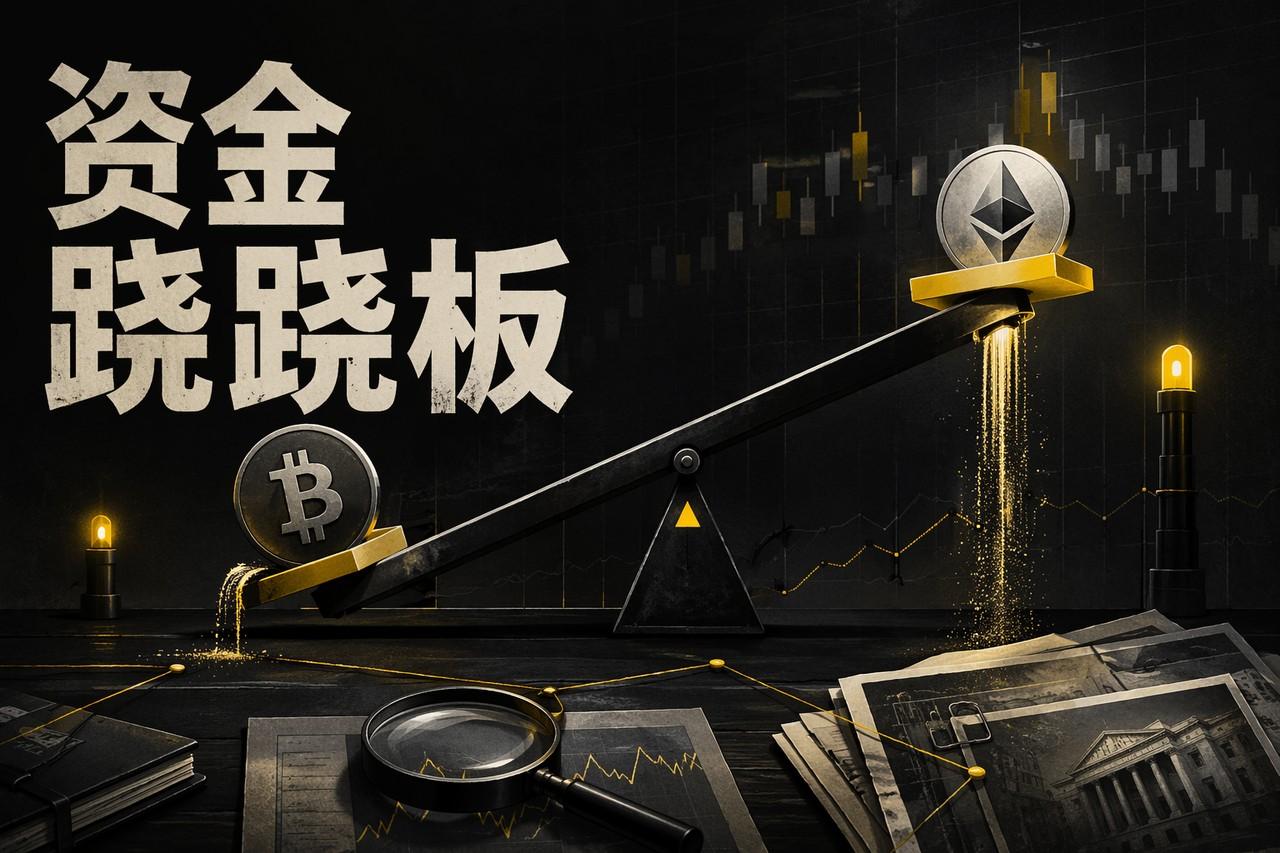
On June 16, 2026, despite the Bank of Japan's Governor Kazuo Ueda being hospitalized and only "present in absentia" through written form, the Bank of Japan nonetheless executed a clearly defined interest rate hike as planned——raising the policy interest rate from 0.75% to 1.00% with 7 votes in favor and 1 against, led by Deputy Governor Shinichi Uchida at the press conference. This was not an ordinary routine adjustment: 1.00% is the highest point seen in 31 years since 1995, marking a transition from the "ultra-low interest yen era" that has persisted since the mid-1990s to another interest rate world. In the same resolution, the Bank of Japan also provided a long-term bond purchase trajectory: continuing to reduce bond purchases starting in April next year until ceasing the reduction in April 2027, fixing the monthly purchase scale at approximately 2 trillion yen, thereby providing a floor for the bond market with a relatively moderate pace of bond buying while nominal interest rates rise. For global carry trades that have long relied on low-interest yen financing, this set of signals of "interest rate increase + fixed purchase pace" will force a rewriting of the formulas for funding costs and risk premiums, while cryptocurrency, as a sector priced in dollars and highly correlated with high-risk assets, will also find it hard to maintain its own uniqueness amidst this transition to a new era of yen interest rates.
The Yen Enters the Era of 1: The Global Pool of Cheap Funds is Closing
When the policy interest rate is pushed from 0.75% to 1.00%, reaching a new high since 1995, what the market is truly bidding farewell to is actually that era where one could "freely borrow yen and buy the world." Since the mid-1990s, zero and even negative interest rates have pegged the yen with the label of "the world's cheapest financing currency," transforming Tokyo into a reservoir for global leveraged funds, where currencies and bonds have treated this reservoir as a de facto choice from the top down. Now, a nominal interest rate of 1.00% means increased risk-free returns from the yen, and the interest rate spreads between the yen and other major currencies are passively narrowing, interrupting the long-held habit of "borrowing first without concern for costs." The cost-performance ratio of traditional yen carry trades is visibly declining.
Interest rates rising to 1% is not only about the financing rates for local Japanese companies but represents a shift in the global cost curve of funds. Cross-border arbitrage relying on yen as the financing leg must either accept higher holding costs or reduce positions, with risk budgets shifting from currencies, credit to equities and crypto. For high-risk assets, the previous reliance on low-cost yen leverage to "pile up" buying will slowly decrease, with the premium derived from yen carry trades being stripped away—investors are increasingly focusing on their own risk returns rather than "free funds." For assets like BTC and ETH, which are priced in dollars and highly correlated with high-risk assets, this means that some of the cross-border long positions sourced from yen financing will tend to be conservative, and the cost of funds in the crypto market will be more directly anchored to global risk-free rates and major currency spreads, no longer benefiting from the structural easing dividends of an extended low-yen interest rate era.
Rewriting the Carry Trade Chain: Yen Borrowing, Yield Spreads and Crypto Risk Premiums
Over the past thirty years, "borrow a bit in Tokyo, add a bit in New York" has been the classic template for global carry trades: in an environment of extremely low or even negative interest rates, funds are borrowed in yen at near zero cost in Japan's short-term market, flowing along the interest spread gradient to U.S. Treasuries, U.S. stocks, and then venturing into the even riskier and more volatile BTC and ETH, aiming to stack risk premiums on top of interest spreads. The yen is the starting point of this structure, while the Japanese government bond yield curve serves as the "risk-free benchmark." When the Bank of Japan raised the policy interest rate from 0.75% to 1.00% on June 16, 2026, and provided forward guidance on the future reduction of bond purchases, ultimately maintaining the monthly purchasing scale at approximately 2 trillion yen, it effectively raised both the yen financing costs and the yield center of government bonds, moving this long-standing carry trade chain upward by a notch.
Raising interest rates to 1.00%, an unprecedented height since 1995, means that cross-currency interest spreads are compressed: in the presence of the same U.S. Treasury yields, the spread cushion for yen financing has thinned out, and the global use of yen-leveraged buy-ins for U.S. stocks, tech stocks, and the additional view of BTC and ETH as "high beta extensions" has been weakened. For funds that are already using high leverage on-chain, this is not simply a little less profit, but a recalculation of the risk-return ratio for the entire trade——the increased interest expenses on the yen side make any price pullback in crypto-assets more likely to trigger liquidation thresholds. Once the carry trade starts to concentrate on stop-losses, funds will contract along the opposite path: first cutting the most volatile BTC and ETH long positions, followed by reducing holdings in overseas stocks and bonds, and finally repaying yen liabilities. In this deleveraging order, crypto assets often become the earliest, and also the most volatile, link.
Rate Hike Paired with Slower Balance Sheet Reduction: Japan's Version of "Hawkish Rates, Dovish Bond Buying"
On the interest rate front, the Bank of Japan raises the policy rate to 1%, sending a signal to the market that "yen is no longer free"; yet on the duration side, it offers a contradictory promise: continuing to reduce government bond purchases starting April next year, and ceasing reductions by April 2027, stabilizing the monthly purchase scale at about 2 trillion yen. The upcoming period of balance sheet reduction until April 2027 means long-term yields may be moderately elevated, allowing for more room for higher policy rates; however, once the 2 trillion yen "steady-state purchasing" phase is reached, the upper limit for expectations on long-term rates will be capped, and the market will view this as a "soft constraint" on Japan's government bond duration spreads and even on global long-term rates.
This narrative is a combination of hawkish front-end rates and dovish duration liquidity. The Bank of Japan emphasizes in its statement the flexibility to adjust the policy rate according to economic and price conditions, retaining the option for further rate hikes while simultaneously using long-term bond buying commitments to inform bondholding funds that "long-duration bonds will not be completely abandoned." For risk assets, this isn't simply a straightforward tightening, but rather a rewriting of the discount rate structure——short-term funding costs rise, compressing leverage space, yet long-term rates are expected to be anchored, weakening the panic over "the risk-free rate continuing to spiral uncontrollably upward." In this environment, the valuation center of global high beta assets will be dragged down a notch by policy rates, yet still retain some risk preference premium due to the relative controllability of long-term rates; for Bitcoin and Ethereum, this means they have to find a new risk premium balance between more expensive yen financing and still ample global liquidity.
Impact Window for BTC, ETH and Dollar-Denominated Assets
When Japan's risk-free rate is pushed to 1.00%, the highest in about 31 years, the "threshold yield" for local investors' asset allocation has been raised overall. For Japanese individuals and institutions, previously forced to choose between nearly zero-yield yen assets and the high volatility of BTC or ETH, there is now an additional path to stabilize returns at 1.00% with a domestic currency yield curve. BTC and ETH are globally seen as high-risk, high-volatility assets, which require a significant risk premium to be included in portfolios, and as Japan's risk-free yield rises, this premium requirement will be adjusted upward: some crypto asset exposures held directly on local platforms priced in yen may marginally be swapped back to yen deposits or government bonds, thus weakening the incremental buying from Japan.
From a global perspective, the narrowing of the interest spread between the yen and the dollar means that the classic carry trade of "borrowing low-interest yen to buy dollar assets" has been compressed in returns. Since most crypto assets are priced in dollars, their returns will be directly compared by investors with dollar rates and other currency rates. As the yen risk-free yield is no longer close to zero, those structured crypto products designed for Japanese and Asian investors that benchmark against dollar yields—whether through term arbitrage or by selling options to earn interest—must offer returns exceeding "1.00% yen yield + currency hedge costs" to incentivize funds to continue bearing the price volatility of BTC and ETH. The repricing of spreads compresses the leverage space for participating in dollar-denominated crypto assets with yen liabilities, forcing some carry traders to reduce positions; on the other hand, it will also transmit the valuation downgrades from dollar risk assets like U.S. stocks to BTC and ETH, which are highly correlated with them, exposing them to dual pressures from local fund outflows and global cooling of dollar assets in this window of spread reassessment.
What Traders Should Focus On: Yen Exchange Rates, Leverage Funds and On-Chain Rates
This time, it is not simply a matter of being done after reviewing the resolution. After the Bank of Japan pushed interest rates to 1.00%, there was no clear indication of the subsequent rate hike pace, leaving vague guidance of "depending on economic and price conditions," compounded by the unusual combination of the governor being absent due to illness and the press conference being hosted by the deputy governor, leading the market to trade on a future path filled with noise. For crypto traders, the first point of focus should be the USD/JPY exchange rate: if, under the 1% interest rate + clear bond purchase reduction path, the USD/JPY continues to decline, it indicates a yen inflow and that domestic assets are gaining attractiveness, while the closing pressure from traditional yen carry trades remains; in such an environment, BTC and ETH will often incur higher price volatility to "hedge" against the opportunity cost arising from rising yen interest rates; conversely, if the exchange rate stabilizes quickly or even weakens again, the market is effectively betting on the end of the Bank of Japan's rate hikes, with the yen continuing to serve as a financing currency, and some high-leverage risk trades might make a comeback.
The second layer is to align the leverage and rate indicators of the crypto market with this macro narrative: perpetual contract funding rates, futures basis, and on-chain dollar borrowing rates serve as magnifying glasses for global risk-free rate changes and shifts in risk preferences. When the 1% yen interest rate elevates the global "low-interest financing pool," if you see mainstream exchanges pushing long BTC and ETH perpetual funding rates down from high positive values to close to zero or even repeatedly turning negative, it often indicates that long positions entering with low-cost yen liabilities are deleveraging, and the market is demanding a higher risk premium for these assets; meanwhile, if on-chain dollar borrowing rates start to rise, it shows that lenders are no longer willing to subsidize high-volatility assets with excessively low returns, and funding costs are being re-anchored to realistic interest rates on-chain. In terms of scenarios, if the Bank of Japan continues to gradually raise rates over the next few quarters, yen carry trades will be forced to continue contracting, and the risk premium for dollar-denominated crypto assets will likely remain elevated, with BTC and ETH's elasticity to each bullish message being weighed down by the underlying "floor on interest rates"; if the Bank of Japan chooses to remain observant around the 1.00% mark for an extended period, with communication leaning towards dovish, and the USD/JPY weakens again, the interrupted yen leverage chain may partially recover, and the funding rates in the crypto market, as well as on-chain dollar rates, may again dip, with the market retrying the old path of "low interest rates and thick leverage"; however, all of this must be verified step by step through the interplay of yen exchange rates, crypto leverage levels, and on-chain rates.
Join our community to discuss and become stronger together!
Exclusive Hyperliquid benefits for AiCoin: https://app.hyperliquid.xyz/join/AICOIN88
Exclusive Aster benefits for AiCoin: https://www.asterdex.com/zh-CN/referral/9C50e2
On-chain Telegram community: https://t.me/AiCoinWhaleData
On-chain community: https://www.aicoin.com/link/chat?cid=N6OVMor5g
AiCoin on-chain Twitter: https://x.com/aicoinwhaledata
免责声明:本文章仅代表作者个人观点,不代表本平台的立场和观点。本文章仅供信息分享,不构成对任何人的任何投资建议。用户与作者之间的任何争议,与本平台无关。如网页中刊载的文章或图片涉及侵权,请提供相关的权利证明和身份证明发送邮件到support@aicoin.com,本平台相关工作人员将会进行核查。