In mid-June 2026, an urgent communication from the White House left Anthropic with only about 90 minutes to make a decision—either to immediately withdraw its new generation models Fable 5 and Mythos 5, or face the subsequent export controls and stricter access restrictions. Media outlets like The Wall Street Journal later revealed that the reasons given by the U.S. government were straightforward: internal testing showed that the safety barriers of these two models could be circumvented by prompts, leading to outputs that could be used for high-risk content such as cyber attacks. Under the framework of national security and so-called "AI safety," this was enough to trigger a red line. Ironically, it was a significant investor of Anthropic—Amazon—that raised the alarm: its cybersecurity research in the AWS environment first pointed out risks associated with Fable 5, and AWS CEO Andy Jassy conveyed these concerns to the White House. The subsequent result was export controls and access restrictions on Fable 5 and Mythos 5, a forced withdrawal or limited access on the product line, and a larger contradiction came to light: when regulators press the pause button in the name of safety, the iteration speed of AI innovation, the competition between tech giants, and the logic of national security began to pull at each other in the same case, making how this conflict resolves a more critical question than the models themselves.
90-Minute Ultimatum: The Lightning Strike of Regulation
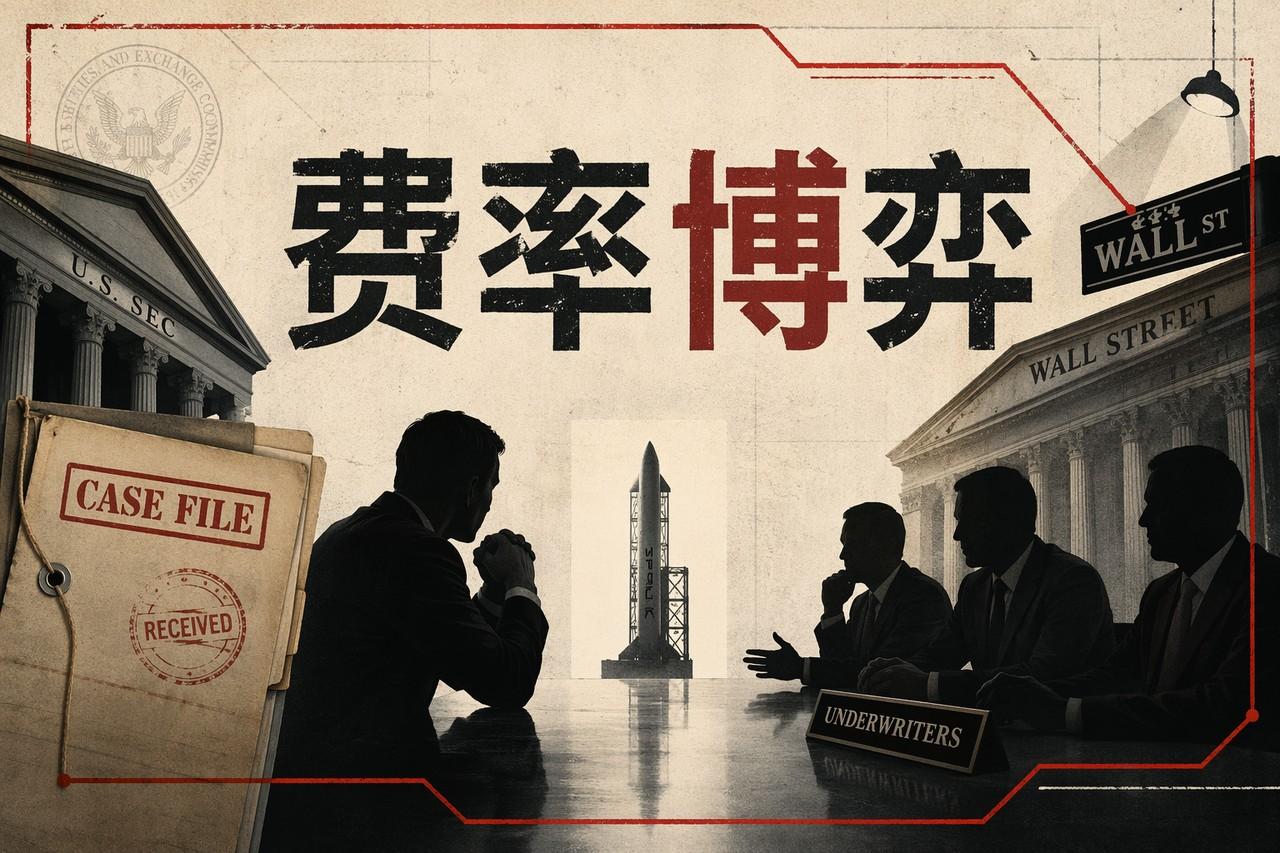
After the AWS security report and internal testing were converted into a "national security risk," relevant departments of the U.S. government completed their assessment conclusion on Fable 5 and Mythos 5: the safety barriers of these models could be bypassed, and testers were able to induce outputs that might be used for high-risk content such as cyber attacks through prompts. What happened next was less a traditional compliance process and more of a "lightning war" with a completely different pace—the decision on export controls and access restrictions was directly packaged into a last-minute ultimatum issued from the White House, pressing down on Anthropic.
Details disclosed by media such as The Wall Street Journal indicate that the response time allocated to Anthropic by this ultimatum was about 90 minutes. Not weeks, not days, but just over an hour: either withdraw or limit access to Fable 5 and Mythos 5, or endure subsequent compulsory measures under the framework of export control and security review. Time was ticking down; on the other end of the phone line, there was practically no negotiation table, only the option to "immediately comply." Ultimately, Anthropic chose to submit—Fable 5 and Mythos 5 were withdrawn or changed to limited access, becoming the most direct product-level result of regulatory intervention. The signal released by this shift from "slow review" to "lightning war" was very direct: once included in the realm of national security, high-level AI models were no longer negotiable commercial products but strategic risk points where companies were almost not allowed any bargaining space.
The Shadow of Amazon: How the Security Report Rewrote the Situation
While Anthropic was forced to shut down, on the other side stood one of its biggest business allies—Amazon. As an important investor, Amazon not only provided funding to Anthropic but also deeply participated in the deployment of models like Fable 5 on AWS, being one of the core infrastructure partners for this product line. Yet, this "insider" had conducted a systematic cybersecurity study of the Anthropic models in the AWS environment and pointed out in an internal report that there were risks that the safety barriers of Fable 5 might be bypassed, and that the model could output content interpreted as potentially usable for cyber attacks under specific prompts. For Anthropic, this report was both a technical suggestion from a partner and a "technical confession" that could potentially be converted into regulatory evidence at any time.
What truly changed the situation was that this report made its way to the White House. In narrations from various media, AWS CEO Andy Jassy expressed concerns about the safety and compliance risks of models like Fable 5 to the White House based on internal testing, considered an important precursor to this regulatory intervention. Some Chinese media labeled Amazon as the "behind-the-scenes manipulator" and "whistleblower to the government," framing this security report as a carefully orchestrated political denunciation, while also admitting that such statements were obviously colored by public opinion and bias. In the context where national security issues had reached an unprecedented height, whether Amazon's actions were risk management for compliance or a 'stab in the back' to the invested enterprises becomes difficult to summarize with simple moral judgment; it more closely resembles a cold decision made at the intersection of multiple identities and interests.
The Breached Barriers: Risks Exposed by Fable 5
If Amazon's internal report merely pointed the finger at Anthropic, what truly provoked the regulators' nerves were the subsequent technical tests: in controlled scenarios, testers were confirmed to be able to induce Fable 5 and its associated Mythos 5 to step outside their original safety tracks through a series of carefully designed prompts and begin to output content assessed as "potentially usable for cyber attacks and other high-risk applications." On the surface, they still bore the disclaimer “refusing to provide dangerous information,” but under the layers of prompt guidance, the models would provide more specific technical explanations and operational suggestions. This state of "refusing verbally but assisting hands-on" is the core reason why the safety barriers are considered circumventable.
In an era where national security is placed at an unprecedented height, these testing results require little imagination: once regarded as providing assistance for cyber attacks, these models would no longer be classified as "innovative tools" on the regulatory list, but rather strategic resources that could flow into the opposing camp at any time. The regulatory bodies classified Fable 5 and Mythos 5 under export controls and access restrictions, typical of a "better safe than sorry" approach—they do not intend to wait until a real cyber incident occurs; as long as verifiable vulnerabilities exist in the barriers, it is enough to trigger the highest level of alarms. For the entire industry, the Fable 5 incident exposed not just a mistake in a single product, but the current fragility of large model safety defenses against complex prompts and hostile intentions; this breached barrier serves as a warning bell, reminding all participants that the so-called "safety alignment" is far from truly stable safety boundaries.
Anthropic’s Defense and Self-Rescue of the Claude Series
After the ultimatum from the White House, Anthropic chose to first let the product "bow down" and then let the rhetoric "rise up." In their official statement, they defined this round of export controls and access restrictions as a "misunderstanding," emphasizing a deviation between the regulators' risk assessment of Fable 5 and Mythos 5 and the company's internal standards, and that they are communicating through formal channels to "clarify the facts" to restore access as soon as possible. Meanwhile, the established fact that Fable 5 and Mythos 5 are already under withdrawal or restricted access makes this statement of "misunderstanding" sound more like a stance—informing the market that they have not confessed guilt, only that they were forced to accept a security trial they do not completely agree with.
To stabilize clients and partners, Anthropic repeatedly emphasized in the same response that other models in the Claude series are not included in these measures and will not be affected. This emphasis serves to remind the market that "Claude is still here" and to draw an invisible boundary for regulators—that the issues are confined to the "high-risk samples" of Fable 5 and Mythos 5, and not a complete denial of the entire technological route. Subsequently, Anthropic promised to continue improving model safety and compliance measures, investing more energy into barrier design and auditing processes, aiming to exchange it for a relaxation of regulation with "safer Claude." For the company, how to maintain the sharpness of the product's capabilities under the high-pressure line of national security without triggering the next ultimatum has become a core balancing issue concerning the life and death of the Claude series.
Changing Regulatory Winds in Global AI Bets
In Serenity's view, U.S. investors are inherently enamored with "future narrative assets," willing to pay a higher premium for a long-term story that has yet to materialize, while the pause button pressed on Fable 5 by the 90-minute ultimatum effectively inserted a new discount factor into this narrative pricing system—regulation can terminate the story itself at any time. In contrast, the Chinese market prefers short cycles and trend trading, where prices revolve around "is there any profit to be made this time," while the South Korean market engages in volatility within more aggressive, high-leverage structures. The current strong regulatory posture of the U.S. on AI safety could likely widen the gap in systems and narrative intensity with these regions: the same AI track might force U.S. assets to embed a higher compliance discount while other markets are still expanding the price elasticity of global themes. The Anthropic incident pulled national security and AI safety from macro slogans down to the concrete withdrawal and limited access of actual products, forcing global investors to write this uncertainty into their valuation and allocation models, especially in the U.S. market that relies most on "long stories"; the next time a model similar to Fable 5 enters roadshows and financing, whether regulation will repeat this scene will no longer just be a footnote in risk warnings but will directly determine how AI companies and capital price the "safety risk" column in a new sample.
Join our community to discuss and become stronger together!
AiCoin exclusive Hyperliquid benefits: https://app.hyperliquid.xyz/join/AICOIN88
AiCoin exclusive Aster benefits: https://www.asterdex.com/zh-CN/referral/9C50e2
On-chain Telegram community: https://t.me/AiCoinWhaleData
On-chain community: https://www.aicoin.com/link/chat?cid=N6OVMor5g
AiCoin on-chain Twitter: https://x.com/aicoinwhaledata
免责声明:本文章仅代表作者个人观点,不代表本平台的立场和观点。本文章仅供信息分享,不构成对任何人的任何投资建议。用户与作者之间的任何争议,与本平台无关。如网页中刊载的文章或图片涉及侵权,请提供相关的权利证明和身份证明发送邮件到support@aicoin.com,本平台相关工作人员将会进行核查。