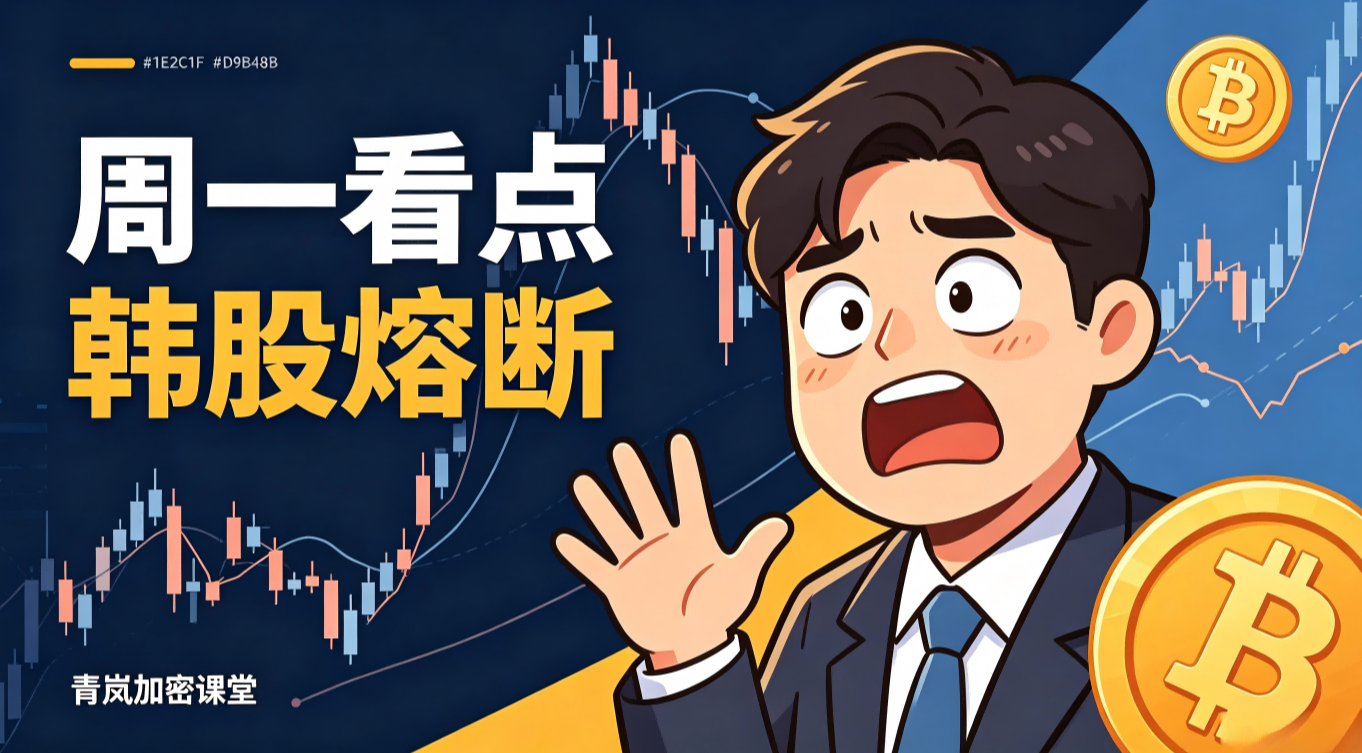
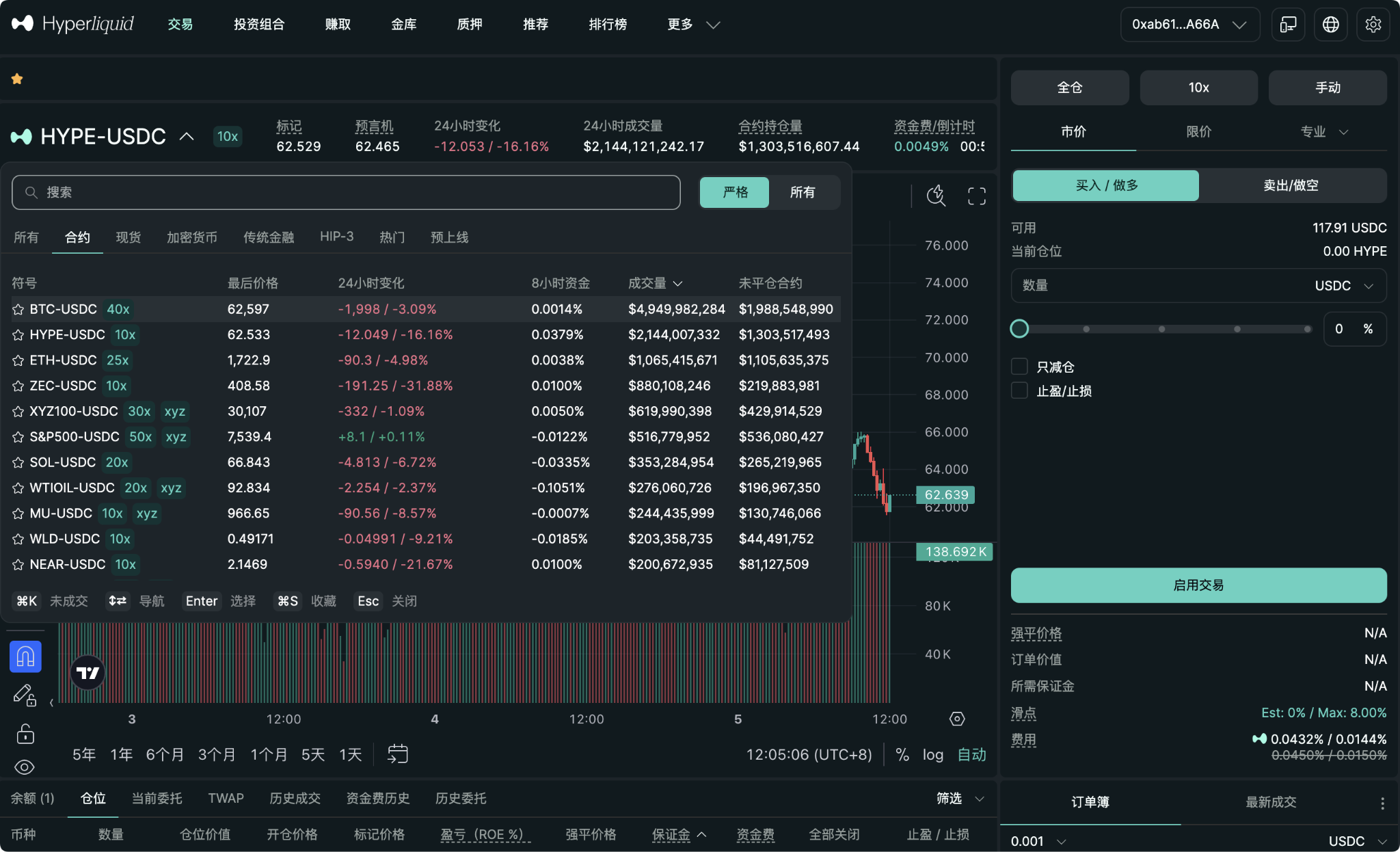
On the morning of June 8, 2026, the South Korean KOSPI opened low at 8040.38 points, with rapid losses expanding to over 8% shortly after, triggering the circuit breaker set at the 8% level. The market index and related stocks collectively hit the "pause button," with trading forcibly frozen for about 20 minutes. After resuming, the losses narrowed to approximately 6.6%. During the same period, Japan's Nikkei 225 index opened at 65983.61 points, down about 0.91% from the previous close, and continued to weaken, dipping close to the 64000-point mark at one point, with the maximum decline extending to about 3%–3.9%. The core driver of the sell-off in both markets was highly overlapping: technology blue-chip stocks represented by semiconductors and AI-related sectors became the main force behind the decline. In the KOSPI, Samsung Electronics and SK Hynix dropped about 10% at one point, while SoftBank Group in the Nikkei 225 fell about 9%, amplifying the downward slope at the index level. Unlike the direct "freeze" in on-market trading, related products linked to SK Hynix on over-the-counter platforms such as trade.xyz continued to trade during the suspension of Korean stocks, with reference prices rebounding to about $1241 after briefly plunging to around 1,904,000 won (about $1226), illustrating a new risk transmission path arising from the coexistence of the circuit breaker mechanism and multi-layered markets under extreme conditions.
KOSPI Plunges 8%, Circuit Breaker Triggered: Semiconductors Lead the Decline
From the market trajectory, the KOSPI did not directly gap down and collapse on the morning of June 8, 2026, but started with a "moderate decline": the index opened at 8040.38 points, down about 1.47% from the previous close. However, not long after the opening, selling pressure sharply increased, and in a short time, the decline rapidly expanded from about 1.5% to over 8%. Various reports estimated the trigger moment's decline to be in the range of 8.0%–8.8%, directly hitting the 8% circuit breaker threshold set by the Korea Exchange for the KOSPI. As the breaker line was breached, trading of the index and related stocks was automatically paused for about 20 minutes, marking the first time in 2026 that the KOSPI triggered an 8% breaker, with prices passively "frozen" at an over 8% decline on the exchange.
The key to amplifying this downturn was the simultaneous踩踏 (踏, meaning ‘treading’) of semiconductor blue-chip stocks. Samsung Electronics and SK Hynix are among the leading constituent stocks in the KOSPI. On that day, both fell about 10% at one point, and since the index still operates on a market capitalization-weighted basis, these companies contributed a significant proportion of the index's point decline, quickly "pulling" the index toward the circuit breaker line within a short period. After the breaker ended and trading resumed, the KOSPI's decline was passively narrowed from over 8% to about 6.6%, which did not alter the overall significant downward trend but clearly reflected that under extreme volatility, institutional halts first cut off the panic selling chain, followed by a round of passive stabilization and rebound led by blue-chip stocks once liquidity was reintroduced.
Nikkei and SoftBank's Downward Chain Reaction
During the same morning session, Japan's Nikkei 225 index continued the trend of regional sentiment weakening, opening low at 65983.61 points, down about 0.91% from the previous close, with selling pressure gradually intensifying, and at one point, the index nearly approached the 64000-point mark, with the maximum decline ranging between approximately 3%–3.9%. Although the magnitude of fluctuation was far less drastic than the "cliff-like" trend of the KOSPI at the time of triggering the circuit breaker, for an index running at a high level with heavy weighting concentrated in technology and manufacturing sectors, this intraday correction was enough to signal significant valuation repricing. In terms of market structure, SoftBank Group fell about 9% at one point, significantly dragging on the index as an important constituent of the Nikkei 225, directly exposing Japan's technology-heavy sector to synchronized pressures from global AI and technology sentiment contractions.
What is even more noteworthy is that while the stock market adjusted, the yield on Japan's 30-year government bonds did not decline but instead rose by about 2 basis points to around 3.910%. This indicates that long-term interest rates have risen, putting pressure on bond prices, and funds did not simply "escape" from equity assets to long-term government bonds; rather, they raised risk compensation requirements across both the equity and debt curves. Observing the steep decline in the KOSPI on the same trading day, it is evident that regional markets are amplifying their sensitivity to technology and AI weightings: on one side, there is synchronous downward pressure at the index level, and on the other, rising yields on long-term bonds, both pointing toward a systematic risk reassessment occurring within Asia's core markets around technology sectors and interest rate expectations.
AI and Semiconductor Weights Amplifying Panic Selling
From an index structure perspective, the sharp volatility in the KOSPI this round is primarily an amplification effect of weight allocation. Public information shows that the KOSPI has a high weighting in semiconductor and AI-related sectors, with Samsung Electronics and SK Hynix being the core constituents at the forefront of the weighting. On the morning of June 8, both companies’ stock prices fell about 10% at one point, and in a highly concentrated index, this type of weighted stock nearing a 10% decline in a single day theoretically could drag the overall index down by several percentage points. As the KOSPI's intraday decline rapidly amplified and triggered the 8% circuit breaker, these two individual stocks played a dominant role in contributing to the downward movement, with the "collapse feeling" at the index level highly correlated with their simultaneous sharp falls in stock prices.
The Japanese market exhibited a similar weighted pattern on the same trading day. Among the Nikkei 225 constituents, companies like SoftBank Group have a significant impact on index points, with SoftBank falling about 9% during the day, correlating with the Nikkei 225 approaching 64000 points and a daily correction of about 3%–3.9%. Whether it is South Korea's Samsung Electronics and SK Hynix or Japan's SoftBank Group, when such technology and AI-related weighted stocks experience a nearly double-digit decline within the same day, both Korean and Japanese indices expose highly concentrated industry risk exposures, significantly amplifying systematic volatility at the index level due to pricing pressures from a single sector.
On-Market Freeze vs. Off-Market Plays During Circuit Breaker
On the morning of June 8, after the KOSPI opened, the decline rapidly expanded to about 8%, hitting the 8% circuit breaker line set by the Korea Exchange, with the index and related constituent stocks collectively hitting the "pause button," and quotes in the on-market were technically frozen for about 20 minutes. Core weighting stocks, including SK Hynix, remained at their last transaction prices prior to the circuit breaker, and SK Hynix fell to about 1,904,000 won, equivalent to about $1226, during the circuit breaker period when this price could not be further adjusted within the exchange, leading to a passive disruption of liquidity in the market.
However, on over-the-counter platforms such as trade.xyz, products linked to SK Hynix did not "freeze" accordingly. Research briefs indicated that when SK Hynix's on-market price fell to about $1226, the corresponding off-market product prices showed a certain rebound, quoted around $1241, forming a price difference of about ten or so dollars. This "suspension vs. non-suspension" institutional difference directly changed the risk management pathways for different participants: retail investors reliant on on-market spot could only endure the uncertainty brought by price freezes during the circuit breaker window, unable to actively adjust their positions through selling or increasing investment; meanwhile, institutional investors equipped with tools like contracts for difference and OTC products could still continuously hedge or speculate off-market based on their expectations of post-circuit breaker trends, with the costs being the expansion of basis and liquidity discounts. As a result, the same asset was subjected to two separate pricing mechanisms during the same time period; the circuit breaker set a rhythm limit for on-market risk release but pushed more price discovery and risk repricing into the more complex structures of the off-market with higher participation barriers.
Trigger Reasons Unresolved, Risk Appetite Rapidly Contracts
Based on the publicly available research briefs and exchange information, the sharp decline of the KOSPI on the morning of June 8, 2026, has not been confirmed by authoritative channels to have a “single, direct” triggering event. Discussions surrounding Iran's missile launches towards Israel, the breaking of ceasefires, possible overflow of income guidance from Broadcom, and “AI bubble” sentiments, as well as simple comparisons of this decline to the "March Shock" of the Korean stock market in March 2026, have all been marked as “to be verified,” seen merely as narrative attempts by market participants seeking causal chains in hindsight rather than facts that can be cited as conclusions. Readers need to maintain a clear boundary between the objective changes in prices that have already occurred and the narratives surrounding those changes.
In the absence of clear bearish events, the price and volatility themselves have become the most direct signals: the KOSPI opened with a drop of only about 1.47% but was quickly slammed to over 8% (in the range of 8.0%–8.8%), triggering the 8% circuit breaker and suspending trading for about 20 minutes, with Samsung Electronics and SK Hynix nearing a 10% decline; while the decline narrowed to about 6.6% after resuming trading, the overall situation still lies within a sharply adjusting range. On the same trading day, Japan's Nikkei 225 expanded the initial loss of about 0.91% at the open further, dipping close to 64000 points, with maximum losses around 3%–3.9%, while SoftBank Group fell about 9%, and the yield on Japan's 30-year government bonds rose about 2 basis points to approximately 3.910%. The stock market fell synchronously led by technology and AI weighted stocks, while long-term rates were repriced, and alongside the KOSPI's 8% circuit breaker, the combined picture resembles a rapid contraction in risk appetite and a general increase in risk premiums rather than a linear response to a singular event.
In an Era of Extreme Fluctuations, How to Interpret Signals from the Japanese and Korean Markets
From the KOSPI's single-day maximum drop of over 8% and the triggering of the first circuit breaker of the year, with a closing range still around 6%–7% drop, to the Nikkei 225 being close to 64000 points within the same day and falling about 3%–3.9%, coupled with SoftBank Group's approximately 9% decline during the day, it can be confirmed that these two indices highly dependent on technology and AI in Japan and South Korea both underwent significant corrections led by weighted stocks on the same day, releasing signals of simultaneous contractions in regional risk appetite and global technology sentiment, rather than isolated fluctuations limited to local events. Regarding the KOSPI, Samsung Electronics and SK Hynix's nearly 10% declines not only amplified the index's drop but also highlighted the characteristics of the combination of “high technology, high weight + circuit breaker + off-market trading”: after the circuit breaker was triggered, the on-market price was forcibly “frozen” for about 20 minutes; however, off-market products like those on trade.xyz continued to price according to expectations of volatility, with SK Hynix's on-market price once corresponding to about $1226, while off-market linked products rebounded to around $1241, and this price deviation itself constituted new risks and information carriers. For investors, this synchronized severe correction in Japan and South Korea's stock markets suggests that during high volatility phases, we cannot merely focus on “how much the index has dropped” but should decompose the concentration of technology and AI weights within the index structure, assess the distribution of liquidity across different constituent stocks and market layers, and consider the prices, basis, and transaction activity of off-market derivatives and cross-market products as forward guidance and pressure-testing tools for on-market trends, understanding the speed and direction of risk transmission amidst multi-source price signals.
Join our community, let's discuss and become stronger together!
AiCoin Exclusive Hyperliquid Benefits: https://app.hyperliquid.xyz/join/AICOIN88
AiCoin Exclusive Aster Benefits: https://www.asterdex.com/zh-CN/referral/9C50e2
On-chain Telegram Community: https://t.me/AiCoinWhaleData
On-chain Community: https://www.aicoin.com/link/chat?cid=N6OVMor5g
AiCoin On-chain Twitter: https://x.com/aicoinwhaledata
免责声明:本文章仅代表作者个人观点,不代表本平台的立场和观点。本文章仅供信息分享,不构成对任何人的任何投资建议。用户与作者之间的任何争议,与本平台无关。如网页中刊载的文章或图片涉及侵权,请提供相关的权利证明和身份证明发送邮件到support@aicoin.com,本平台相关工作人员将会进行核查。