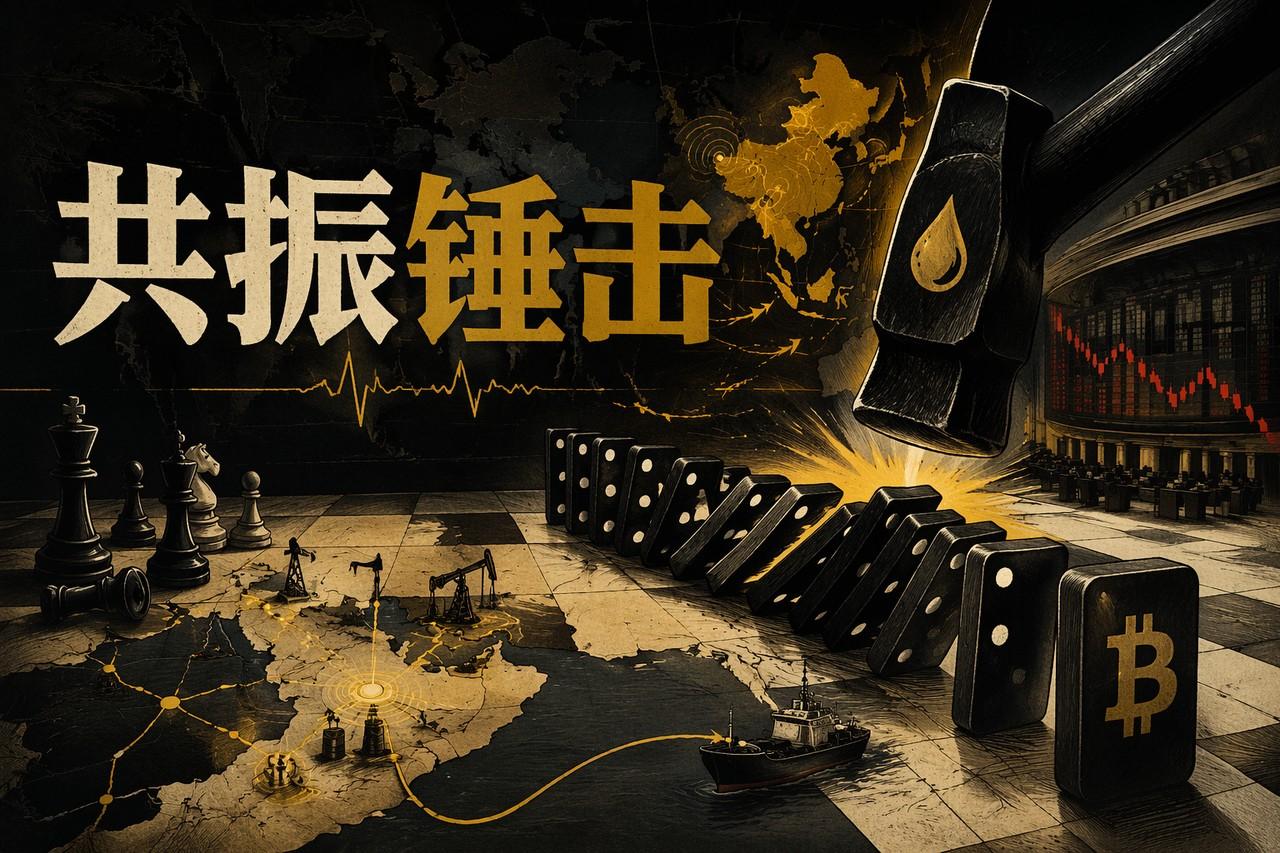
After Iran's missile attack on Israel, tensions in the Middle East escalated until June 8, 2026, which marked a new breaking point: on one side, reports indicated that former U.S. President Trump called Netanyahu, asking to postpone retaliation against Iran, with anonymous officials saying "a good agreement is close to being reached," as a barely pressed counterattack button pinned market sentiment on the edge of "possible reversal"; on the other side, risk assets had already given their vote through pricing—on that day, the Nikkei 225 fell about 3%, closing around 64309.79 points, as Japanese investors collectively sold off to price in the rising geopolitical tensions, while Korea seemed more like the last lever pulled: the KOSPI dropped over 8% in a single day, triggering a trading halt for 20 minutes, while Kosdaq150 futures fell another 6%, leading to an urgent halt in program trading for 5 minutes, pushing the entire Korean market into extreme volatility. Just as people rushed to cut positions and supplement margins, Nvidia's CEO Jensen Huang announced a long-term agreement with SK Hynix in Korea, boldly stating that Korea's preparations in robotics technology are "unparalleled." This optimism about the long-term prospects for AI and semiconductors created a glaring contrast with the panic deleveraging in the Japanese and Korean stock indices: while the fundamental narrative was moving forward, capital was being forced to retreat. For cryptocurrency traders, this was not an isolated set of news but a series of overlapping signals on the same timeline—Middle Eastern frontline, U.S. political figures mediating, Asian stock market crashes, and tech giants betting on Korea's AI ecosystem—all rewriting the discount rates of "risk assets," while the real question to answer is how this round of shocks will re-anchor the risk appetite and pricing framework of BTC, ETH, and on-chain funds in the region through Asian capital deleveraging, hedging, and reallocation.
Under the Shadow of Missiles: How Geopolitical Tensions Amplify Crypto Risk Premiums
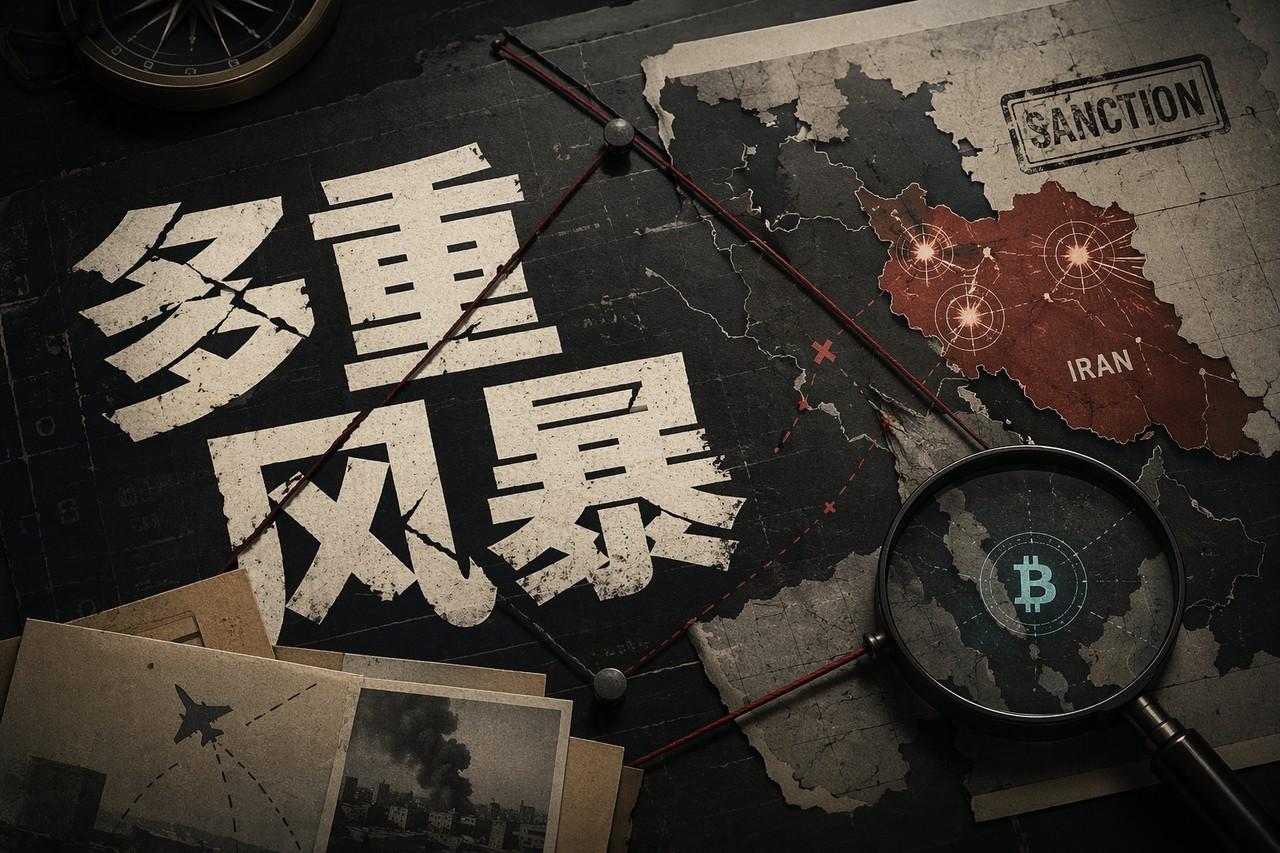
Iran's previous missile attack on Israel directly pushed the already sensitive Middle Eastern situation into the "tail risk" pricing zone: discussions in the market have shifted from conventional friction to low-probability, high-loss scenarios such as oil-producing countries miscalculating, allies becoming embroiled, and even disruptions to shipping routes. On June 8, 2026, former U.S. President Trump reportedly called Netanyahu, asking Israel to postpone retaliation against Iran, claiming that the two sides were close to reaching a "good agreement," to which Netanyahu was described as reluctantly agreeing. From an asset pricing perspective, this call briefly dampened the panic of "immediate escalation" after hours, but it did not erase the geopolitical uncertainty itself—the market still needed to pay a higher risk premium for conflicts that could be triggered at any moment in the future.
Amid this high geopolitical volatility, the narratives of BTC and ETH were once again torn apart: on one side, some investors attempted to slot them into the framework of "digital safe-haven assets," hoping that when sovereign risk rises and expectations of capital controls increase, on-chain assets could replicate the performances of certain geopolitical conflict phases alongside traditional safe-haven assets; on the other side, more common "high β risk asset" pricing emerged—as oil, the dollar, and the global stock market were repriced, with interest rates and liquidity expectations swinging violently, the outer circle of high-volatility assets often faced the first round of deleveraging and discount clearouts. Under general macro logic, rising oil price risk premiums would elevate the uncertainty of inflation and interest rate paths, pushing up the risk premiums on dollars and equities, which ultimately transmitted tighter funding risk budgets to cryptocurrencies. This round of Iran's missile attack, Trump's mediation, and the plunge in Asian stock markets has coincided sharply in timing, confirming that geopolitical uncertainty has been collectively marked up by the market, magnifying impulses for hedging and deleveraging; regarding the K-line of BTC or ETH on that day, there is insufficient evidence to directly attribute its movement to geopolitical conflicts or other liquidity and positioning factors—it is rational to reassess the pricing positions and pressure sequences of cryptocurrencies within the entire spectrum of risk assets above this uncertainty premium.
KOSPI Circuit Breaker: How Korean Stock Liquidation Pressures Compress Crypto Leverage
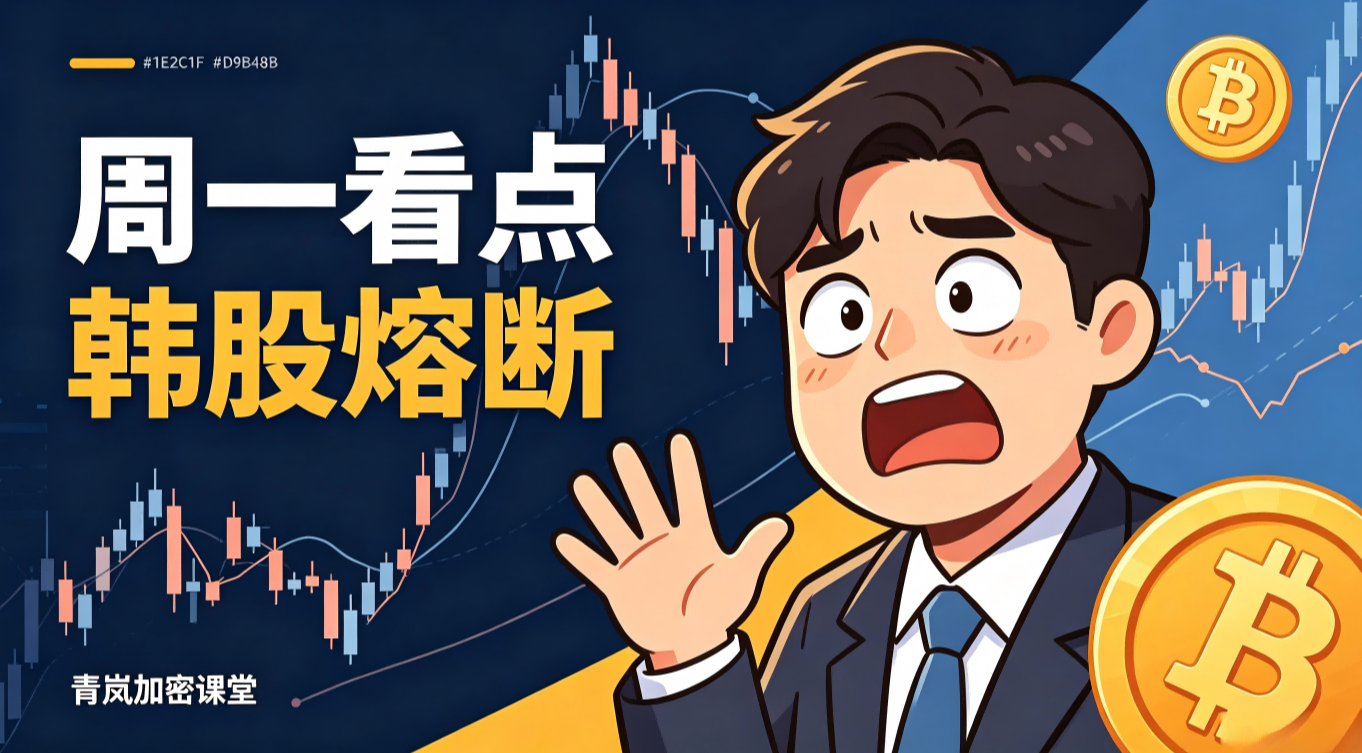
The KOSPI fell over 8% in a single day and triggered a circuit breaker, leading to a 20-minute "pause" in trading, while the Kosdaq150 index futures dropped around 6%, triggering a halt in program trading, indicating this was not just an ordinary emotional fluctuation but a liquidity shock significant enough to provoke systemic margin pressures. For investors heavily utilizing stock financing, index futures, and structured products, the real issue at this moment was not "whether to cut losses," but rather "where can cash be freed up to meet margin calls." In a market like Korea, where retail investors deeply participate, and brokerages intertwine margin trading with off-exchange leverage, stock market deleveraging often does not stay confined to stock assets but extends through margin calls into all high-volatility assets that can be quickly liquidated.
At this point, cryptocurrency assets transformed from "independent stories" into "shared collateral." Korea is one of the most active regions for cryptocurrency trading globally, and in the past, during extreme conditions, synchronized amplifications of volatility in the stock and crypto markets have frequently occurred, often driven not simply by emotional resonance but by the same pool of capital being passively shuffled between different assets: when stock market margins are called, investors might first cut long positions in BTC, ETH, and high-beta altcoins on local exchanges to release Korean won liquidity, subsequently supplementing stock margin if needed. In this environment, a retreat in risk appetite from "gambling on high-beta altcoins" to "only holding core + low leverage" is almost an inevitable choice, favoring dollar-denominated assets and dollar-pegged stablecoins as tools that come closer to cash forms in the short term. Of course, we cannot simply conclude that Korean investors must have massively sold off cryptocurrencies on that day, but it is reasonable to believe that under the shock level of a KOSPI circuit breaker, local capital's willingness to use leverage on cryptocurrencies and overall risk positions are likely to undergo a phase of contraction.
Nikkei Plummets 3%: The Link Between Yen Carry Withdrawals and Bitcoin's Risks
On that day, the Nikkei 225 dropped about 3%, closing around 64309 points; this sudden dip in Tokyo was not merely a revaluation of Japanese tech stocks but seemed like a warning against the consensus of "the yen as the world's leveraged currency." Long-held yen/dollar carry positions accumulated in an ultra-low interest rate environment—borrowing low-cost yen, converting to dollars to leverage and purchase U.S. stocks, and buying high-beta tech stocks, including allocations in BTC/ETH—would be forcibly reduced by risk models facing a sharp pullback. Once domestic and global hedge funds in Japan start cooling off on yen carry strategies, the reduction will typically not only cut one side of Nikkei long positions but also pare down foreign exchange hedges, Nasdaq longs, and crypto longs, forming a synchronized deleveraging chain across assets.
For BTC/ETH, this contraction "starting from Tokyo" often manifests most directly as amplified volatility during the Asian trading hours: the long structure originally relying on yen/dollar funding is forced to unwind in relative liquidity-constrained time windows, with futures funding rates and spot premiums prioritizing a narrowing—even briefly turning negative. Moving forward, we need to closely monitor not only the price itself but also the correlation between Japanese stocks and crypto on down days: if every time the Nikkei and tech stocks encounter sell-offs, BTC/ETH follows downwards, then it will continue to be priced as "tech stock β" amidst this round of Middle Eastern shocks; only if BTC/ETH can maintain an independent trajectory in the context of a struggling Nikkei and yen carry withdrawals does crypto have the opportunity to advance further in this round of risk events toward the narrative of "independent assets."
Jensen Huang Bets on Korea AI: What Kind of β Does Tech Bull Market Bring to Crypto?
At the same time when the KOSPI dropped over 8% and triggered a circuit breaker, Jensen Huang announced a long-term agreement with SK Hynix in Korea; while the public cannot see the terms and amounts, the direction has become clear enough: Nvidia is locking in its AI supply chain in Korea with real capital. SK Hynix itself is an important supplier of storage and HBM globally, and he publicly claimed that Korea's readiness in robotics technology is "unparalleled," sending a countercyclical signal to global capital—despite geopolitical conflicts driving the Japanese and Korean stock markets into extreme volatility, the long-term capital expenditure curve for AI and semiconductors continues to gravitate toward hardware centers like Korea.
From the macro variables perspective, this doesn't change the question of "Are we afraid of risk today?" but rather "Will tech investment continue to rise in the coming years?": AI chips and robotics naturally require high and long-term capital expenditures. Historically, similar tech investment upturns have often coincided highly with bull phases in stock markets and high-risk assets. As long as the market can clearly articulate the chain of "computing power expansion - profit expectations - asset pricing," cryptocurrencies will be rewrapped as high β assets linked to "technology growth + new finance"—whether BTC/ETH is positioned within the framework of "next-generation tech assets," or sectors like "AI + crypto" or "decentralized computing" follow tech giants like Nvidia to amplify volatility, fundamentally, it is consuming the same sentiment dividends from the tech bull. In the short term, the escalation of Middle Eastern situations and the Japanese and Korean stock market crashes will suppress risk appetite, dragging BTC/ETH into the deleveraging gates, but in the medium to long term, if this cycle of AI and semiconductor capital expenditure can truly sustain, BTC/ETH and related narrative sectors will at least possess a macro story that can be repeatedly articulated by Wall Street to attract capital back.
Short-Term Hedging and Long-Term Bets: Which Signals Should Crypto Traders Focus On?
Bringing the timeline back to early June 2026: Iran's attack, the revelation of Trump's mediation, the Nikkei 225 dropping about 3%, the KOSPI plummeting over 8% and triggering a circuit breaker, and the Kosdaq150 futures triggering a halt—this series of events collectively releases the same signal—global risk aversion has been aggressively accelerated in a short span. From a short-term perspective, such sentiment will usually first compress BTC/ETH leverage positions, squeezing out the risk premiums of altcoins, with market participants more willing to shrink balance sheets and reduce positions, temporarily relocating safe havens to dollars and dollar-pegged stablecoins. If the volatility of Korean and Japanese indices continues to amplify, it means that passive deleveraging is not over, making it difficult for the high-leverage narratives around crypto to restart quickly. In the medium to long term, however, a different line emerges: the long-term agreement Jensen Huang tossed out with SK Hynix in Korea, along with the optimism for local robotics and AI ecosystems being "unparalleled," strengthens the narrative of global tech capital expenditure continuing to rise—as long as this mainline is not falsified, BTC/ETH will have the opportunity to continue being viewed as a "high β asset of tech innovation," recapturing liquidity once the panic subsides. Traders will need to monitor several sets of dashboards simultaneously: whether the Korean and Japanese indices stabilize after a crash, whether the Korean won and yen continue their decline or phase into a rebound, whether the rolling correlation of BTC/ETH with Asia-Pacific stock markets is rising (more like high β tech) or falling (more like independent allocation), and whether the net issuance and cross-border premium of dollar-pegged stablecoins are repairing or contracting. The truly important judgment is whether the market perceives this round of shocks as a transient worry that will be forgotten in weeks or evolves into a long-term hedging cycle spanning several quarters, for only by clarifying this can you decide whether to continue holding defensive positions or gradually shift chips from defense back to offense while the tech long-cycle narrative is still in place.
Join our community, let's discuss together and become stronger!
AiCoin Exclusive Hyperliquid Benefits: https://app.hyperliquid.xyz/join/AICOIN88
AiCoin Exclusive Aster Benefits: https://www.asterdex.com/zh-CN/referral/9C50e2
On-chain Telegram community: https://t.me/AiCoinWhaleData
On-chain community: https://www.aicoin.com/link/chat?cid=N6OVMor5g
AiCoin On-chain Twitter: https://x.com/aicoinwhaledata
免责声明:本文章仅代表作者个人观点,不代表本平台的立场和观点。本文章仅供信息分享,不构成对任何人的任何投资建议。用户与作者之间的任何争议,与本平台无关。如网页中刊载的文章或图片涉及侵权,请提供相关的权利证明和身份证明发送邮件到support@aicoin.com,本平台相关工作人员将会进行核查。