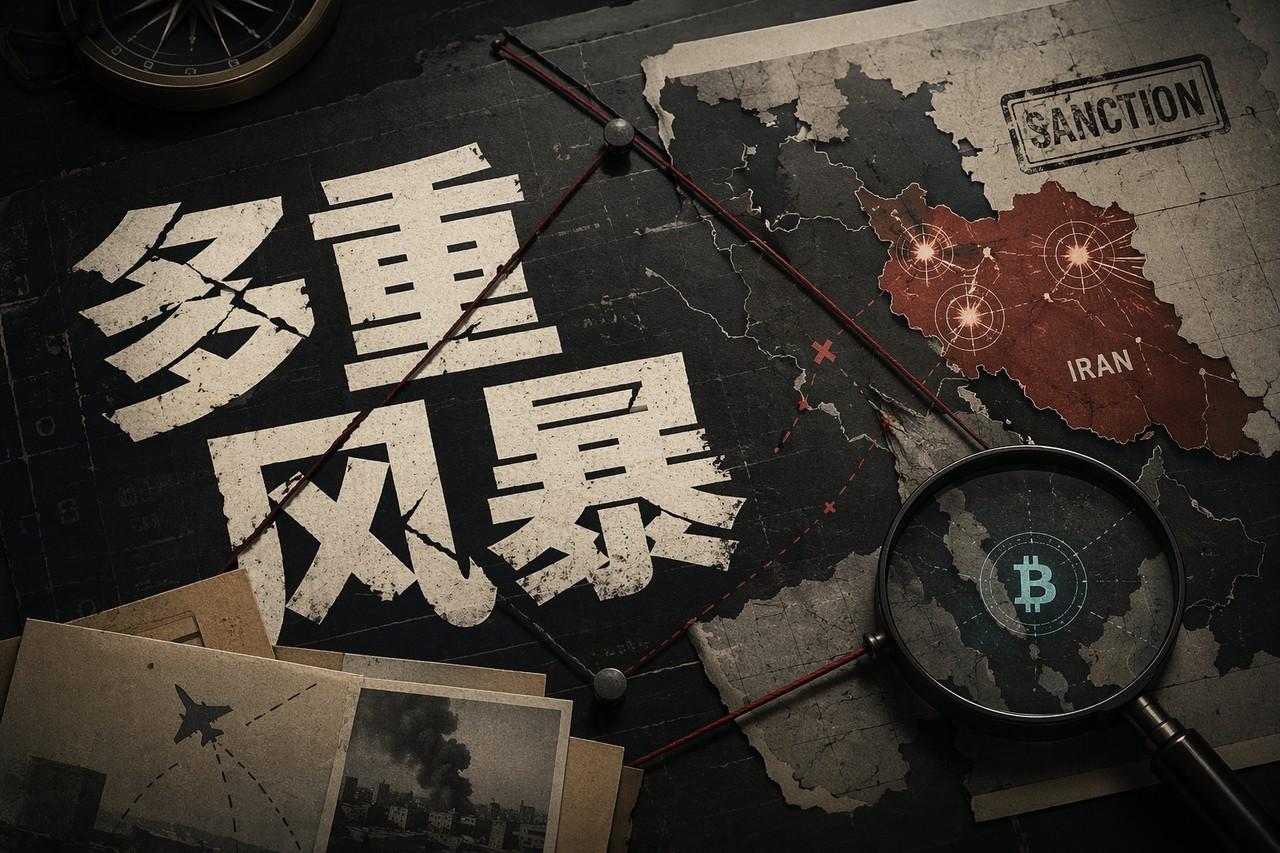
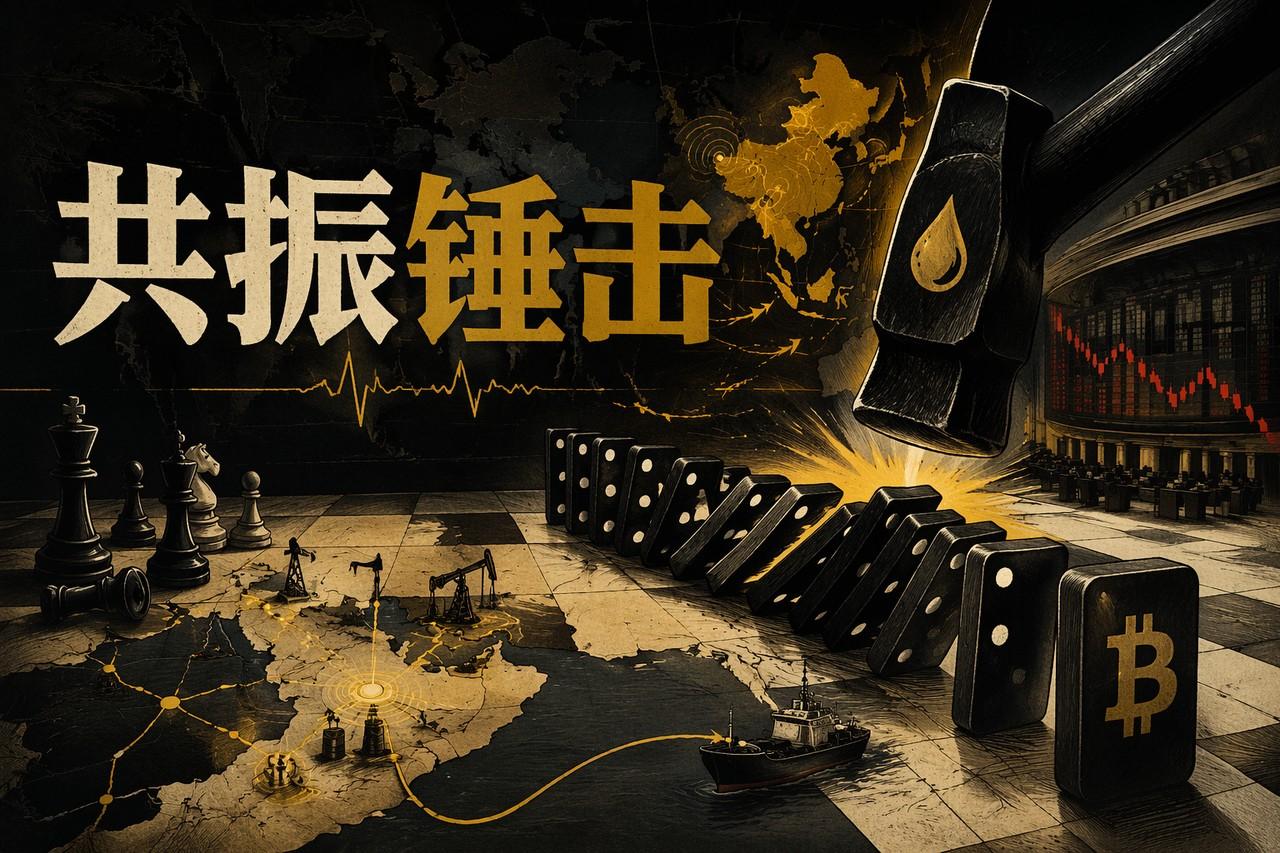
The ceasefire did not end this game. On April 8, 2026, the United States, Israel, and Iran barely reached a ceasefire agreement, temporarily suppressing the flames along the Middle East oil and gas routes, and the global market enjoyed nearly two months of a "geopolitical discount period." However, around June 7, local time, Iran launched missiles at Israel for the first time since the ceasefire, marking the first crack on the paper agreement. On the same day, Trump urgently called Netanyahu, asking Israel not to retaliate immediately, claiming that negotiations with Iran were close to a “good agreement,” hoping to exchange a pause in strikes for more negotiation leverage; although Netanyahu opposed it, he ultimately agreed to hold off to some extent. This political tug-of-war over the weekend was quickly translated into prices in the early Asian-Pacific trading on June 8: WTI crude oil futures jumped about 2.98%, reaching approximately $93.235 per barrel, with war premiums re-entering the curve; during the same period, major U.S. stock index futures fell about 0.3% to 0.6%, and the Korean KOSPI index plummeted about 8%, triggering a trading halt for 20 minutes, as geopolitical risks from the Middle East spilled over into the Asia-Pacific equity markets through oil prices. In traditional macro narratives, this means that expectations of inflation and paths for monetary policy have been re-priced, while in the crypto world, Bitcoin and Ethereum are again caught between two identities: one portion of funds treats them as "digital safe-haven assets," while another sees them as high-beta tools following stock market fluctuations. The surge in oil prices, the decline in stock index futures, and the KOSPI's trading halt collectively constitute the background noise of this upheaval; the real question is: this time, how will the global risk preference rearrangement ultimately reflect on the valuation and trading structure of crypto assets like BTC and ETH along energy prices and the stock market?
Missiles Break the Ceasefire: Oil Price Risk Premium Soars
The ceasefire agreement reached on April 8 gave the market nearly two months of “false peace.” Iran's missile launch at Israel around June 7 was seen as the first such attack since the ceasefire and truly shattered the tranquility in the minds of energy traders. As the news fermented over the weekend, by June 8 in the Asian-Pacific early trading session, WTI crude oil futures provided direct pricing feedback — an increase of about 2.98%, reported at about $93.235 per barrel, climbing back above $90, almost entirely interpreted as a re-pricing of Middle Eastern supply security, rather than a normal rise due to demand recovery. For macro trading, this jump represents not just a price fluctuation but the resurgence of war premiums: in the sensitive range of "above $90," oil prices are habitually seen as a troublesome combination that both constrains global growth and raises inflation expectations.
When oil prices are driven up by supply risks rather than demand prosperity, the signal to central banks is “more stubborn inflation risks” instead of “a healthier recovery logic.” This means that already weak expectations for interest rate cuts will be diminished, and the global monetary policy path tends to “maintain a tighter stance for longer,” with upward pressure on both nominal and real interest rate expectations. In terms of asset pricing, this translates to an increased discount rate: the margin for error on equity valuations narrows, and all high-beta assets' risk premiums are forced upward, including crypto assets viewed as alternatives to technology growth. The longer oil prices remain above $90, the more difficult it becomes for the market to simply package BTC and ETH as “macroeconomically decoupled assets”; they need to offer higher future returns to compensate for this round of discount rate increases driven by energy, which will be directly reflected in the subsequent volatility and the reordering of risk preferences.
Trump Hits the Pause Button on Retaliation: Hedging Risk Sentiment
Just as the market was rewriting risk premium curves using oil prices and stock index futures over the same weekend, Trump's phone call with Netanyahu on June 7 became a counter-anchor point in this narrative. According to U.S. senior officials and Israeli sources cited by Axios, he emphasized in the call that negotiations with Iran were “close to reaching a good agreement” or nearing a final accord and explicitly asked Israel to delay retaliation for the Iranian missile attack. The timing closely followed Iran's first missile action after breaking the ceasefire, making this call seem like a temporary interruption to the path of “immediate escalation to full conflict.”
Netanyahu took a hardline stance in the call, publicly opposing the delay of retaliation, but multiple reports pointed to a common detail: he ultimately “reluctantly agreed” or “somewhat agreed” to hold off temporarily. The result is a typical two-track structure presented to the market — the possibility of military escalation has not disappeared but is partially hedged by diplomatic mediation and expectations of a “good agreement.” Historically, a rhythm of “conflict escalation — diplomatic easing — risk asset sentiment repair” is often seen, where high-level signals of negotiation progress and restraint usually suppress the most extreme wartime scenarios. Under this narrative, funding shifts from a one-way full hedge to a game of paths: the oil price war premium lingers, but the tail risk of “uncontrolled escalation” is diminished, resulting in a shrinkage of the tail risk premium for high-beta assets. For BTC and ETH, which are simultaneously treated as “digital safe-havens” by some funds and as high-beta technology substitutes by others, the meaning of this pause button is not a direct price increase, but a tightening of the left-side tail: given that the discount rate has been pushed up by oil prices, the worst geopolitical scenarios are temporarily capped, and traders begin to use options structures, maturity mismatches, and position leverage to speculate on the direction of the situation over the next two months, rather than paying unlimited insurance premiums for doomsday scenarios.
Korea's Trading Halt Alarm: Asia-Pacific Stock Market Can’t Hold Up
The weekend missile news repeatedly fermented in the post-trading public opinion arena, but real pricing had to wait until the exchanges opened. On June 8, 2026, in the early Asian-Pacific trading session, oil prices first indicated the direction: WTI crude oil futures jumped about 2.98%, reaching $93.235 per barrel, as war premiums once again weighed on the valuation models of energy-importing countries. For South Korea, which heavily relies on external energy and is deeply embedded in the global supply chain, this is not just abstract geopolitical news but directly affects the cash flow discounting parameters — the KOSPI index dropped about 8% during the day, triggering a trading halt, with trading paused for 20 minutes, as multiple financial media immediately linked this wave of selling to the escalated Middle Eastern situation. In the same period, major U.S. stock index futures also generally fell 0.3% to 0.6% before trading opened, as American investors began to reprice global risk assets at the derivatives level before the market even opened, with the geopolitical shock from the Middle East spreading into a global “risk budget recalibration day.”
In such a highly volatile scenario, discussing the labels of “safe-haven assets” versus “risk assets” often lacks significance; what matters more is who occupies the margins and risk limits. Historically, Asia-Pacific markets like South Korea have been sensitive to tensions in the Middle East and significant fluctuations in oil prices. If a sudden drop like the KOSPI's nearly 8% loss occurs and triggers a trading halt, the VaR and leverage red lines in institutional risk control models will simultaneously be highlighted, and stocks, index futures, and crypto assets sharing the same set of capital pools will be collectively pulled into the list for coordinated de-leveraging. For many Asia-Pacific trading desks, BTC and ETH are viewed at this moment primarily as “the most liquid and elastic chips,” rather than the abstract “digital gold” in narratives: amid the combined impacts of the KOSPI trading halt and the decline in U.S. stock futures, the short-term selling pressure largely stems from passive deleveraging and margin gaps, causing the price performance to align more closely with a basket of high-beta technology stocks rather than serving as a hedging tool independent of stock market fluctuations.
Possible Three Trading Lines in Crypto
As oil prices were reignited in the Middle East, with WTI surging to about $93, and a daily increase of nearly 3%, the crypto landscape is actually being torn into three distinctly different trading lines. The first line consists of funds treating BTC as a “digital safe-haven asset”: the long-term escalating conflict between Iran and Israel has once again illuminated the combination of “geopolitics + oil prices + dollar liquidity,” leading some long-term participants to raise BTC's weight in their portfolios based on historical experience, viewing it as a cross-sovereign, anti-local currency depreciation allocation tool to hedge potential inflation due to Middle Eastern conflicts and risks of domestic asset shrinkage.
The second line treats BTC and ETH completely as high-beta technology assets from a macro perspective: in a risk-averse environment where major U.S. stock index futures are down 0.3%-0.6% and the KOSPI drops about 8% triggering a trading halt, they are included in the same list for reducing positions along with a basket of growth stocks. High leverage positions are the first to cut exposure, followed by low leverage positions shrinking their open interests, amplifying the price volatility of cryptocurrencies in sync with the decline of stock indices, rather than providing counter-cyclical hedge returns.
The third line resembles a structural retreat: as safe-haven demand for dollar-denominated assets rises amid geopolitical crises, some funds first temporarily “anchor” the chips originally intended for BTC and ETH in dollar positions through dollar-pegged coins and centralized exchanges, waiting for the noise from oil prices, stock indices, and Middle Eastern conditions to diminish before seeking opportunities to shift back to high-risk assets, thus turning the original question of “whether to hold coins” into a pure timing gamble of “when to get back in.”
What to Watch Next: Oil Prices, Negotiations, and Fund Direction
Stretching the timeline from the April 8 ceasefire to June 8, the macro coordinates have been freshly carved: WTI returning to the $93 level indicates that war premiums are again weighing on inflation and monetary policy expectations; KOSPI's 8% drop triggering a trading halt and the pre-opening decline of U.S. stock futures suggest that geopolitical risks have spilled from the Middle East into major equity markets; simultaneously, Iran's renewed attack, Trump's assertion that negotiations with Iran are “close to a good agreement,” and Israel's postponement of retaliation add another layer of diplomatic easing options on top of the risk premium. Moving forward, the market will repeatedly question four issues: Will Iran turn this missile attack into a series of actions? Will Israel tear up the implicit agreement to "postpone retaliation"? Will the Iranian deal pushed by Trump provide substantial texts in the coming weeks? And before all of this is clarified, will oil prices remain in a high plateau above $90, or be forced to continue rising? For on-chain funds, the framework can be simply broken down into two scenarios: if the conflict escalates and oil prices rise again, historical experience shows that “liquidity is killed first, then repricing” — BTC and ETH will initially be sold off as high-beta risk assets, and dollar-pegged coins will temporarily magnify their roles as safe havens and transit tools. Only when the market begins to bet on a second round of inflation and policy shifts will Bitcoin's “digital safe-haven” narrative return; if negotiations progress, Israel exhibits restraint, and oil prices fall from high levels, the risk premiums weighing on the global stock market will be partially released, with BTC and ETH returning more to a pricing framework of high-beta growth and technology assets, and dollar-pegged positions will shift back from defense mode to cash and futures positions. Ultimately, what will determine the depth of the imprint left by this round of Middle Eastern shock on-chain is how the trajectories of oil prices and progress in negotiations together rewrite preferences for time and risk for funds.
Join our community, let’s discuss together and grow stronger!
AiCoin exclusive Hyperliquid benefits: https://app.hyperliquid.xyz/join/AICOIN88
AiCoin exclusive Aster benefits: https://www.asterdex.com/zh-CN/referral/9C50e2
On-chain Telegram community: https://t.me/AiCoinWhaleData
On-chain community: https://www.aicoin.com/link/chat?cid=N6OVMor5g
AiCoin on-chain Twitter: https://x.com/aicoinwhaledata
免责声明:本文章仅代表作者个人观点,不代表本平台的立场和观点。本文章仅供信息分享,不构成对任何人的任何投资建议。用户与作者之间的任何争议,与本平台无关。如网页中刊载的文章或图片涉及侵权,请提供相关的权利证明和身份证明发送邮件到support@aicoin.com,本平台相关工作人员将会进行核查。