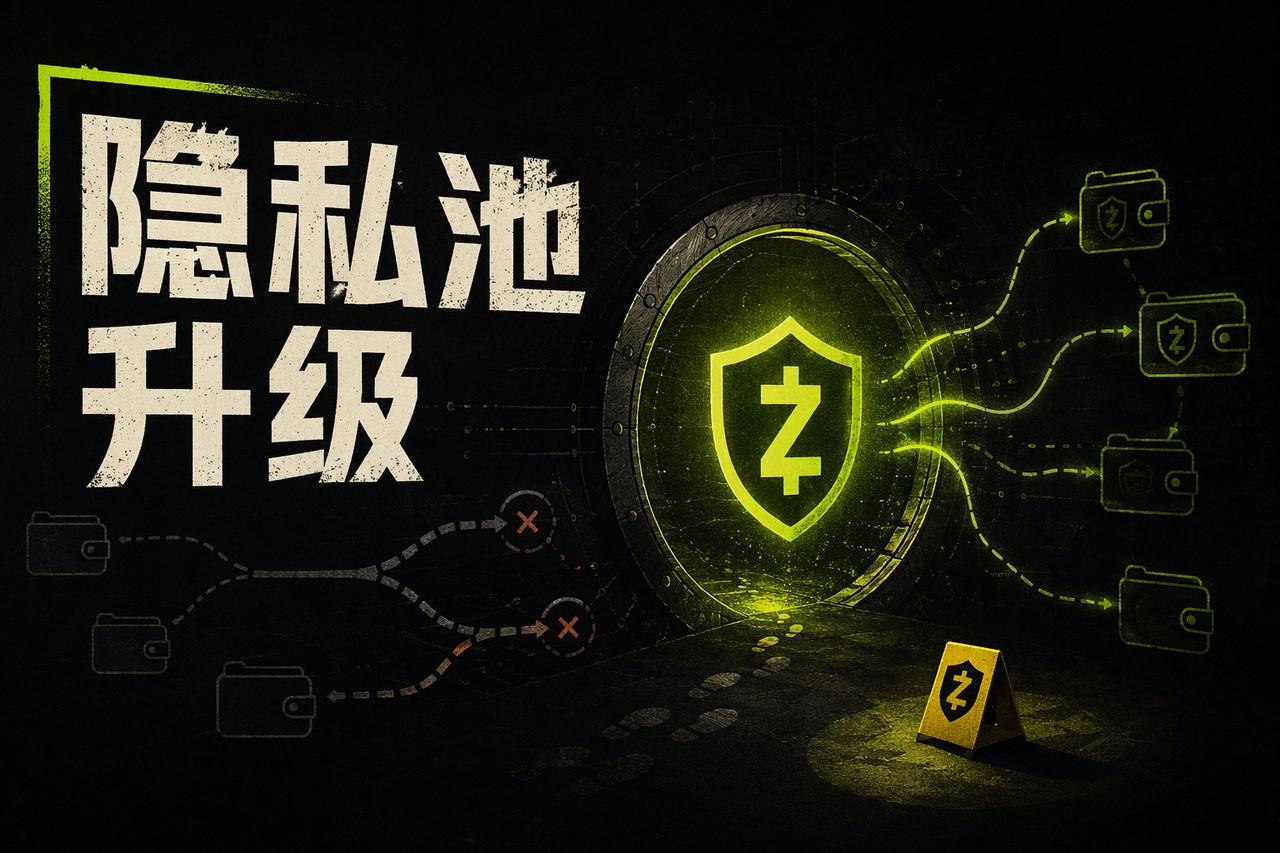
Zcash has consistently shaped the narrative of “invisible transaction details, yet a trustworthy system” through zero-knowledge proofs (zk-SNARKs) until a vulnerability, unnoticed for four years, was exposed in the Orchard shielded pool. On May 29, 2026, security engineer Taylor Hornby, using the Anthropic Opus 4.8 model, discovered serious to critical issues within this privacy pool activated in 2022, with relevant information made public around June 6, prompting the entire ecosystem to question how high the cost of “invisibility” truly is. Subsequently, multiple parties including Shielded Labs, Zcash Open Development Lab, Zcash Foundation, Tachyon Group, and Valar Group proposed the Ironwood upgrade plan to address repair pathways, aiming to activate it on the network by the end of July 2026. This plan seeks to re-establish the verifiability of the circulating and total supply of ZEC on-chain through the introduction of new shielded pools, as Zooko emphasized, “returning the verifiability of supply to users.” However, when a privacy-focused network must reopen certain accounting logic to fix trust gaps, an unavoidable question arises: how much room can privacy coins leave for auditing the overall supply while maximizing user transaction detail concealment?
AI Unveils Orchard Vulnerability Crisis
The story of “returning the verifiability of ZEC supply to users” begins with an AI-assisted code review. On May 29, 2026, security engineer Taylor Hornby did not rely solely on manual visual inspection of complex zero-knowledge proof circuits while reviewing the Orchard shielded pool, but instead incorporated Anthropic's Opus 4.8 model into the audit process. This “human-AI paired programming” review ultimately unearthed a vulnerability categorized as serious or critical, within the privacy pool regarded as a secure fortress since its launch in 2022.
What truly stung the Zcash community was not just the vulnerability itself, but that it had been proven to “exist since the activation of Orchard.” In other words, for a long time, a portion of the privacy circulating supply of ZEC was built on a structural gap that no one noticed, directly impacting the overall credibility of network supply and users' psychological expectations of “on-chain auditability.” As relevant details were disclosed around June 6, 2026, this vulnerability uncovered by AI forced the entire privacy coin sector to rethink: traditional security audits are evidently insufficient to cope with complex privacy protocols, and AI tools must no longer just be adjunct debugging toys but must be systematically integrated into security infrastructure.
Ironwood: Redefining Audit Rights through New Privacy Pools
After the Orchard vulnerability ripped open the baseline of “auditable total supply,” the Zcash ecosystem's response was a collaborative upgrade proposal driven by Shielded Labs, Zcash Open Development Lab, Zcash Foundation, Tachyon Group, and Valar Group: Ironwood. According to current publicly available plans, this network upgrade is expected to activate by the end of July 2026, with one of its core design directions being to replace or supplement existing privacy pools by introducing new shielded pools, thereby bringing the circulating and total supply of ZEC back to a verifiable track.
For users, what Ironwood aims to do is not to weaken privacy, but to return the right to “independently audit this chain” while maintaining the concealment of transaction details through zero-knowledge proofs. Zcash founder Zooko has repeatedly emphasized in public statements that Ironwood's goal is to transform verifiability of supply from promises of a few maintainers back into facts verifiable by users, which serves as both a repair for the Orchard incident and a direct response to an old issue in the privacy coin world—how to maintain the currency accounting function of the entire chain while concealing individual transactions. If Ironwood can be successfully implemented and operated stably as planned, the long-term monetary credibility of ZEC and protocol trustworthiness will have the opportunity to rebuild trust based on on-chain verifiability from this crisis.
Shielded Labs Takes Immediate Action to Resolve the Crisis
After the vulnerability was confirmed, the Zcash ecosystem swiftly entered “war mode.” In a public statement by founder Zooko, Shielded Labs, ZODL (Zcash Open Development Lab), Zcash Foundation, Tachyon Group, and Valar Group were named as key preparatory forces for the Ironwood upgrade. These teams, coming from different backgrounds, quickly rallied around the risks exposed by the Orchard shielded pool to advance design and implementation with the common goal of creating a new shielded pool. Ironwood is clearly identified as a joint proposal, indicating that this is not a patch decided by a single maintainer but a collective compromise and reconstruction at the protocol, implementation, and risk management levels.
From the perspective of governance and collaboration, this crisis not only proves Zcash's resilience at critical moments: after discovering the issue, research, development, and public welfare institutions within the ecosystem can align priorities in a short period to redistribute tasks focused on restoring the verifiability of ZEC supply, with Zooko articulating the upgrade intentions externally, maintaining basic information transparency and narrative coherence. On the other hand, the fact that the Orchard shielded pool has long harbored severe vulnerabilities since its activation in 2022 also exposes shortcomings in the existing governance structure regarding security audits, cross-team code reviews, and risk response plans—when multi-party collaboration mainly manifests in “post-event joint fire-fighting” rather than “pre-event systemic defenses,” whether Ironwood can truly repair institutional trust, and not just fix a single vulnerability, will be a question the Zcash community must answer moving forward.
Zcash's Moment in the Debate over Privacy and Verifiability
When the Orchard vulnerability was uncovered, Zcash faced more than just an engineering accident; it confronted the old issue that privacy coin projects cannot avoid: how to ensure total supply remains verifiable while using zk-SNARKs and the next generation of shielded pools to drastically compress on-chain visibility. Orchard, introduced as a new shielded pool after the 2022 NU5 upgrade, essentially chose the former in balancing “preferably hiding a bit more information” against “preferably exposing a bit more accounting details,” which made any systematic auditing of assets in the pool increasingly reliant on the tools and professional understanding of a few development teams. If these tools or models had flaws, the market would intuitively interpret it as “is it possible that unnoticed inflation has already occurred.”
Against this backdrop, defining Ironwood as an upgrade to “restore or enhance the verifiability of the circulating and total supply of ZEC” goes beyond merely fixing a bug in the shielded pool logic. Zooko describes it as returning verifiability of supply to users, which fundamentally acknowledges: the past model of pushing privacy to extremes while having a few teams guarantee safety and accuracy is no longer adequate to meet regulatory minimums against “unlimited inflation” and fails to respond to holders’ long-term trust requirements. More alarmingly, Taylor Hornby, who discovered the Orchard vulnerability, subsequently announced plans to audit Monero and expand to more privacy coin projects, compelling the entire sector to recalibrate its narrative—future privacy designs will no longer merely be a technological competition of “hiding deeper” but will focus on finding an acceptable balance among architecture, compliance language, and supply transparency.
The Trust Assessment Challenge After Ironwood
When Ironwood activates on the mainnet as planned at the end of July 2026, the real test will have just begun: Can Zcash withstand the scrutiny of time and real-world attack surfaces under the new shielded pool architecture, allowing users to “stably” re-audit ZEC's circulation and total supply for soundness in practical operation? The answer will not only be written in the protocol code but also hinges on several key variables—whether the community is willing to migrate assets and long-term stay in the new privacy pool, whether independent audits can continuously expose and remedy potential flaws, and whether this round of turmoil ultimately crystallizes into a replicable standardized security process rather than a one-off crisis response. Taylor Hornby’s focus on Monero and plans to extend into more privacy coin projects suggest that the entire sector is being forced into a “collective review” cycle of security reassessment; how Ironwood is implemented and remembered will determine whether this round of “trust repair” is just a temporary patch or a paradigm shift for the industry.
Join our community to discuss and become stronger together!
AiCoin exclusive Hyperliquid benefits: https://app.hyperliquid.xyz/join/AICOIN88
AiCoin exclusive Aster benefits: https://www.asterdex.com/en/referral/9C50e2
On-chain Telegram community: https://t.me/AiCoinWhaleData
On-chain community: https://www.aicoin.com/link/chat?cid=N6OVMor5g
AiCoin on-chain Twitter: https://x.com/aicoinwhaledata
免责声明:本文章仅代表作者个人观点,不代表本平台的立场和观点。本文章仅供信息分享,不构成对任何人的任何投资建议。用户与作者之间的任何争议,与本平台无关。如网页中刊载的文章或图片涉及侵权,请提供相关的权利证明和身份证明发送邮件到support@aicoin.com,本平台相关工作人员将会进行核查。