Original author: Sleepy
Recently, there has been much debate in Silicon Valley about the value of a life.
A young man named Nico Laqua, twenty-five years old, grew up in San Diego. His father worked as a lawyer for the USAA insurance company all his life. Nico watched his father type, fill out forms, and flip through clauses in front of the computer since he was a child, with the whole house piled high with papers.
Then ChatGPT emerged, and he looked at those papers and thought that insurance might just be one of the industries with the most interactions with text in the world, so using ChatGPT for processing should be very effective.
Thus, in the summer of 2024, he and Stanford dropout Emily Yuan entered Y Combinator with this idea and started an insurance company named Corgi, with a logo of a corgi dog.
Corgi is not a middleman; they underwrite, issue policies, and handle claims themselves, holding a full-stack insurance license. For this license, they spent thirty-five million dollars to acquire a decades-old insurance company, buying both the shell and the qualifications.
Corgi officially launched in July 2025. By the end of the year, their annual recurring revenue exceeded forty million dollars, serving over forty thousand startup clients across forty-nine states, with a customer churn rate of less than one percent. In an industry with paper-thin profits, these numbers are impressively solid.
But recently, people learned about Corgi not because of its impressive performance.
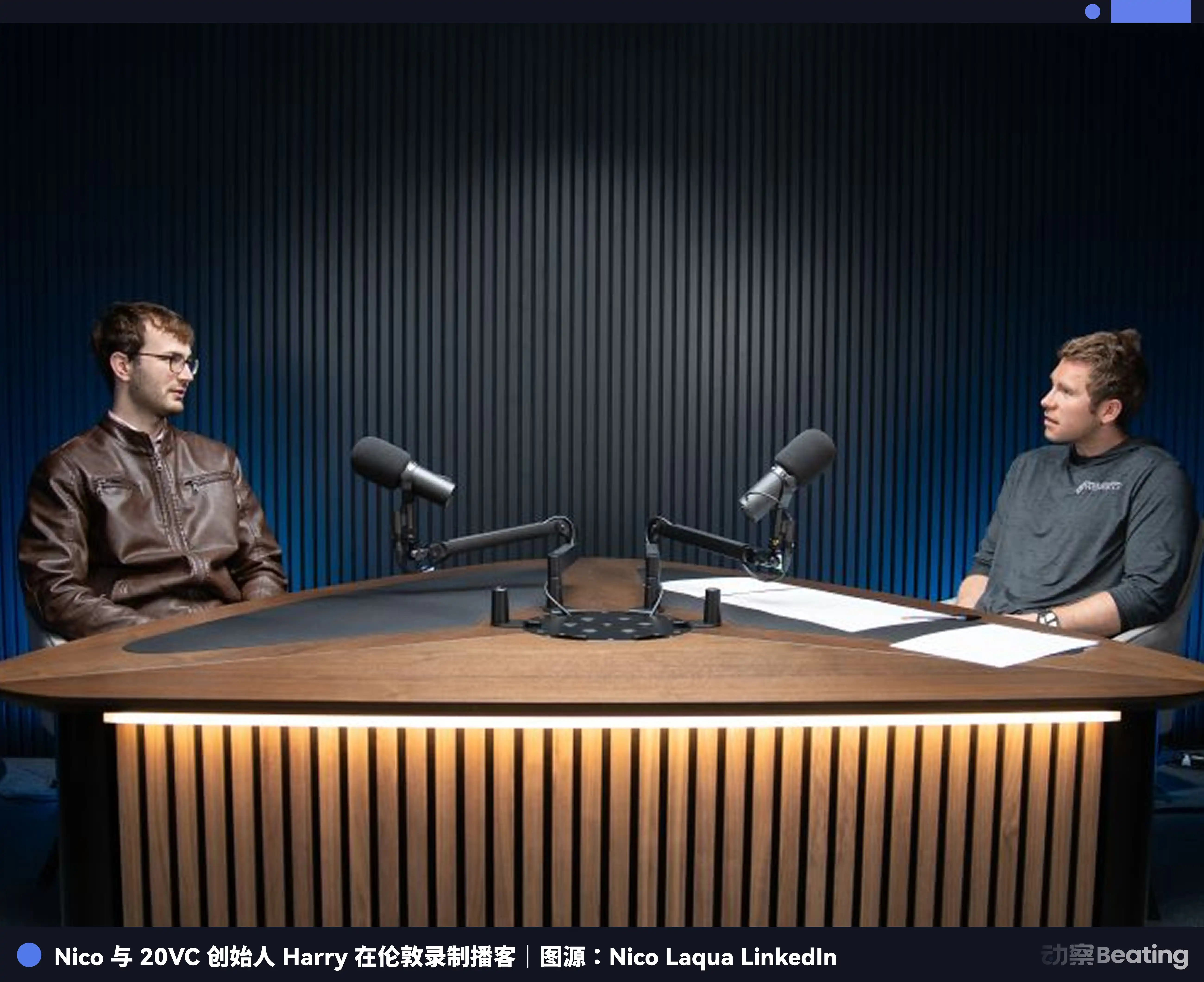
At the end of May 2026, Nico appeared on Harry Stebbings' podcast 20VC. The episode was titled "The Most Extreme Workplace Culture in America."
He lives in an office in the San Francisco Financial District, with a mattress directly on the floor, showering at the Equinox gym down the street. "They close at eight on Friday nights," he said, "that's not great."
He sleeps three to four hours a day, suffers from psoriasis, and experiences some palpitations. When he talks about these ailments, his tone is steady, as if he is reading someone else's medical report.
He also complains that the coffee shops in the Financial District close too early. After six or seven in the evening, there is almost no "nightlife" in that area. So he leased an old barbershop space on the ground floor of his office building, spending less than a hundred thousand dollars to convert it into a 24-hour café, so he and his employees can have coffee anytime while working around the clock.
Corgi's interviews are intentionally scheduled on weekends. Nico said, "If your days off just happen to be Saturday and Sunday, then Corgi is not for you."
He believes that the office of a high-growth startup should be full every day, and employees can take a day off occasionally, but fixed weekends off do not exist. "If you can finish something in five days, you can definitely accomplish more in six or seven days. You should give it your all."
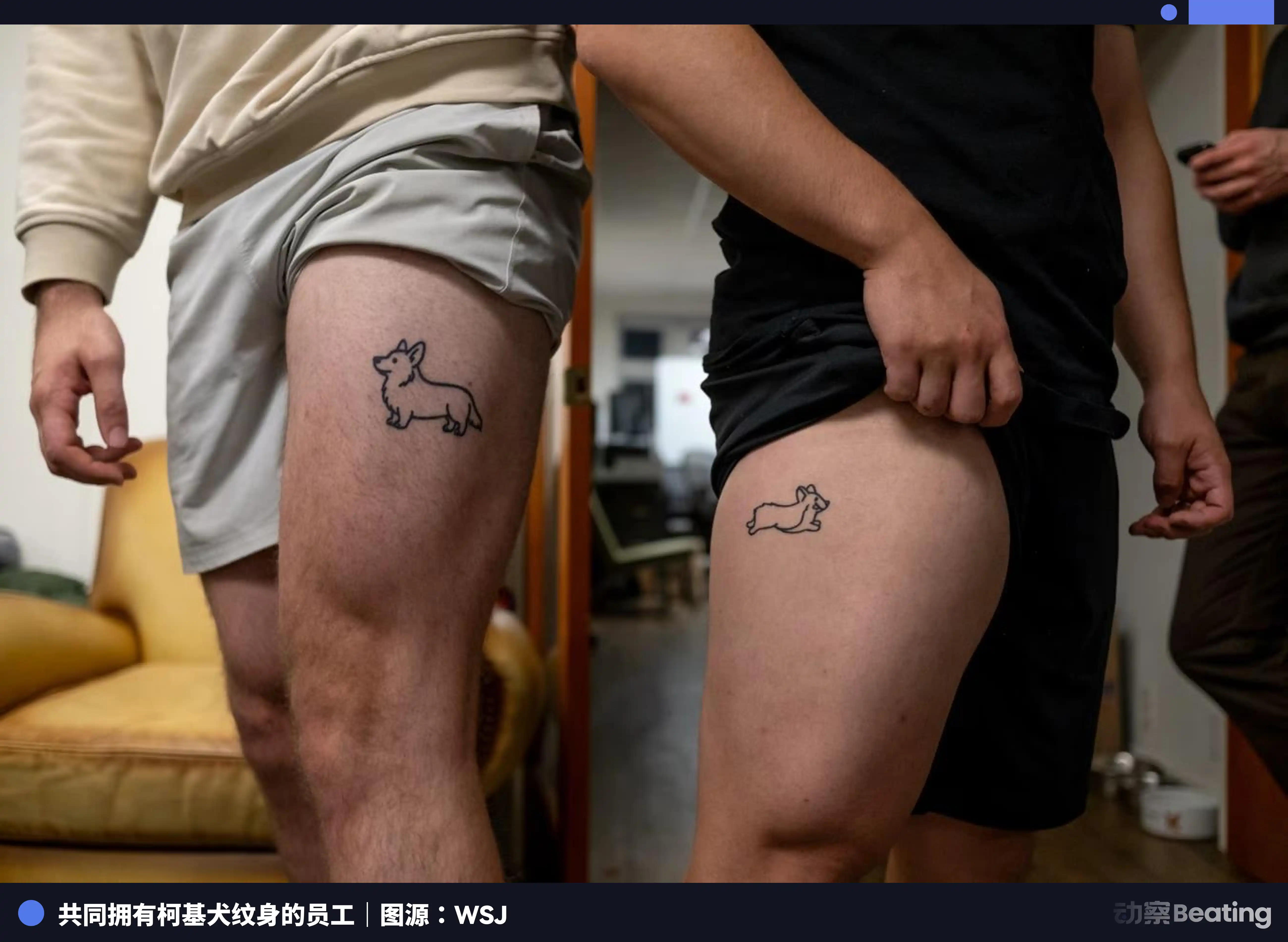
In such a company, two-thirds of the early thirty employees have even tattooed the corgi logo on their bodies.
As the interview was wrapping up, the host posed a multiple-choice question: Corgi becomes a trillion-dollar company, but you die at fifty. Or the company fails, and you live to eighty. Which one would you choose?
"That's too easy. After all, I have to die someday," Nico replied, citing a statistic that says ninety-eight percent of Olympic athletes would trade ten years of their life for a gold medal.
I listened to that part several times and felt something was off.
It wasn't because he chose to die thirty years earlier; how he chooses is his business. What puzzled me was that he found the question simple. For a question that prices life, he answered without hesitation, as if he had already thought it through, or he never considered that there was anything worth contemplating in it.
A person who is so resolute about their own life has either truly figured it out or hasn't thought about it at all; from the outside, both states look the same. But what I actually worry about is the third possibility: he has thought about it, but that logic itself is wrong, and he is completely unaware of it.
After the episode aired, he received death threats and numerous private messages. Linear founder Karri Saarinen wrote on X that this kind of thinking "often represents young founders who perceive entrepreneurship as their persona. They struggle to do anything outside of work and cannot understand that your job does not equal who you are."
Nico replied, "If you care about an issue, you will naturally work hard for it."
He didn't think he was insane.
You Will Be Unlucky
To understand why this situation is twisted, one must first talk about the origins of the insurance business.
In 17th century London, there was an unremarkable café on Tower Street by the Thames, owned by Edward Lloyd. Shipowners, merchants, and brokers crammed inside to drink coffee, discussing nothing but bad news. This ship might sink, that batch of goods might be lost; the storm is ruthless and treats every brave sailor equally. Maritime trade is profitable but fraught with risk. A ship goes out; no one can guarantee it will return.
They talked and talked until they forged an industry. You pay a certain amount, and I’ll bear the risks you cannot handle. Lloyd's café eventually became Lloyd's of London, which remains a totem of the global insurance industry today.
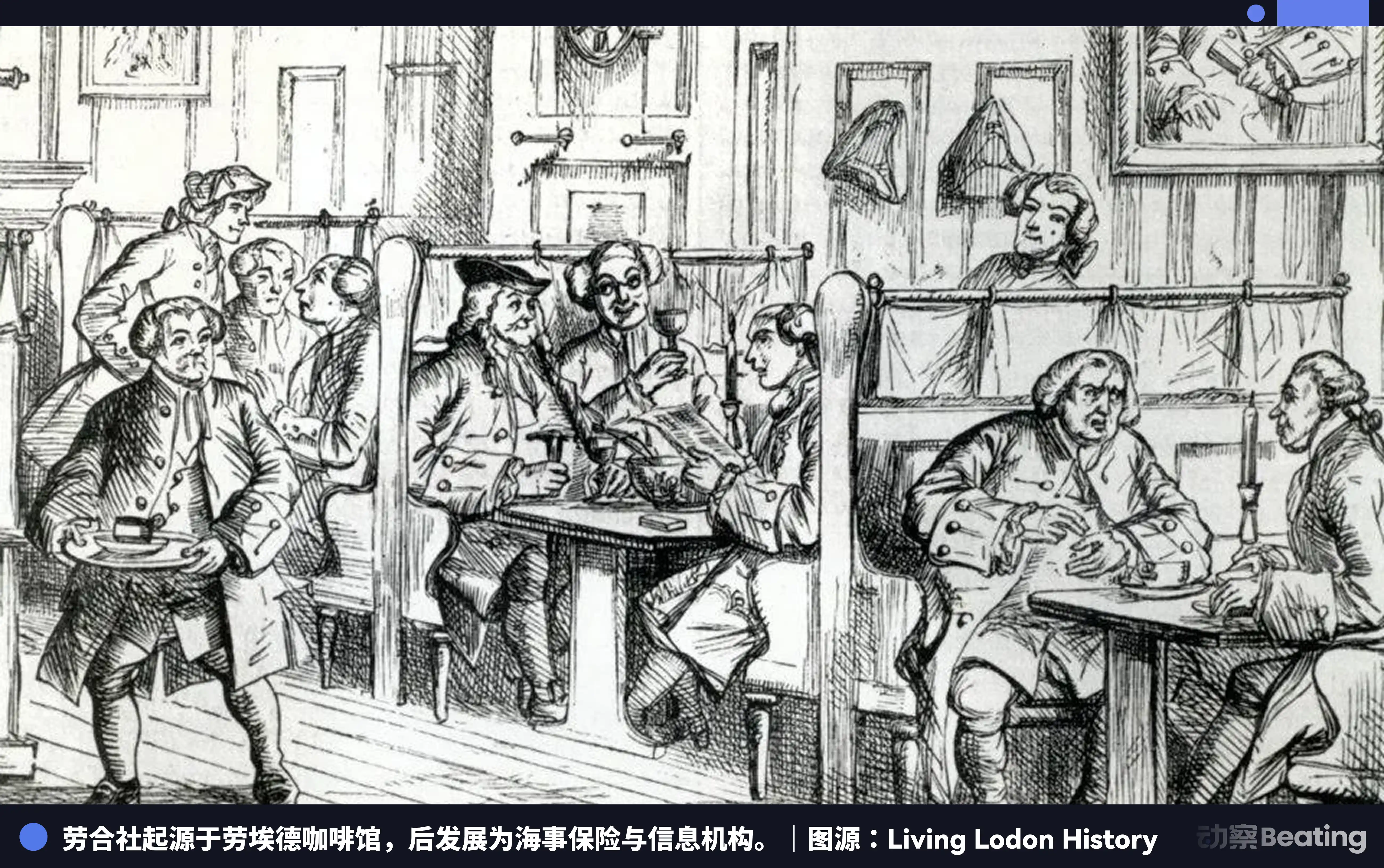
A café, over three hundred years old. Since its inception, the insurance business has been labeled with five words: you will be unlucky.
This is not a curse; it is stating a fact. Houses will catch fire, people will fall ill, cars will crash, businesses will fail; you will have accidents when you least expect them.
The Industrial Revolution came, machines took people's fingers, hence the birth of workers' compensation insurance. Your product might harm others, leading to liability insurance. The economic cycle can turn overnight, creating unemployment insurance. Life has grown more complex, to the point where no one can endure all misfortunes alone.
Insurance never expects people to tough it out. It directly assumes you will not make it and prepares the money in advance.
In such an industry, the last thing one should do is idolize someone who is reckless with their life. Yet Corgi does the opposite. A company selling risk management relies on a founder's disregard for their life to prove its reliability.
Asceticism Is an Art of Valuation
But this matter is not complex. Don't think about it spiritually; think about it in terms of valuation, and it becomes clear.
AI is making companies lighter. In the past, fifty people might take five years before they felt ready to seek funding; now, five people can store a demo and sit at the table. Corgi has 177 people achieving forty million dollars in annual revenue, and the per capita output is indeed astonishing. The AI system has streamlined the entire underwriting, policy issuance, and claims process. The efficiency is apparent, visible to investors.
Yet its valuation growth is still too exaggerated. In early May 2026, it was valued at 1.3 billion and by the end of the month, it flipped to 2.6 billion—doubling in three weeks—and has raised a total of 269 million dollars. A two-year-old insurance company’s valuation has already surpassed many established competitors of several decades.
Valuation is something that is built upon the "future," but the current "future" is insubstantial. To stabilize something weightless, it needs a solid foundation beneath it. Thus the mattress was moved out of the office, the lights stayed on all night, employees' tattoos were displayed, and Nico's psoriasis and palpitations were also brought up.
Asceticism is never a management style, nor even a work attitude. Asceticism is a storytelling art, especially in this age of narrative inflation. Co-working spaces say they are "enhancing human consciousness," ride-sharing apps claim they are "reshaping the future of cities," and cryptocurrency traders argue they are "rebuilding financial freedom."
In the AI era, the inflation intensifies. Technology genuinely accomplishes things that were previously impossible, which blurs the lines further between boasting and actual work. Asceticism is the best disguise for a bubble. It pulls an abstract vision back to the physical realm, making you feel this isn't just rhetoric on a PowerPoint slide. People are putting their lives on the line, so it can't be fake, right?
"I Am Willing"
The greatest ability of a startup is not paying salaries, nor is it offering equity; it is providing identity. It allows a twenty-five-year-old to feel that they are not just working but participating in something worthy of their life. Nico says he wants to hire "people who want to do something important with their lives."
The words sound good and seem genuine. But upon closer inspection, a system specifically selects those who tie their self-worth to their work, replacing normal labor protections with mission and meaning, and defining those who need to sleep, need weekends, or need to go home to cook for their children as "not dedicated enough." This system begs the question: is it fulfilling young people's dreams or consuming their dreams?
Young people in the AI era are afraid of being left behind by the world, afraid of standing still, afraid of waking up one day to find they have become relics of a previous era.
Thus they utter those three words, "I am willing."
But what lies behind those three words is much more than they realize. It encompasses the imagination of wealth, the fear of falling behind, and the anxiety that this era bestows upon them. In the face of these things, the choice they make, can it be considered free will? I have my doubts.
Conceiving consumption as choice, anxiety as ambition, and overexertion as passion ultimately leads to making you utter the most cost-effective management phrase. Once spoken, management costs drop to zero. You are no longer a laborer needing protection but a willing, burning believer. The boss does not owe you overtime pay; you owe yourself a great future.
This set of rules has another effect: it filters people. Those filtered out are not necessarily those lacking ability but rather those leading normal lives—people who have children to pick up, elders to care for, health warning signs, and still want to date well and sleep in on weekends.
Those who are filtered out will certainly be unaware of these reasons; the feedback they receive is merely that they are "not All In enough."
We Must Imagine Sisyphus as Happy
In the conclusion of "The Myth of Sisyphus," Camus wrote: we must imagine Sisyphus as happy.
The gods punish Sisyphus by making him push a boulder up a mountain. Just as he reaches the top, the boulder rolls down, and he descends to start all over again, endlessly.
Camus asserts he is happy. Not because the boulder reaches the peak, but because he knows it will roll down again, yet he continues to push. There is no endpoint, but he perseveres. The boulder is his, the mountain is his; the absurd is his. Clarity itself is freedom.
Silicon Valley also speaks of Sisyphus but in a way entirely opposed to that of Camus. The Sisyphuses of Silicon Valley do not accept that the boulder will roll back to the foot of the mountain; they believe that if they exert enough effort this time, the boulder will stay firmly at the top. They always say this time is different and genuinely believe they will reach the summit this time.
Camus's Sisyphus possesses destiny, while Silicon Valley's Sisyphus is possessed by destiny.
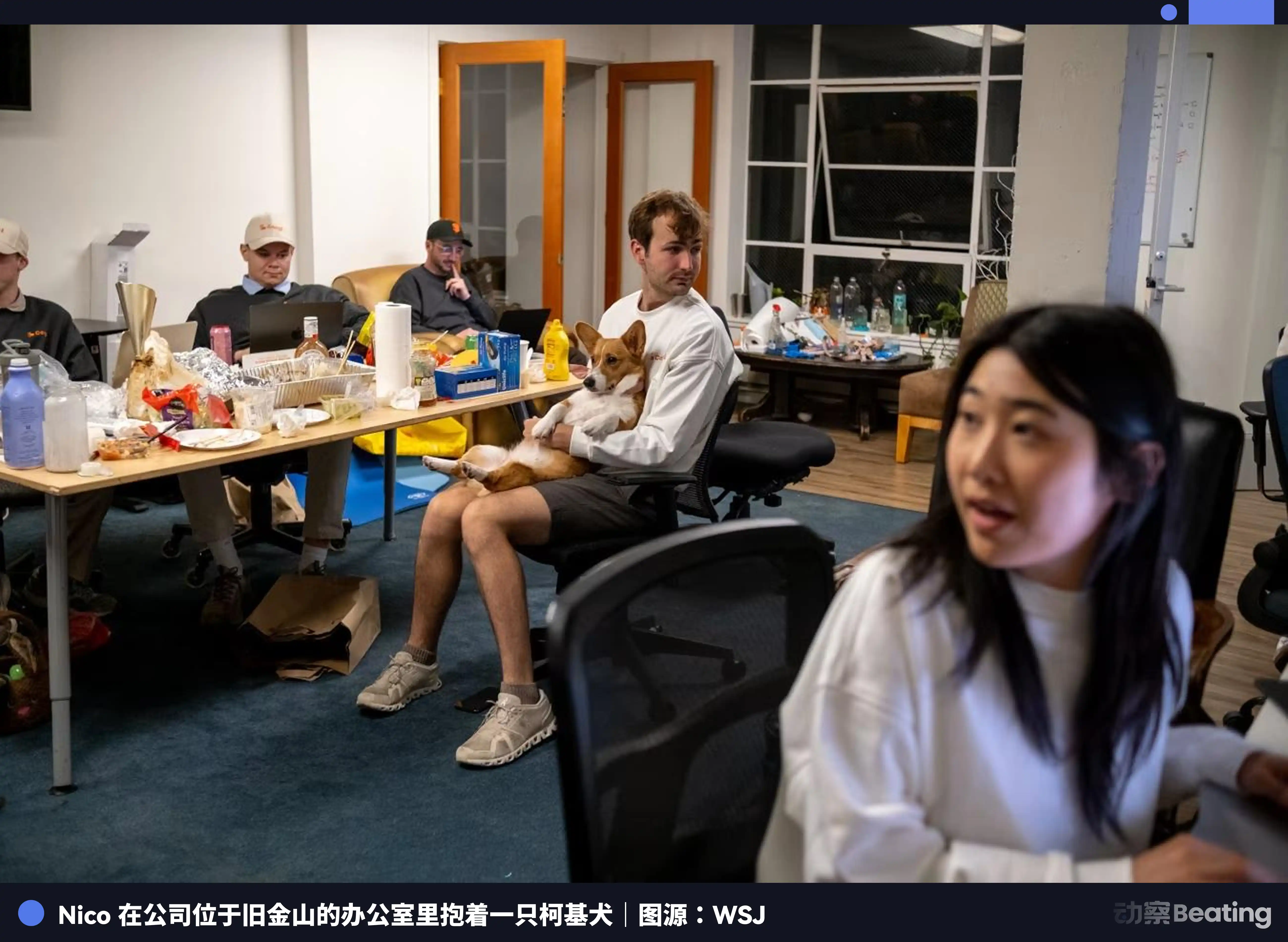
Nico has founder shares, started a business before turning twenty-five, made the Forbes list, and went through YC. He can tell another story after taking a loss. Those twenty-three or twenty-four-year-olds who come to San Francisco with suitcase in hand, laying mattresses on the office floor, what can they restart after losing?
Insurance inherently acknowledges that failure is a probability, not a fault. It recognizes that people can collapse, face misfortune, and make wrong decisions at the wrong time. It acknowledges that some boulders are destined to roll down the mountain, regardless of how much effort you exert.
This recognition embodies a kind of goodwill. It does not ask why you fell; it just ensures that a mat is put down before you do. This is a severely underestimated goodwill.
Corgi's technology is genuine; the efficiency is real. Policies can be issued within twenty-four hours, and AI handles the entire claims process. If it only spoke of these aspects, it would be a very good company.
But it insists on telling another story. It emphasizes sleeplessness, fearlessness, and overtime work, making you believe it is worth 2.6 billion dollars not only because of its good products but also because the people here are more reckless than others.
We must imagine Sisyphus as happy, provided that the boulder is his own.
免责声明:本文章仅代表作者个人观点,不代表本平台的立场和观点。本文章仅供信息分享,不构成对任何人的任何投资建议。用户与作者之间的任何争议,与本平台无关。如网页中刊载的文章或图片涉及侵权,请提供相关的权利证明和身份证明发送邮件到support@aicoin.com,本平台相关工作人员将会进行核查。


