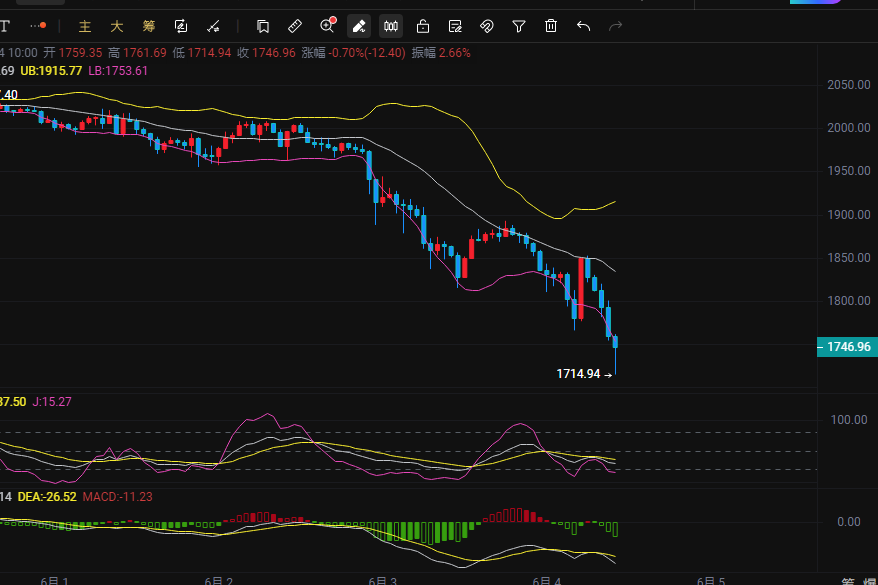
On June 4, 2026, two muffled rumbles sounded simultaneously on-chain: on one side, the wallet related to former ConsenSys ambassador Russell Verbeeten, which had been inactive for a long time, suddenly withdrew 20,426 ETH from Aave, equivalent to about $37.26 million at the time's price. It was subsequently split into 10 new addresses, with approximately 4,144 ETH already flowing into a centralized exchange; this early holder's average cost was only about $5.6 per coin, making each moved ETH practically "pure profit" on paper. On the other side, the largest ETH long on the contract trading platform Hyperliquid was being pushed down by the market: approximately 120,000 ETH, with an opening price of $2,261, nominally valued at about $271 million, faced floating losses of tens of millions of dollars after ETH dropped about $100 from the previous day, forcing it to add approximately 11 million USDC in margin over the recent day, pulling the liquidation price down from about $1,617 to approximately $1,506 in a tough struggle for survival. When a whale with a cost of $5.6 starts pushing chips towards the exchange entrance, another highly leveraged long is struggling at the liquidating price, the market is genuinely concerned about whether the two forces of active selling and passive liquidation could converge into an uncontrolled downward shock at the same moment.
Five Dollar ETH Whale from Ten Years Ago Awakens
Going back to the time when most people had not yet heard the name "Ethereum," Russell Verbeeten was already quietly queuing on-chain. He served as a ConsenSys ambassador and was seen as one of Ethereum’s early participants. According to public on-chain analysis, his main ETH holdings can be traced back about 10 years, with an average cost of only about $5.6 per coin—this is a price that only the earliest "bettors" could have acquired. Placing this cost line into the current price range of about $2,000, even without precise calculation, one can intuitively sense that it represents a super-long bet yielding over three hundred times on paper.
Because of this, the address had seen almost no major moves in the past year, making this sudden large transfer particularly eye-catching: after a long silence, this typical low-cost whale began to adjust its chips again, viewed as "old money that has been asleep for many years making decisions." For the market, the actions of such extremely low-cost holders are difficult to simply interpret as short-term trading and resemble a re-evaluation of the entire cycle—when a participant who bought at a few dollars and whose profits have ballooned to an unimaginable magnitude chooses to act, the outside world naturally interprets it as a sentiment indicator, speculating whether it is preparing for the next round of positioning or searching for an exit for the current round.
20,000 ETH Leaves Aave for New Addresses
According to AiCoin data, about 7 hours before publication, a Russell-related address withdrew 20,426 ETH in one go from Aave, equating to approximately $37.26 million at that time. After the funds left the lending pool, they did not immediately rush to known exchange hot wallets, but were swiftly split into 10 newly created addresses: each address holds several thousand coins worth of medium positions, neither continuing to concentrate into one or two "super positions" nor being broken down into dozens or hundreds of extremely fragmented small addresses; it appears more like a conscious effort to break a whole whale position into several separately manageable "sub-accounts."
Subsequently, about 4,144 ETH from these new addresses have been deposited into a centralized trading platform, though the specific platform name has yet to be cross-validated by multiple sources, while approximately 16,282 ETH remains quietly at the new addresses, neither moving cross-chain again nor further identified as flowing into wallets of other trading platforms. From an on-chain perspective, the funds "arriving at the exchange" does not equate to having been sold; the order and transaction details inside the exchange are invisible to the out-of-chain world. Therefore, it can only be confirmed at this point that this extremely low-cost chip has completed the repositioning and partial accounting, but it cannot yet be concluded that Russell has initiated substantial selling; the market sees it as a potential pressure interpretation, remaining at the expectation level.
120,000 ETH Longs on Hyperliquid Suffers
In contrast to the $5 per coin spot chips, on the perpetual contract side, a giant account betting on ETH on Hyperliquid finds itself passively on the other end. According to AiCoin data, this anonymous giant holds a
免责声明:本文章仅代表作者个人观点,不代表本平台的立场和观点。本文章仅供信息分享,不构成对任何人的任何投资建议。用户与作者之间的任何争议,与本平台无关。如网页中刊载的文章或图片涉及侵权,请提供相关的权利证明和身份证明发送邮件到support@aicoin.com,本平台相关工作人员将会进行核查。