The aftermath of the tanker incident near the Strait of Hormuz has not subsided, while the confrontation between Iran and the United States in the Gulf continues to escalate: on one side, the Iranian Islamic Revolutionary Guard Corps claims to have attacked the headquarters of the U.S. Fifth Fleet and related vessels with missiles and drones, while on the other side, the U.S. Central Command announced the interception of multiple ballistic missiles and drones, and carried out "defensive strikes" against Qeshm Island. Beyond military maneuvers, a new round of financial warfare under the framework of "economic fury" has also rapidly unfolded— the U.S. Treasury has included Iran's leading domestic cryptocurrency exchange Nobitex and three other platforms on its sanctions list, claiming that they handled over 50% of Iran's digital asset inflows, officially placing cryptocurrency infrastructure in the crosshairs of sanctions. In parallel to this high-pressure situation, the trading landscape appears to be cooling slightly: according to public statistics, the total crypto futures volume on major exchanges is about $2.9 trillion in May 2025, falling to nearly a 12-month low, close to levels seen at the end of 2023, with speculation-driven leveraged trading clearly retracting. On the other hand, in contrast to traditional tech stocks and the on-chain world, AI is igniting new imaginations—Marvell Technology's stock (MRVL) surged dramatically under AI expectations, while the cross-chain public blockchain ZetaChain attempts to bind tokens with computational access rights through a design that "locks ZETA to unlock AI services." Amid the intertwining of missiles, sanctions, and AI sentiments, the focus of the cryptocurrency market is being quietly rearranged: on one end, there are on-chain infrastructures embroiled in sovereignty games, while on the other end, assets and protocols are being repriced under the AI narrative.
Missiles and Sanctions: Middle Eastern Conflict Pushes Crypto to the Frontline
Following the tanker incident near the Strait of Hormuz, tensions in the Gulf have escalated beyond warning levels. The Iranian Islamic Revolutionary Guard Corps claims it has launched missile and drone attacks against the U.S. Fifth Fleet headquarters and related vessels, although this assertion currently comes from a single channel, and the details of any victories and casualties remain unresolved. Almost simultaneously, the U.S. Central Command provided a different narrative: intercepting multiple ballistic missiles and drones from the direction of Iran and executing "defensive strikes" against Iran's Qeshm Island, emphasizing that the entire operation is a necessary defensive response. While the ultimate flight path of the missiles remains difficult to verify, it can be confirmed that the military confrontation between the U.S. and Iran in the Gulf has entered a high-risk zone of reciprocal actions and varied narratives.
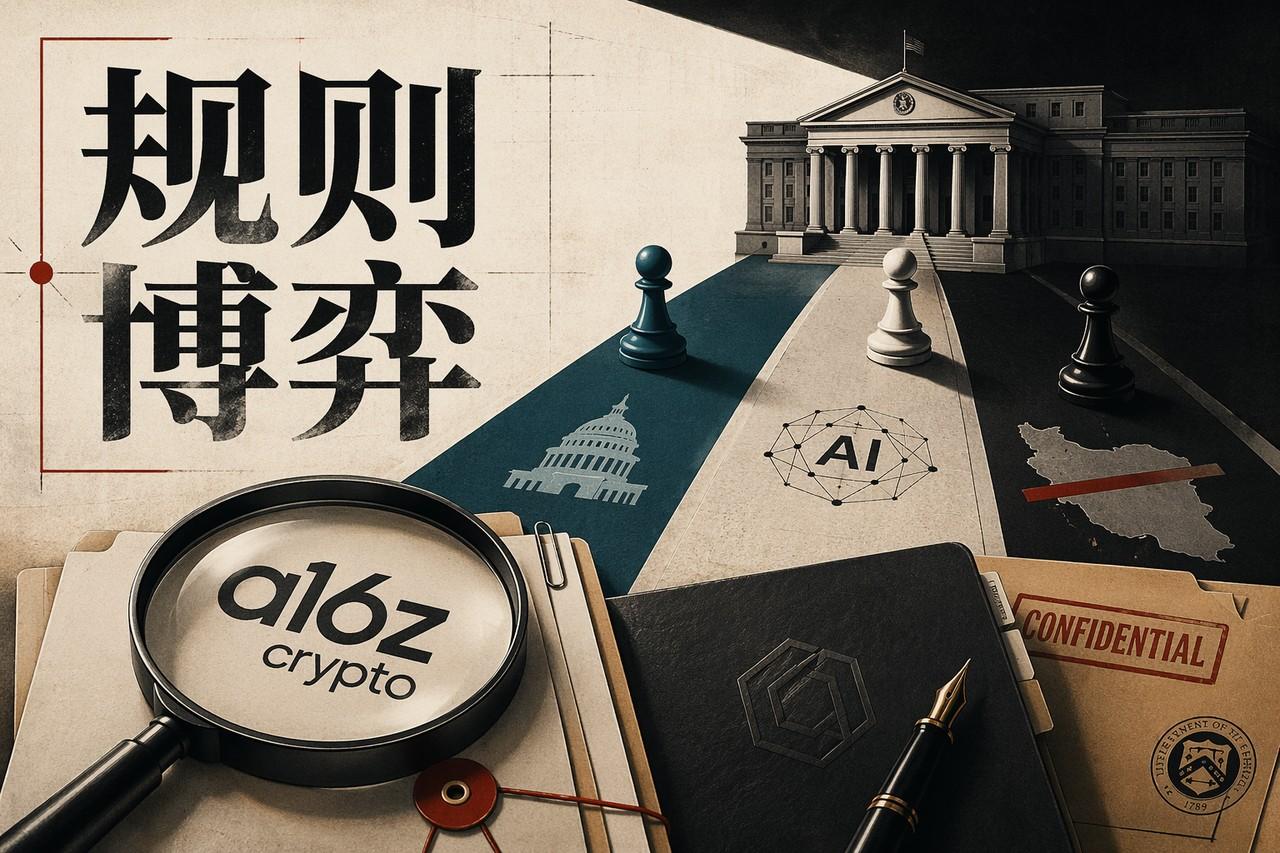
On this timeline of intertwined missiles and statements, the U.S. Treasury has further expanded the old framework of "economic fury" to the on-chain world. For a long time, this framework has relied on financial and energy sanctions to pressure Iran; however, in this new round of actions, the Iranian domestic cryptocurrency exchange Nobitex and three related platforms have been directly named in the sanctions list, with U.S. authorities accusing them of providing digital asset services to related individuals and entities in Iran, claiming these platforms handled over 50% of Iran's digital asset inflows. For these platforms, being placed on the list means potential freezing of assets in the U.S., loss of opportunities for direct contact with the U.S. financial system, and restrictions on services provided by Americans and U.S.-based institutions. Coupled with the demand from Iranian residents and enterprises to settle and preserve value in crypto assets under traditional financial restrictions, the signal conveyed by this round of sanctions is clear: amidst the escalation of geopolitical games in the Middle East, cryptocurrency infrastructure is no longer merely a technical or speculative tool, but rather implicitly recognized by both sides as part of the sanctions loophole and financial warfare frontline.
Iranian Exchanges Targeted: Compliance Redrawn
In the latest round of sanctions, the U.S. Treasury directly named Iran's domestic cryptocurrency exchange Nobitex and three related platforms, accusing them of providing digital asset services to related individuals and entities in Iran, and included them on the sanctions list. The announcement simultaneously provided a key figure: these platforms collectively handled over 50% of Iran's digital asset inflows, which equals effectively including half of the country’s "crypto ports" in the list. For Iranian residents and enterprises that heavily rely on these platforms for daily settlement and asset allocation, this not only cuts off their access to assets in the U.S. and dollar clearing channels but also delivers a "dimensional strike" against their counterparties' networks—any institutions with direct or indirect ties to the U.S. financial system will need to reassess their ties with these platforms and their users.
The redrawn lines do not belong solely to Iran. The signals emitted from this round of sanctions have already begun to spill over globally: centralized exchanges, custody institutions, and technology service providers can no longer casually treat "high-risk jurisdiction clients" as mere geographical tags, but must supplement their due diligence and screening logic with a more detailed set of processes at the levels of account opening, risk control, and even on-chain monitoring. For decentralized protocols that pride themselves on being "permissionless and neutral," being named in this sanction similarly constitutes real pressure—whether to implement geographical and address restrictions and whether the governance layer should incorporate parameters from the sanctions list have transitioned from abstract discussions to concrete decisions. Since the moment Nobitex was named, discussions in the crypto world regarding neutrality and compliance boundaries have had to enter the next stage.
Futures Trading Falls to Yearly Low: Speculative Sentiments Retreat
According to public statistics, the total trading volume of futures on major cryptocurrency exchanges in May 2025 is approximately $2.9 trillion, falling back to nearly a 12-month low, with real levels approaching those seen at the end of 2023. For traders accustomed to high volatility and high leverage, this means that the market is "slowing down": a contraction in futures trading volume generally corresponds to a slowdown in short-term price fluctuations, and the activity of high-leverage short-term trading is declining. However, the specifics of differences across platforms and varieties still require more granular data to unpack.
Behind this slowdown, geopolitical and regulatory uncertainties are compounded, suppressing some speculative players' willingness to take risks. On one side, the situation around the Strait of Hormuz is heating up, with missile and drone maneuvers raising tail risks; on the other side, the U.S. Treasury has included Iranian cryptocurrency exchanges such as Nobitex in the sanctions list, dragging the cryptocurrency infrastructure itself into the "economic fury" narrative. Those engaged in high-leverage short-term trades have to worry not only about price gaps but also about sudden rule changes. As the heat of derivatives evidently retreats, the market’s attention is forced to shift elsewhere: towards sensitivity to new narratives, the practicality of protocols, and changes in the macro environment; for instance, ZetaChain's attempt to unlock AI services through the locking of ZETA appears more like a bet on actual usage on-chain rather than purely price speculation. In an environment where futures trading volume has dropped to a year-low, those who can read these non-price signals will be the ones qualified to assume more assured risks in the next round of volatility.
ZetaChain Launches AI Use Cases: Locking Tokens for Computation Power
In the cooler trading volume environment, ZetaChain, a public blockchain focusing on cross-chain capabilities, has chosen to place its chips on "locking tokens for computation power." The project team announced the introduction of a new category of AI use cases based on the native token ZETA: users can lock a certain number of ZETA according to rules to subsequently unlock AI services and gain corresponding "AI capabilities" and points. In other words, tokens that originally fluctuated only on price charts are now directly tied to computational and service access rights. However, the specific launch time, usage thresholds, and points exchange ratios related to this mechanism have not yet been fully released and will need further confirmation.
This design, viewed against the backdrop of the total trading volume of futures slipping to a near 12-month low in May 2025, appears to be a proactive hedge against a "cold market": as high-leverage speculation retreats, ZetaChain attempts to extend the utility of ZETA to keep users on-chain—not relying on the next candlestick but on the ongoing services unlocked through locked tokens. For the project itself, this means creating structural demand for tokens through real use cases when price fluctuations slow; for the longer-term multi-chain world, it provides a model: cross-chain infrastructure is no longer just a channel for transporting assets, but can package cross-chain capabilities, AI computational power, and access rights into unified benefits, allowing future multi-chain applications to be designed around the combination of "assets + services," rather than just the short-term story of "assets + leverage."
MRVL Surges 30%: AI Wave Spills Over to Crypto Imagination
During the same period when cryptocurrency futures trading volumes returned to yearly lows, a completely opposite scene unfolded on the other side of the U.S. stock market: Marvell Technology (MRVL) saw its stock surge roughly 32.52% in a single day, with after-hours prices continuing to rise over 9%, pushing its market capitalization aggressively into a new expected range. The market almost unanimously attributed this long bullish candlestick to the "unprecedented strength" of demand for AI chips and computational infrastructure, and the earnings reports and forecasts were viewed as endorsements of this narrative. Jensen Huang's comment that "MRVL could become the next trillion-dollar company" has effectively placed this company in a prominent position within AI infrastructure, allowing funds to justifiably pay a premium for a future vision.
In contrast, within the on-chain world, ZetaChain, also branded under AI, is taking a completely different path: it does not tell its story through profit and loss statements, but instead directly binds tokens to AI service access rights. Users lock ZETA tokens and unlock AI capabilities and related rights in a cross-chain context according to predetermined rules. The former is a capital imagination of "chips + orders + trillion-dollar market cap," while the latter is an on-chain experiment of "tokens + usage rights + cross-chain traffic"; one constrained by traditional valuation models and regulatory frameworks, the other rewrites pricing logic at the intersection of computation, data, and assetization using contracts and addresses. The misalignment and resonance between these two tracks are defining the risk boundaries and opportunity capture potential of traditional tech stocks and crypto projects under the AI theme.
From Hormuz to Wall Street: Crypto at a New Crossroads
From the missiles and drones over the Strait of Hormuz to the U.S. Treasury writing platforms like Nobitex into a new round of sanctions under the framework of "economic fury," to the futures trading volume dropping to a near 12-month low in May 2025 while Wall Street bets on AI infrastructure among companies like MRVL, and watches ZetaChain unlock AI services through ZETA token locking, the crypto world is simultaneously being pulled by three forces towards hedging, compliance, and new narratives. Centralized compliant platforms are being forced to choose between "continuing to serve high-risk area users" and "staying within the dollar system," while decentralized protocols and on-chain infrastructures, although seemingly distanced from sanctions lists for now, also have to confront uncertainties about how future regulations will view their developers, front ends, and liquidity participants. The variables that will truly determine the direction moving forward are three groups: whether the U.S. and its allies will expand sanctions from single platforms to more crypto infrastructures and key addresses; whether users from sanctioned areas like Iran will accelerate their shift to more decentralized or privacy-focused tools as anticipated; and whether initiatives like ZetaChain's "AI + on-chain protocol" can solidify sustained real usage and verifiable long-term value beyond the lively narrative.
Join our community to discuss and get stronger together!
Exclusive Hyperliquid benefits for AiCoin: https://app.hyperliquid.xyz/join/AICOIN88
Exclusive Aster benefits for AiCoin: https://www.asterdex.com/zh-CN/referral/9C50e2
On-chain Telegram community: https://t.me/AiCoinWhaleData
On-chain community: https://www.aicoin.com/link/chat?cid=N6OVMor5g
AiCoin on-chain Twitter: https://x.com/aicoinwhaledata
免责声明:本文章仅代表作者个人观点,不代表本平台的立场和观点。本文章仅供信息分享,不构成对任何人的任何投资建议。用户与作者之间的任何争议,与本平台无关。如网页中刊载的文章或图片涉及侵权,请提供相关的权利证明和身份证明发送邮件到support@aicoin.com,本平台相关工作人员将会进行核查。