Around June 2 to 3, 2026, gunfire was once again heard in the Arabian Gulf: the U.S. Central Command announced it had struck and disabled a tanker named "Lexie," which was heading towards an Iranian port and flying the flag of Botswana. They claimed to have simultaneously repelled multiple ballistic missiles and drones launched by Iran and conducted strikes on Qeshm Island under the banner of "self-defense." In response, Iran launched missiles towards Kuwait and Bahrain, but publicly available information indicated they did not hit their targets. Almost at the same time, the U.S. dollar against the Japanese yen rose back above the 160 mark, returning to this sensitive level for the first time since April 30, prompting discussions about Japan possibly intervening around this level. The escalation of geopolitical conflict, combined with sharp fluctuations in exchange rates, should have collectively pressured "risk assets," yet on that day, the three major U.S. stock indexes all closed higher: the Dow Jones was up about 0.45%, the S&P 500 rose about 0.1%, and the Nasdaq also saw a slight increase. The real focus of the sell-off was on crypto-related stocks: Strategy dropped about 9.15%, Coinbase fell about 4.72%, standing out amidst the overall market gains. Public data has not provided a single direct trigger for this round of declines, but it clearly exposed a changing pricing logic: under the multiple pressures of a tense Middle East situation, a strengthening dollar, and a highly uncertain regulatory outlook, the market is debating whether to treat crypto assets as a "new hedge" against macro and geopolitical risks or whether to categorize them, along with high-beta tech stocks, as risk exposures that need to be prioritized for liquidation.
Tanker Struck and Missiles Fired: Risks Reignite in the Gulf
Returning the focus to the Gulf itself: According to the U.S. Central Command report, around June 2 to 3, U.S. military forces conducted a strike on the tanker "Lexie," which was headed towards an Iranian port and flying the flag of Botswana, resulting in reports that the tanker was disabled. This is not abstract diplomatic language but rather an attack on a tangible energy transportation line, directly tearing a hole in maritime safety. Almost simultaneously, the U.S. military claimed to have repelled multiple ballistic missiles and drones launched by Iran and launched strikes on targets on Iran's Qeshm Island under the justification of "self-defensive strikes," extending the conflict from the surface to the shore and forming a complete cycle of attack and defense.
Iran, for its part, launched missiles towards Kuwait and Bahrain, with publicly available information indicating these missiles did not hit their targets, resulting in limited outcomes. However, it was sufficient to make neighboring countries realize they were now within a potential firepower coverage range—this felt more like a "warning shot" affecting the broader region's security expectations rather than immediately igniting a comprehensive war. In this tense yet not yet out-of-control state, U.S. Secretary of State Rubio emphasized at a Senate hearing that the United States is still negotiating with Iran, but when an agreement might be reached remains uncertain: on one side, there are real strikes on tankers and mutual missile fire, while on the other, diplomatic channels remain open. This pulling between military escalation and diplomatic communication constitutes the true dilemma facing the current risk pricing in the Middle East.
Dollar against Yen Breaks 160 Again: "Hedge Misalignment" Under Yield Spread Pressure
Beyond the missiles and tankers, the most eye-catching number on the screen is the U.S. dollar against the Japanese yen jumping back above 160 at the beginning of June 2026. Since April 30, this is the first instance of USD/JPY reapproaching this psychological threshold. The market is not discussing whether "Japan can become a safe haven," but rather voting with points: under the backdrop of the U.S. maintaining high interest rates while Japan continues to cautiously explore normalization, funds are more willing to pay for dollar duration than to take on yen risk. Previously, external observers largely bet that "the Bank of Japan would intervene near 160," but even as the exchange rate pierced this level again, no new official intervention was confirmed. The mere possibility of intervention itself became part of market transactions.
At the same time, the Japanese government was forced to increase spending on the fiscal side, finalizing an additional budget of about $19 billion to subsidize soaring fuel and utility costs, attempting to shield against the initial wave of imported inflation. The tension in the Middle East theoretically continues to push energy prices up, which for Japan, heavily reliant on energy imports, means a dual squeeze on its current account and living costs: either tolerate a weaker yen to support the economy and asset prices or, in the face of a huge yield spread, attempt to tighten policies at the risk of impacting recovery. Under this structural constraint, during each round of heightened geopolitical risk, the yen struggles to automatically strengthen as in past narratives; the role of a "safe haven currency" is suppressed by actual yield spreads and intervention expectations, and what ends up being bought are often higher-yielding, clearer policy path dollar assets.
U.S. Stocks Rise While Crypto Stocks Decline: Risk Appetite Quietly Rewriting
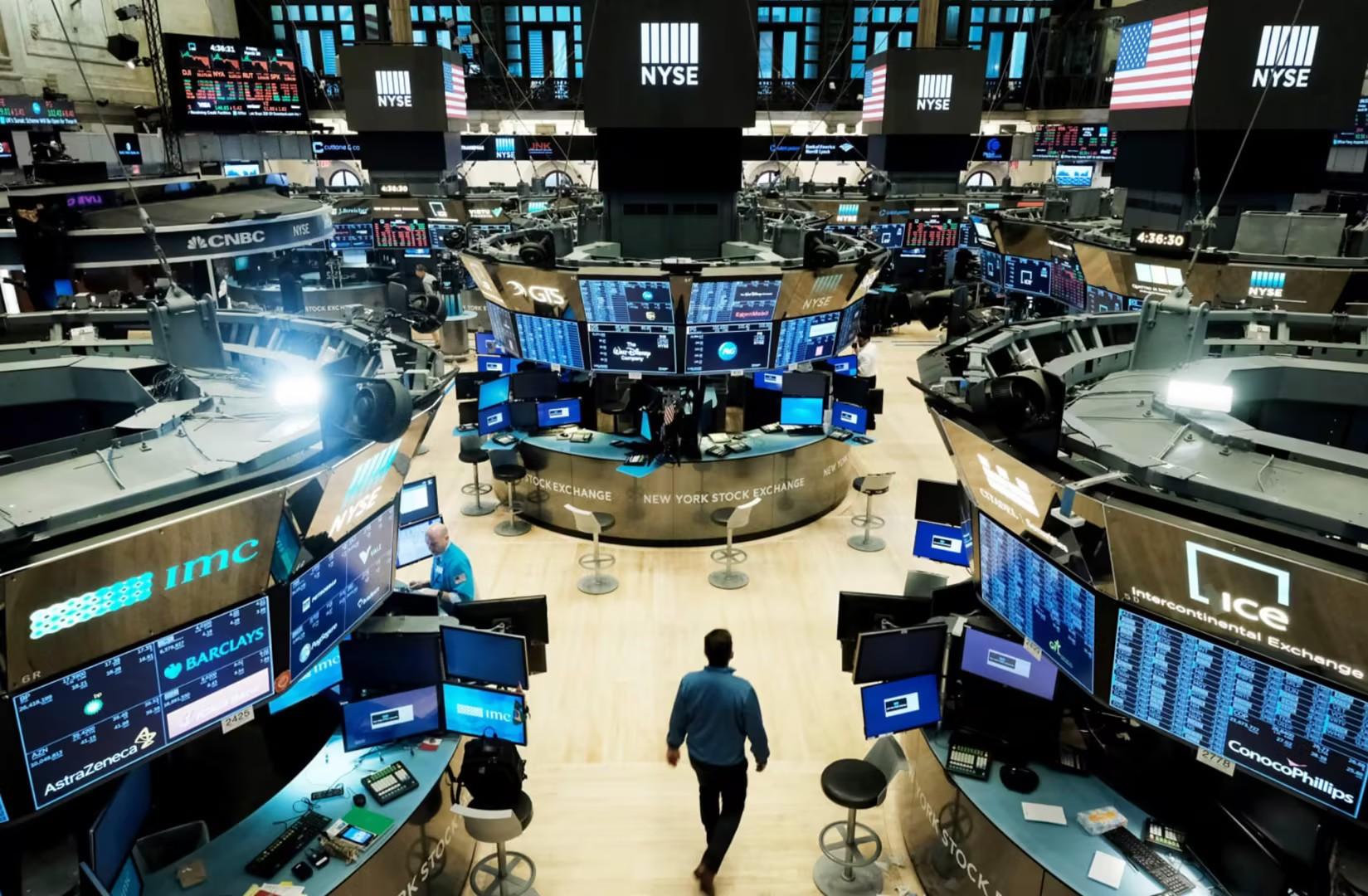
On the same trading day when the dollar strengthened and the situation in the Middle East escalated, two groups of curves on the screen began to diverge: the Dow Jones was up about 0.45%, the S&P 500 rose about 0.1%, and the Nasdaq also slightly closed in the green, indicating that amidst the macro noise, U.S. stocks overall maintained a strong risk appetite. However, concurrently, crypto concept stocks distinctly displayed a "weakening against the trend": Strategy’s stock price fell about 9.15%, and Coinbase also dropped about 4.72%, standing out especially amidst the green backdrop of the three major indexes, as market exposure related to crypto was singled out for pressure.
What is even more intriguing is that public data has not provided a specific single source for the decline of these two representative stocks on that day, making it difficult to simply attribute it to a regulatory announcement or a project's negative news; instead, it appears more like a unified "rebalancing action" across investment portfolios amidst the interplay of military risks in the Middle East and USD/JPY volatility. When higher-yielding and relatively clearer policy path dollar assets gain preference, high-volatility tech and crypto-related assets often receive the first cuts; and given that the regulatory framework for crypto assets remains uncertain, during periods of geopolitical and macro turbulence, this institutional level ambiguity is magnified, ultimately reflecting in the market as an overall resilience for U.S. stocks while crypto stocks are seen as high-beta risk exposures to be sold off first—a structural differentiation.
Crypto's Role Under the Shadow of War: Safe Haven Asset or High Beta Chips?
Amidst the tension in the Middle East and the U.S. dollar against the yen standing again above 160, Bitcoin has not been embraced by mainstream capital as "digital gold," but rather more like an extension exposure to a basket of high-volatility tech stocks. Historically, during certain global risk events, Bitcoin has, at times, risen alongside gold, providing the market with the imagination space of an "hedge narrative"; but similarly, many times, when risk aversion truly rises, and funds flow back to the dollar and treasury bonds, crypto assets often get grouped with high-beta growth stocks and are cut together, clearly leaning more towards the latter this time. According to public market data, as per AiCoin data, on the same trading day when the Dow Jones, S&P 500, and Nasdaq all recorded gains, crypto concept stocks overall weakened, with Strategy down about 9.15% and Coinbase down about 4.72%. This is not a typical "safe haven asset" price trajectory but rather a standard picture of "risk assets being prioritized for disposal."
For traditional financial investors, the price performance behind this is indicative of two exposures being merged in pricing: on one hand, crypto concept stocks represent an indirect exposure to on-chain asset prices and activity levels; on the other, under the macro narrative of U.S.-Iran conflict and the imbalance of the U.S.-Japan exchange rate, the regulatory path for U.S. crypto assets remains highly uncertain, and this institutional level ambiguity can amplify into an additional "political risk premium" when geopolitical risks escalate. When these two layers of risk stack up, holding crypto stocks, or even directly holding on-chain assets, in their risk control models increasingly resembles holding "a single high-beta chip." It is worth emphasizing that currently public information has not provided specific on-chain indicators—whether changes in holdings of particular types of addresses or liquidation data are lacking quantifiable evidence. We can only observe the secondary market pricing reinforcing the "crypto = risk asset" label, but we cannot reverse-engineer this to confirm large-scale withdrawals from on-chain funds have occurred.
War, Yen, and Crypto Sentiment: Three Clues to Watch Next
Looking at the extended timeline, since late February 2026, the continuous escalation of U.S.-Iran military friction, combined with the U.S. dollar/yen again reaching the critical level of 160 at the beginning of June, this round of "tanker + missile + exchange rate" combination has temporarily pushed crypto assets to the side of being a "risk amplifier" rather than a "safe haven": on the same trading day, while the Dow, S&P, and Nasdaq still managed to close slightly higher, crypto concept stocks like Strategy and Coinbase significantly underperformed the market, becoming the "martyrs" of the re-pricing of risk. Moving forward, there are at least three clues worth closely monitoring: first, whether the Middle East conflict will continue along the escalation trajectory established since late February towards a new round of strikes, or will the U.S. side's military actions coincide with negotiations (the contents of which have not yet been publicly disclosed) controlling the situation; this will directly alter global risk preferences; second, how long USD/JPY can stay above 160; whether, after introducing an additional budget of about $19 billion, the Japanese government, along with the Bank of Japan and the Ministry of Finance, will trigger a new round of global asset repricing through tougher policies or foreign exchange interventions—currently, the market is only speculating without official confirmation; third, will crypto-related assets be sold off preferentially during the next geopolitical or macro shock as they were this time, or will there be more scenarios similar to gold showing "resonance hedges"? In the absence of on-chain fund and holding quantifiable evidence, as well as concrete new regulatory details, these three clues remain hypotheses that need dynamic verification, rather than conclusions that can be definitively stated.
Join our community to discuss and become stronger together!
AiCoin Exclusive Hyperliquid Benefits: https://app.hyperliquid.xyz/join/AICOIN88
AiCoin Exclusive Aster Benefits: https://www.asterdex.com/zh-CN/referral/9C50e2
On-chain Telegram Community: https://t.me/AiCoinWhaleData
On-chain Community: https://www.aicoin.com/link/chat?cid=N6OVMor5g
AiCoin On-chain Twitter: https://x.com/aicoinwhaledata
免责声明:本文章仅代表作者个人观点,不代表本平台的立场和观点。本文章仅供信息分享,不构成对任何人的任何投资建议。用户与作者之间的任何争议,与本平台无关。如网页中刊载的文章或图片涉及侵权,请提供相关的权利证明和身份证明发送邮件到support@aicoin.com,本平台相关工作人员将会进行核查。