to
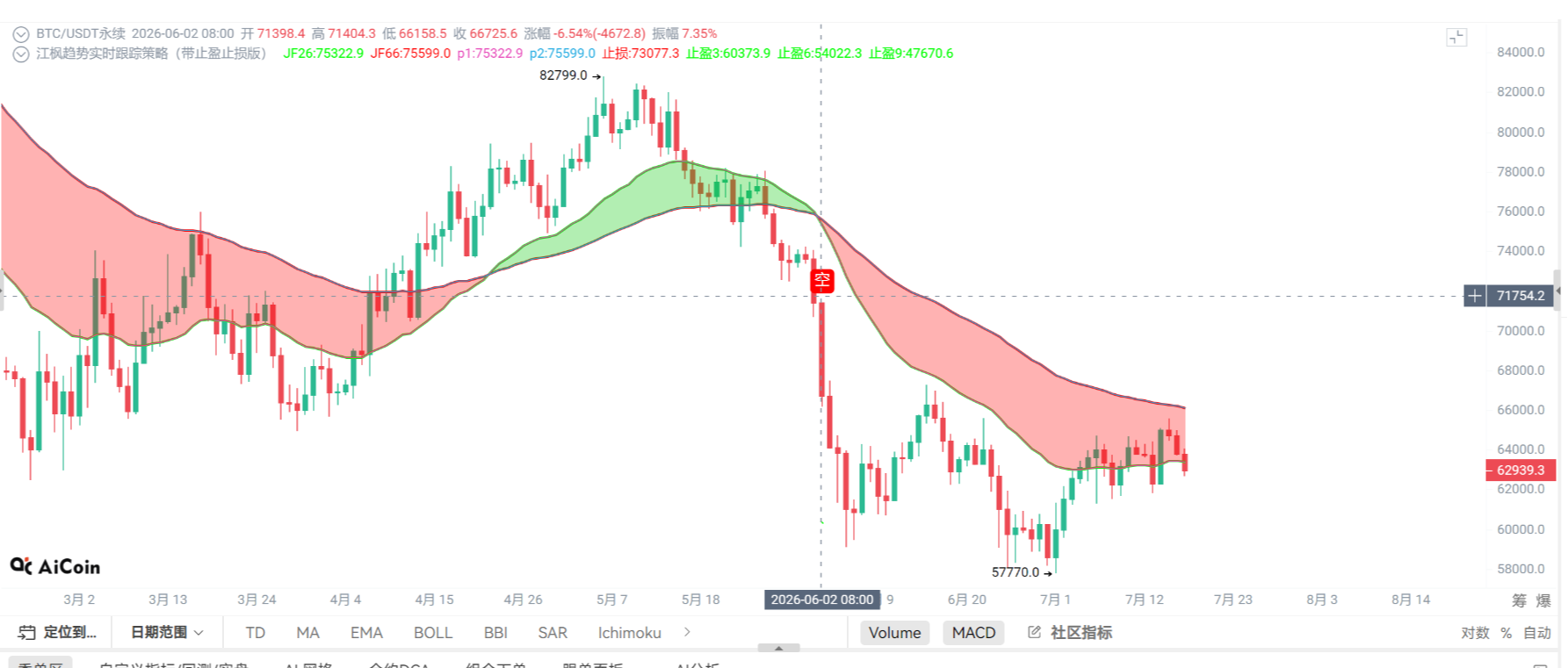
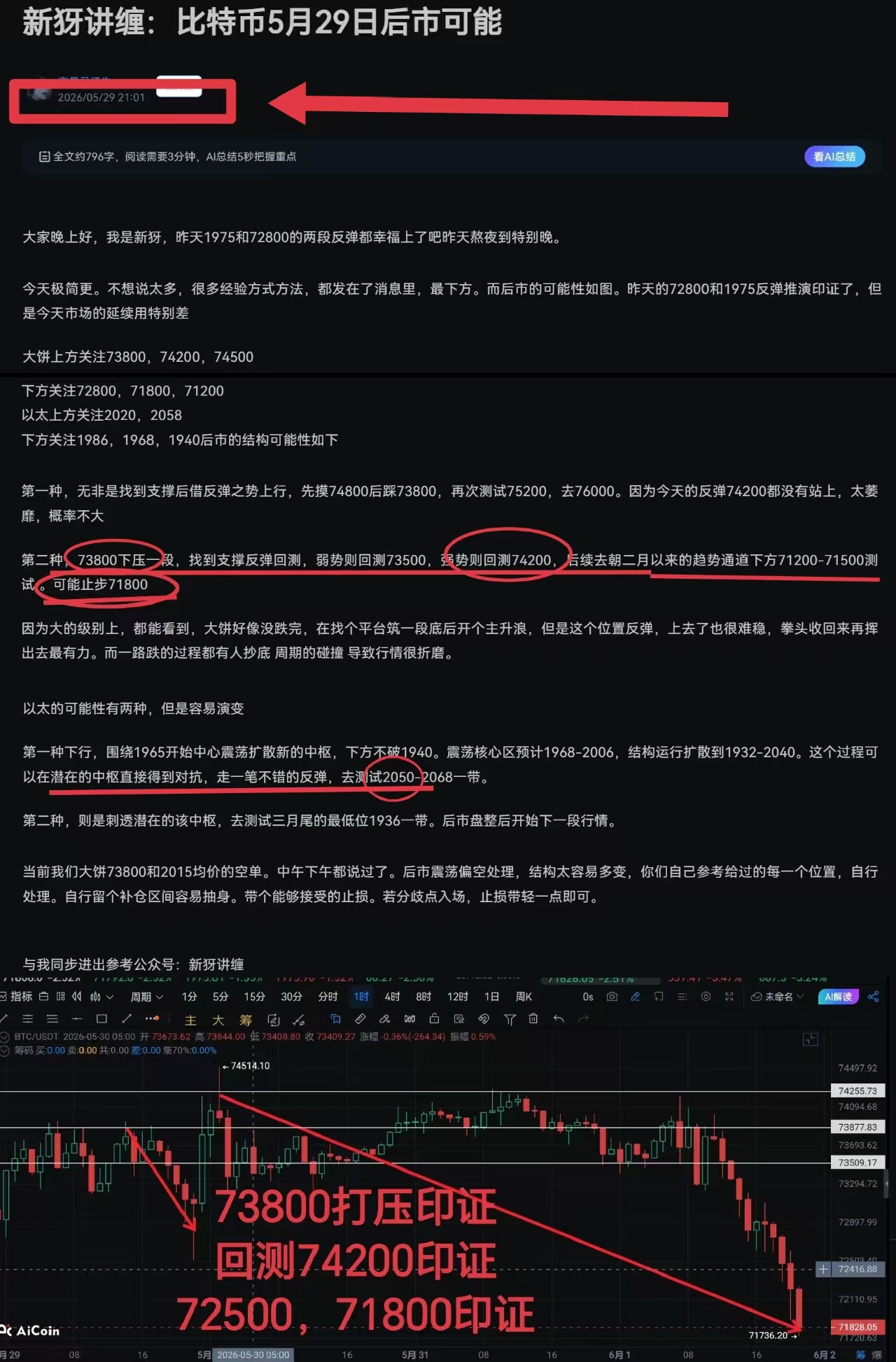
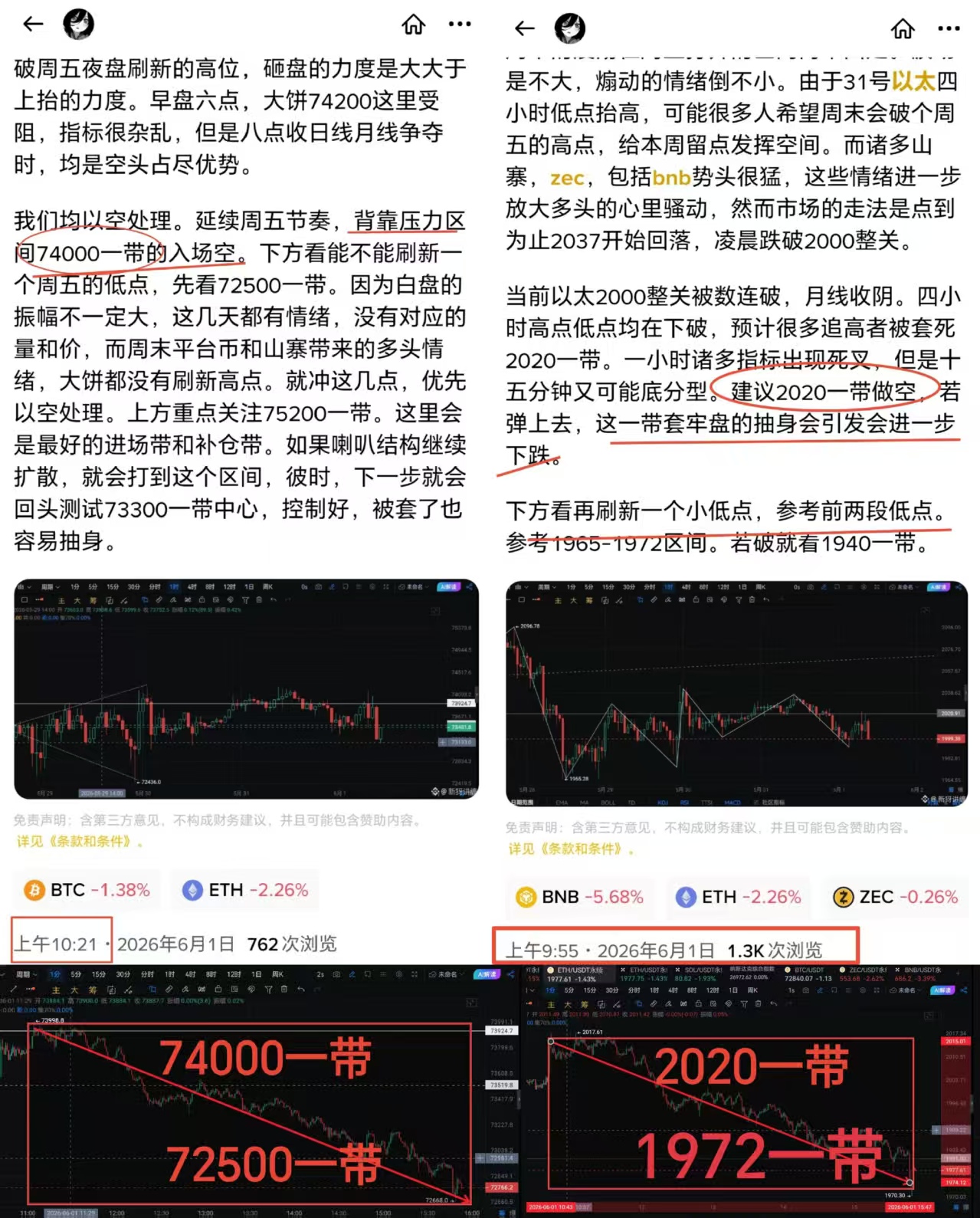
Good evening everyone, I am Xin Ya. First, I wish you a happy holiday. As for me, you are all blank babies in the cryptocurrency circle. Today, I won't be discussing any strategies; instead, I'll present to you the underlying logic of swing trading and short-term trading. Before that, let me show you the forecast that was confirmed on the 29th.
Alright, now let’s get down to business.
First, let’s talk about altcoins. I do not recommend you trade altcoins.
The fundamental reason why altcoins sometimes experience explosive growth is that the tokens are in the hands of a few individuals. When they feel it is about time, there will be situations where they push up the contracts. In this process, shorts act as fuel, pulling everything up one to one. When liquidation reaches the limit, it will redistribute tokens and then perform a reverse liquidation cycle to capture the momentum players, thereby harvesting them. Retail investors entering altcoins will also eventually return their gains in some way.
Alright, next, let's focus on the main points:
I have noticed that many people do not dare to trade short-term; they always want to wait for the best position to take on larger spaces. This can only lead to eating the leftovers on the left side. In places where the price can rise or fall, one should take risks based on expectations to validate their judgment's starting points. Different people have their styles, and because of the conflicting logic in building positions, it may not be suitable for retail investors to move together in short-term trading. They might never understand that price does not represent value itself.
Rather, it is a temporary equilibrium achieved through the confrontation between buyers and sellers based on current information, expectations, supply and demand relationships, and emotions. This balance can be easily disrupted, leading to changes in structural forms. Market movements are merely fluctuations brought about by the main force after they participate based on these factors. During this process, retail investors might lift the burden, reducing the cost for the major players, or they may exploit and consume their costs. Only when some forces participate in the market will there be good fluctuations; it’s not because there are good fluctuations that some people will be willing to participate.
In the market's trend over the past few months, I have seen very strong individuals around me who have not entered the market at all, including some leading funds, because they do not see any matching returns, even though the risks are considerable. The difference between major players and retail investors has never been about the amount of capital; major players and institutions have the confidence, time, and sufficient funds to validate their judgment, can accept drawdowns, allow themselves to make mistakes, and have the confidence to hedge. They can remain inactive for a year without being affected. On the other hand, for retail investors, one day without entering the market can make them feel uneasy, and if they get stuck, they lament life and death. This is the biggest difference. In the current market, the middle class has already been washed out; what remains are people who have fallen from grace, including new retail investors. In this context, the market will not provide too many opportunities.
Many people always want to open the largest position at the best price to capture the biggest swings, but this situation is entirely impossible. Whether they are doing business or speculative trading, sufficient costs are required before the opportunity matures, and only then does the market start a round of action. During this process, the swings will be consumed by retail investors. This is the cost for the major players.
In some pure continuation points that are able to rise or fall, during the pullback and consolidation process after completing a phase of market action, almost everyone is doing the same thing: analyzing sentiment, volume, and price, breaking down the market. They will split the price up and down into several segments. At this time, the part beyond consensus often becomes the identification of resistance and support.
Some people will think that resistance is above the plunge point, while others believe that it has already sunk; otherwise, there would be no reason to trigger a plunge. A thousand people, a thousand faces; the logic is different, but every point of divergence broken down contains some consensus.
Support, potential support, counter bands, large order entrustment bands, and liquidation bands for whales, along with one, two, and three trading points, some are overlapping. Others are divergences; the consolidation process is to digest divergences. This is the opportunity for short-term trading and also the reason for volatility formation. Because every entry and exit of funds at each divergence will change the expectations and strength on both sides. Price is merely a reflection of temporary balance.
Many people's order opening logic is to eat expectations, that is, the part between perceived value and current price. Many people may themselves be unclear about how they opened positions in a muddled way, but this is the very logic behind your order openings. Most people are not willing to bear the gap when expectations are not met, so the market's handling becomes chaotic.
Let's talk about ordering habits.
Some speculative traders, including institutions, understand this point clearly, so they will place limit orders. After judging the direction, they will begin to enter the market in batches sequentially. This is because they have enough capital and time advantages to verify their judgments and are not afraid of sideways markets or being stuck.
However, most others constantly watch the market. After building positions, they look for countless pieces of information that favor their direction to convince themselves. In terms of planning leverage and positions, many people have different habits.
For example, if a product is priced at 1200, the lower divergence points are at 1160, 1120, and 1080, while the upper ones are at 1240, 1280, and 1320. Some people will enter at corresponding positions based on the direction they see, doing one entry, two additions, and three settlements. Some will do two entries and three additions, four settlements. Others will do one entry, three additions, and two exits. The target area they see corresponds to the respective divergences.
Those who are stuck, their judgments will be disturbed; during the market's operation, supply and demand will break down divergences due to the flowing capital, leading to unknown chaos, but the overall situation will still lie around the divergent segments. However, some people will add to their positions when they should exit; others will increase their positions when they should be taking profits, including those who should reverse direction but instead go heavy on their existing positions.
Meanwhile, slightly smarter individuals will utilize divergences to start planning position leverage ratios for entry and exit; different people will make different choices, with low leverage fully invested, high leverage lightly invested, and medium leverage moderately invested. Their leverage planning causes psychological expectations to be influenced by short-term market sentiment. The market's chaotic unknown and structural evolution also stem from such individuals, so the smarter ones will take a look at the liquidation heat map and depth chart upon returning.
The key I want to emphasize is that many people's leverage at different points of divergence is entirely different. In the market's fluctuations, some will analyze the potential profit space of the advantageous party, heavily leveraged to grab the left side and gain points. However, if market sentiment continues, they may face liquidation. On the other hand, those who enter with light positions will find themselves supplementing their positions based on the next segment of profit for the advantageous side. Some will enter heavily at this point to grasp the left side with maximum leverage to capture maximum space.
The offensive and defensive dynamics of the passive and proactive sides are not always consensus, which makes short-term handling particularly complex. Building positions is a response to judgment, a respect for cognition. Many do not handle this well because they are unwilling to bear the gains and losses of their judgments; in this case, if it's due to their own reasons, they may feel regret. If it’s due to outside forces, they are influenced by others’ judgments, and then they shift the blame. Therefore, they can never improve.
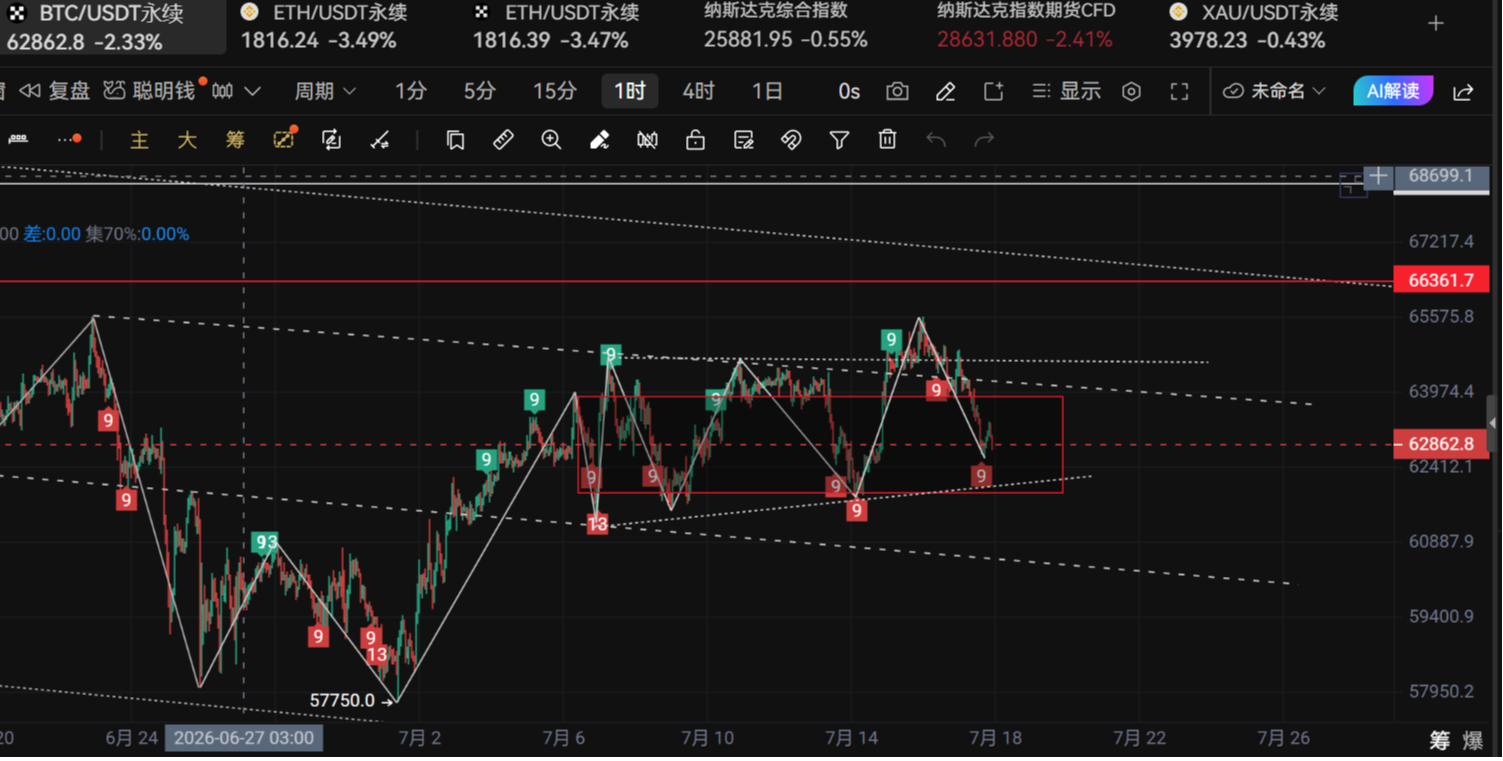
Alright, let me show you today’s layout; all points are at the turning points.
Follow Xin Ya, and subscribe to the public account: Xin Ya Talks about Trading.

免责声明:本文章仅代表作者个人观点,不代表本平台的立场和观点。本文章仅供信息分享,不构成对任何人的任何投资建议。用户与作者之间的任何争议,与本平台无关。如网页中刊载的文章或图片涉及侵权,请提供相关的权利证明和身份证明发送邮件到support@aicoin.com,本平台相关工作人员将会进行核查。