Two weeks ago, the parent company of the New York Stock Exchange, ICE, along with CME, filed a "small report" in front of the CFTC and the U.S. Congress. A platform registered in Singapore, trading with complete anonymity, Hyperliquid, is posing a risk of manipulation to global oil prices, potentially exploited by insiders or even sanctioned state actors. Bloomberg reported that these two longstanding exchanges are hoping for tighter regulatory constraints on it.
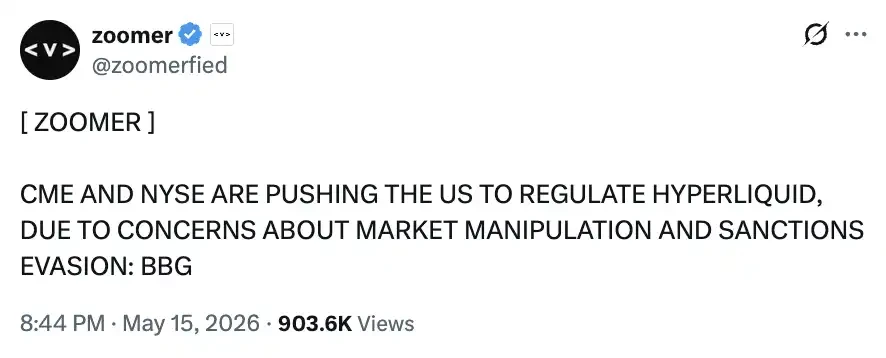
Two weeks later, at an investor event hosted by Bernstein, ICE founder, chairman, and CEO Jeffrey Sprecher discussed Hyperliquid with a completely different perspective. He stated that this platform is "larger than Nasdaq," and the entire company only has 11 people, which is quite impressive. Sprecher has met with the Hyperliquid team several times, and they are learning from each other, ultimately adding, "Respect to these people; I wish I were younger to do this myself."
ICE's dilemma is not about wavering attitudes. It has long determined that tokenization will win, but it has yet to qualify to compete alongside the winners.
Tokenization Track
In Sprecher's view, value will ultimately be tokenized through the internet, achieving continuous liquidity around the clock. The reason is simple: banks have operating hours, while global supply chains and energy are not constrained by day or night. ICE operates 13 exchanges and 6 clearinghouses globally, and once a bank in a certain time zone closes, the funds in that area are forced to halt. When the world moves to 7×24, capital will flow to channels that never close.
Tokenization also brings profit advantages. Currently, ICE needs to set aside extra collateral at all 6 clearinghouses it collaborates with, in case local clearing is demanded at any time. Imagine a multinational company opening an account in six countries, with each account holding an unused fund that cannot be touched. Tokenization can consolidate these six funds into one; wherever trading begins or margins are needed, funds can be transferred almost instantaneously. For a company with clearinghouses spread across the globe, this is a tangible upgrade in funding efficiency.
Since the judgment has been made, actions must follow. ICE initially wanted to directly tokenize the stocks of the New York Stock Exchange, but investors were not convinced; thus, it took a detour and established a subsidiary called Blue Ocean, requesting the SEC for the ability to trade stocks 24/7 year-round. Sprecher emphasized that the approval of this application is unrelated to the passage of the Clarity Act, and he is currently quite optimistic about obtaining approval.
Vertical Integration Bet
Once approval is obtained, where will the increment come from?
ICE anticipates that when the 7×24 tokenized U.S. stocks launch, most domestic institutions will not support it, as trading during weekends and late nights does not align with habits and may not receive regulatory approval.
The real incremental demand lies in Asia.

OKX is the second largest cryptocurrency exchange globally, after Binance, with 120 million users, making it an ideal fit to fill ICE's shortcomings in geography and clientele. It previously faced setbacks under the Biden administration, paying large fines and accepting regulators at its premises, agreeing to strengthen KYC and AML compliance, which showcased OKX's determination to remain legally in the U.S.
Thus, the two made a reciprocal exchange. ICE helped OKX obtain brokerage qualifications and brought it under FINRA and SEC supervision, opening the door to the U.S.; in return, OKX leveraged its Asian network and hundreds of millions of clients to distribute ICE's products. In March 2026, ICE invested approximately $200 million in OKX, corresponding to a $25 billion valuation, and secured a board seat.
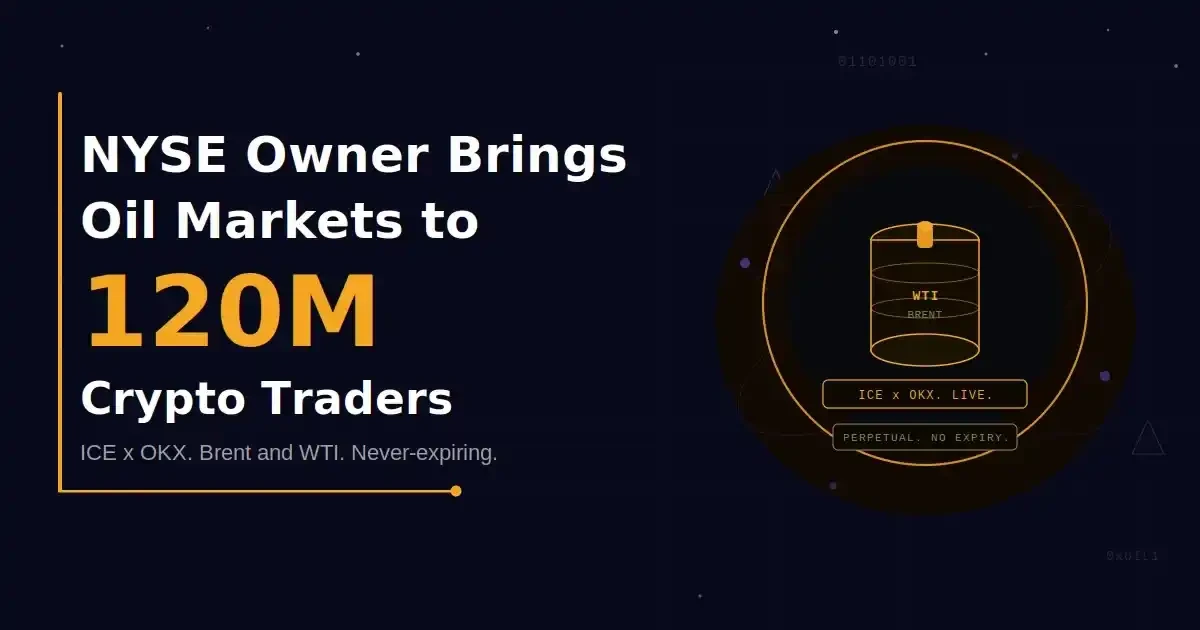
Two weeks ago, the first product of their collaboration launched, with OKX introducing perpetual contracts based on Brent and WTI crude oil benchmarks.
Settlement Layer Positioning
Buy distribution, buy data, but lack a chain that can make it all run.
However, Sprecher knows full well that the current L1 and L2 solutions in the market cannot yet meet ICE's performance requirements. The trading volume of the New York Stock Exchange in one day, by his account, is greater than Google's search count. More problematic is the delay. Decentralization relies on a group of validators to reach consensus and confirm ownership transfer, which takes time, while ICE's algorithmic trading operates on a microsecond scale; no one is willing to revert transaction speeds to a decade ago to get transactions on-chain.
ICE's solution is to split the workflow in half. Matching stays off-chain, while collateral transfers move on-chain.
These two steps have already seen action from ICE.
Internally, it has integrated the New York Stock Exchange onto a blockchain for settlement, running within its data center and not open to the public.
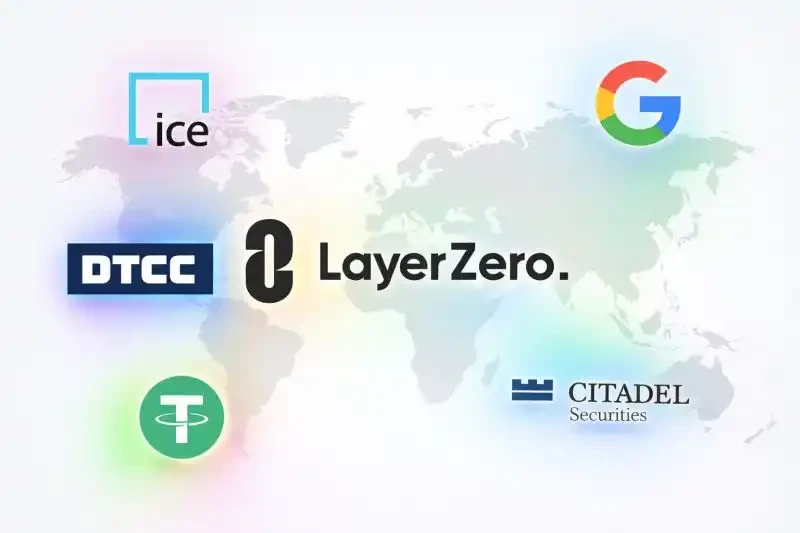
Externally, ICE invested in the cross-chain protocol LayerZero's upcoming Zero public chain in February 2026; Zero's investors form nearly the backbone of the traditional financial chain, including DTCC, responsible for U.S. securities settlement, market-making giant Citadel, Google Cloud, ARK, and Tether.
Regulatory "Double Standards"
For the "challenger" Hyperliquid, Sprecher has been closely monitoring two things they can do that ICE currently cannot.
In the ongoing Middle Eastern conflict, significant news often drops on weekends, when the traditional oil market is closed. Hyperliquid has taken over this gap, leading price discovery in oil during weekends.
The other is the pre-market contracts for SpaceX launched on Hyperliquid. Sprecher is curious whether a price "discovered" in a private on-chain market can truly reflect the real price when the market opens. He stated he is willing to wait a few more weeks before making a judgment.
When the host mentioned ICE's "FUD" towards Hyperliquid two weeks ago, Sprecher clarified, "In fact, we are not feeling panicked. On the contrary, we are communicating with these people to understand their thinking. They are learning about what we're doing. We are helping them understand our world, and they are helping us understand theirs. So, in a way, it is a relationship of mutual appreciation."
The underlying message of this statement is what ICE really wants to convey to regulators.
"What Hyperliquid is doing, no one penalizes it; why can't we do it? ICE needs a fair playing field. If regulators believe what Hyperliquid is doing is legal, then ICE wants to do more; if you think it's illegal, then why hasn't Hyperliquid received the kind of warning letters that you regularly send us?"
免责声明:本文章仅代表作者个人观点,不代表本平台的立场和观点。本文章仅供信息分享,不构成对任何人的任何投资建议。用户与作者之间的任何争议,与本平台无关。如网页中刊载的文章或图片涉及侵权,请提供相关的权利证明和身份证明发送邮件到support@aicoin.com,本平台相关工作人员将会进行核查。


