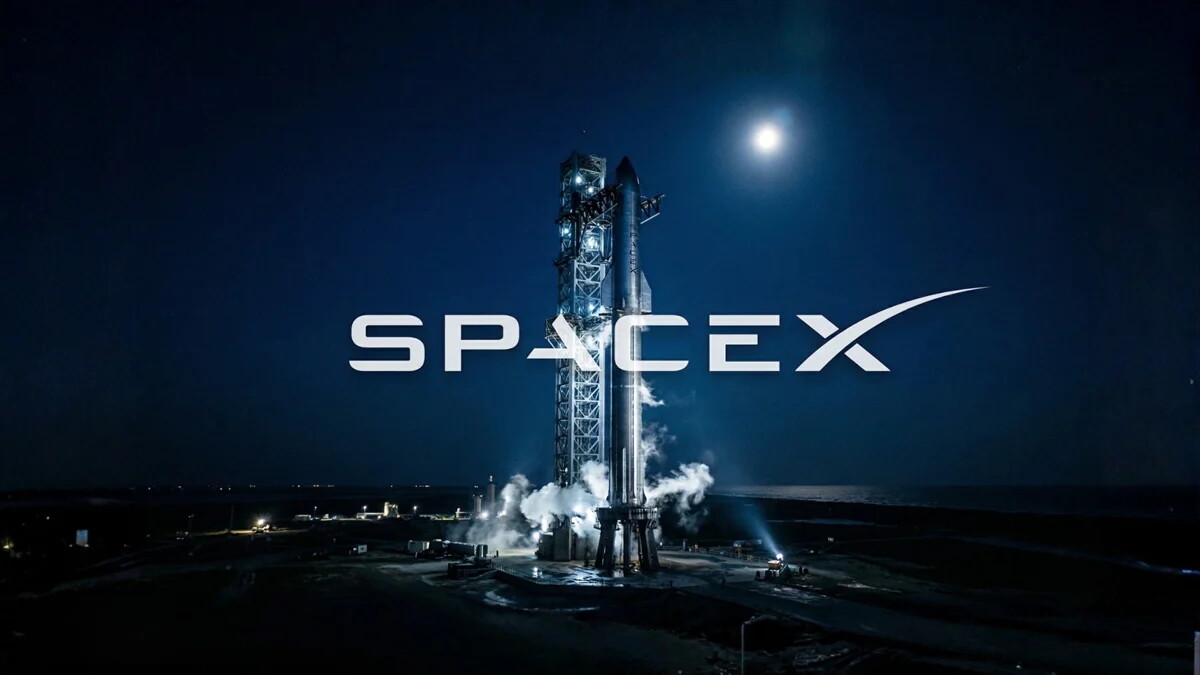
In 2026, the US stock market will re-enter the era of "super IPOs".
Technology giants such as SpaceX, OpenAI, Anthropic, and Databricks have reported news of going public, among which SpaceX is undoubtedly the most closely followed. According to reports from multiple media outlets including Reuters, SpaceX's potential valuation has approached $2 trillion, and if it materializes, it could become one of the largest IPOs in the history of global capital markets. Meanwhile, OpenAI is also pushing its IPO plans, with AI, space technology, and next-generation infrastructure companies once again becoming the core sectors of global capital attention.
However, the impact of this IPO frenzy is not limited to the US stock market. A more noteworthy question is emerging for the Crypto market: As more mainstream, high-growth, and high-volatility assets enter the traditional financial market, how will global risk capital be reallocated?
In the past, many believed that Crypto was a world independent of Wall Street, but today, the boundary between the crypto market and traditional finance has become increasingly blurred. BTC ETFs, stablecoins, listing trading platforms, and the influx of institutional funds all signify that Crypto is being incorporated into the global capital system. Behind this, a term has started to frequently appear—TradFi.
What is TradFi?
When many people first hear the term TradFi (Traditional Finance), they might simply understand it as "traditional finance," like banks, brokerages, or the stock market. However, in reality, TradFi is more like a complete global fund operation system. It includes the Federal Reserve, commercial banks, Wall Street investment banks, the ETF market, pension funds, asset management companies, and the entire US dollar liquidity network. Whether it’s US stocks, bonds, or commodities, they are essentially built on this system.
The true strength of TradFi lies not only in the scale of capital but in its mature rules and comprehensive financial infrastructure. Why do global institutional funds prefer to allocate to US stocks? Why do pension and sovereign funds favor Nasdaq over on-chain assets? The reason is that TradFi offers a more stable regulatory environment, a more mature exit mechanism, and stronger liquidity depth.
Essentially, TradFi determines how global funds flow and which assets can gain long-term pricing power. Over the past few years, Crypto has been trying to establish its own financial system, but with the development of ETFs, stablecoins, and compliant trading platforms, the crypto market has not completely detached from TradFi; rather, it is gradually integrating.
Why is Crypto becoming more "US-stock-like"?
The true change in the structure of the Crypto market has actually been driven by BTC ETFs. In the past, Bitcoin was more like an asset independent of the traditional financial system, while the emergence of ETFs has allowed BTC to genuinely enter Wall Street's asset allocation framework for the first time. Now, institutional investors can buy Bitcoin directly through brokerage accounts without needing wallets or on-chain operations.
This indicates that the pricing logic of Crypto is beginning to change. Previously, market influences were more about on-chain narratives and industry sentiment; today, the Federal Reserve's interest rates, Nasdaq trends, US dollar liquidity, and even AI sector performance have started to affect Crypto's price fluctuations. Bitcoin is increasingly resembling a global macro-risk asset rather than merely a "cryptocurrency".
Meanwhile, stablecoins are also becoming part of the US dollar system. The core of USDT and USDC is essentially a mapping of dollar credit onto the blockchain. Many once believed that Crypto would challenge the US dollar, but the reality is that Crypto is becoming increasingly dependent on US dollar liquidity. As companies like Coinbase and Circle continue to list on the US stock market, the entire industry is being "securitized" by traditional capital markets.
Why does TradFi become an opportunity for Crypto?
Many people are concerned that this super IPO frenzy will "siphon off" liquidity from the crypto space. In the short term, this worry is not entirely unfounded. When super assets like SpaceX and OpenAI emerge, institutions will inevitably reallocate their risk budgets. Compared to high FDV and low circulation altcoins, technology assets that are more mainstream, compliant, and easier to enter into index systems will naturally attract more capital.
However, from a longer-term perspective, the entry of TradFi is actually bringing something that Crypto has never had before: truly large-scale institutional capital. The past crypto market resembled a high-volatility market driven by retail sentiment, but now, with the development of ETFs, stablecoins, and compliant trading platforms, Crypto is attaining an increasingly mature capital structure.
This is also why more platforms are beginning to reconstruct product logic around "multi-asset trading." For example, BitMart's recently launched TradFi aggregation page essentially adapts to this trend. In the past, users needed to switch between different pages or even different platforms to view stocks, gold, indices, forex, and crypto assets, whereas BitMart integrates these traditional financial asset entries into a unified interface, enabling users to complete market viewing, asset filtering, and trading execution within the same trading environment.
Currently, the BitMart TradFi section covers stocks, index ETFs, precious metals, forex, and some commodities, including AAPL, TSLA, SPY, QQQ, XAU, PAXG, and other mainstream asset targets. For users who are becoming increasingly accustomed to cross-market trading, this aggregation structure actually represents a new direction: future trading platforms will not only be Crypto platforms but will resemble a globalized, multi-asset digital financial terminal.
TradFi and Crypto are moving towards integration
In the past, the most popular saying in the Crypto world was "decentralization will replace Wall Street." But the current direction of market development seems to be not confrontation but integration. TradFi offers scale, liquidity, and a global capital network, while Crypto provides more efficient clearing methods, a more open financial structure, and on-chain programmability.
In the coming years, we may see a new form of finance gradually emerge: BTC increasingly resembling a global macro asset, stablecoins resembling digital dollars, trading platforms resembling global digital brokerages, while truly quality on-chain protocols will become part of the next generation of financial infrastructure.
Therefore, this wave of super IPOs may not necessarily be a bad thing for Crypto. It serves as a reminder to the entire industry: the crypto market is no longer an isolated small world, but is officially entering the global mainstream capital system. And those platforms and assets capable of traversing economic cycles will certainly be those participants who can understand both TradFi and Crypto.
免责声明:本文章仅代表作者个人观点,不代表本平台的立场和观点。本文章仅供信息分享,不构成对任何人的任何投资建议。用户与作者之间的任何争议,与本平台无关。如网页中刊载的文章或图片涉及侵权,请提供相关的权利证明和身份证明发送邮件到support@aicoin.com,本平台相关工作人员将会进行核查。


