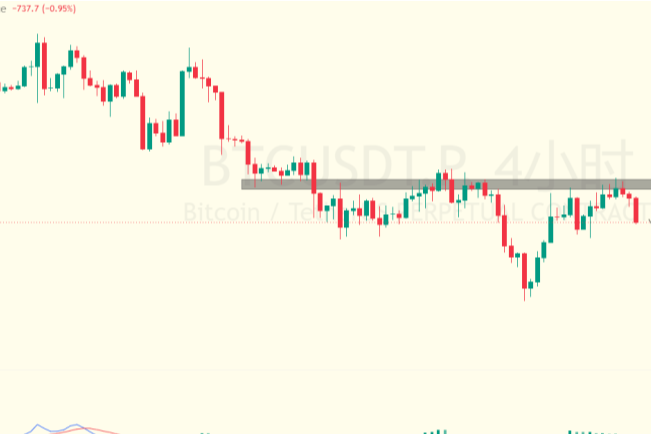
On May 26 (Eastern Time), the Ethereum spot ETF recorded a net outflow of approximately $35 million—Farside statistics indicated $35.1 million, while SoSoValue reported $35.0383 million—according to a single source, this marks the 11th consecutive trading day of capital withdrawal. Among these, Fidelity’s FETH saw a net outflow of $17.0126 million on the same day, although its historical total net inflow remains around $2.159 billion (single source), indicating that long-term funds have not completely turned away, but short-term funds are voting with their feet. Against a backdrop of rising macro uncertainty, regulatory concerns, and competition among public chains, the traditional institutional entry channel of the spot ETF suddenly transformed the "slow accumulation" into "continuous liquidation," creating a stark contrast with the long-term value narrative of "ETH is Money" in the on-chain world: on one side, leading assets are shaped into durable assets akin to "currency," while on the other, compliant funds are compressing Ethereum's risk premium through continuous net outflows. This article will trace the real changes in risk preferences behind the periodic flow of ETFs along the fissure created by the divergence of capital flow and narrative, discussing how it re-prices ETH’s discount rate, risk premium, and trading structure.
The Picture of Ethereum ETF’s 11 Days of Blood Loss
Pulling the timeline back to this phase of “continuous liquidation”: according to a single source, since around mid-May, the Ethereum spot ETF entered a phase of net outflows for 11 consecutive trading days, pulling chips out of the compliant channel day after day. On May 26, Eastern Time, the numbers for that day produced a notable point in this trend—overall products saw a net outflow of approximately $35 million: Farside indicates $35.1 million, while SoSoValue’s figure is $35.0383 million; both differ in statistical methods and update rhythms but point to the same conclusion: funds are not idly sitting in the market but are systematically flowing out.
If we zoom in on a single product, Fidelity’s FETH emerges as the benchmark in this context. According to a single source's data, FETH experienced a net outflow of $17.0126 million on May 26, roughly equivalent to nearly half of the total outflow that day, making it highly representative of the overall market. However, the same set of data also reminds us that FETH has a historical total net inflow of about $2.159 billion since its launch, with a long-term curve still significantly upward, but during these 11 trading days, the curve showed a localized downward "dip." It is important to emphasize that these flow data primarily come from Farside Investors and SoSoValue. Apart from FETH, detailed daily figures for other single products have not been fully disclosed, and the statistical criteria, update times, and inclusion scopes used by different institutions are not entirely consistent; hence, a more reasonable interpretation for readers is to view “11 consecutive days, with a single-day net outflow of around $35 million” as a trend signal of a shift in risk preferences, rather than pursuing an immutable settlement table for every single dollar.
How Wall Street Re-Evaluates Ethereum Risks
For Wall Street, the continuous net outflows over 11 days are no longer "trading noise" but a process of systematically reducing Ethereum risk exposure using compliant tools. The Ethereum spot ETF itself is an important tool for traditional institutions and compliant funding allocation towards ETH. When it experiences a net outflow of about $35 million in a single day, it simultaneously draws a “negative curve” over 11 days—not just adjusting the scale of a particular product but reshaping the weight and pricing logic of ETH within the entire set of risk assets in the context of cooling macro risk appetite. Research briefs indicate that since their inception, these products exhibit cyclical fluctuations in capital flow, and the current outflow resembles a new cycle: faced with regulatory trends, macro environments, and narrative pressures from competing public chains (like Solana), institutions are pulling back the portion of their risk budget that is easiest to label as “high uncertainty, high elasticity.” Compared to Bitcoin, which is more closely positioned as a “digital hard asset,” Ethereum is more easily reduced at this juncture.
From the perspective of capital structure, Fidelity's FETH still has a historical total net inflow of about $2.159 billion, indicating that long-term allocation has not completely retreated but is choosing to give back a portion of chips at a phase of high valuation; this is a typical operation of “increasing risk premium”: for the same unit of Ethereum exposure, Wall Street now demands a higher compensation. The spot ETF, as one of the main channels for traditional funds to enter ETH, when its arrow continuously points to “sell,” the secondary market will apply a “risk asset discount” in pricing—not to deny Ethereum’s long-term value but to move it temporarily from a position of “comparable to core assets” to a basket that “requires a larger discount to hold.” This is the key variable being re-evaluated behind this round of outflows.
ETF Capital Flight and ETH is Money
During the same period when the spot ETF gave a “liquidation” signal for the 11th consecutive day, the internal narrative of Ethereum, however, was being torn at a high level: on one side, Bankless co-founder David Hoffman, who has been reported as having fully liquidated his ETH holdings, while on the other side, Uniswap founder Hayden Adams publicly emphasized, “ETH is Money is the correct narrative, just different from most people's understanding.” Both are established bulls in the Ethereum ecosystem but expressed diametrically opposed attitudes on the question of “should ETH still be treated as a core asset,” which itself undermined market confidence in “ETH’s long-term anchoring.” For institutions trying to incorporate ETH into asset allocation frameworks through spot ETFs, the picture they see is: ETF channels experiencing 11 consecutive days of net outflows, with approximately $35 million leaving the market on May 26, while opinion leaders representing “intrinsic faith” begin to waver between "liquidation" and "ETH is Money."
The demand for “ETH is Money” aims to pull ETH back from the narrative of “fuel for applications” and “platform equity” to a position akin to “currency assets”: held for the long term and seen as a hedge against inflation and systemic risk, rather than a high Beta tech stock substitute. Yet the real capital behavior presents another pricing logic—verbally treating ETH as “Money,” while simultaneously reducing holdings through the spot ETF. This divergence between narrative and trading behavior produces different psychological impacts on various participants: long-term holders are forced to ask themselves, “What I hold is money or cyclical tech asset,” while new institutions, upon seeing internal opinion leaders liquidate and needing to defend the narrative loudly, are more inclined to classify ETH as a risk asset requiring dynamic trading rather than static holding. This renders “ETH is Money” more like a verbal firewall attempting to hedge against the panic of capital flight, rather than an asset attribute that has been priced in by market consensus.
Post-Outflow Pricing of ETH on the Market
When the Ethereum spot ETF experiences continuous net outflows over 11 days and in a single day on May 26 flows out approximately $35 million, the market first needs to address a very straightforward variable: the supply curve of physical chips has been pushed slightly to the right. The spot ETF essentially holds physical ETH; redemption means the fund must either sell part of its holdings directly or return the chips available for sale back to authorized participants, becoming potential selling pressure. Even if these chips do not immediately flood the secondary market, traders will consider them as “incremental supply hanging above,” compressing the bid depth in quotes and increasing liquidity discounts, using this round of redemption cycle as justification for ETH deserving a higher risk premium. The outflow of funds from the ETF also weakens the passive buying power in compliant channels, causing the costs for market makers in hedging and restocking to rise, which will indirectly reflect on the re-pricing of futures discounts/premiums and options implied volatility—markets are willing to charge a bit more insurance for “holding ETH.”
Funds leaving the Ethereum spot ETF do not vanish into thin air; they either flow back to the clearer regulation and narrative of Bitcoin ETFs, shift towards competing public chain assets, or simply revert to fiat currency and interest rate assets. This structurally weakens ETH's weight relative to other mainstream crypto assets. When ETH is reclassified as a high Beta tech asset that “requires dynamic trading,” the typical trading reaction is that the ETH/BTC relative performance enters a defensive mode, with most institutions preferring to adjust their allocations in hedging positions to "reduce ETH, preserve BTC," while in the derivatives sector, they lower leverage and shorten duration, using a more conservative structure to navigate through the redemption window on the ETF side. What ultimately emerges on the market is not just short-term selling pressure but a comprehensive discounting process regarding expectations for Ethereum's growth and risk compensation, and whether this process has been fully realized depends on whether subsequent funds continue to choose to vote with their feet and leave the ETH chain.
What to Watch Next: Realignment of Funds and Narrative
免责声明:本文章仅代表作者个人观点,不代表本平台的立场和观点。本文章仅供信息分享,不构成对任何人的任何投资建议。用户与作者之间的任何争议,与本平台无关。如网页中刊载的文章或图片涉及侵权,请提供相关的权利证明和身份证明发送邮件到support@aicoin.com,本平台相关工作人员将会进行核查。