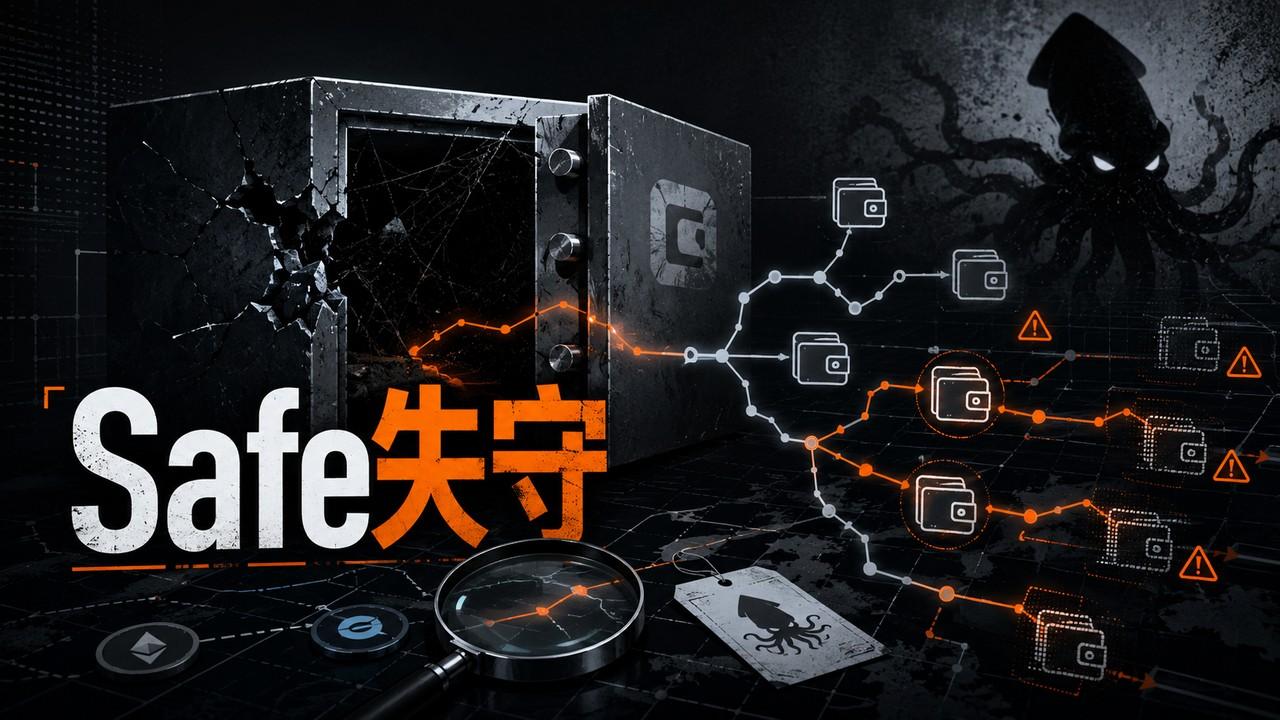
Everything started with a seemingly "ironclad" piece of chain information: a wallet labeled "IOSG Ventures?" by Onchain Lens, simultaneously marked with "IOSG Ventures?" and "Binance Deposit Change Address?" question marks on Arkham, was interpreted as the "selling address" for IOSG Ventures transferring UNI and COMP to Binance. Based on these question-marked labels, some market observers and media quickly pieced together the related transfer story into a narrative of "top institutions offloading," repeatedly referencing this set of tags in prior reports, reinforcing the impression of "suspected IOSG selling." On May 25, 2026, the wind direction changed rapidly within hours—IOSG Ventures released an official statement, clearly stating that the related wallet is not an IOSG address, and that they have neither held nor sold UNI and COMP recently, with no deposits of these tokens to Binance through that address; founding partner Jocy also posted on the X platform, specifically naming Arkham's labels as speculative and erroneous. That day, multiple Chinese media outlets including Rhythm BlockBeats, Odaily Planet Daily, and PANews followed up with reports, characterizing the incident as a "selling blunder" caused by mislabeling. However, what was truly glaring was not the blunder itself, but the repeatedly played-out pattern behind it: chain data platforms rely on algorithms for inference and user contributions for question-mark labels. Even under unverified circumstances—with the platforms themselves harboring doubts—these were still interpreted by the market as "quasi-official conclusions" regarding institutional behavior. So, under such a labeling system, why does the market still willingly hand over pricing power to a string of question-marked names?
How rumors of selling started from a label
This round of story about "suspected IOSG selling" actually began with a string of question-marked labels. A certain wallet address was marked as "IOSG Ventures?" on Onchain Lens, while Arkham layered "IOSG Ventures?" and "Binance Deposit Change Address?" tags on the same address—each clearly marked with a question mark. According to the platform's own rules, this means it is merely speculative attribution, not a confirmed identity. However, in the community's eyes, "IOSG Ventures?" was quickly simplified to "IOSG address," and coupled with the hint from "Binance Deposit Change Address?", a transfer record related to UNI and COMP was immediately interpreted by many as "IOSG depositing UNI and COMP to Binance, likely preparing to sell."
In this atmosphere, the lack of official confirmation in the chain on the labeling was treated as the starting point of the story, with several Chinese media reports prior to May 25 incorporating these question-marked labels as background material. When the community recited the information, they further removed qualifiers like "suspected" or "unverified," leaving only the dramatized narrative of "renowned institutions transferring coins to exchanges" and "possible selling." By the time IOSG came forward to clarify, the market had already completed a cycle of emotional reaction based on this narrative, transforming originally unclear labels into a typical case: it showcased how unverified chain labels, under amplification by media and community, were reshaped into seemingly certain "institutional selling facts."
IOSG swiftly responds: From selling suspicions to clarification
On May 25, IOSG Ventures released an official statement, directly addressing the market focus at the beginning: denying recent holdings or sales of UNI and COMP, emphasizing "we have not held the relevant tokens, nor is there any behavior of depositing UNI or COMP to Binance through the so-called IOSG wallet." The statement specifically named the involved address as not being owned by IOSG and denied any responsibility for associated trading decisions or executions. On the same day, founding partner Jocy continuously voiced on X, dismantling the "evidence chain" of chain information point by point, emphasizing that Arkham's tags "IOSG Ventures?" and "Binance Deposit Change Address?" with question marks inherently signify speculative labels rather than verified facts. Many Chinese media outlets simultaneously shifted to cite this clarification, redirecting the contentious focus from "suspected selling" back to "label mislabeling."
From the narrative rhythm, IOSG chose to respond quickly before emotions could escalate again, clearly weighing two costs: on one hand, allowing the story of "institutional selling" to propagate, eroding long-term reputation and LP trust; on the other, actively stepping forward to correct, acknowledging information gaps, and directing responsibility towards the unverified labels themselves. In a market heavily reliant on chain intelligence, once an institution is bound to a question-mark label, it is exposed to misinterpretation and excessive readings at any moment. By denying the accusations before public opinion solidified, IOSG effectively sent a signal to the market: facing speculative chain labeling, silence is no longer an option, and proactive clarification is the minimum requirement to protect narrative boundaries.
How labels on chain intelligence platforms come about
To understand how this blunder was "created," one must first look at the labeling mechanisms of chain intelligence platforms. Tools like Arkham and Onchain Lens do not simply wait for project parties to report addresses but operate through a dual-track mechanism of algorithms and crowdsourcing: on one hand, systems cluster wallets with similar behavior patterns based on characteristics like capital flow, interaction targets, and transaction frequency, then match them against known exchange and institutional public addresses to infer "who they might belong to"; on the other hand, they generally allow users to submit and correct labels, where anyone can label an address as "a certain fund" or "a certain exchange," and the platform decides whether to adopt it according to its own rules. Consequently, the labeling itself carries a strong "inferential flavor," with quality ranging from professional research to offhand stickers, far from unified standards.
In this context, question-mark labels are almost internal jargon for platforms. For instance, the address involved in this case was marked as "IOSG Ventures?" on Onchain Lens, and on Arkham it was "IOSG Ventures?" and "Binance Deposit Change Address?", with the question mark itself serving as a reminder to users: this is merely a speculation based on algorithms or community clues, and has not been verified by IOSG or the exchanges directly involved. The problem lies in the platform regarding the question mark as a "reserved opinion," while users easily take it as a "not out of the question" factual clue. Especially during market sensitive periods, the speed at which screenshots circulate far exceeds the risks highlighted, with question marks being naturally overlooked in the forwarding chain, even directly smoothed over in media headlines, ultimately evolving into a definite narrative of "some institution's large transfer in and out." The industry has previously seen cases where internal addresses of exchanges were misjudged as large adjustments by institutions; this time, the IOSG incident again exposed a structural contradiction: platforms attempt to delineate responsibility boundaries with question marks, while market participants habitually treat such "semi-confirmed" labels as actionable intelligence, creating a misalignment of cognition where every question-marked label harbors the risk of being amplified into "ironclad evidence."
When the market treats speculation as fact: Emotional amplification effect
In these types of events, once an address is tagged "IOSG Ventures?" or "Binance Deposit Change Address?", many people's first reaction is not to see the question mark, but to see the institution name in front. Especially when the labels point to well-known VCs, the familiar narratives of "institution selling" and "transferring to exchanges" immediately gain the upper hand: screenshots circulate quickly in communities, bloggers jump to conclusions, and media cite these labels in early reports, creating a chain of information that packages a dubious label into "intelligence" capable of swaying emotions with almost no cross-verification. The industry has previously witnessed multiple instances of misreading due to address label misjudgment, interpreted as substantial institutional or large holder sell-offs; such topics, which are already familiar and capable of generating discussion, naturally spread more easily than "labels unverified" or "information in doubt."
In the IOSG incident, the involved address was marked with question marks throughout, and on May 25, IOSG clearly denied that the relevant wallet was its address, stating that it had neither held nor sold UNI and COMP recently. Multiple media outlets began to emphasize the "unverified labels" point in follow-up coverage. However, before this, market sentiment had already amplified around the "suspected VC selling," and research materials also indicated that this case lacked specific token quantities, transaction amounts, and profit-loss data verified by multiple parties, which means the so-called "selling degree" and "cash-out scale" are more imaginative than factual. When the chain only shows a question-marked label yet is treated as a stamped conclusion, investors are effectively making decisions using emotions in place of evidence; any single label should be merely the starting point of analysis, not an endpoint sufficient for placing bets.
How to understand labels after this lesson
The process by which IOSG was mislabelled clearly outlined the trust boundaries of chain labels: the question-marked "IOSG Ventures?" and "Binance Deposit Change Address?" are essentially just a hypothesis based on speculation from the platform, yet in the market retelling, the question marks were erased until the parties involved themselves publicly denied it on May 25, 2026, bringing the narrative back to reality. For ordinary participants, the first step is to learn to "read punctuation": a question mark signifies unverified, indicating that the platform itself is also hesitating; such labels can only serve as clues, not as immediate betting conclusions; simultaneously, one must pay attention to descriptive text to distinguish whether it is algorithm-generated by the platform or user-submitted, remaining vigilant against "half-finished" labels that lack official validation yet are quoted as ironclad evidence by the media. The reminder in research materials to "prohibit fabricating wallet ownership and specific token quantities" also highlights a fundamental methodology—in the absence of multi-party validation, it is better to acknowledge information gaps than to fill in details with imagination. From the perspective of the tool providers, future chain intelligence products marking verification status and source paths next to labels, or even adding conspicuous risk warnings to question-marked labels, are all improvements to be anticipated. Once platforms, media, and institutions clearly define the verification responsibilities and usage boundaries for labels, such "selling blunders" caused by mislabeling may truly decrease, and chain intelligence can revert from sensational material back to a reliable basis for analysis.
Join our community, let’s discuss and become stronger together!
Chain on Telegram community: https://t.me/AiCoinWhaleData
Chain community: https://www.aicoin.com/link/chat?cid=N6OVMor5g
AiCoin on Twitter: https://x.com/aicoinwhaledata
AiCoin exclusive Hyperliquid benefits: https://app.hyperliquid.xyz/join/AICOIN88
AiCoin exclusive Aster benefits: https://www.asterdex.com/zh-CN/referral/9C50e2
免责声明:本文章仅代表作者个人观点,不代表本平台的立场和观点。本文章仅供信息分享,不构成对任何人的任何投资建议。用户与作者之间的任何争议,与本平台无关。如网页中刊载的文章或图片涉及侵权,请提供相关的权利证明和身份证明发送邮件到support@aicoin.com,本平台相关工作人员将会进行核查。