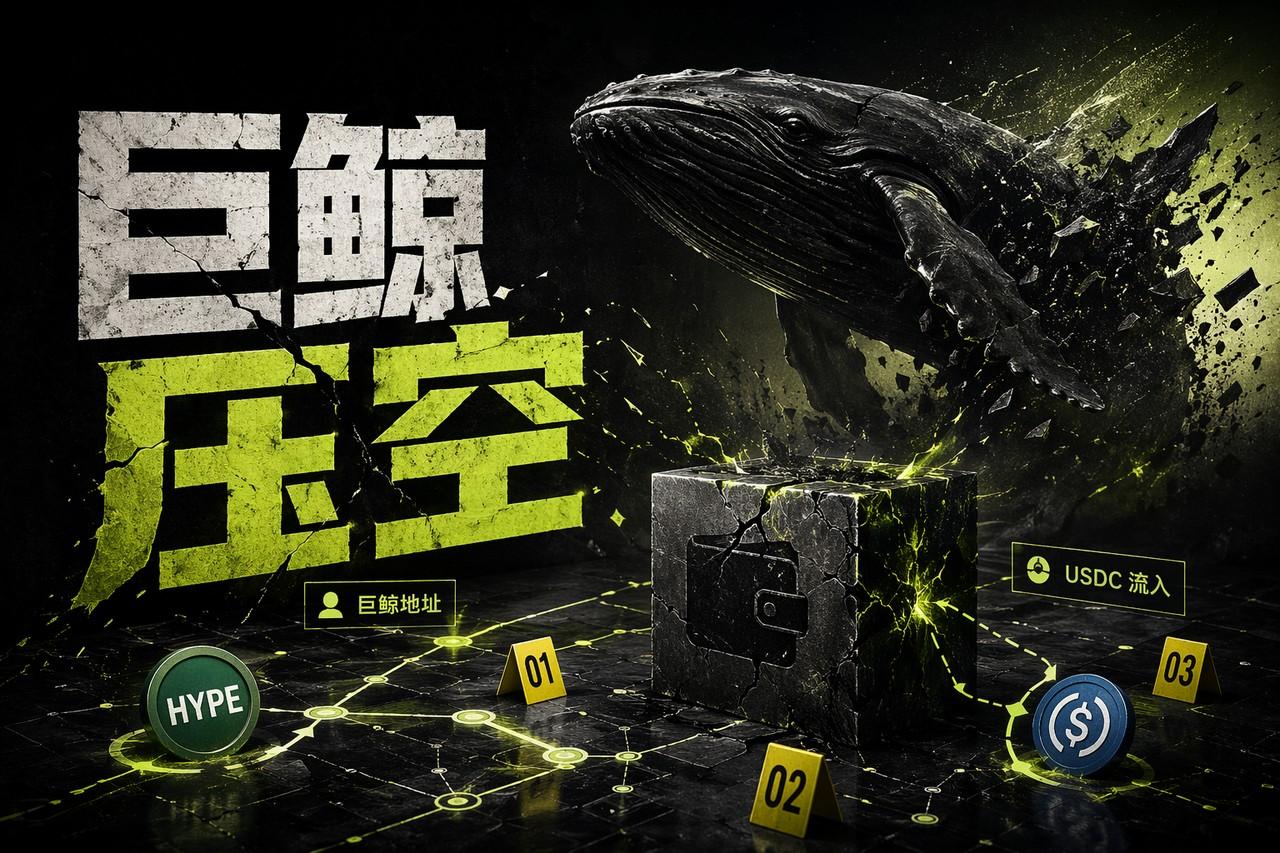
On May 25th, the numbers on the surface of the cryptocurrency market began to slightly warm up: the Fear and Greed Index rose from 25 the previous day to 30, with sentiment retreating from "extreme fear" back to "fear", but the shadow of overall weakness in May still loomed, and risk appetite had not yet recovered to neutral levels. Meanwhile, HYPE was selected by capital as the main battleground for the showdown between bulls and bears—on one side was the current largest short seller, Loracle, who placed about $75 million in short orders at a price level of $64, increasing the total short exposure to approximately $143 million; on the other side, an address linked to Arthur Hayes deposited 115,453 HYPE into Bybit on May 23, then withdrew 85,714 HYPE for about $5.37 million around May 25, with the continuous adjustment of positions combined with Loracle's heavy short leading the market to expect a funds battle that would forcibly increase volatility. In sharp contrast to this tense sentiment on-chain was the macro-level signal of "risk warming": in late May, the market bet that the U.S. and Iran might reach an agreement to restart oil transportation through the Strait of Hormuz, driving oil prices down by about 5% in a single day, with WTI and Brent hitting two-week lows. In an environment of a weakening dollar and strengthening risk currencies, traditional risk assets showed significantly better sentiment than those in crypto, while HYPE, seen as a high volatility barometer, had its long-short game amplifying the misaligned sentiment into a trial of capital flow and pricing power.
Contradictory Signals in the Rising Fear Index
From May 24 to 25, the Fear and Greed Index in the cryptocurrency market rose from 25 to 30, seemingly completing a shift from "extreme fear" to "fear", but this repair felt more like taking half a step back from the edge of the abyss rather than turning back onto solid ground. The overall market sentiment in late May was already weak, and even though the index slightly rebounded, the actual behavior of capital provided another answer: under the macro backdrop of oil prices dropping about 5% in a single day, WTI and Brent hitting two-week lows, a weakening dollar, and strengthening risk currencies, traditional risk asset sentiment improved, but crypto blue chips did not see a significant influx of funds, and the uplift in sentiment indicators hadn’t translated into substantial incremental buying, leaving risk appetite still at a low level.
The sense of contradiction deepens here: on one side, the macro "risk switch" seems to have been lightly turned ON, while on the other side, funds in the on-chain world remain withdrawn into a defensive stance unwilling to follow. With high volatility tokens like HYPE, the longs and shorts continue to engage in intense competition, considered a risk sentiment barometer by the market; however, this local aggressiveness has not spread into widespread bullish impulses, but rather highlights a caution of "only daring to bet locally while not willing to endorse the overall risk asset". The rise of the Fear and Greed Index from 25 to 30 seems more like sentiment retreating from extreme tension back to high tension, rather than a true warming of risk appetite, with the current market still in a phase of testing the overall confidence baseline through local high-stakes gambling.
Loracle's Big Bet on HYPE Decline
In this atmosphere of "only daring to gamble locally", Loracle chose to push leverage to the extreme on HYPE. As the current largest short on HYPE, it added about $75 million in short orders around $64 on May 25, increasing its total short exposure to approximately $143 million. This is not just a simple directional bet but transforms a high β asset into a vehicle for concentrated betting: such a large unilateral short position turns the price curve of HYPE into a tightened bowstring, where any slight force from either side could amplify into intense fluctuations, once again pulling already "fearful" sentiment back to extremes.
For the entire market, this concentration of large short positions itself is a declaration of risk aversion. As a high volatility token, HYPE's intensive long-short bets have become an important barometer of crypto risk appetite, and when the largest short piles up to $143 million, other participants tend to treat HYPE as a hedging tool rather than a purely speculative asset: funds on BTC-denominated and USDT-denominated contracts adjust around it, and once HYPE quickly drops, short profits are realized into dollar chips, suppressing rebounds in other high β assets; if HYPE quickly rises, the forced liquidation triggered by short squeezes could compel some funds to reduce positions in mainstream assets like BTC and ETH to replenish margin. As a result, HYPE is shaped into an emotion amplifier, with each of its pronounced fluctuations rewriting the risk pricing of mainstream assets like BTC and ETH through hedging and rebalancing chains.
Arthur Hayes' Contrarian Move
While Loracle pressed out about $75 million in new short orders around $64, making HYPE the “panic leverage” of the whole market, on the other side of the table, an address linked to Arthur Hayes took a distinctly different path: on May 23, that address deposited 115,453 HYPE into Bybit, reserving ammunition for subsequent operations; around May 25, it then withdrew 85,714 HYPE for about $5.37 million at that time's market price. The on-chain situation currently cannot provide specific selling amounts and transaction prices within the market; outsiders can only see these two evident entrance and exit actions but cannot discern the true intentions in the order book.
Because of this “visible entry and exit, yet invisible details” opacity, market sentiment opened up a new fissure: on one side, Loracle piled up the short leverage to about $143 million, betting on continued fear; on the other side, this address linked to Hayes was interpreted by many traders as adjusting positions or accumulating chips at lower levels, rather than simply reducing holdings at high levels. For capital still in the fearful zone, having just slightly rebounded from extreme fear, such contrarian operations immediately became a new focal point of contention—some capital saw following the large short as the “main line trade,” while another part viewed potential Hayes-style low-position layouts as hedging or even counter-attack tools, by increasing or hedging on HYPE, transferring systemic risk from BTC and ETH to higher β tokens. This narrative opposition among major players diverted what should have been a singular tendency of fear into two paths: either following Loracle to go short, amplifying fear; or betting on a Hayes-style inversion, accepting greater volatility on HYPE to exchange for relative stability in mainstream asset positions.
Oil Price Plunge and Breathing Room for Risk Assets
Just as the bulls and bears increased their stakes on HYPE, the macro side suddenly sent a "cooling" signal: in late May, the market began betting that the U.S. and Iran might reach an agreement to restart oil transportation through the Strait of Hormuz, with reports indicating a single-day drop of about 5% in crude oil prices, pushing WTI and Brent down to two-week lows. As oil prices edged down, inflation expectations immediately loosened, and the pressure on real yields eased, combined with a weakening dollar and stronger risk currencies, the discount rate for global asset pricing was gently adjusted lower. For high β assets like BTC and ETH, this was a short-term buffer from the macro side—during this fragile phase when the Fear and Greed Index had just risen from 25 to 30, this combination of "oil prices + dollar" provided a somewhat plausible narrative for risk asset sentiment.
However, this buffer line is extremely unstable. Trump has already stated: the U.S.-Iran agreement "is not yet fully negotiated," and significant differences still exist, meaning that what the market is currently trading is actually an expectation that has not yet been inked. If negotiations stall and expectations reverse, oil prices might quickly bounce back, pushing inflation concerns and real yield pressures that had just been alleviated back up, inversely tightening global liquidity expectations. In such a scenario, BTC, ETH, and the high-leverage positions around HYPE would switch from "enjoying the benefits of lower oil prices" instantly to a new round of volatility due to hedging the impacts of energy rebounds, forcing investors to pull this external variable, oil prices, back into the core monitoring table of crypto position management.
Fake News and New Vulnerabilities in Crypto Sentiment
Just as macro positives and micro competition intertwine, a piece of fake news regarding CZ's disappearance while surfing in Dubai rapidly spread across social platforms and chat groups, later directly denied by CZ himself on X, with reports indicating it originated from a Chinese WeChat group accompanied by forged media screenshots. This "create panic—immediate refutation" rhythm blatantly exposes the emotional fragility of the crypto market amid information noise. The rise of the Fear and Greed Index from 25 to 30 on May 25 seemed like a recovery from extreme fear to fear; it was partially influenced by macro signals like falling oil prices, a weakening dollar, and strengthening risk currencies, as well as the "story" attraction brought by the standoff between Arthur Hayes and Loracle on HYPE, but the indicators still remained within the fear range, signifying that funds had only retreated from extreme defense to cautious observation, rather than being willing to pay for risk once again. The "grassroots community support" mentioned by Coinbase's European policy head is two-fold in such a scenario: it is both a mobilization base against traditional finance and an accelerant for rumors amplifying the ties between on-chain capital and sentiment. For BTC, ETH, and the high-leverage positions around HYPE, this slight emotional repair does not equal that risk has been cleared, and the next step of escaping the "news-driven consolidation" state depends not on a single story, but on the simultaneous evolution of three lines: whether the long-short structure of HYPE continues to extreme, whether U.S.-Iran negotiations and the oil price path surprise in the opposite direction, and whether the rhythm of flows in and out of BTC, ETH, and surrounding capital realigns.
Join our community to discuss and become stronger together!
On-chain Telegram community: https://t.me/AiCoinWhaleData
On-chain community: https://www.aicoin.com/link/chat?cid=N6OVMor5g
AiCoin on-chain Twitter: https://x.com/aicoinwhaledata
AiCoin exclusive Hyperliquid benefits: https://app.hyperliquid.xyz/join/AICOIN88
AiCoin exclusive Aster benefits: https://www.asterdex.com/zh-CN/referral/9C50e2
免责声明:本文章仅代表作者个人观点,不代表本平台的立场和观点。本文章仅供信息分享,不构成对任何人的任何投资建议。用户与作者之间的任何争议,与本平台无关。如网页中刊载的文章或图片涉及侵权,请提供相关的权利证明和身份证明发送邮件到support@aicoin.com,本平台相关工作人员将会进行核查。