Why is it illegal to buy foreign stocks with one's own money in China?
I thought I had explained this very clearly, but there are still many friends who are very interested in this topic and are happily discussing it. In fact, the premise of this topic is wrong.
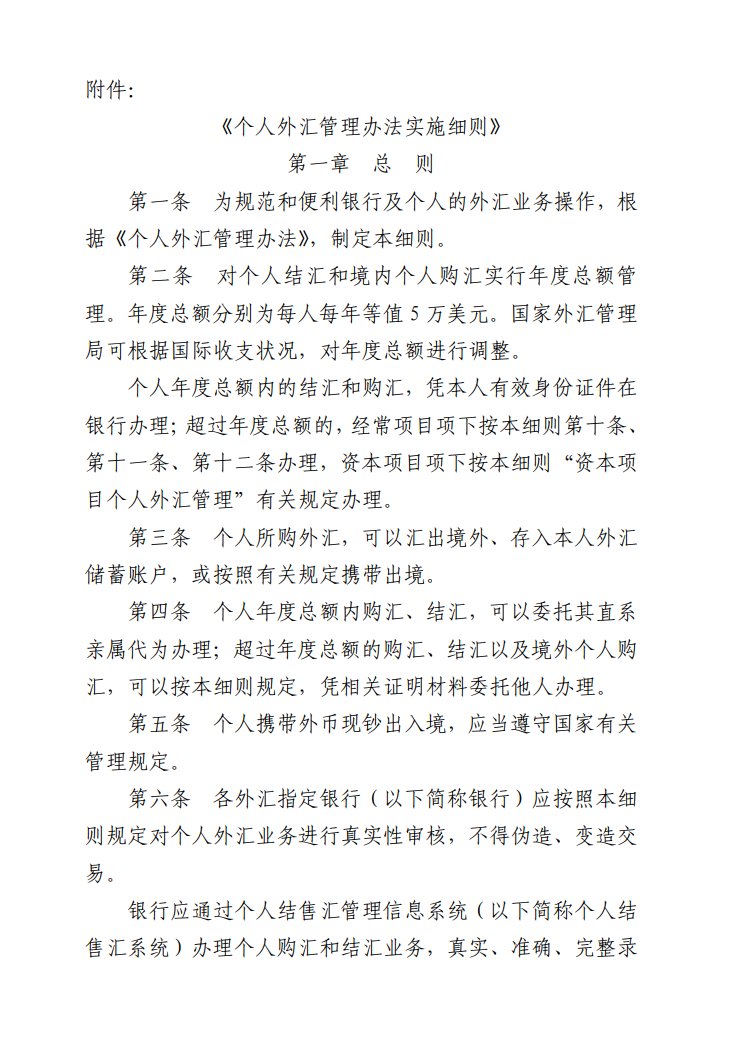
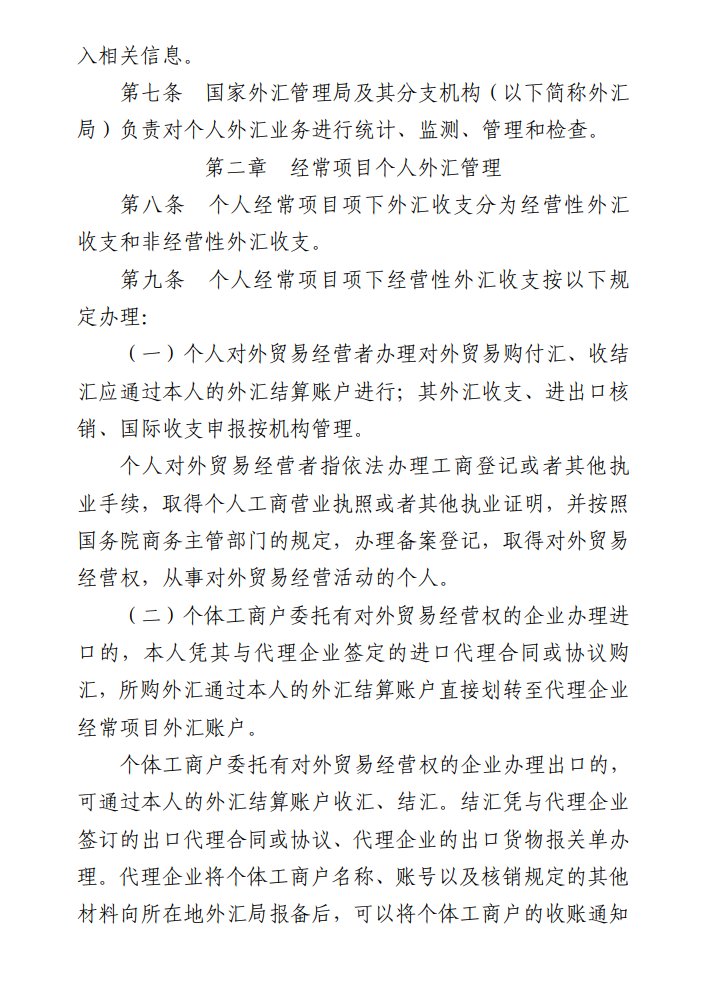
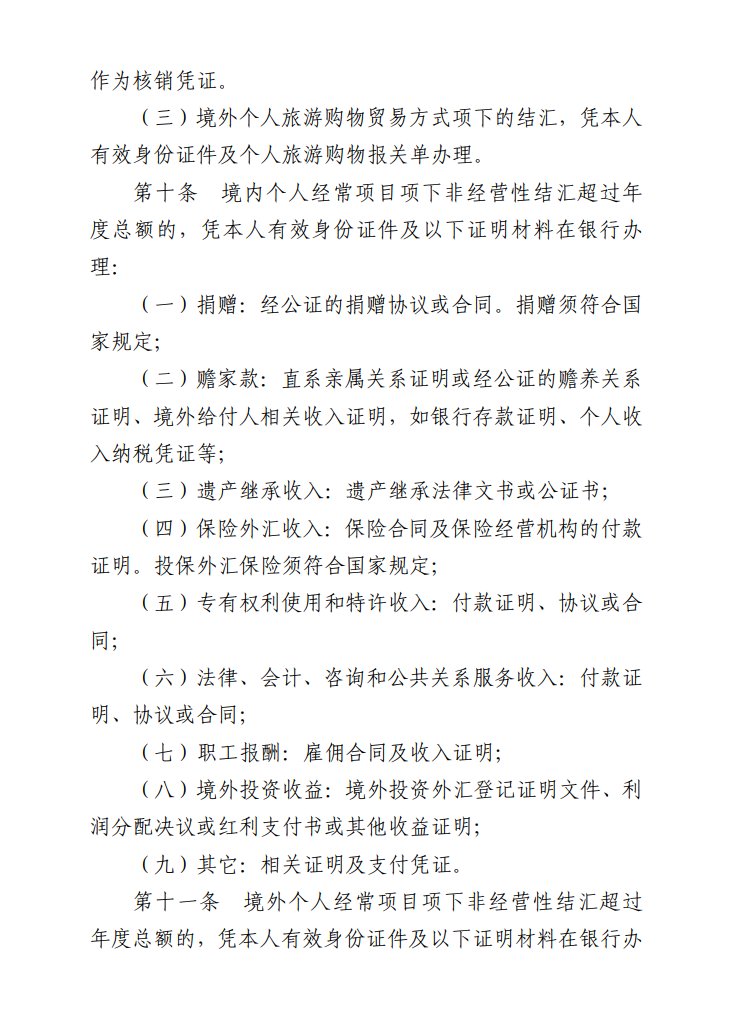
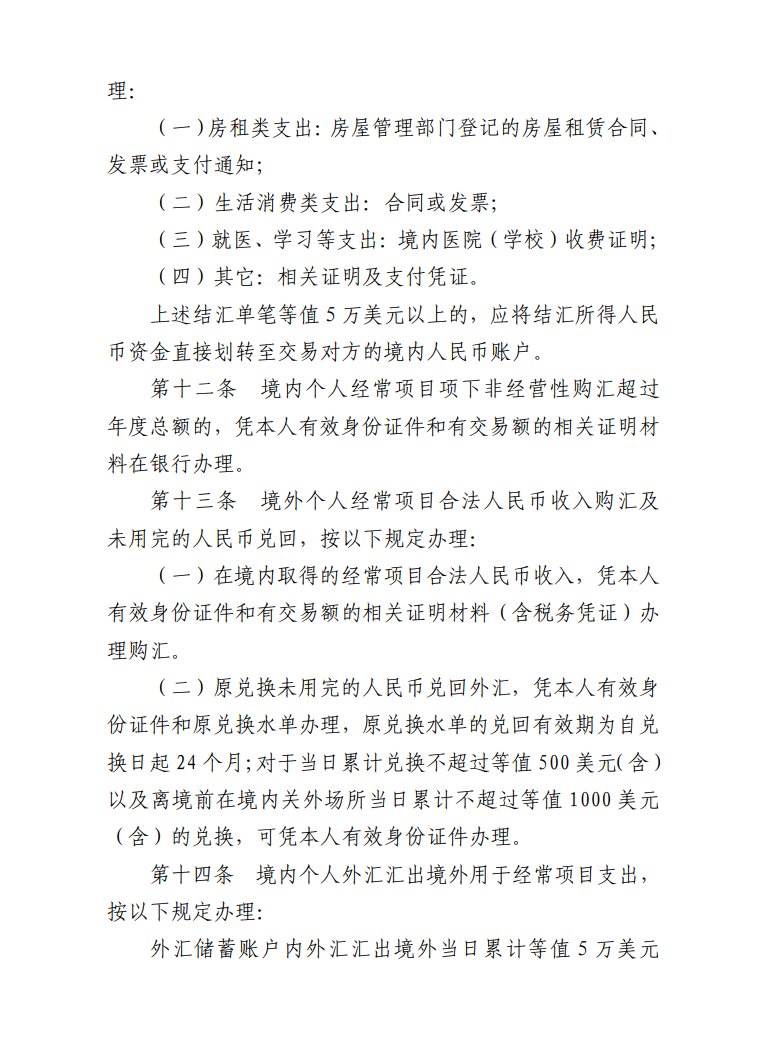
It has never been prohibited to buy foreign stocks in China; buying foreign stocks is not illegal, that is a fact.
For example, QDII, Hong Kong Stock Connect, Cross-Border Wealth Management Connect, employee stock ownership plans, or option plans are all legal.
Moreover, the documents from the foreign exchange bureau also clearly state that domestic individuals can invest in overseas fixed-income and equity financial investments through qualified domestic institutional investors QDII via banks and fund management companies, and employee stock ownership and stock options can also be processed through companies or domestic agents after applying to the foreign exchange bureau.
Therefore, holding or purchasing overseas stocks is a legal activity in China.
However, this statement requires one premise: it must be purchased through officially recognized legal channels for overseas investment. Of course, even if one purchases through illegal means now, the Chinese authorities have never expressed that they would confiscate personal assets.
(Of course, the premise is that the source of the funds used to purchase the stocks is legal.)
So where does the problem lie?
The issue is that China has not opened a channel for domestic individuals to "freely exchange currency and go abroad to buy foreign stocks directly with their money."
The essence of the matter is that China implements capital account controls, and the RMB is not yet a fully freely convertible currency under capital projects. This needs to be remembered!!
Why can’t the RMB be freely exchanged? Mainly to prevent large-scale capital outflows.
If 1.4 billion people could freely exchange RMB for USD to buy U.S. stocks, U.S. bonds, and overseas real estate, the RMB exchange rate, foreign exchange reserves, and liquidity in the banking system would all come under pressure.
If given the choice, would you choose RMB or USD? Of course, some friends might ask, why are the U.S. or Europe okay with free conversion?
Because Europe and the U.S. have chosen a different financial system. Their capital account is mostly open, the exchange rate is market-oriented, the degree of currency internationalization is high, while managing risks through taxes, anti-money laundering, sanctions, brokerage regulation, and information reporting.
China restricts the free convertibility of capital accounts. Most countries in the U.S. and Europe have completed the opening of capital accounts, allowing residents to convert local currency into foreign currency to buy foreign stocks, bonds, funds, and real estate, but the premise is that the source of the funds is legal, tax reporting is compliant, and they must not violate sanctions and anti-money laundering rules.
The core issue is that the U.S. and the Eurozone can afford to have free capital movement, while China is not willing to bear that cost right now.
Because there is a trilemma in international finance: a country cannot simultaneously have a fixed or heavily managed exchange rate, free capital movement, and an independent monetary policy. At most, it can only choose two out of three.
Why can the U.S. do it? Because the dollar is the global reserve currency, and the U.S. does not need to worry about its currency being suddenly sold off like emerging markets do, which would lead to a depletion of foreign exchange reserves. Capital that flows out of the U.S. often eventually returns to dollar assets; the dollar system itself is a reservoir for global funds.
Why can Europe also relatively do it? Because the euro is also a major international currency, and the free flow of capital within the EU is part of financial integration; the financial regulatory, tax information exchange, and anti-money laundering systems of member countries are relatively mature.
Why is China different? China is not willing to allow residents, enterprises, and financial institutions to freely exchange RMB for USD assets at any time. Otherwise, several issues may arise:
First, pressure on the RMB exchange rate will increase.
If residents and enterprises could freely exchange dollars to buy U.S. stocks, U.S. bonds, and overseas real estate, once expectations of RMB depreciation form, funds will concentrate on flowing out, and the central bank will have to exhaust foreign exchange reserves to stabilize the exchange rate.
Second, domestic liquidity would be drained.
China hopes that savings will remain in the domestic banking system, bond market, real estate market, A-shares, and the real economy financing system. If the capital account is fully opened, residents may directly transfer their money to U.S. assets, impacting domestic asset pricing and financing environments.
Third, the independence of monetary policy will be weakened.
If capital flows completely freely, when the Chinese central bank lowers interest rates, funds may flow out. Higher rates in the U.S. may draw funds to buy dollar assets. This way, China's own interest rate policy would be driven by the Federal Reserve.
Fourth, the difficulty of regulatory and tax transparency would increase.
If individuals go directly to overseas brokers to buy stocks, funds, insurance, or real estate without a comprehensive reporting, taxation, anti-money laundering, and accountability system, regulation would find it difficult to ascertain the sources of funds, the ownership of returns, and tax liabilities.
Therefore, the core issue is that China wants to maintain the stability of the RMB exchange rate, preserve foreign exchange reserves, uphold monetary policy independence, and protect the domestic funding pool, so it must impose currency controls.
#Bitget is here to be VIP! Crypto, U.S. stocks, CFDs, a one-stop layout for global opportunities
免责声明:本文章仅代表作者个人观点,不代表本平台的立场和观点。本文章仅供信息分享,不构成对任何人的任何投资建议。用户与作者之间的任何争议,与本平台无关。如网页中刊载的文章或图片涉及侵权,请提供相关的权利证明和身份证明发送邮件到support@aicoin.com,本平台相关工作人员将会进行核查。


