The information flow is too fast, and in-depth analysis articles are easily drowned by hot topics. The "Weekly Editor's Picks" section extracts these judgment-worthy contents from a vast amount of information, helping you filter out the noise, leaving insights and inspiration.

Macroeconomic Situation
The political paradox of Trump is becoming increasingly clear: his support among national voters continues to decline, yet he wields increasing dominance within the Republican Party.
On one hand, he uses endorsements, primary challenges, and political purges to force candidates within the party to pledge loyalty to him; on the other hand, this politically selective process centered around personal loyalty may weaken the Republican Party's competitiveness in the general elections.
Also recommended: 《The Financial Chaos in South Korea: Samsung Strikes, AI Communism and Major Losses in the Crypto Circle》.
Investment and Entrepreneurship
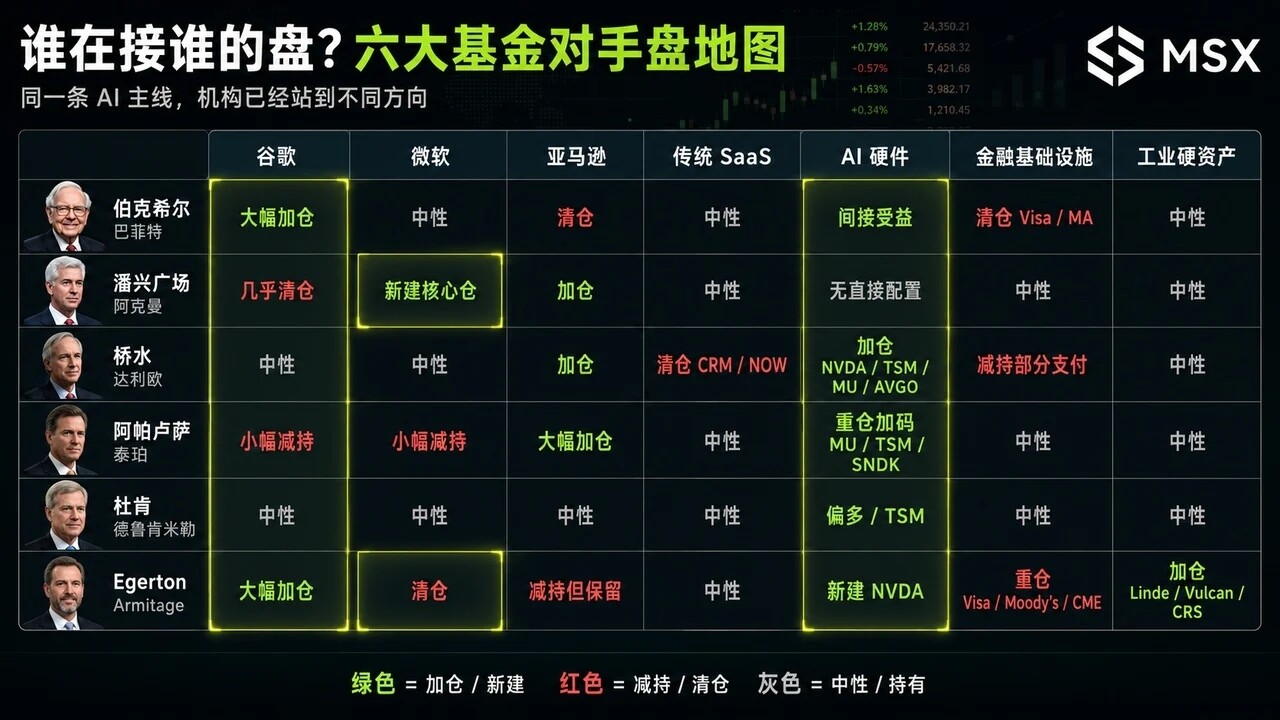
Also recommended: 《With the World Cup Approaching, Sports Are Entering the Era of "Fragmented Finance"》《After the Number of Developers Was Cut in Half: Crypto Has Not Died, It Just Transferred Talent to AI》.
Prediction Markets
The core landscape of prediction markets in 2026: on one side are the duopoly formed by Polymarket and Kalshi, with the former expanding its influence through on-chain trading, USDC settlement, and media distribution, while the latter relies on CFTC compliance qualifications and channels like Robinhood to enter mainstream financial scenarios; on the other side, a number of new platforms seek opportunities in short-cycle trading, sports predictions, media integration, on-chain native indicators, and infrastructure layers.
Policies
The SEC is expected to release the tokenized stock "innovation exemption" policy this week, allowing third parties to issue and trade tokens corresponding to stocks without needing the consent of listed companies.
Platforms like Coinbase are expected to launch trading of U.S. stock tokens without obtaining a full broker-dealer license.
Traditional institutions such as DTCC, Nasdaq, and the New York Stock Exchange have accelerated their layouts, expecting to start real trading of tokenized assets between July and October.
What Will Happen to the Crypto Market After the CLARITY Act Passes?
The commodity status of Bitcoin and Ethereum will be enshrined in federal law, eliminating the tail risk of future administrative reversals;
XRP will be one of the biggest beneficiaries of the bill, as the years-long shadow of the SEC lawsuit will receive permanent closure on the legal level;
The passive income function of stablecoins will be limited, but activities tied to trading and liquidity provision will be protected.
Stablecoins
USDC Strikes Back at USDT: The Real Battlefield is Hyperliquid
The competition among stablecoins is shifting from "who is more compliant" to "who can control more trading entrances."
Superficially, USDC is re-emerging as the main pricing asset on Hyperliquid, which is gaining a higher revenue share. But at a deeper level, this is a battle over distribution channels.
For Coinbase and Circle, Hyperliquid offers global reach capabilities difficult for them to replicate. Coinbase faces regulatory restrictions that prevent it from covering broader markets like Binance or Hyperliquid can, so embedding USDC in the underlying transactions of Hyperliquid could be a realistic path to counter USDT's network effects.
CeFi & DeFi
After 220 Days of Launching Trade.xyz, Hyperliquid is Becoming the "New Nasdaq"
After experiencing the pre-market battle of Cerebras (CBRS), Hyperliquid has begun to play the role of "the U.S. stock price discovery machine" and is becoming the new Nasdaq.
Pre-IPO New Battlefield: On the Eve of the Listing, $SPCX Has Been Pushed to 25 Trillion
As the narrative around crypto weakens, the star IPOs in the U.S. stock market are filling this gap, with all players vying for this category, marking the beginning of the on-chain pricing of humanity's largest IPO.
As the supply of sUSDe is halved, funds have flowed into lower-yield USYC and sUSDS. This is not a capital exit but a change in choice standards.
APY is no longer the dividing line for asset segmentation. What matters more is whether it can be adopted as collateral, a savings product, or a reserve.
S&P has given USDS the first credit rating in the history of DeFi protocols, while marking USDe with a 1250% risk weight.
Ethena will fully renovate its collateral structure in April 2026, shifting from a synthetic model to a hybrid model. A single source of income is no longer sufficient to survive in the YBS market.
DeFi is shifting from a market that produces yields to a market that imports and distributes yields from traditional finance. The more stable the foundation, the stronger the upper structure can be.
Why Is the RWA Boom Hard to Benefit DeFi?
The vast majority of RWA assets float outside the lending market, collateral vaults, and other scenarios that enable free combination and interaction of crypto assets. Bonds and money market funds are the largest categories of RWA, yet the funds entering the DeFi market are few. Only the private credit sector has performed well, as projects like Maple Finance and Centrifuge have positioned themselves as lending financial tools from the outset, naturally fitting DeFi application scenarios.
The permissioned architecture has become the greatest barrier to DeFi composability.
Positive expectations: Highly adaptable products have run out sample models; Negative realities: Industry growth may be stuck within the traditional financial system.
WLFI's Self-Rescue Turns into a Selling Wave: Long-term Holders Take the Opportunity to Clear Out
Facing months of pressure from governance disputes, unlocking concerns, and liquidity doubts, World Liberty Financial has taken multiple measures to respond: destroying WLFI tokens, connecting with exchanges, and launching a rewards program linked to the stablecoin USD1, aiming to revitalize the entire WLFI ecosystem.
These measures have boosted market sentiment but also created a new liquidity window for long "sleeping" holders to take profits.
Also recommended: 《The "Blind Box Shareholders" Amidst the Wealth Tide of SpaceX: Layer Upon Layer, Who Is Swimming Naked?》《The Mysterious Founder of TradeXYZ, Shoku, a Person Always Looking for Asymmetric Opportunities》.
Airdrop Opportunities and Interaction Guide
50 Million Dollar Financing Ignites Airdrop Expectations, Variational Becomes New Focus of Perp DEX
Security
Vitalik's Latest Long Article: In the Age of AI, How Can Code Become Safer?
Faced with stronger AI attackers, it's necessary to compress key systems into smaller, more verifiable, and more trustworthy "security cores"—formal verification.
Clear Signing was further pushed into the Ethereum open standardization process on May 12, attempting to solve an old problem: many users do not neglect security but cannot understand what they are actually signing before clicking confirm.
The role of Verifiable UI is to ensure that what users see (on-screen display) is what will truly happen (transaction signatures).
Weekly Hotspot Review
Policies and Macroeconomic Market
The National Development and Reform Commission: Has never required Chinese technology companies not to accept foreign investment;
The Securities Regulatory Commission seriously investigates illegal cross-border business cases: plans to confiscate all illegal gains from Tiger, Futu, and Changqiao's domestic and foreign entities;
Eight departments of the Securities Regulatory Commission: Strengthen the cleaning of internet platforms and information; Completely Ban illegal cross-border operations by offshore securities, futures, and fund management institutions;
The U.S.-Iran Agreement reaches its final draft;
Iran launches a digital maritime insurance platform Hormuz Safe, supporting cryptocurrency settlements (Interpretation);
The EU initiates an assessment of the MiCA regulatory framework, and the global cryptocurrency regulatory competition accelerates;
The Trump Administration provides a total of $2 billion in funding to 9 quantum computing companies;
Elon Musk's lawsuit against OpenAI was unanimously rejected;
Samsung Electronics announces a strike on Thursday by South Korean unions;
Google I/O Conference All in AI (Key Points Overview);
Views and Voices
The New Bond King: The Federal Reserve's interest rate cuts this year are "impossible";
The U.S. Crypto Market Structure Bill has entered a critical period: NYDIG warns that June to August is the last legislative window;
Arthur Hayes: Hopes the Clarity Act will be vetoed, cryptocurrency can survive without regulation;
Bankless Founder liquidates ETH, Ethereum faith collectively shatters;
Hyperliquid Co-Founder: Has met with U.S. policymakers to discuss entering the U.S. market;
Institutions, Large Companies, and Leading Projects
SpaceX submits IPO application, not disclosing issuance scale and valuation;
OpenAI is about to submit an IPO application;
Polymarket teams up with Nasdaq to launch a prediction market for private companies;
Sui launches zero Gas stablecoin transfers;
Data
The recently named "AI Stock God" Leopold Aschenbrenner's fund reveals holdings (Layout Overview);
ZEC has surged (Interpretation);
HYPE has skyrocketed (Attribution), Hyperliquid FDV surpasses Solana, Institutions have varying pricing for HYPE;
Duan Yongping's Q1 new position in Circle, holding a market value of $19.08 million...
Attached is the entry point for the "Weekly Editor's Picks" series portal. See you next time~
免责声明:本文章仅代表作者个人观点,不代表本平台的立场和观点。本文章仅供信息分享,不构成对任何人的任何投资建议。用户与作者之间的任何争议,与本平台无关。如网页中刊载的文章或图片涉及侵权,请提供相关的权利证明和身份证明发送邮件到support@aicoin.com,本平台相关工作人员将会进行核查。


