It is Bankless that needs Ethereum, not Ethereum that needs Bankless.
In fact, it is just a simple shift in positions in the historical development process; who would have thought it would cause such a stir in both the Chinese and English markets.
It seems that the main contradiction lies not in the shift itself, but in the long-term stability of Ethereum's price.
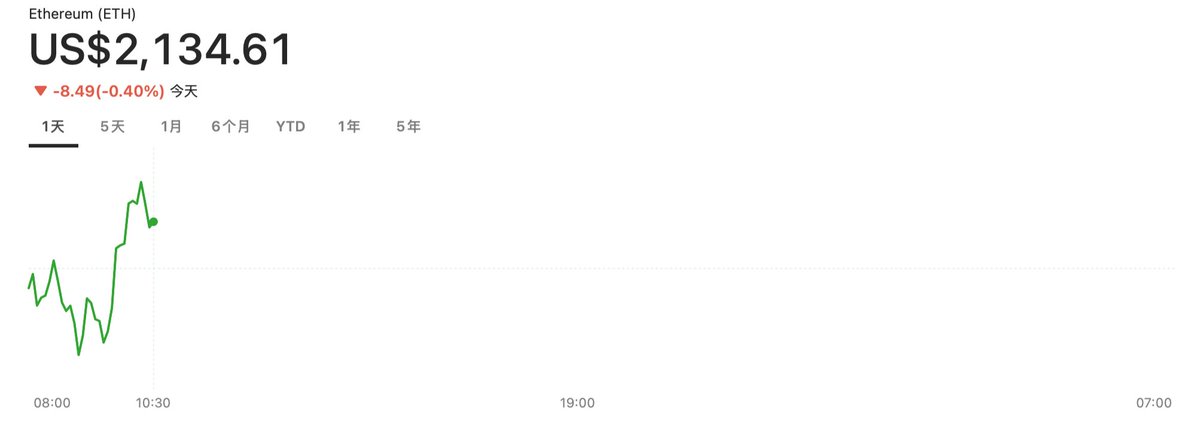
Yesterday I saw a chart showing that Bitcoin has increased more than 5 times from its lows, but Ethereum has basically not changed much.
I think this might be the issue that everyone is most concerned about.
Bankless is the same; it is also an institution controlled by people. Although they once served as amplifiers for the Ethereum narrative, they are not the load-bearing wall of Ethereum.
David liquidating his ETH is, in the short term, of course, a negative sentiment because it represents a weakening of faith from a generation of ETH evangelists.
But in the long run, this is actually a stress test:
If Ethereum has truly matured, it should no longer rely on a specific media outlet or a few KOLs to maintain faith.
Early ETH needed Bankless to tell the story; now ETH needs to answer tougher questions:
1️⃣ Can the growth of L2 flow back to ETH?
2️⃣ Can stablecoins and RWA settle on Ethereum?
3️⃣ When institutions allocate ETH, are they purchasing an asset or a story?
4️⃣ Can ETH itself capture the value of ecosystem expansion?
Here, I manually @VitalikButerin because the ultimate question is: When the best storytellers of Ethereum stop telling its story, can Ethereum still prove itself with data?
We should focus on this factor.
This is a critical point for judging ETH's future.
Previously, the logic of ETH was very clear: the more users there are → the more congested the mainnet → the higher the gas fees → the more burned → the scarcer ETH becomes → the easier it is for the price to rise.
This is the core logic of "ultrasound money."
But after Dencun, Pectra, and Fusaka, Ethereum is increasingly moving towards an L2 expansion route. This route is good for users because transactions are cheaper; it is good for the ecosystem because the throughput is higher; but for ETH holders, it brings a dilemma:
If all transactions go to L2, will the mainnet transaction fee income decrease, and will ETH's burn and revenue capture also decrease?
Current data indeed shows that this problem is quite sharp.
Ethereum's on-chain fees are about $326,000 in 24 hours, with chain income around $64,000, but the same page shows that the fees from Ethereum ecosystem applications are about $11.24 million.
This is the contradiction:
The application layer and L2 can make money, but ETH itself may not necessarily make money in sync.
This is also why the market questions ETH.
Not because people don't know Ethereum is important, but because they are starting to ask:
How much of the growth of the Ethereum ecosystem will actually return to ETH as an asset?
If this question isn't answered well, ETH will continue to be awkward like "a great company but poor stock."
免责声明:本文章仅代表作者个人观点,不代表本平台的立场和观点。本文章仅供信息分享,不构成对任何人的任何投资建议。用户与作者之间的任何争议,与本平台无关。如网页中刊载的文章或图片涉及侵权,请提供相关的权利证明和身份证明发送邮件到support@aicoin.com,本平台相关工作人员将会进行核查。


