Written by: Ethereum Applications Guild
April 22, 2026 Ethereum Applications Summit Highlights
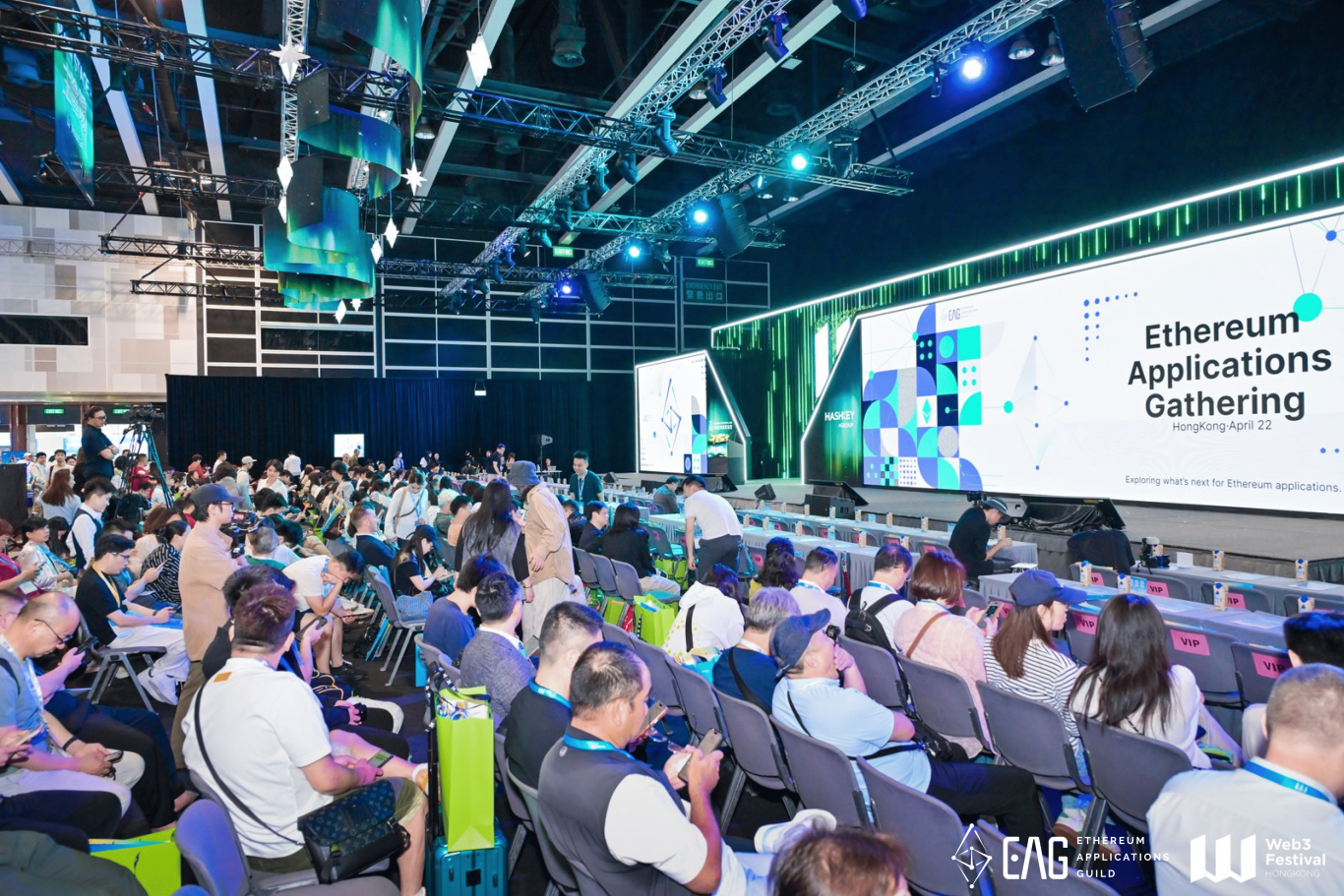
On April 22, the "Ethereum Applications Summit" hosted by the Ethereum Applications Guild (EAG) took place on the main stage of the Hong Kong Web3 Carnival. Builders, researchers, and application promoters from various levels of the Ethereum ecosystem gathered to discuss "what the next phase of Ethereum should construct," jointly exploring the real directions and long-term opportunities that the application layer is forming.
As Ethereum's infrastructure gradually matures, industry focus is shifting from foundational capabilities to the application layer. Against this backdrop, the event focused on real application progress and practical experiences, exchanging views on the core issues at hand: what directions are trending, what key challenges remain, and how applications can further transition into the real world. During the event, the Ethereum Applications Guild (EAG) was officially launched. As an open collaborative network and non-profit organization aimed at the Ethereum application ecosystem, EAG is dedicated to connecting developers, researchers, application promoters, and ecosystem participants worldwide to jointly promote the development, exposure, and long-term ecological construction of Ethereum native applications.
The event followed a "four-chapter" structure, starting from the evolution of Ethereum infrastructure and application layers and extending to cutting-edge directions such as real-world applications, AI Agents, institutional adoption, and hardware autonomy, systematically sorting through the changes occurring in the Ethereum application layer and presenting builders' judgments and practices regarding the next stage. Below are the core views shared by attendees.
Vitalik Buterin: Moving Towards Full Stack Open Source Security and AI-Driven Soft Sovereignty Era
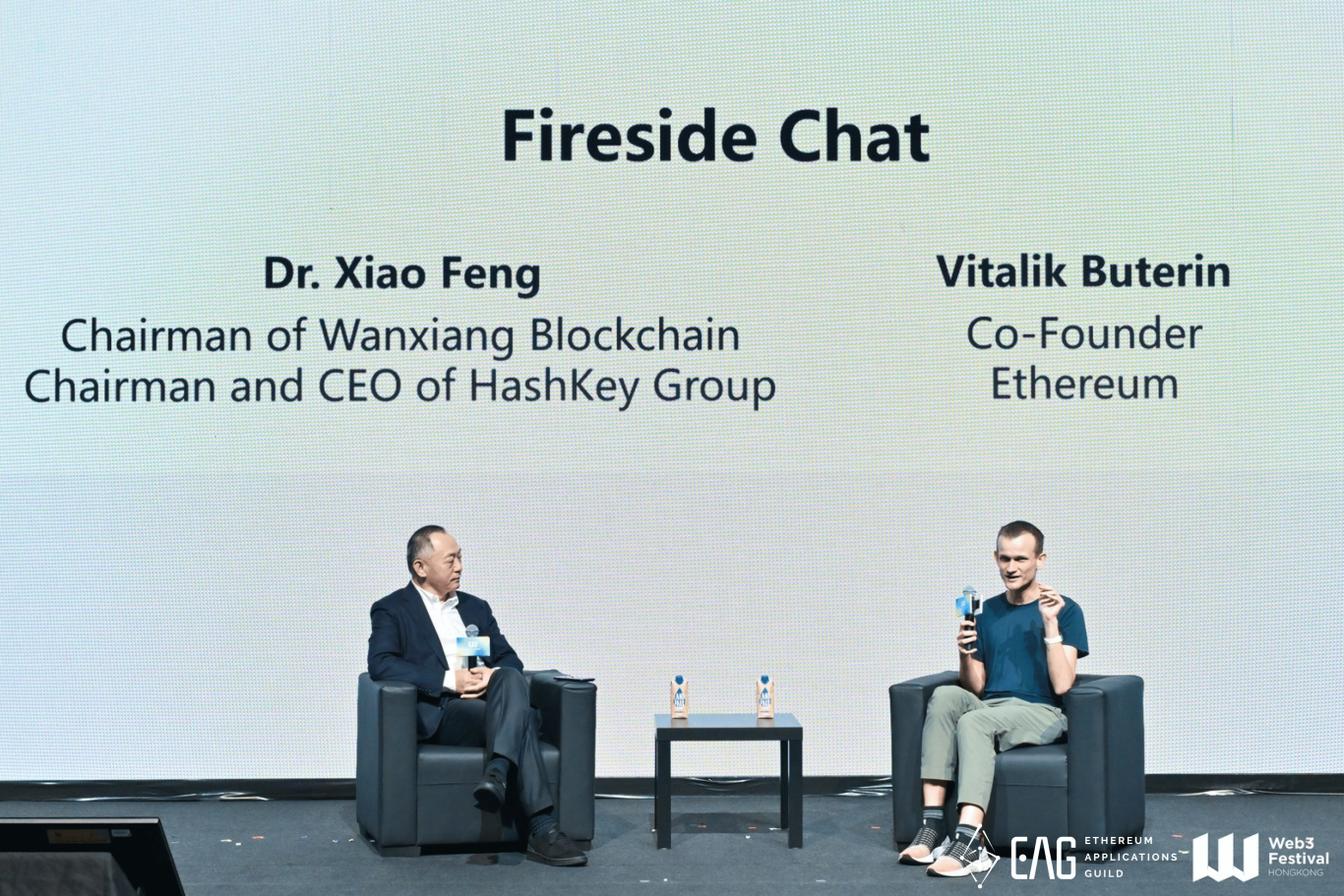
In a fireside chat with Dr. Xiao Feng, Vitalik Buterin focused on the future development direction of Ethereum and the significant implications of AI, hardware, security, and privacy computing for the blockchain ecosystem. He stated that Ethereum is rethinking the concept of "Full Stack Open Source Security," meaning that security exists not only at the blockchain protocol layer but also includes browsers, operating systems, hardware wallets, and even chip levels. As blockchain applications increasingly enter the real world, hardware security and hardware acceleration will become essential infrastructure that cannot be ignored. At the same time, he believes that Ethereum needs to continue to "simplify" in the future, lowering the accessibility barriers for ordinary users and developers. The internet has undergone evolution from command line to GUI and then to mobile internet apps, and the emergence of AI may bring about a "command line of natural language"—users will only need to use natural language to invoke a myriad of programs and services built by different developers behind the scenes. He predicts that future AI wallets, AI user interfaces, and natural language-based on-chain interactions will become new directions.
Regarding security and protocol levels, Vitalik believes that AI is simultaneously enhancing the capabilities and risks of blockchain systems. On one hand, AI can assist in formal verification, smart contract auditing, and core protocol development, making it possible to achieve complex verifications previously deemed almost impossible; on the other hand, AI will significantly enhance the ability to discover vulnerabilities and carry out attacks, making "security" not only a technical issue but also a matter of whether developers are willing to choose secure architectures. He mentioned that important goals for the next phase of Ethereum include faster finality, quantum resistance, stronger distribution, and higher protocol security, with significant work combining AI and formal verification already underway. Furthermore, he believes that Ethereum's core competitiveness in the future will still lie in security and trustworthiness. Compared to other new chains that emphasize performance and efficiency, Ethereum should focus on doing "what only Ethereum can do," including distributed, secure, privacy-protecting, and trustless infrastructure capabilities.
On the integration of privacy computing and AI, Vitalik pointed out that zero-knowledge proofs (ZK) have reached a relatively mature stage, while fully homomorphic encryption (FHE), though slightly delayed, is developing rapidly. He believes that in the future, once AI, FHE, and blockchain are combined, they will be able to genuinely support real-world scenarios such as healthcare, IoT, and data collaboration. For example, medical data requires both AI analytical capabilities and extremely high privacy protection, while blockchain can further provide a permissionless, trustless data collaboration and value exchange mechanism. He emphasized that the core reason for the recent update of the Ethereum Foundation's mission and values is to continue adhering to principles of decentralization, privacy, self-sovereignty, and open collaboration in the fast-developing era of AI and digitalization. He proposed the concept of "Soft Sovereignty," arguing that future technology should not only improve efficiency but also enable users to genuinely own and control their assets, data, and digital lives, which is also a core value that Ethereum has long upheld.
Regarding the establishment of the Ethereum Applications Guild (EAG), Vitalik expressed that as the Ethereum ecosystem continues to expand, the long-term development of the ecosystem requires the joint promotion of more independent organizations, developer communities, and application teams. He believes that EAG can undertake many tasks that the foundation is not suited to directly promote, yet are crucial for ecological development, including fostering innovation at the application layer, connecting traditional industries with the blockchain world, supporting global developer collaboration, and promoting regional ecological construction. He also expressed hope that in the future, more independent organizations similar to EAG will emerge within the Ethereum ecosystem to drive the long-term development of the Ethereum ecosystem and open collaboration in various directions.
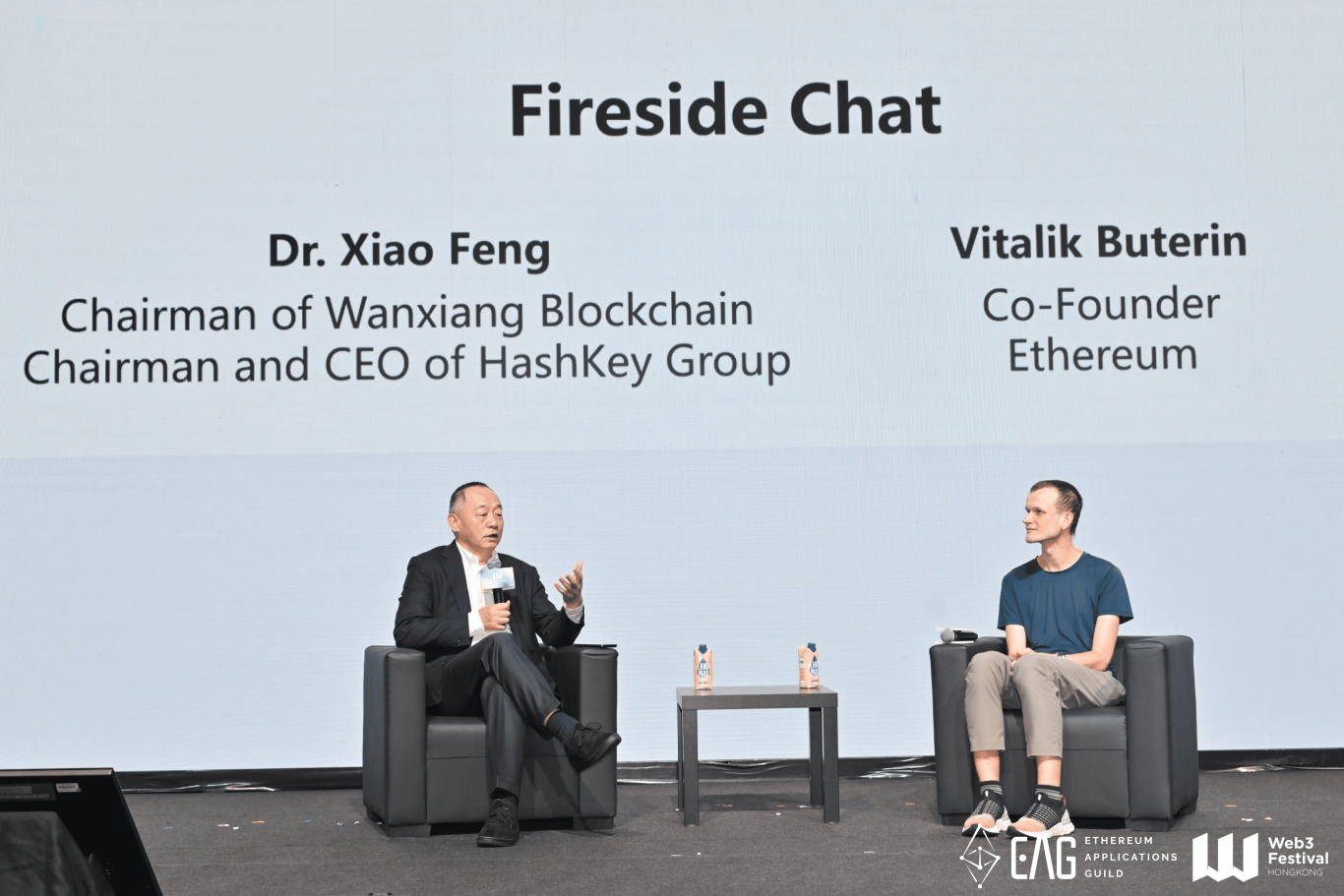
Dr. Xiao Feng believes that Ethereum is entering a new stage from "infrastructure construction" to "real application implementation," and the key to this process is continuously lowering technological thresholds and enhancing user experience. He pointed out, using the development history of the internet and operating systems as an example, that the widespread proliferation of technology often relies on simplifying interaction. From command line to graphical interfaces, and now to apps in the mobile internet era, complex systems are ultimately encapsulated into products that ordinary users can easily use. In his view, the future development of Ethereum also needs to further automate and smarten wallets, smart contracts, and on-chain interactions. With the advancement of AI and natural language interactions, in the future, users may not need to understand the underlying technology; they just need to express their needs in natural language, and AI can automatically invoke on-chain protocols and applications to complete operations, thereby allowing more ordinary people to genuinely enter the Web3 world.
At the same time, the development of Ethereum should not solely pursue efficiency but continue to adhere to core values such as decentralization, security, and user autonomy. He emphasized that the combination of AI, privacy computing, and blockchain will bring new possibilities to real scenarios such as healthcare and data collaboration, while technologies like zero-knowledge proofs, fully homomorphic encryption, and quantum-resistant cryptography are gradually meeting the conditions for practical applications. In this process, Layer 1 should continue to focus on security and distribution, while Layer 2 and application layers should meet the performance and functionality needs of different scenarios. He also pointed out that as the scale of blockchain applications expands, the importance of hardware, security, and cryptographic infrastructure will continue to rise, and the Ethereum ecosystem will need more organizations like EAG in the future to promote application innovation, industrial collaboration, and global ecological construction.
Aya Miyaguchi: Promoting Long-term Evolution of Ethereum Ecosystem with the "Principle of Subtraction"
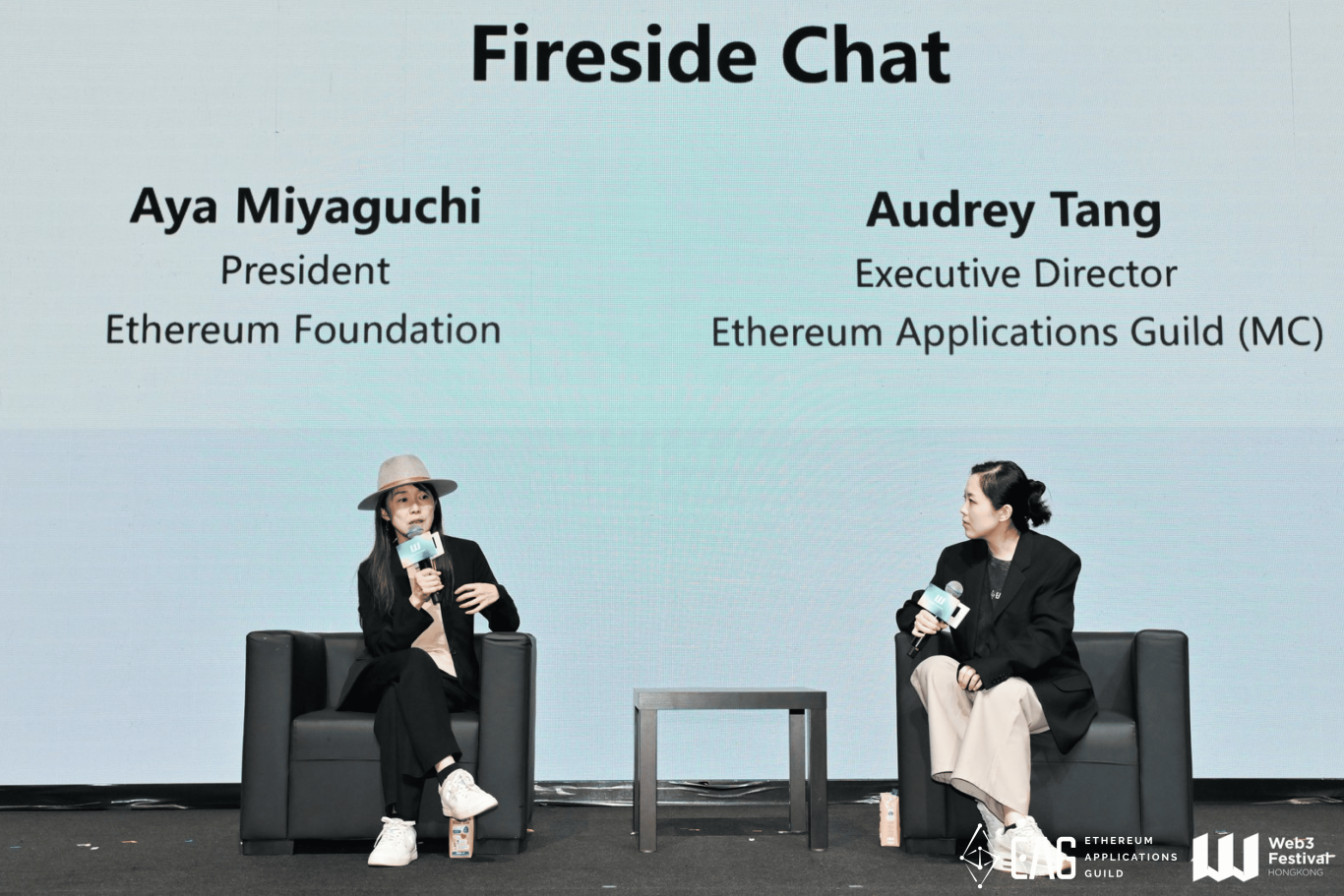
Aya Miyaguchi, chair of the Ethereum Foundation, and Audrey Tang, executive director of the Ethereum Applications Guild (EAG), engaged in a fireside chat about the evolution of Ethereum ecosystem governance, application development, and the role of the foundation. Aya elaborated on the "Principle of Subtraction" in the Ethereum Foundation's Mission Declaration (EF Mandate). This means that the EF will more often assume a supportive role in areas that are already relatively mature or where the community has capabilities. For instance, the EF initially developed wallets and the Geth client, but as the ecosystem evolved, its goals shifted towards allowing market competition to naturally produce better tools. She described the EF's role as "one of many gardeners" in the ecosystem, rather than being the central driving force.
At the same time, Aya pointed out that "real applications" are often built on the core values of Ethereum, including anti-censorship, open-source, security, and privacy protection. She emphasized that the security of Ethereum is the foundation for achieving meaningful widespread applications; and that "long-term resilience" is more important than "short-term incentives"—the core idea being that Ethereum should be able to withstand the "walkaway test" and possess the ability to achieve self-sustainability over a span of ten years or longer.
Additionally, she particularly emphasized the importance of the "Local-first" strategy, believing that organizations like EAG can fully utilize deep regional ecological resources to generate global influence and "adding" effects through local knowledge and talent.
Joseph Chalom: Unleashing Ethereum Productivity and the Paradigm Shift of the "Agent Economy"
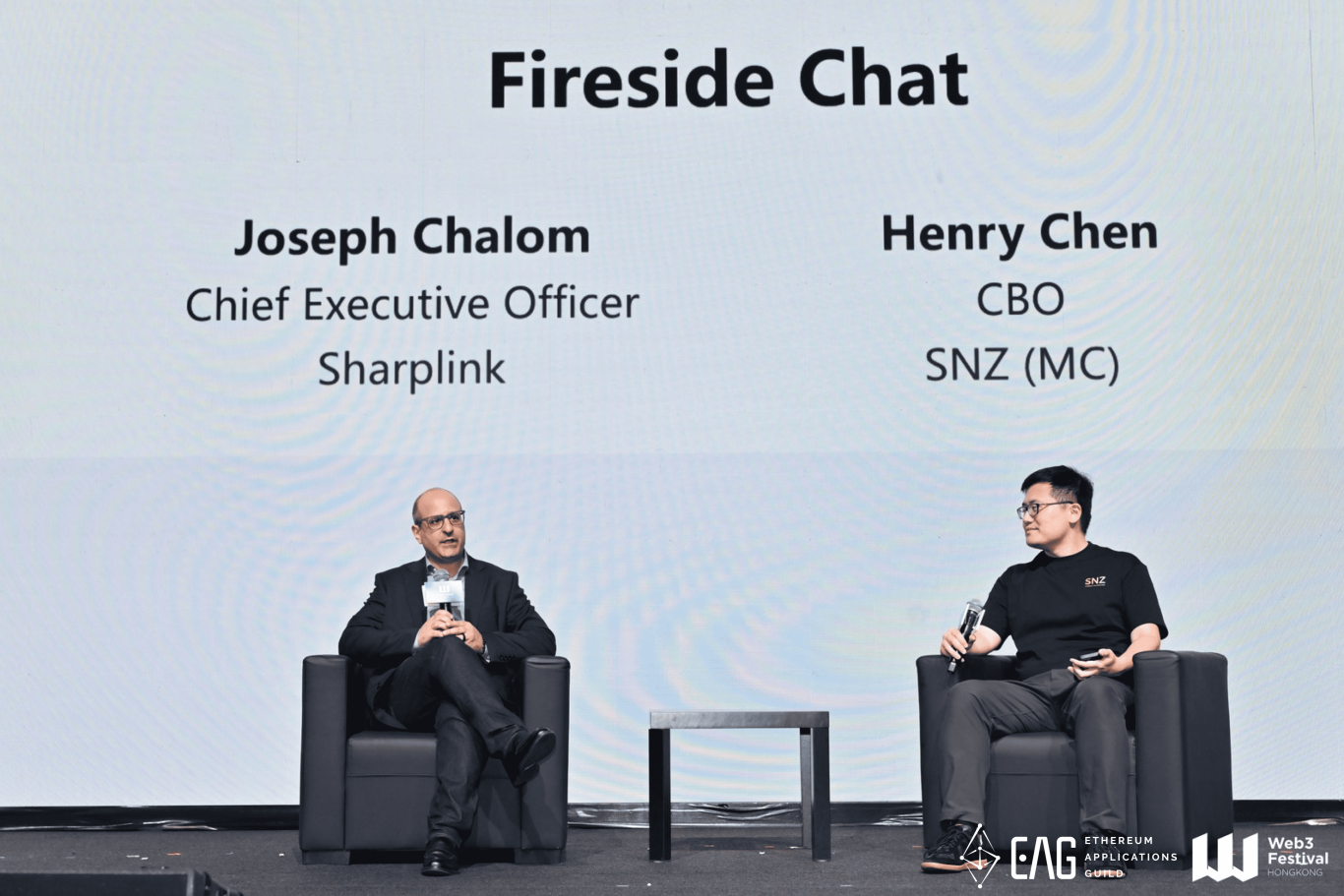
SNZ CBO Henry Chen engaged in a dialogue with SharpLink CEO Joseph Chalom, exploring Ethereum's institutional path and the future of the "Agent Economy" driven by AI Agents. Joseph firmly believes that Ethereum represents the underlying architecture of future global capital markets and regards Hong Kong, with its advantages in capital, talent, and stable regulation, as an ideal place to build a long-term digital economy. He pointed out that the biggest difference between Ethereum and Bitcoin is "productivity": Bitcoin serves as a store of value, while ETH has the unique property of generating yield through staking, making it highly attractive to institutions. SharpLink uses ETH as an institutional-grade reserve asset and achieves nearly 100% staking, aiming to provide holders with transparent and sustainable on-chain returns.
Regarding the explosion of AI technology, Joseph painted a picture of the coming "Agent Economy" era: by 2027, people will directly use Web3 wallets supporting bank accounts and AI Agents, where AI Agents will tirelessly execute commands for capturing maximum returns, balancing investment portfolios, and purchasing RWA, among others. He encourages transcending existing technological architectures to build the future of finance while respecting security and decentralized principles.
The Ethereum Applications Summit concluded successfully in Hong Kong. As Ethereum's infrastructure matures, the application layer is becoming the core driving force for the next stage of ecosystem development. The official launch of the Ethereum Applications Guild (EAG) also marks the formation of an open collaborative network aimed at global builders. In the future, as more real applications are implemented and cross-domain integration occurs, the Ethereum ecosystem will continue to accelerate its transition into a broader real world.
About Us
The Ethereum Applications Guild (EAG) is a global non-profit collaborative organization dedicated to accelerating the development of Ethereum native applications with real-world impact. EAG aims to connect developers, institutions, and various participants in the Ethereum ecosystem to explore and build open, transparent, and sustainable collaborative mechanisms at the application layer. Through application acceleration programs, community co-building evaluation frameworks, sustainable public goods financing mechanisms, and global ecological activities, EAG promotes the long-term and sustainable growth of the Ethereum application ecosystem.
Official website: https://www.ethappsguild.org/
Twitter: https://x.com/EthAppsGuild
免责声明:本文章仅代表作者个人观点,不代表本平台的立场和观点。本文章仅供信息分享,不构成对任何人的任何投资建议。用户与作者之间的任何争议,与本平台无关。如网页中刊载的文章或图片涉及侵权,请提供相关的权利证明和身份证明发送邮件到support@aicoin.com,本平台相关工作人员将会进行核查。


