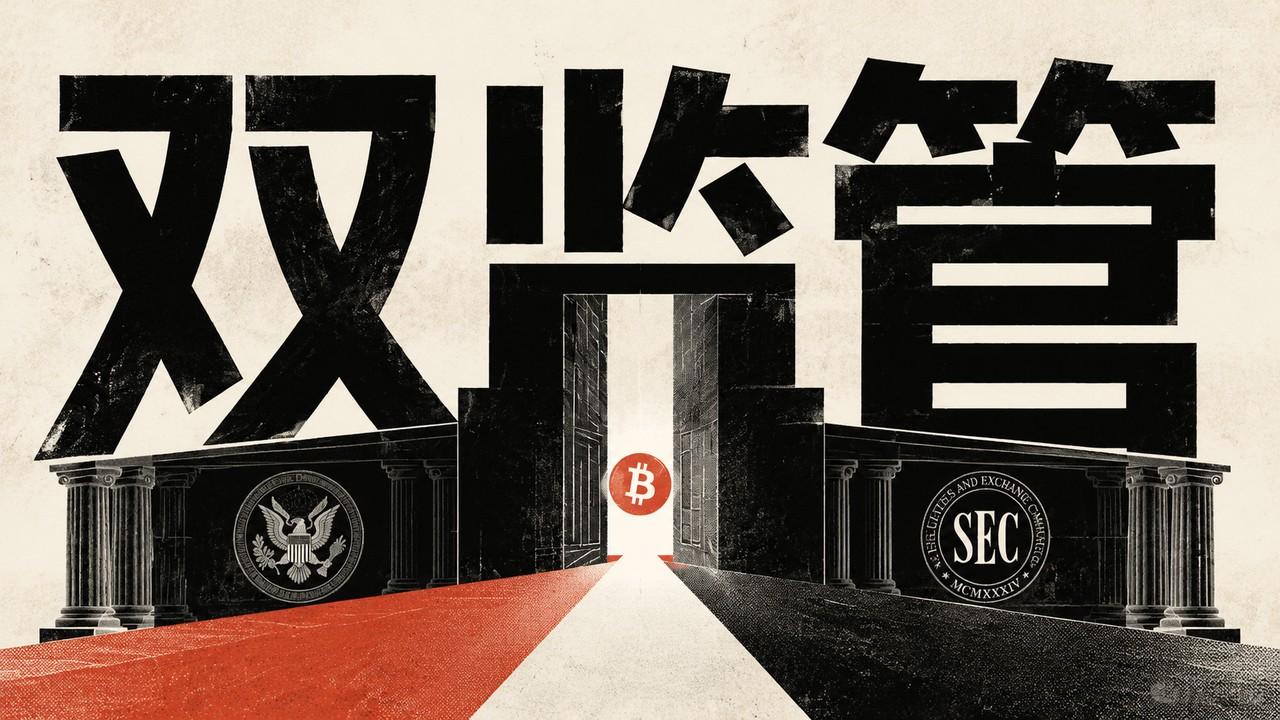
On May 15, 2026, the same "submit" button was pressed by two traditional asset management institutions. VanEck submitted its fifth amendment of the BNB ETF registration statement S-1 to the US SEC, while Grayscale simultaneously submitted the second amendment of the Grayscale BNB ETF prospectus—new version documents for the same subject, the same regulator, and on the same day, layered with previous back-and-forth comments and modifications, making this pair of "opponents" seem more like they were responding to the same set of regulatory comments. Bloomberg ETF analyst James Seyffart pointed out that this was a response to SEC feedback, meaning the approval game for BNB-related ETFs had moved from early exploration into a more intense interaction phase. As the core asset of the Binance ecosystem, whether BNB can stand on the US public market in ETF form is regarded by the industry as an important regulatory barometer. Many media outlets focused on amplifying this round of amendments in mid-May, shifting the discussion from "how will BNB price move" to the more constraining question of "what exactly is the SEC requiring in disclosures and what compliance pathways are allowed."
Simultaneous Reporting: The SEC's Unified Feedback Window is Prized Open
On May 15, 2026, VanEck pushed the S-1 for the BNB ETF to its fifth revision, and Grayscale delivered the second version of its prospectus, sending new version documents into the SEC system on the same day, creating an implication of "synchronized rhythm" in this round of interaction. The interpretation by Bloomberg ETF analyst James Seyffart suggests that the issuers are centrally responding to the same or similar rounds of regulatory comments—indicating that the fragmented process of individual institutions communicating with SEC has been "locked" into a time window with a group of potentially unified feedback. What the market sees is not a single institution hastening its pace, but rather the rhythm signals emitted by the SEC regarding BNB products being captured and executed simultaneously by at least two regulated asset managers.
From a procedural perspective, this scene completely aligns with the SEC's customary "comment-revision-recomment" pathway for ETF registration statements: the regulatory body focuses on details like information disclosure, risk warnings, and custody arrangements through comment letters, while the issuer revises through one version after another to match. That VanEck has reached the fifth revision indicates it has gone several rounds in this back-and-forth; Grayscale is still at the second revision, but its simultaneous reporting with VanEck shows it has chosen to catch up with regulatory feedback at a faster pace. All of this is happening against the backdrop in which Bitcoin and Ethereum spot products have already undergone similar processes, yet with BNB being additionally linked to a single platform ecosystem. The key is that, so far, the outside world does not see any specific phrases from any comment letters and can only infer from the frequency of revisions and the density of time points that the review intensity is being tightened, signifying that the only signal the current market can read is that the regulatory focus on BNB products is increasing, with the final boundaries still entirely dependent on the direction of the subsequent rounds of comments.
BNB as a Regulatory Litmus Test: From Binance Turmoil to Wall Street Products
For regulators, BNB is not just an abstract on-chain symbol, but a value center closely associated with Binance Exchange and its on-chain ecosystem. Thus, this "platform token," placed on the review shelf for US public ETFs after global regulatory bodies initiated investigations and penalties against Binance, signifies a systematic review of the risks associated with Binance: when the SEC reviews a single token-related product, it must cross-check the issuer's background, market structure, potential manipulation space, and the integrity of information disclosure on the same table. On May 15, 2026, VanEck submitted the fifth amendment of the BNB ETF S-1 to the SEC on the same day that Grayscale submitted the second revision of its prospectus, symbolizing that this token, originally seen as "internal equity of the platform," has been drawn into the main battleground of Wall Street compliance documents, its risk narrative beginning to shift from the "exchange incident book" to "capital market prospectuses."
For compliant capital in the US, the advancement of the BNB ETF feels more like a psychological boundary redefinition. Prior to this, the legitimacy of BNB in US institutional allocations was often confused, lingering in the gray areas of proprietary accounts or over-the-counter structured products, dependent wholly on each one's compliance interpretation and risk tolerance; however, once an ETF with BNB as its underlying asset enters the SEC's deep water review, even if subsequently not approved, compliance institutions will be forced for the first time to respond directly within the frameworks of fiduciary duty and regulatory expectations to the question of "whether and under what conditions to access BNB-related exposure." VanEck and Grayscale, continually revising documents per SEC demands, are essentially translating the past controversies surrounding Binance and its ecosystem into terms and risk sections that regulators can read and enforce accountability for disclosure obligations, effectively pushing BNB from "the platform's private reserve" to the margins of the regulated capital market. Whether BNB can be recognized as a compliant asset eligible for public products thus shifts from being merely a matter of technical or market choice to becoming a litmus test for how regulations reshape the boundaries of platform tokens.
From Bitcoin to BNB: SEC's Tentative Advancement on New Underlyings
In the approval process for Bitcoin and Ethereum spot ETFs, the SEC has already familiarized itself with a "templated" review pathway: issuers first submit an S-1 or prospectus, the regulatory body provides multiple rounds of comments, refining the disclosure language concerning custody security, market manipulation risks, monitoring sharing agreements, and pricing benchmark reliability, followed by institutions revising as requested, culminating in several rounds of back-and-forth communication. This synchronized oversight model allows the SEC, before final approval, to not only lock in information disclosure obligations through text but also to conduct "horizontal comparisons" on different applicants to observe whether the market structure and risk control design are sufficient to support a public-facing product.
BNB is integrated into this pathway, but the rhythm is notably more intense. By May 15, 2026, VanEck's BNB ETF registration statement had been revised to its fifth version, on the same day, Grayscale also submitted its second amendment to the BNB ETF prospectus, with both institutions responding to SEC feedback on the same day, interpreted by Bloomberg ETF analyst James Seyffart as the regulators conducting "paired testing" on the same batch of comments. The market views this as one of the signals indicating BNB products are entering a later stage of gamesmanship similar to that of Bitcoin and Ethereum ETFs. However, unlike the higher degree of decentralization and ecological dispersion characterizing BTC and ETH, BNB is more deeply tied to a single platform ecosystem, which directly amplifies the SEC's concerns about market manipulation and concentration risks, and compels regulators to apply additional layers of pressure testing to affiliate transactions, liquidity sources, and pricing reliability while adhering to existing frameworks. As of May 17, 2026, the SEC had not yet publicly concluded regarding the BNB ETF, but in the course of this overlapping advancement and probing, whether BNB can be included in the investment lists of compliant institutions, custodians, and institutional investors is no longer determined by the market itself but will require the SEC to delineate a new boundary once again following Bitcoin and Ethereum.
Compliance Institutions Bet on BNB: Boundary Choices Between Asset Managers and Custodians
When VanEck submitted the fifth amendment of the BNB ETF registration statement S-1 to the SEC on May 15, 2026, and Grayscale delivered its second amendment to the prospectus on the same day, these two US-regulated asset management institutions had essentially tied their compliance credibility and fiduciary responsibilities to this single platform ecosystem token. Launching an ETF, in the regulatory context, has never just been about "bringing a new underlying," but about providing the SEC with a complete narrative that is acceptable in terms of information disclosure, risk disclosure, conflicts of interest, and pricing mechanisms. Continuous multiple revisions are, in essence, the issuers using time and legal fees to refine the text repeatedly: which risks the issuer bears responsibility for disclosure, which boundaries the regulators will delineate, which issues can be resolved through product structuring, and which must be honestly written in the footer stating "you may lose your entire investment." Choosing BNB as the underlying means VanEck and Grayscale must demonstrate to the SEC that even if this is an asset more tightly bound to a single platform, it can still be treated as a "trustable" public product within the existing disclosure rules and fiduciary duty frameworks, and should regulatory disputes or market events arise in the future, this choice will also retrospectively amplify scrutiny over their compliance judgment.
If one day the BNB ETF is truly approved for listing, this compliance gamble will no longer remain solely in the application documents but will swiftly transmit to custodian banks, market makers, and auditing firms. The BNB ETF must preemptively secure custody arrangements, liquidity providers, and valuation mechanisms; whoever is willing to sign off on the prospectus effectively needs to build systematic operational processes around anti-money laundering, sanction compliance, and customer suitability, transforming "whether to engage with BNB" from a gray area into a well-defined internal policy. For institutional investors and family offices accustomed to taking "whether the SEC clears it" as a threshold for compliance whitelist, a BNB ETF that passes review will become a trigger for re-evaluating the feasibility of allocating such assets: it can be seen as a regulatory signal for inclusion in the investment list, or it might delineate a firewall of "only through compliant products, not direct holdings," ultimately determining BNB's position in the traditional institutional sphere based on an SEC approval letter and an entire set of supporting processes.
Timeline Not Established, but Regulatory Boundaries Have Shifted Toward BNB
Returning to the timeline itself, as of May 17, 2026, available information can only confirm that VanEck submitted its fifth S-1 revision on May 15, that Grayscale submitted its second prospectus revision on the same day, and thus verifying that the comment-revision cycles between the SEC and the issuers are still ongoing, with no formal arrangements regarding "when to vote, or whether it will pass." Bloomberg analyst James Seyffart emphasizes the "synchronous response feedback," indicating that the communication rhythm has become compact, rather than the approval conclusion already being clear. What is truly being rewritten are the boundaries of regulatory discussion: BNB, as an asset closely affiliated with a single platform, has been actively pulled into the same context of US capital market regulatory rules as Bitcoin and Ethereum, and its risk definitions will no longer merely reflect the platform's self-reporting but will be documented in SEC files, comment letters, and public decisions. Moving forward, whether platform entities or compliant accounts, the more realistic action will be to watch each public disclosure—new revision versions, possible comment letters, a future formal decision—and interpret these as "the specific coordinates of BNB within the regulatory coordinate system," rather than simply translating the simultaneous submissions by both institutions on May 15 into a piece of news suggesting impending approval regarding price or short-term trading.
Join our community, let’s discuss and become stronger together!
Official Telegram community: https://t.me/aicoincn
AiCoin Chinese Twitter: https://x.com/AiCoinzh
OKX Benefits Group: https://aicoin.com/link/chat?cid=l61eM4owQ
Binance Benefits Group: https://aicoin.com/link/chat?cid=ynr7d1P6Z
免责声明:本文章仅代表作者个人观点,不代表本平台的立场和观点。本文章仅供信息分享,不构成对任何人的任何投资建议。用户与作者之间的任何争议,与本平台无关。如网页中刊载的文章或图片涉及侵权,请提供相关的权利证明和身份证明发送邮件到support@aicoin.com,本平台相关工作人员将会进行核查。