On May 15, 2026, four seemingly unrelated forces collided on the same news timeline: In Seoul, Hanwha Financial Group announced a plan to invest about 1 trillion won, acquiring approximately 6.55% of Dunamu, the parent company of Upbit, interpreted as traditional finance officially betting on the cryptocurrency industry; Across the ocean, Anthropic finalized new funding terms with co-lead investors Dragoneer, Greenoaks, Sequoia Capital, and Altimeter Capital, amounting to about $30 billion, corresponding to a valuation of about $900 billion, pushing AI and capital to new heights; In London, cryptocurrency billionaire Christopher Harborne offered approximately £5 million in crypto gifts to Nigel Farage, leader of the UK Reform Party, with details of the latter's £1.4 million house purchase in May 2024 being resurfaced, once again illuminating the gray area between political funding and crypto assets; Meanwhile, in the open-source world, the node-ipc library, with downloads exceeding 10 million times per week, was disclosed by the Slow Mist security team to have embedded credential theft payloads in its versions 9.1.6 and 9.2.3, ripping open old wounds of supply chain security. On the same day, from bank equity trading and AI funding terms to political donations and open-source dependency package invasions, cryptocurrency acted like a wire connecting capital greed and trust fractures, forcing the market to reassess the true boundaries between risk, regulation, and premiums.
Hanwha invests 1 trillion won in Upbit's parent company
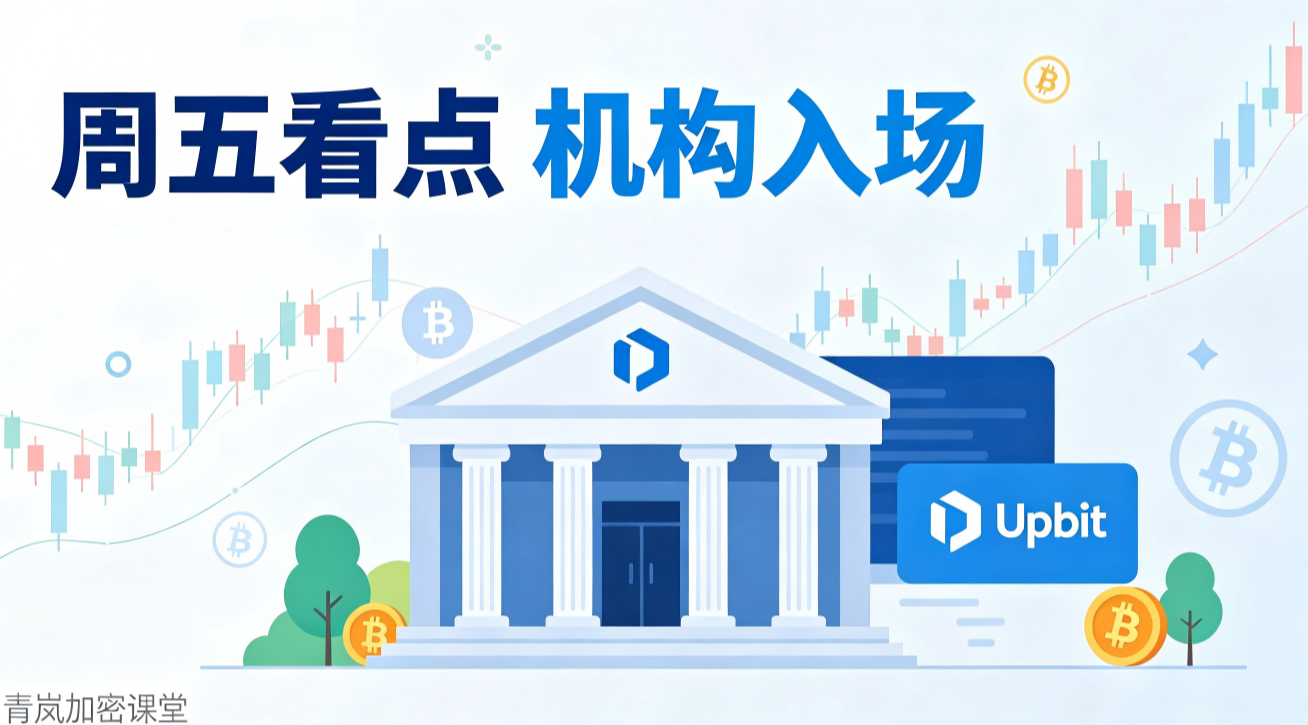
Just as the market was still digesting the news of the second attack on node-ipc, another flow of funds turned from traditional finance into the crypto world. One of South Korea's major financial groups, Hanwha Financial Group, announced plans to utilize about 1 trillion won (approximately $670 million) to acquire approximately 6.55% equity in Dunamu from Kakao's investment subsidiary, Kakao Investment—this company is the parent of one of South Korea's largest cryptocurrency exchanges, Upbit, which has long held a dominant position in the local market. If the deal is finalized, Kakao Investment's stake in Dunamu is expected to decrease to around 4.03% (according to a single source), with several Chinese media outlets even viewing this as part of Dunamu's approximately $670 million equity financing round, although the specific valuation remains in the "to be verified" gray area.
For Hanwha, this is not an abstract financial investment, but the first time it directly stands at the forefront of the cryptocurrency exchange shareholder front. In recent years, most mainstream banks in South Korea have remained in the safe territory of "cooperation," "custody," and "ancillary services." Now, Hanwha's choice to place 1 trillion won on a trading group mid-May 2026 is interpreted as a shift from observation to deep participation, signaling that the capital integration between traditional finance and the cryptocurrency industry is being further pushed to the foreground. However, the accompanying exposure is the amplification of regulatory and market risk: A financial group known for its stability must explain to bank shareholders why this equity investment, which is highly correlated with cryptocurrency asset prices, is worthwhile; it must also prove to regulators that it will not compromise capital adequacy and risk control indicators due to the volatility of exchange business. Moreover, in the next round of market turbulence, it must answer the public and political queries about whether banks should participate in exchange equity, this three-party tug of war itself is a stress test of trust boundaries.
Anthropic's $30 billion funding and the AI crypto bubble
While traditional finance is still grappling with the equity of a cryptocurrency exchange, another side of the capital story is more exaggerated. In the mid-May 2026, Anthropic, which broke through with its Claude series of models between 2024 and 2025, reached an agreement with investors on new funding terms for a new round—about $30 billion of new money is coming in, corresponding to a company valuation of around $900 billion (according to a single source), with the deal possibly being completed as early as this month. More notably are the names of the investors: Dragoneer, Greenoaks, Sequoia Capital, and Altimeter Capital, acting as co-lead investors, each expected to invest about $2 billion or more (according to a single source), these institutional investors, seasoned in the growth stock cycle, are refreshing market expectations for the size of AI unicorns with checks close to "pre-IPO level."
The issue is that these names are not unfamiliar; they frequently appeared on cap tables during the cryptocurrency bull market of 2020-2021 as "high-growth capital." Over the past two years, capital that once roamed between cryptocurrency, internet, and consumer technology has surged into AI, and is now concentrating bets on Anthropic, triggering a wave of public debate on whether AI would replicate the cryptocurrency bubble: Both stories are difficult to discount using traditional cash flows, both saw singular-source valuations pushed to extremes in a short time, and both are heavily dominated by few leading projects siphoning off the majority of ammunition. Capital rotating between AI and cryptocurrency has layered the risk appetite for "the next big thing," making any fluctuations potentially shake the valuation framework of both tracks. This $30 billion gamble itself mirrors a shared risk appetite between AI and cryptocurrency.
£5 million crypto gift ignites controversy for Farage
As capital bets on "the next big thing" between AI and cryptocurrency, British politics has also faced an unprecedented crypto storm. Nigel Farage, leader of the UK Reform Party and a significant figure in the Brexit movement, was reported to have received a personal crypto gift of around £5 million from billionaire Christopher Harborne involved in the cryptocurrency sector (according to a single source). In an environment in the UK known for its strictness regarding political donations, such amounts are already rare, and when they emerge in the form of on-chain assets, originally clear regulatory boundaries instantly blur: Is this a private gift, or a political transfusion bypassing traditional channels? How to declare, how to value, how to audit, has all become a floating question mark.
Even more provocative is the timeline. In May 2024, Farage purchased a property for about £1.4 million, which occurred shortly before he announced his candidacy for the election (according to a single source). To the public, on one side is the newly appeared £5 million crypto gift, and on the other is the subsequently completed high-priced property; although the chain of legal and factual connections has not been fully pieced together, public opinion has begun to fill in the gaps in its way: Did this crypto asset indirectly flow into real estate? Does it constitute a “prepayment” for future political stances? This event has raised broader concerns— while the UK political funding regulations are still discussing how to handle large on-chain gifts, the potential anonymity of crypto assets, the hidden space for benefit transfers, and the gray area of political-business relationships have been brazenly pushed to the forefront, turning the role of crypto assets in democratic politics into a public trial of trust boundaries.
Node-ipc dependency contamination sounds the supply chain alarm again
While the public discourse is still questioning the boundaries of political donations, another invisible chain of trust also broke at the same time. The Node.js inter-process communication library node-ipc, which has previously faced controversy for malicious code inserted by developers, was revealed by the Slow Mist security team to have been invaded again: the latest versions 9.1.6 and 9.2.3 have been embedded with malicious payloads designed to steal credentials (according to a single source). This time, the issue is not with a single project but with the breadth of this "infrastructure"—node-ipc has weekly download numbers exceeding 10 million (according to a single source), any project that includes it in its dependency list, as long as it has undergone automatic updates, is highly likely to expose keys, tokens, or other sensitive credentials without awareness.
Slow Mist's Chief Information Security Officer 23pds subsequently publicly reminded developers to self-check dependencies and pay attention to credential security on social platforms, this “public shout” itself illustrates how fragile trust in the open-source supply chain has become. For many crypto and Web3 projects that heavily rely on the JavaScript ecosystem, foundational libraries like node-ipc are often deeply embedded in front-end panels, monitoring scripts, and even automation tools. A seemingly ordinary version upgrade may expose the entire private key management chain to attackers. The repeated compromise of node-ipc is not just an incident of a single package but is a reminder to the entire industry: when capital and business entrust their destinies to open-source components, every weak link in maintenance and auditing could turn into a new trust storm after an unnoticeable version number.
When trust is priced: the cryptocurrency world faces challenges on all sides
When Hanwha Financial Group spends about 1 trillion won to buy a 6.55% stake in Dunamu, it is not just acquiring a simple technology company, but binding itself to the fluctuations and regulatory shadows of cryptocurrency exchanges like Upbit; this is a transaction that exchanges a century-old bank’s reputation for entry into a new track. Almost simultaneously, Dragoneer, Greenoaks, Sequoia Capital, and Altimeter Capital pooled about $30 billion for Anthropic's new round of financing, corresponding to a $900 billion valuation. Some observers see this kind of "discounting based on future expectations" as not fundamentally different from the exorbitant bets on platform tokens and on-chain projects during the previous cryptocurrency bull market: both involve using massive capital to price an as yet unverified technological prospect. One is traditional finance stepping into the core of the cryptocurrency industry chain, and the other is top-tier venture capital betting on the intersecting future of AI and cryptocurrency infrastructure, both converting "trust" into a series of numbers on the balance sheets.
In the realm of politics and code, the price of trust is written even more sharply. Nigel Farage received a £5 million crypto gift from Christopher Harborne and subsequently purchased a property for about £1.4 million in May 2024, in the context of the UK's heightened sensitivity to political funding transparency, such personal gifts appearing in the form of on-chain assets push public trust in the system toward a new gray area: Is the donation legal funding, or a bypass of disclosure rules? Regulatory provisions are still catching up. Meanwhile, the node-ipc library, with weekly downloads exceeding 10 million, was found to have embedded credential theft payloads, once again proving that trust in open-source supply chains can be repeatedly compromised, while countless higher-level applications unknowingly bear joint risks. Hanwha's equity agreement, Anthropic's funding terms, Farage's property purchase contract, and a developer's line of dependency declaration, seemingly belong to entirely different worlds, yet were all brought into the spotlight simultaneously in May 2026, forming a “trust stress test” surrounding cryptocurrency assets. For all industry participants, rather than chasing after which hot spot is more profitable, the real need is to understand how trust is built and overdrawn in these starkly different scenarios, and ultimately, at what cost it is repriced by the market.
Join our community, let’s discuss and become stronger together!
Official Telegram community: https://t.me/aicoincn
AiCoin Chinese Twitter: https://x.com/AiCoinzh
OKX Benefits Group: https://aicoin.com/link/chat?cid=l61eM4owQ
Binance Benefits Group: https://aicoin.com/link/chat?cid=ynr7d1P6Z
免责声明:本文章仅代表作者个人观点,不代表本平台的立场和观点。本文章仅供信息分享,不构成对任何人的任何投资建议。用户与作者之间的任何争议,与本平台无关。如网页中刊载的文章或图片涉及侵权,请提供相关的权利证明和身份证明发送邮件到support@aicoin.com,本平台相关工作人员将会进行核查。