Perp DEXs have a capital productivity problem.
A venue can attract deposits with incentives, but the harder test is making that capital useful enough to stay.
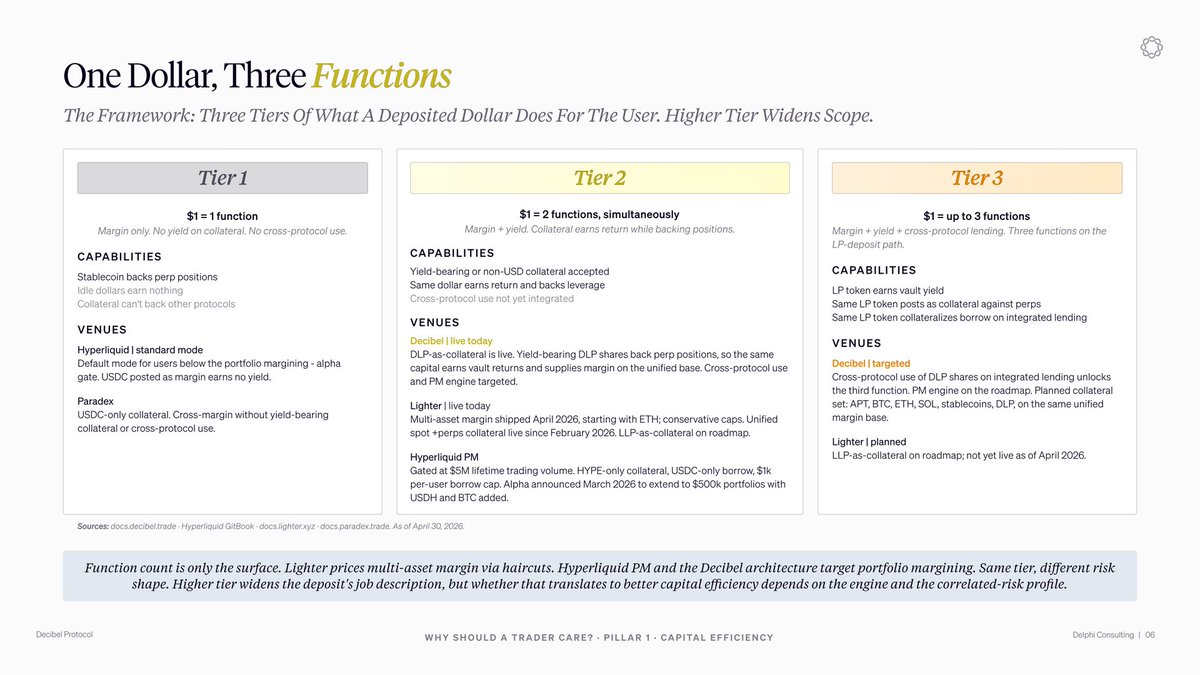
@DecibelTrade starts by making collateral more useful. Through DLP users can earn market-making yield from the liquidity vault while using the same position as margin for perp trades.
That makes the deposit more useful because the same capital can earn yield while it supports trading.
Decibel's native stablecoin (usDCBL) applies the same idea to the venue’s balance sheet. Stablecoin collateral can generate reserve revenue for the protocol. That revenue can create more room to compete on fees over time.
X-Chain Accounts make that capital easier to bring in. Users can sign Aptos transactions with existing Ethereum and Solana wallets instead of setting up new infrastructure.
The next step is turning productive capital into usable liquidity. Market makers update quotes far more often than they get filled. Tight spreads become harder to sustain when each update burns gas.
Decibel’s bulk orders reduce quote-update gas by roughly 90%. Makers can replace the full ladder in one transaction. The cancel and replace happen together so stale quotes are less likely to remain live.
Aptos’ encrypted mempool supports the same goal by keeping orders and quote updates hidden until execution. This reduces the window for stale quotes to get raced.
Together this increases capital productivity. Collateral can earn while it backs trades, stablecoin reserves can fund the venue outside trading fees, and lower quote-update costs can help makers keep the book tighter.
The question is whether this turns incentive driven deposits into sticky liquidity.
免责声明:本文章仅代表作者个人观点,不代表本平台的立场和观点。本文章仅供信息分享,不构成对任何人的任何投资建议。用户与作者之间的任何争议,与本平台无关。如网页中刊载的文章或图片涉及侵权,请提供相关的权利证明和身份证明发送邮件到support@aicoin.com,本平台相关工作人员将会进行核查。


