1. Definition and Evolution Logic
The cryptocurrency sector in the U.S. stock market essentially refers to the category of investments where cryptocurrency-related assets are traded in stock form on traditional securities exchanges. Investors can participate in this high-growth track through familiar securities accounts without needing to directly hold cryptocurrency private keys. The evolution of this model reflects the complete journey of crypto assets from "geeks" to "mainstream institutions."
In terms of evolutionary stages, the growth of this sector has gone through three key milestones. The first stage is the "Underground Mining Period" (2017-2020), represented by pure mining companies such as Riot Blockchain and MARA Purpose, with single business focus, chaotic governance, and vague valuation logic, primarily trading on the Pink Sheets with extremely poor liquidity, where mainstream institutions showed almost no interest in such assets. The crypto stocks during this period were highly correlated with the cryptocurrencies themselves, exhibiting volatility far exceeding that of the underlying assets, earning the market label of "leveraged Bitcoin."
The second stage is the "Compliance and Securities Period" (2021-2023), marked by the direct listing of Coinbase (NASDAQ: COIN) and MicroStrategy's (NASDAQ: MSTR) large-scale Bitcoin accumulation plan. The emergence of compliant exchanges signified the industry's move towards standardization, with Coinbase being the only publicly listed crypto exchange in the U.S., its direct listing on NASDAQ in April 2021 being milestone-worthy. At the same time, MicroStrategy accumulated over 150,000 Bitcoins between 2020 and 2023, transforming itself into a "Bitcoin Treasury Company," pioneering a completely new paradigm of corporate valuation.

The third stage is the "ETF Product Explosion Period" (2024 to present), with the SEC's approval of Bitcoin spot ETFs marking the formal entry of crypto assets into the mainstream financial product system in the U.S. BlackRock's iShares Bitcoin Trust (IBIT) accumulated tens of billions of dollars in assets within months of its listing, becoming the fastest-growing ETF category in history. The core feature of this phase is productization—risk and return characteristics of cryptocurrencies are packaged into standardized financial products, lowering compliance thresholds for institutional entry while enabling retail investors to manage professional-level exposure at a lower cost.
2. Market Structure and Competitive Landscape
From a market structure perspective, the U.S. cryptocurrency sector in 2026 presents a "tripartite" product configuration: spot ETFs dominate, crypto equity companies provide beta exposure, and leveraged and thematic products meet precise demands.
In the spot ETF sector, the market is highly concentrated, with Bitcoin ETFs collectively holding about 1.32 million BTC, currently totaling approximately $105 billion in size. BlackRock's iShares Bitcoin Trust (IBIT) holds about $65 billion in assets, capturing around 60% of the market share with a 0.25% management fee that is notably competitive among similar products. Fidelity's Bitcoin Trust (FBTC) is approximately $14.8 billion in size and also adopts a 0.25% fee, making it IBIT's most direct competitor. Grayscale's GBTC was once the largest crypto trust fund but faces significant pressure from a 1.50% fee post-conversion to ETF, currently sized around $12 billion; while the BTC mini-trust with only a 0.15% fee (approximately $4.2 billion in size) attracts funds sensitive to low fees. Among new entrants, Morgan Stanley's MSBT officially listed in April 2026, marking a traditional banking giant's formal entry into the crypto ETF space, a signal with profound industry significance.
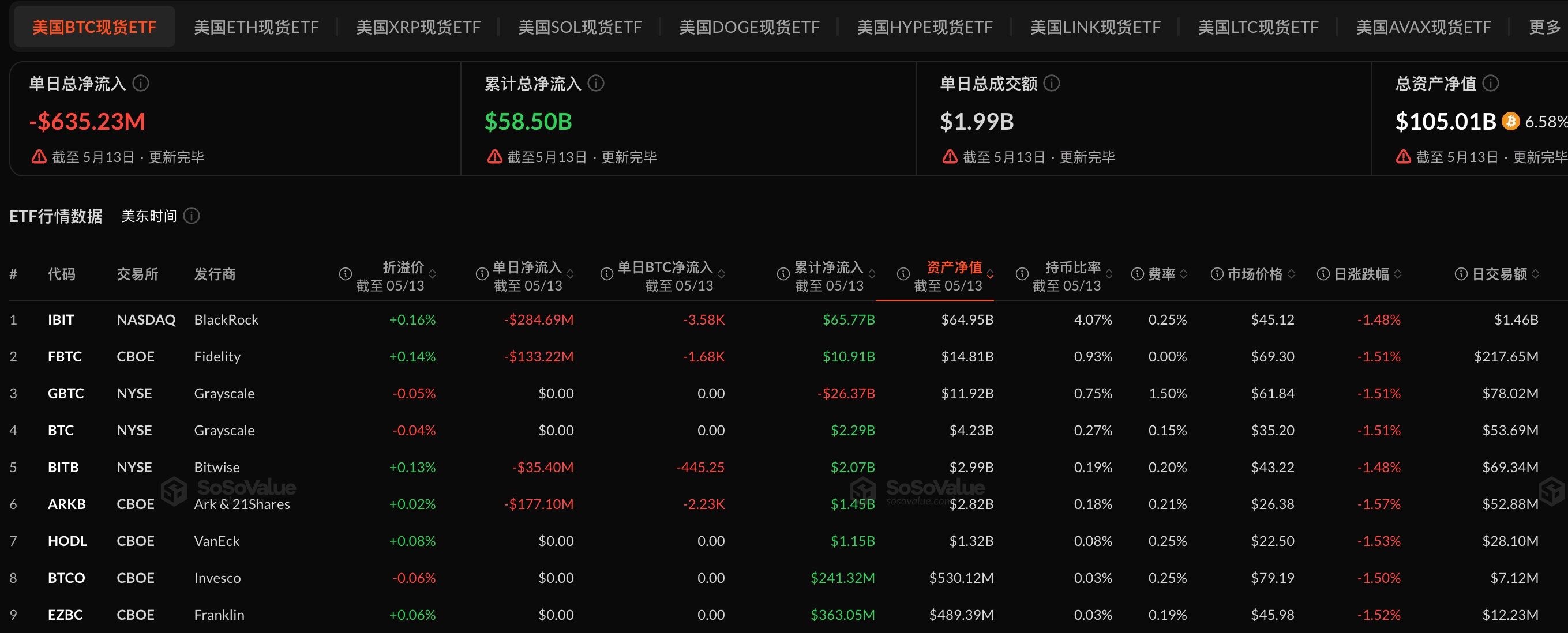
In terms of Ethereum ETFs, BlackRock's ETHA (approximately $7 billion in size) is in a leading position, also currently the largest single Ethereum ETF product. It is noteworthy that BlackRock’s ETHB, launched in 2026, supports staking yields for the first time, pioneering the ability for ETFs to obtain native crypto yields, which may reshape ETF product design logic. Altcoin ETFs were officially approved following regulatory reforms in 2025, with XRP and Solana categories attracting about $1 billion each; it is expected that over 26 new emerging altcoin ETFs (such as Dogecoin, Chainlink, etc.) will be launched in 2026, marking the transition of the crypto ETF product line from the BTC/ETH duopoly era to a "leading many strong" multi-category era.
In the field of crypto treasuries and mining companies, the landscape is undergoing structural differentiation. MicroStrategy (MSTR), as the pioneer of the Bitcoin treasury model, currently holds about 700,000 Bitcoins, making it the publicly listed company with the largest Bitcoin holdings globally. However, with Bitcoin prices dropping about 18% from early 2026 to now, approaching the cost basis of some companies, the accumulation behaviors of pure mining companies represented by MARA and RIOT have significantly slowed, raising skepticism about the sustainability of the treasury model. Unlike the "forced selling" dilemma commonly faced by Bitcoin treasury companies, emerging Ethereum treasury companies exemplified by Bitmine Immersion Technologies (BMNR) demonstrate a distinctly different business logic. BMNR generates about $196 million in regular staking yields each year through its MAVAN staking infrastructure, allowing the company to cover operational expenses without needing to sell crypto assets, thereby forming a genuine "native self-sustaining capacity." As of 2026, BMNR holds about 4.8 million ETH, valued at around $10.8 billion, accounting for 3.98% of the global ETH supply, with a strategic goal of holding 5% of the global ETH supply. If this scale is achieved, it will make BMNR a significant holder in the Ethereum ecosystem.
In the realm of leveraged, inverse, and thematic ETFs, the risk-return characteristics of products show significant differences, requiring investors to exercise due diligence. Leveraged ETFs amplify daily returns through derivatives, and during the late 2025 market, 2x long MicroStrategy's MSTX and MSTU plummeted by about 80%, resulting in around $1.5 billion in evaporated retail assets, revealing the extreme risks of these products. Mainstream products include BITO (1x BTC futures), ETHU (2x ETH futures), and MSTZ (inverse MSTR), etc. Blockchain thematic funds provide indirect exposure for conservative investors—BKCH (Global X) heavily invests in Coinbase and core mining companies, BLOK (Amplify) covers about 80 blockchain-related stocks, and STCE (Charles Schwab) has a fee rate of only 0.30%, including about 40 stocks such as MicroStrategy and Bitdeer, suitable as a long-term foundational tool for allocations.
3. Core Risk Analysis
The high-growth characteristics of the U.S. cryptocurrency sector come with a complex array of risk dimensions. Investors need to establish a clear awareness of the following fourfold risks before constructing their allocations.
The first risk is the dynamic uncertainty of the regulatory framework. Although the "Genius Act" established the first federal stablecoin framework in 2025 and confirmed the establishment of a strategic Bitcoin reserve, allowing banks to conduct crypto custody, the overall framework for cryptocurrency regulation is still evolving. The delineation of jurisdiction over crypto assets between the SEC and CFTC remains unclear, and the approval pace for certain altcoin ETFs still has room for policy friction. Moreover, if the Trump administration adjusts its financial regulatory direction in 2026, the continuity of related policies might be subject to change, and it remains to be seen whether regulatory benefits can be sustained.
The second risk is the high volatility of underlying assets. The cryptocurrency market is known for its extreme volatility, evidenced by Bitcoin's drop of about 18% from early 2026 to now. This volatility transmits to investors through ETFs and stock products, and due to friction costs like management fees, holding discounts, and liquidity premiums, actual losses often exceed the direct decline of underlying assets. For investors allocating this sector in their portfolios, it should be regarded as a high-risk asset, with strict control over position size to avoid tail risks arising from excessive concentration in a single asset.
The third risk is the financial structural risk of crypto treasury companies. Taking MicroStrategy as an example, the core logic of its treasury model is to finance through issuing convertible bonds and preferred shares, then purchase Bitcoin, expecting Bitcoin's appreciation to exceed the financing costs. However, this model involves significant financial leverage—if Bitcoin continues to decline, not only does the value of Bitcoin holdings shrink, but the interest expenses and debt repayment pressure on the financing side will also amplify. Although BMNR's staking income model is more resilient, the staking yield itself fluctuates with Ethereum prices and faces potential slashing risks, where ETH holdings may be deducted if malicious behavior occurs at validator nodes. Investors allocating such assets need to pay attention to both the company’s financial structure and the cyclical risks of underlying crypto assets.
The fourth risk is the liquidity and tracking error at the product level. For leveraged ETFs and some small crypto stocks, intra-day volatility may lead to liquidity exhaustion, widening spreads and increasing transaction costs. More importantly, the "Compounding Decay" mechanism of leveraged ETFs means that even if the directional judgment is correct, long-term holdings of leveraged ETFs may suffer cumulative losses due to daily rebalancing—this was powerfully illustrated by the lessons from MSTX/MSTU at the end of 2025. Moreover, while the historical discount of Grayscale's GBTC has narrowed after its conversion to an ETF, its relatively high management fee and lack of staking yield support still significantly diminish its attractiveness to institutional funds compared to competitors like IBIT.
4. Innovation Trends and Track Opportunities
Despite the multitude of risks, the U.S. cryptocurrency sector in 2026 showcases several noteworthy new trends, which are reshaping the investment logic and product landscape of the sector.
The first trend is the emergence of "staking ETFs," which represents the most breakthrough product innovation of 2026. BlackRock's ETHB, which supports staking yields for the first time, means that ETF holders can indirectly earn staking yields from the Ethereum network through their holdings, without needing to operate validation nodes or stake through DeFi protocols. This innovation upgrades ETFs from passive holding tools to active yield generators, significantly expanding the application scenarios of the products. For institutional investors, ETHB offers a compliant, convenient way to earn ETH without needing to manage private keys, a demand that was almost unmet in the traditional financial system previously. If ETHB gains market acceptance, it can be anticipated that more staking ETFs based on other PoS chains will successively emerge, further broadening the product boundaries of the ETF industry.
The second trend is the rise of specialized Ethereum treasury company models. Unlike the "buy-and-wait-for-appreciation" model of Bitcoin treasury companies, Ethereum treasury companies generate native income through staking, forming a commercial closed loop— even during a bear market, staking yields can still cover operating expenses, preventing the need to forcibly sell holdings. With BMNR targeting "holding 5% of the global ETH supply," if this goal is achieved, it will become a systematically influential holder in the Ethereum ecosystem, with its strategic decisions (such as whether to participate in PoS governance, adjust staking parameters, etc.) having substantive effects on the entire network. This model may spawn the emergence of more specialized ETH treasury companies, forming a whole new investment sub-sector.
The third trend is the structural inflow of institutional funds and the rise of on-chain fixed income assets. Data shows that despite Bitcoin's approximately 18% decline from early 2026 to now, institutional funds are migrating towards on-chain fixed income assets. This trend is closely tied to the maturation of the Ethereum staking ecosystem—projects like EigenLayer and Pendle Finance have constructed the infrastructure for restaking and yield tokenization, allowing staking yields to be structured, fragmented, and even used as collateral in the DeFi ecosystem. Ethereum treasury companies like BMNR are producing stable yields through MAVAN staking, aligning perfectly with the strong demand from institutional investors for "crypto native yields without exposure to coin price risk."
The fourth trend is the continuous expansion and multi-chain development of the ETF product line. From the BTC/ETH duopoly to the introduction of mainstream altcoin ETFs like XRP/SOL, and the expected approvals of emerging targets like Dogecoin and Chainlink in 2026, ETF products are experiencing a detailed upgrade from "mainstream coin comprehensive coverage" to "precise track allocation." Chainlink's oracle infrastructure, Solana's high-performance public chain positioning, and Dogecoin's MEME culture attributes correspond to different investment themes such as DeFi, infrastructure, and community culture, and multi-chain development of ETF products will enable investors to express their specific judgments on particular tracks more accurately, rather than passively holding the entire crypto market.
5. Participation Strategies and Investment Logic
For investors interested in allocating to the U.S. cryptocurrency sector, the following provides a reference framework based on risk stratification, for investors to consider in conjunction with their circumstances.
In terms of core foundational holdings, BTC and ETH spot ETFs (especially the low-fee IBIT and ETHA) are the most universal participation tools. Considering the existing sizes of BTC spot ETF at about $86.9 billion and ETH ETF at about $18 billion, as well as the brand endorsement of BlackRock, the world’s largest asset management company, these two types of products offer sufficient liquidity, low tracking errors, and clear regulatory compliance. They are recommended as "industry beta" allocations, with position size controlled within a range of 1% to 5%, primarily bearing exposure to the overall trends of the crypto market.
From the perspective of industry beta, blockchain thematic funds (such as BKCH and BLOK) provide diversified exposure covering exchanges, mining companies, and infrastructure stocks. Compared to directly holding individual crypto companies, thematic funds can mitigate the impact of individual stock black swan events while sharing the systemic dividends of growth in the entire crypto ecosystem. For investors with lower risk tolerance, this may be the most suitable entry point. The relatively low-fee STCE (0.30%) is suitable as a long-term foundational allocation.
From a high-risk, high-return perspective, Ethereum treasury company BMNR and Bitcoin treasury company MSTR are suitable for investors willing to bear higher volatility for the potential of excess returns. BMNR’s staking yield model provides it with operational resilience relative to MSTR, while MSTR's "aggressive accumulation + leveraged buying" strategy showcases tremendous elasticity in bull markets. Position sizes for these assets should be controlled in the range of 0.5% to 2%, and ongoing tracking of company financial structure changes and the impact of cryptocurrency price trends on repayment capacity is necessary.
From a tactical allocation level, leveraged and inverse ETFs (such as MSTX and MSTZ) are only suitable for professional investors with short-term timing capability, with holding periods measured in days or weeks, strictly prohibiting long-term holding. The compounding decay mechanism of leveraged ETFs means that, even with correct directional judgment, long-term actual returns may be far lower than the changes in the underlying prices. For most ordinary investors, this category should be approached with restraint.
It is particularly important to emphasize that the above analysis is for reference only and does not constitute any investment advice. Crypto assets have extremely high volatility and uncertainty, and investors should make prudent decisions after thoroughly assessing their risk tolerance. Leveraged products face compounding decay, staking assets face slashing risks, and crypto treasury companies face financial leverage pressure—any single asset's holding proportion should not be too high, and maintaining a diversified portfolio is key to long-term survival.
6. Conclusion and Outlook
In summary, the U.S. cryptocurrency sector is in a crucial phase of transition from "product innovation period" to "ecological maturity period" in 2026. The approval of Bitcoin spot ETFs has opened the door for institutional participation, while Ethereum staking ETFs and Ethereum treasury companies are redefining the business model of "compliance in holding crypto assets." The regulatory framework established by the "Genius Act" in 2025 provides unprecedented policy certainty for the industry, with banks permitted to conduct crypto custody and a federal stablecoin framework established, indicating that the position of crypto assets within the U.S. financial system is now irreversible.
Looking ahead, several key observation indicators are worth continuous tracking. First, whether the staking yield scale of Ethereum treasury companies can continue to expand will determine the long-term viability of this business model; second, the inflow situation for staking ETF (ETHB) will validate market acceptance of the innovation "ETF + native yield"; third, the actual approval pace and initial fundraising size of altcoin ETFs like XRP and Solana will reveal the productization space beyond mainstream coins; fourth, further clarification of the U.S. regulatory framework at the federal level will determine whether the long-term institutional dividends of this sector can be sustained.
免责声明:本文章仅代表作者个人观点,不代表本平台的立场和观点。本文章仅供信息分享,不构成对任何人的任何投资建议。用户与作者之间的任何争议,与本平台无关。如网页中刊载的文章或图片涉及侵权,请提供相关的权利证明和身份证明发送邮件到support@aicoin.com,本平台相关工作人员将会进行核查。


