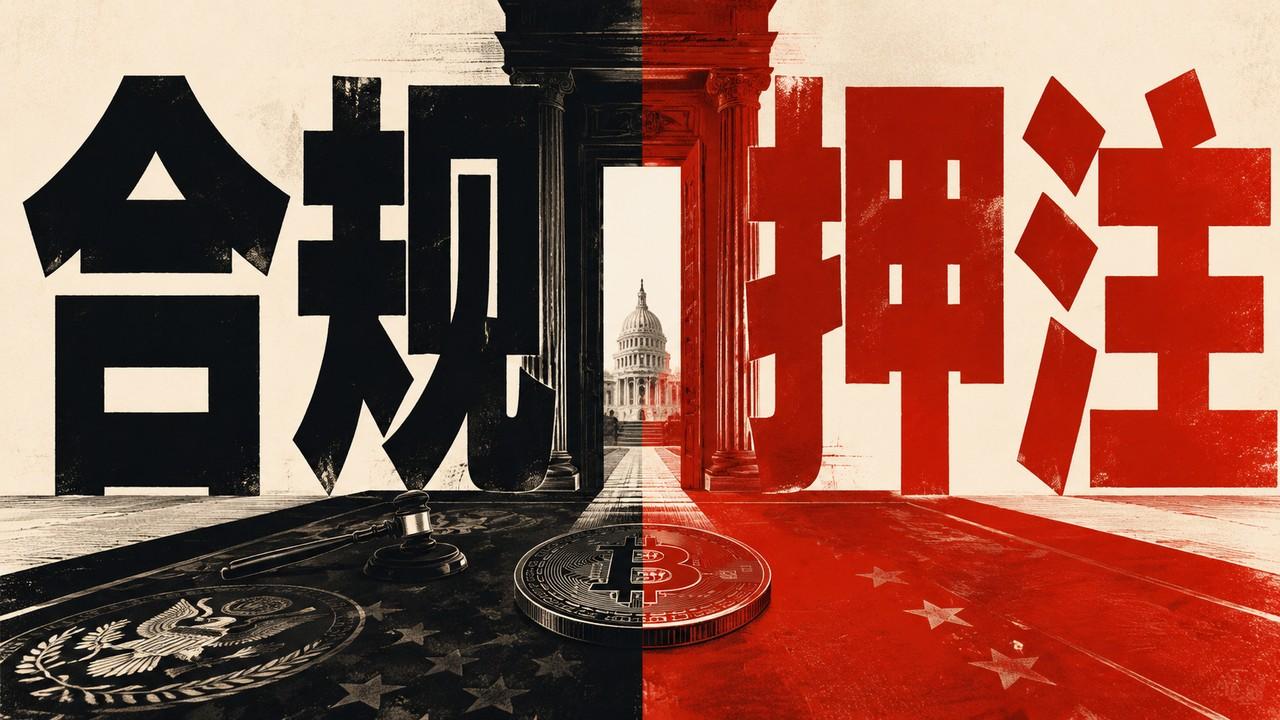
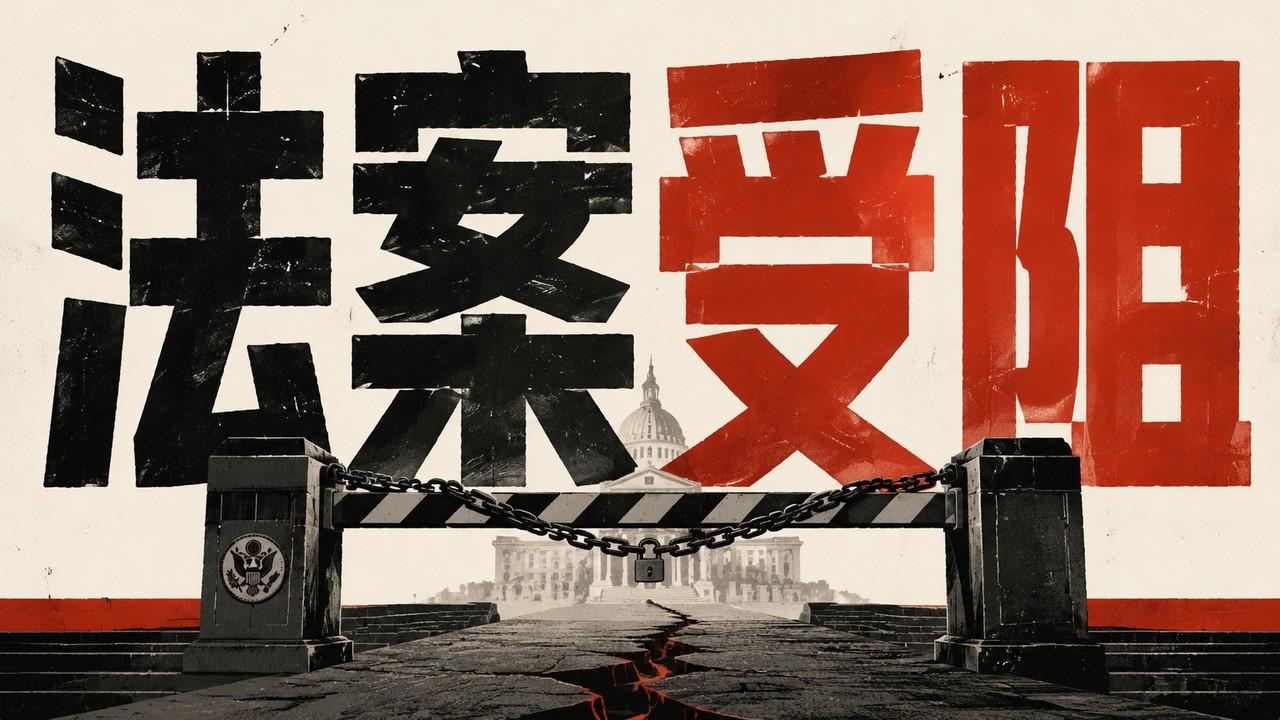
On the timeline of the U.S. Congress, the eve of May 14, 2026, became a watershed moment: on one side, bipartisan negotiations within the Senate Banking Committee over the CLARITY Act suddenly “stalled” just before formally marking for review. Republican Senator Cynthia Lummis emphasized that negotiators had reached consensus on approximately 99% of the terms, yet the remaining 1% of disputes had them deadlocked—journalist Eleanor Terrett revealed that there are clear divisions within the Democratic Party regarding the so-called "moral clause" and the BRCA clause, while the specific text and functions of these two types of clauses have yet to be fully disclosed, and the circulating versions have largely been marked as “pending validation.” On the other side, during the same timeline, the Celsius criminal leads pushed by the U.S. Attorney’s Office for the Southern District of New York did not halt; the top lending platform that collapsed during the liquidity crisis in 2022 saw its former Chief Revenue Officer Roni Cohen-Pavon agree to surrender about $1.07 million in assets as part of a forfeiture arrangement related to the alleged criminal proceeds. Whether these funds will be counted in the Celsius bankruptcy estate and how they will be divided among creditors remains unclear based on public information. At the legislative level, a framework bill covering market structure and consumer protection issues is held back by the 1% of disagreement under 99% consensus; at the enforcement level, prosecutors and regulatory agencies continue to hold platforms and executives accountable within existing legal tools and precedent frameworks. This “legislative logjam and enforcement first” misalignment is reshaping the risk pricing of the U.S. crypto industry: platforms, project parties, and underlying developers must recalibrate their compliance boundaries and survival space in an environment without a unified legislative coordinate system, where they may be named by the SEC, CFTC, or even criminal prosecutors at any time.
99% Consensus Stalled by 1%
In the meeting room of the Senate Banking Committee, the CLARITY Act was originally intended to be the framework legislation that would “finally define unified boundaries for the crypto market”: it needed to clearly state who the jurisdictional authorities are, what qualifies as regulated assets, and who is responsible if investors encounter issues. After months of tug-of-war over market structure and consumer protection clauses among the bipartisan negotiating team, Senator Cynthia Lummis disclosed that approximately 99% of the content had achieved consensus between the parties, leaving about 1% of the text undecided. What truly caused the process to “stall” was political judgment rather than technical details: journalist Eleanor Terrett reported that there are significant divisions within the Democratic Party regarding the so-called “moral clause” and the BRCA clause, and the specific text and functions of these clauses have not yet been disclosed, with external interpretations largely deriving from a single source or market rumors and can only be considered fragments pending verification. The negotiations ultimately broke down on the eve of the formal marking review by the Banking Committee, indicating that this key 1% clause failed to even enter the procedural amendment and voting stage.
The result is that the CLARITY Act, originally meant to unify language, continues to stagnate in legislative limbo, and U.S. crypto asset regulation must perpetuate the state of “whoever sues first calls the shots”—the SEC and CFTC issue their own enforcement statements and guidelines; federal courts fill regulatory gaps case by case, and industry participants are forced to treat these scattered administrative actions and rulings as de facto operational manuals. At this moment where an almost completed framework has been stalled by 1% of political disagreement, platforms, project parties, and developers are faced not with a set of predictable unified rules, but rather with pieces of regulatory puzzles that could shift at any moment.
The Conflict Over the Moral Clause and BRCA
As Senator Cynthia Lummis’s reference to the “99% consensus, 1% disagreement” is repeatedly quoted, crypto journalist Eleanor Terrett revealed that the sharpest point within that 1% relates to two clauses referred to internally as the “moral clause” and the BRCA. Her reporting points to a non-unified Democratic Party: some insist on crafting these clauses to be stricter and more detailed, while others worry that excessive constraints could lock up both innovation and regulation. The circulating market version suggests that the “moral clause” may relate to conflicts of interest constraints for senior officials and their families, but this is just information pending verification; once family accounts and affiliated funds are included in the scope of review, the holding transparency of legislators and regulators themselves would also be brought into the spotlight. The BRCA is described by a single source as a clause involving developer responsibilities and regulatory exemption boundaries. If the final text defines “who is the regulated entity” as including code submitters and non-custodial wallet maintainers, teams that previously identified as solely “technical roles” may find themselves pushed to the regulatory forefront overnight.
The issue is that these key clauses have yet to be made public; even the rough functions remain at the rumor level, while negotiations have already broken down over them. For DeFi protocols and non-custodial developers, it remains unclear under what scenarios they are obliged to disclose conflicts of interest and what degree of code publication would be regarded as “leading users into regulated activities.” The CLARITY Act draft cannot be written into internal compliance manuals; for platform executives, whether the “moral clause” traces back to individual and family accounts directly determines their positions in project tokens and counterparty equity. With the text undecided, compliance departments can only look for reference points within existing SEC and CFTC enforcement actions and scattered case law, fearing to preemptively assume whether Congress will ultimately choose leniency or strictness, transforming the 1% political controversy of the CLARITY into a rule black box that cannot be rehearsed in advance.
Regulatory Windows Amid Legislative Stalemate
The Senate Banking Committee was initially expected to complete the marking review of the CLARITY Act around May 14, 2026; a single source indicated that this process would be highly partisan. Now, as negotiations have broken down on the eve of voting, the bill is stuck at the committee door, meaning that the market can only continue to “cross the river by feeling the stones.” In the absence of unified legislation, the classification and boundaries of U.S. crypto assets continue to be pieced together mainly by the enforcement statements and guidelines of the SEC and CFTC, as well as scattered court precedents. Regulatory practice shows a pattern of “enforcement first, legislation lagging,” where industry participants are not reading a complete regulatory code before designing business but are forced to gauge the regulatory bottom line in each case, with individual enforcement shaping the overall compliance path step by step.
This legislative stagnation directly offloads uncertainty and costs onto platforms and token issuers. For exchanges and custodians, without the unified language of the CLARITY Act, they can only passively manage regulatory risks by limiting access for U.S. users, actively tightening token listing standards, and seeking more legal opinions; cross-border projects applying for licenses in the U.S. and other jurisdictions or designing product terms for the U.S. market have to assume they will continue to operate in an environment where the SEC and CFTC will enforce strongly and court rulings will alternate. The result is that compliance budgets are pushed into the early stages where profitability has not yet been achieved, but legal risks remain difficult to quantify; the U.S. regulatory window has been extended into a structural barrier by time, making it crucial to determine who dares to increase investments in the U.S. market and who chooses to circumvent to other jurisdictions—this will become a key dividing line in the changes to the industry landscape in the coming years.
Former Celsius Executive Agrees to Forfeiture
In another timeline where legislation is slow to materialize, the story of Celsius is being dismantled by prosecutors and courts as an “illustrative case”: this former leading crypto lending platform collapsed in 2022 due to a liquidity crisis and asset mismatches, reliant on promises of high returns and mass user asset absorption, ultimately leading into bankruptcy proceedings; in the subsequent judicial process, the U.S. Attorney’s Office for the Southern District of New York no longer treated it merely as a “market accident” but instead filed criminal charges against some high-level executives, including fraud and token price manipulation, directly incorporating the gray areas in platform governance and token design into the criminal law framework. The latest disclosed milestone has former Chief Revenue Officer Roni Cohen-Pavon agreeing to forfeit approximately $1,070,000 in assets, which have been defined as proceeds related to the crimes he is accused of. Currently, public information has not clarified whether and how these forfeited funds will be included in the Celsius bankruptcy estate and distributed among creditors, and this handling path itself has become a regulatory variable pending verification.
Unlike the Senate CLARITY Act, which remains bogged down in textual negotiations, the prosecution’s message in the Celsius case to the market conveys a coarser but more straightforward rule: company-level bankruptcy protection does not constitute a “safety net” for personal liability of executives; the design of yield-generating products, the methods for meeting revenue targets, and all internal and external actions related to the price of their own tokens may later be redefined as forfeitable “criminal proceeds.” For other CeFi platforms and yield product issuers, Roni Cohen-Pavon agreeing to forfeit $1.07 million is not just a case data point, but a signal showing that the prosecution is willing to dig deeper along the personal liability chain in an environment of “enforcement first, legislation lagging,” reminding management that any luck in information disclosure, risk representation, and price impact actions could eventually translate into accountability piercing the corporate veil to personal assets.
Signal of Enforcement Intensification Amid Legislative Stalemate
From the CLARITY negotiations stalling at the Senate Banking Committee to the Southern District of New York prosecutors advancing criminal accountability for Celsius executives and implementing the $1.07 million forfeiture against the backdrop of the CLARITY not yet having passed, U.S. crypto regulation has shown a clear structure: Congress lacks a unified, predictable framework legislation, while the SEC, CFTC, and federal prosecutors continuously “pre-emptively delineate” through enforcement statements, guidelines, and individual case judgments under existing laws. Currently, there is no public evidence indicating that CLARITY can swiftly enter a vote before resolving the disputes around the approximately 1% critical clauses; a single source also predicts that subsequent reviews in the Senate Banking Committee will continue to be constrained by partisan differences, making the timeline highly uncertain; this reality compels project parties, platforms, and developers to, for a significant period, design product structures, risk control arrangements, and information disclosures under the assumption of “the most conservative and stringent enforcement expectations.” The real hedge already appears in reality: large platforms introducing compliance officer teams early, strengthening KYC and asset proofing, essentially paying “compliance insurance fees” in advance for the potentially implemented framework legislation and continuously upgraded enforcement standards. The true variables, however, focus on which direction the still-pending “moral clause” and BRCA clause will ultimately converge, whether the CLARITY can be unblocked in future reviews to enter substantial voting, and how subsequent judgments surrounding Celsius will handle specific details including asset forfeiture; these developments will collectively determine whether the U.S. crypto industry is redefined under a unified legislation, or continues to passively piece together a new rules landscape in the gray area driven by enforcement through individual cases.
Join our community, let's discuss and grow stronger together!
Official Telegram community: https://t.me/aicoincn
AiCoin Chinese Twitter: https://x.com/AiCoinzh
OKX benefit group: https://aicoin.com/link/chat?cid=l61eM4owQ
Binance benefit group: https://aicoin.com/link/chat?cid=ynr7d1P6Z
免责声明:本文章仅代表作者个人观点,不代表本平台的立场和观点。本文章仅供信息分享,不构成对任何人的任何投资建议。用户与作者之间的任何争议,与本平台无关。如网页中刊载的文章或图片涉及侵权,请提供相关的权利证明和身份证明发送邮件到support@aicoin.com,本平台相关工作人员将会进行核查。