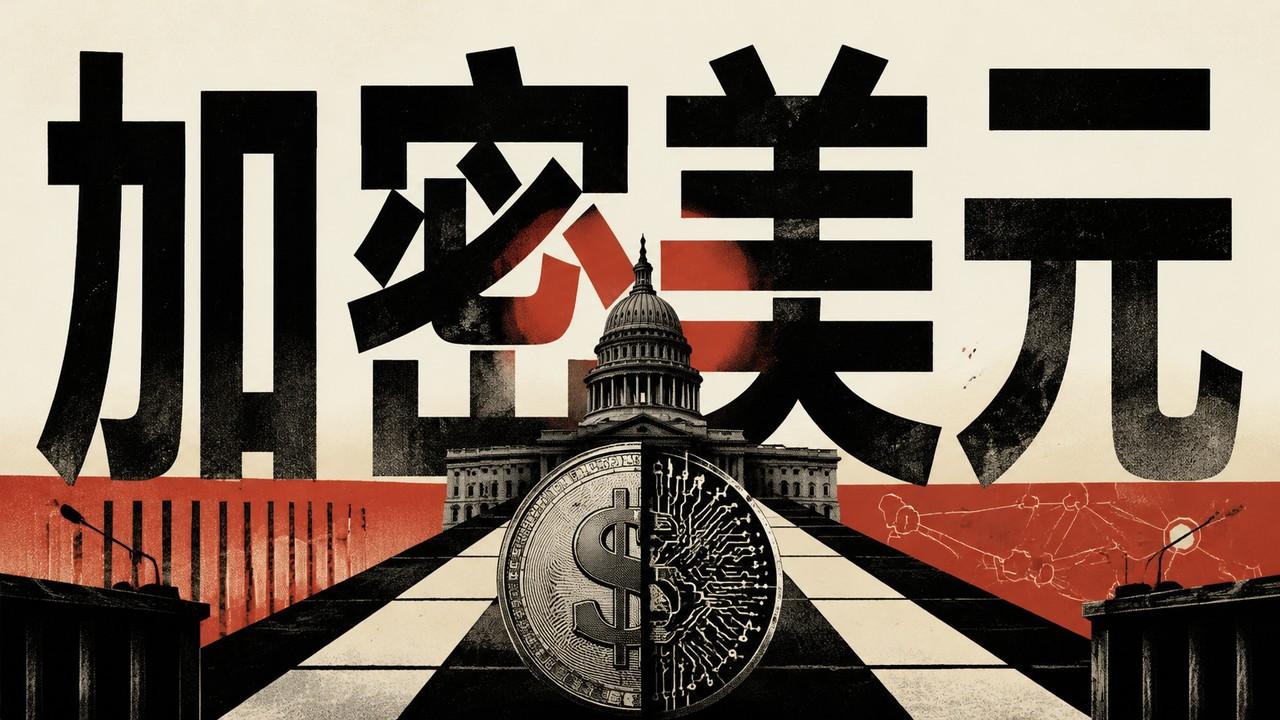
On May 13, 2026, the Senate narrowly confirmed Kevin Walsh’s nomination as Chair by a vote of 54 to 45, just a day after he was confirmed for a 14-year term as a board member. In a highly partisan vote, with only one Democratic senator crossing over to support him, the new "inflation hawk" officially took the seat. Almost simultaneously, the House Financial Services Committee began reviewing a bill to amend Section 2A of the Federal Reserve Act, narrowing the Fed's mission from "price + employment" to a focus solely on price stability. This topic has been reported by financial journalist Nick Timiraos in mainstream media, signifying that the dual mandate is facing systematic challenges. While the Democratic-controlled Senate means that diminishing the employment target faces a high legislative hurdle, Walsh is widely viewed as a more hawkish figure sensitive to inflation, while Powell is expected to remain as a board member after his term ends on May 15. Together, these developments signal a new direction for the Fed, indicating that future decisions regarding inflation and growth will be more "worried about inflation," thus making it more sensitive to fluctuations in asset prices and liquidity. For global traders accustomed to pricing risks using the federal funds rate curve, Treasury yields, and the cost of dollar funding, this is not merely a personnel change but rather the starting point for rewriting interest rate paths and policy response functions. In the context of higher beta BTC and ETH markets, and on-chain ecosystems centered around dollar-pegged assets, this means an overall increase in funding costs, leverage tolerance, and risk premiums, leading to a passive reallocation of capital based on the new expectation of "tighter for longer, with inflation fighting prioritized."
54 Votes in a Nail-Biter: The Walsh Era Begins
The vote on May 13 felt more like a public referendum on the future direction of the Federal Reserve. The narrow result of 54 votes in favor and 45 against relied on the support of one Democratic senator who crossed party lines, a scenario described by many observers as one of the most starkly divided appointments of the modern Federal Reserve in American history. Just a day earlier, Walsh had been confirmed for a 14-year term as a board member and has now ascended to the position of chair, a rapid leap placing a notoriously hawkish figure known for high sensitivity to inflation back at the top of the interest rate decision-making chain.
For the markets, this is not a neutral signal combination. Firstly, Walsh has long been labeled by mainstream media and research institutions as someone more alert to inflation, inclined to tighten monetary policy more quickly or loosen it more slowly. Secondly, this hawkish new chair was pushed through under a highly partisan atmosphere while the House Financial Services Committee is discussing a bill that weakens the employment target and highlights the price stability mission, creating an overall narrative focused on "inflation fighting" rather than "growth prioritization." With this political and personnel pairing, expectations for the interest rate path are forced to tilt toward "maintaining higher levels for longer," raising the so-called policy "lower bound," thereby pushing up the discount rates and volatility risk premiums for high-beta assets like BTC and ETH. Henceforth, every slight adjustment in the federal funds rate expectations will more easily translate into drastic price changes and leverage repricing in the crypto market.
The Shadow of Political Rivalry Accelerating Central Bank Politicalization
When the confirmation vote of 54 to 45 almost strictly followed party lines, with only one Democratic senator crossing over to support, the market perceived not just Walsh's assumption of office, but also Congress treating the Federal Reserve chair as an extension of partisan conflict. The statutory independence remains, but hearings, bills, and appointments are being more frequently utilized as pressure tools, especially after the House Financial Services Committee publicly debates amendments to Section 2A, and with reporters like Nick Timiraos continuously covering it, the potential to "rewrite the mission" has been incorporated into pricing models. The monetary policy response function is no longer seen as a purely technical rule but rather as a result of the power struggle between Congress and the executive branch.
Once the central bank is perceived by the market as a political tool, the "policy trust premium" for longer-dated interest rates is inevitably raised. Higher uncertainty compensation needs to be embedded in the yields of U.S. long-term Treasuries, pushing up the overall risk premium for dollar credit and U.S. assets. For funds accustomed to leveraging under low interest rates and predictable policies, part of this uncertainty will manifest through an allocation cut in risk assets such as U.S. stocks and Treasuries, while another part will shift toward BTC, ETH, and dollar-pegged on-chain assets in search of hedging and speculative opportunities outside of central bank control. In past rounds of macro turbulence, the market's trust in the Federal Reserve’s predictability has directly amplified long-term interest rates and U.S. dollar volatility. Now, under the backdrop of longstanding Republican criticism of the Fed's "excessive concern for asset prices" and calls to weaken employment targets, political uncertainty itself has become a source of volatility: it could trigger unexpected shifts between hawkish and dovish stances and may dilute the willingness to protect the market during an economic downturn, thereby increasing the risk premiums and price volatility ranges for BTC and ETH, reinforcing the high beta characteristics of crypto assets within the global asset spectrum.
From Dual Mandate to the Sole Focus on Inflation Control
The current Section 2A of the Federal Reserve Act grants the Fed a highly flexible mandate: to pursue both “maximum employment” and “price stability” in the long term. This dual mandate has, in practice, provided excellent political and legal cover for loose policies—so long as employment data shows “room for improvement,” even amid high asset prices and loose financial conditions, the Fed can claim to be fulfilling its employment responsibility rather than merely “supporting the market.” For the crypto market, this institutional ambiguity implies an implicit "Federal Reserve safety net option": once unemployment rises or growth weakens, the policy focus can swiftly shift from inflation to employment, providing liquidity buffers for risk assets and BTC, ETH.
The amendment to Section 2A currently under consideration by the House Financial Services Committee, however, directly targets the root of this buffering mechanism—deleting the “maximizing employment target” and retaining only price stability. Historically, such proposals have surfaced multiple times within the Republican Party, asserting that the employment target induces a long-term bias towards loose monetary policy; this time, it first entered mainstream policy discussions through reporting by financial journalists like Nick Timiraos. Once the market believes that the "single price stability target" is only a matter of time, even with the current short-term barrier posed by the Democratic-controlled Senate, such expectations will elevate perceptions of the long-term ending point for real interest rates, weaken the belief that “the Fed will intervene when asset prices drop,” and compel global capital to add a higher structural risk premium to U.S. interest rate paths. Consequently, this will compress the liquidity premium and valuation space that crypto assets can enjoy, while increasing BTC and ETH’s sensitivity to the risks associated with a “tighter for longer, inflation-fighting priority” regime during each macro fluctuation.
A Triangular Game Under Tightening Liquidity
Under the combination of “more hawkish chair + possibly reinforced inflation-fighting mission,” the baseline scenario shifts from “ready to cut rates to save the market” to “maintaining tighter liquidity for longer.” The federal funds rate and short-end dollar funding costs are now assumed by the market to settle on higher levels, with the Fed’s control over the federal funds rate, Treasury yields, and the price of dollar funding being understood as tools to suppress inflation rather than to support asset prices. Anticipated adjustments in interest rate futures and the dollar index reflect the incorporation of higher risk-free dollar yields into pricing formulas. Global capital is thus forced to recalibrate risk premiums between “securing reliable dollar coupons” and “chasing high-volatility returns like BTC and ETH.” When cash and Treasuries present sufficient attractiveness, only those risk assets that can still demonstrate their scarcity under higher discount rates will be worth occupying space in the risk budget of portfolios.
This directly extends to the on-chain environment: an increase in the cost of dollar funding raises leverage prices, compressing DeFi yields, while high leverage and high beta strategies lose their environment of “easily obtained liquidity.” Historically, in periods of rising interest rate or tightening balance sheet expectations, high leverage and long-tail token positions often get cut first, with on-chain and exchange data repeatedly showing that BTC and ETH's proportion of the total crypto market capitalization is increasing. Under a new round of "tighter for longer" expectations, the same triangular game is being reenacted within the system—one end represents Bitcoin, viewed as a digital safe-haven asset; the other end is Ethereum, possessing cash flow and ecological narrative; and the third end comprises on-chain dollar-pegged assets. In an environment of high interest rates, a strong dollar, and pressure on risk assets, the proportion changes among them will become key indicators for assessing whether the overall market's risk preference is genuinely stabilizing.
How the Crypto Market Reprices the Fed's Path
Under the expectation of hawkish new chair Walsh, crypto derivatives are often the first to “understand” the interest rate path shifts. The BTC and ETH futures curves are adjusted after each FOMC statement and chair press conference, with short-end premiums reflecting bets on imminent rate hikes or sustained high rates, while the long-end reflects expectations for “higher and longer” rate endpoints. If the market believes the Fed’s tolerance for asset prices is declining, perpetual contract funding rates may easily flip from positive to negative or exhibit brief extreme fluctuations around macro data releases, with rising implied volatility being a direct reflection of the policy uncertainty premium incorporated into options prices. In past instances around CPI, employment data, and FOMC meetings, crypto leverage rates and long-short positions have shown clear reallocation, and this experience will likely be applied by traders in the Walsh era for faster futures and options repricing with each policy signal.
Spot and compliant product funding will rebuild on a slower timeline. Redemption data of U.S. related ETFs and over-the-counter trusts have been treated by institutions as macro barometers: once the Fed is interpreted as more focused on price stability and less tolerant of asset bubbles, high-beta altcoin exposures are often cut first, with positions concentrating on BTC and ETH. Some funds then view these two major assets as “on-chain Treasuries” to hedge against long-term inflation and policy missteps. Simultaneously, the opportunity cost of on-chain dollar-pegged assets rises with U.S. short-term interest rates, making traditional dollar deposits and short-term bond yields more attractive; if on-chain capital is to remain, it must provide additional compensation in terms of interest allocation or usage scenarios. Importantly, this process is not one-off: from Walsh’s public statements to each FOMC dot plot, through congressional hearings and key macro data releases, the interest rate path will undergo repeated fine-tuning, with volatility in crypto derivatives and net flows of on-chain dollars continuously offering tradeable signals through these multiple rounds of “repricing.”
What New Macro Signals Traders Should Monitor
After Walsh takes the helm, it is clear that the core of this round of macro repricing is: inflation fighting priority, more hawkish monetary policy, and an increased probability that central bank decisions will be interrupted by political noise in a highly partisan Senate environment, meaning that the dollar liquidity cycle is both tighter and harder to predict using old models. Crypto traders should be monitoring not only the interest rate levels but also the overall tone of the first few FOMC meetings under Walsh’s leadership—whether the dot plot shifts upward and whether the language around “price stability” is tougher—along with whether he maintains this hawkish posture after formally taking office following protocol at the White House. Secondly, they should observe whether the House Financial Services Committee's bill to amend Section 2A of the Federal Reserve Act can exit the committee and enter a full vote, and watch whether it is directly shelved or forced into negotiation in the Democratic-controlled Senate, which will determine whether the mission is merely a pressure signal or genuinely transitions from a dual goal to a singular focus on price stability. Thirdly, key U.S. inflation and employment data’s “feedback” on the policy path: historically, crypto markets have often seen violent volatility around turning points in the Fed's path during interest rate hikes and balance sheet reductions, indicating that BTC and ETH remain highly sensitive to these data-driven expectation adjustments. In scenarios where mission reforms are institutionally blocked while political pressures from Congress and the media persist, the market will face an environment of “high uncertainty + high-frequency policy noise”: the direction of interest rates may not be extreme, but the decision-making response function will be more difficult to decipher, turning volatility itself into the main asset. Conversely, if the long-term mission indeed slides towards a singular goal of price stability, it implies higher real long-term rates, weaker assumptions on asset price support, and a normalization of rising risk premiums. In this new landscape, BTC and ETH resemble a combination of “macro hedge assets + high-volatility risk assets”: as inflation and policy uncertainty amplify, they will be drawn into a safe-haven narrative, but when real rates and dollar yields rise, they will also be discounted as high-beta tech stocks based on cash flow logic. Trading strategies will have to dynamically switch between these two pricing frameworks, and this framework itself will become the main macro layer for all BTC and ETH traders in the coming years.
Join our community to discuss and grow stronger together!
Official Telegram Community: https://t.me/aicoincn
AiCoin Chinese Twitter: https://x.com/AiCoinzh
OKX Benefits Group: https://aicoin.com/link/chat?cid=l61eM4owQ
Binance Benefits Group: https://aicoin.com/link/chat?cid=ynr7d1P6Z
免责声明:本文章仅代表作者个人观点,不代表本平台的立场和观点。本文章仅供信息分享,不构成对任何人的任何投资建议。用户与作者之间的任何争议,与本平台无关。如网页中刊载的文章或图片涉及侵权,请提供相关的权利证明和身份证明发送邮件到support@aicoin.com,本平台相关工作人员将会进行核查。