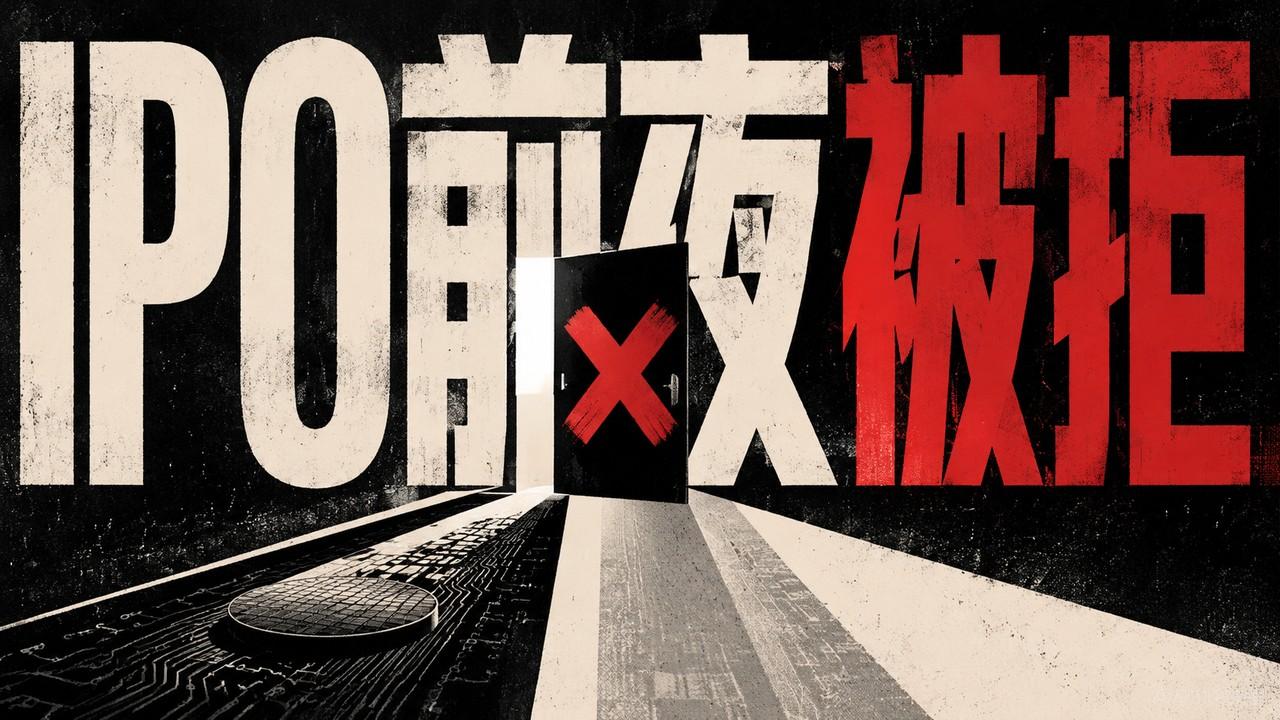
French hardware wallet manufacturer Ledger, regarded as one of the companies "closest to traditional blue chips" in the cryptocurrency space, has hit the brakes before sprinting into the U.S. capital market: According to media reports, Ledger has paused its IPO plans in the U.S., attributing the decision to "unfavorable market conditions," and has shifted its focus to evaluating private financing and other non-public routes at a stage where it has yet to submit any form of S-1 registration statement to the U.S. SEC. Compared to the narrative during the preparation period, this shift appears particularly stark—at that time, Ledger was in discussions with investment banks such as Goldman Sachs, Jefferies, and Barclays regarding a U.S. listing, with the market once expecting a potential IPO valuation around $4 billion, yet it has now chosen to bypass a public offering before entering SEC scrutiny, returning to a private exempt framework targeting specific investors. Current reports largely come from media and information aggregation channels, with Ledger not having publicly confirmed or announced a new timeline in regulatory documents; however, one unavoidable question has emerged: In a U.S. market characterized by stricter regulations and heightened disclosure and compliance costs, even hardware wallet manufacturers, known for "secure key storage" and not directly engaging in transactions, have started to vote with their feet. The enthusiasm for high valuations, high liquidity, and rapid storytelling between crypto companies and the U.S. capital market is being replaced by a more rational and even cautious pricing logic.
From Goldman Sachs' backing to an emergency brake: IPO preparations hit pause
Before "voting with their feet," Ledger had actually taken significant steps toward the U.S. capital market—engaging in discussions with Goldman Sachs, Jefferies, and Barclays about a U.S. IPO plan, with reports indicating an effort to achieve an estimated valuation of about $4 billion upon landing on a U.S. exchange. For a French company renowned for secure hardware, this combination of Wall Street investment banks meant it was initially constructing its narrative and valuation expectations according to the standard U.S. listing path, trying to find a balance that mainstream institutions would be willing to endorse between regulatory compliance and growth stories.
The real turning point came before entering the SEC's view. According to the general requirements of U.S. securities law, an overseas company must submit an S-1 registration statement (either public or confidential) to the SEC to go public in the U.S., undergo review, and subsequently bear ongoing disclosure obligations. When Ledger hit the pause button, it had not submitted any form of S-1 document, and the entire project remained at the preparatory stage of investment bank collaboration and proposal refinement. The company attributed this decision to "unfavorable market conditions," but did not provide a more detailed explanation, leading many to interpret this halt as an intentionally made "withdrawal from the plan"—before truly entering the SEC review channel and locking in valuation and business model, Ledger chose to preserve maneuvering room, hedging against the asymmetric risks brought by increasing regulatory strictness and cooling capital sentiment through an active delay in going public.
Regulatory uncertainty combined with cooling sentiment: The cost-effectiveness of going public is decreasing
Breaking down the vague statement of "unfavorable market conditions," in the current U.S. environment, the first layer of pressure often comes from the regulatory uncertainty itself. In recent years, U.S. regulators (including the SEC) have visibly tightened registration, compliance, and enforcement regarding crypto-related businesses. Choosing to pursue a U.S. IPO means submitting an S-1, undergoing preliminary review, and subsequently bearing continuous information disclosure and corporate governance obligations. For companies involved in on-chain businesses, custodial services, and technology services, this not only results in a linear increase in compliance costs, but also exposes their business models, risk assumptions, and income structures to regulators and the secondary market, with the tightening rules making it increasingly difficult to price future risks amid uncertainty about where the "compliance red line" lies and which revenues might be redefined.
The second layer of pressure is that this uncertainty is directly translated into discounted valuations and liquidity. In a stage where the secondary market's preference for crypto equities is becoming more cautious, investors are more inclined to evaluate new shares using a valuation framework based on economic downturns and regulatory shadows, with the premium they are willing to pay for growth stories significantly decreasing, while the liquidity offered to issuers may not be better than that of large private rounds. From industry experience, when regulatory questions overlap with market volatility, IPOs can easily turn into a transaction characterized by "limited returns and determined constraints": companies lock in relatively conservative valuations but must bear rigid disclosure obligations and potential enforcement risks for the long term. Under this cost-effectiveness structure, even without delving into how Ledger internally weighs these factors, it is understandable why more and more crypto-related businesses choose to backtrack to private placements at the last moment. For infrastructure companies like Ledger, going public is becoming a high-cost option that requires careful consideration rather than a "valuation amplifier."
Shifting to private financing: Ledger seeks flexibility within regulatory boundaries
From the moment it pressed the pause button on its U.S. IPO, Ledger's fundraising narrative shifted from "stepping into the spotlight" to "returning to the negotiation table." Public information shows that after halting its U.S. listing, Ledger began evaluating private financing and other non-public methods, hoping to replace its original plan that relied on public offerings. In the U.S. market framework, public offerings require submitting an S-1 registration statement to the SEC and undergoing review, subsequently taking on high-frequency information disclosure and compliance obligations; whereas, compliant private pathways can fall under specific exemption clauses, mainly targeting qualified or particular categories of investors, with more controllable disclosure rhythms and content, significantly reducing the regulatory "exposure." For a company specializing in crypto asset key storage hardware, this difference in exposure constitutes a significantly practical comparison of regulatory costs in the context of overall tightening enforcement.
Shifting to private placements also means a rewriting of the game rules. A general rule of the capital market is that private financing offers more flexibility in valuation negotiations and terms design: Ledger can negotiate repeatedly with a select few institutions around valuation ranges, protective clauses, and subsequent rounds without having to immediately accept a single price signal offered by the public market, maintaining a relatively centralized and stable governance structure without being forced to adjust its board or information communication pace in the short term due to an influx of numerous dispersed shareholders. However, the costs are equally clear: the liquidity of privately placed shares is far weaker than that of publicly listed company stocks, and the price discovery mechanism is more dependent on the judgments of a few investors. Early shareholders expecting to achieve exits or partial liquidations through an IPO can only turn to secondary market transfers or subsequent refinancing, which takes more time. As of now, Ledger has not disclosed any confirmed amounts, valuation ranges, or lists of investors regarding private financing, making its "return to private placement" more like a long-term battle for proactive control within regulatory boundaries rather than a short-term tactical adjustment capable of rapidly realizing liquidity.
Signals in the hardware wallet sector: Gains and losses for peers, platforms, and users
For peers, the issue is not about one more financing option for a French hardware wallet manufacturer, but rather about how the "global leader," after discussing an IPO with Goldman Sachs, Jefferies, and Barclays and receiving an estimated valuation of about $4 billion, still chose to turn back at the doorstep of the U.S. public market. More subtly, the current information regarding Ledger's IPO pause mainly comes from media and information aggregation accounts, rather than a submitted S-1 to the SEC or an official announcement from the company. This means that what peers are seeing is an active example of choosing not to "get on the bus" amid stricter regulations and cooling sentiment, rather than a cautionary tale of being denied scrutiny. This creates a chilling effect: security infrastructure projects, which were already inclined to delay their listings or switch to private placements or convertible bonds, will have more reason to treat the public market as a "long-term option," concentrating their valuation and terms negotiations within the relatively controllable private investment circle amidst regulatory pressures.
Exchanges, custodians, and other platforms interpret these signals more pragmatically. They understand that the U.S. public market means submitting an S-1 to the SEC, undergoing review, and taking on continuous disclosure obligations, with the current tightening registration and enforcement of crypto-related business making any step potentially amplify compliance uncertainties. On the other hand, they see that even leading hardware wallet companies are choosing to pivot to private assessments instead of betting on the valuation increase brought by "compliance premiums." The result is that platforms are weighing their capital paths more cautiously: Should they accept high transparency and regulatory accountability in anticipation of potential market valuation, or should they rely on private pricing by qualified investors under exemption frameworks, leaving complex issues for the future? For ordinary users and institutional clients, the cost becomes a systematic discount on transparency—without going public, they cannot rely on public market disclosures and regulatory accountability to assess financial stability, governance structure, and compliance risks, and must rely more on third-party audits, custodial arrangements, and reputation constraints. In a security landscape centered around "trust" as its core selling point, such information asymmetry is gradually becoming a new fundamental risk rather than something marginal that can be ignored.
When will crypto companies dare to re-enter the U.S. capital market?
Returning to Ledger: This French manufacturer, founded on the safe storage of crypto asset private keys, has stepped back from imagining a U.S. IPO projected at around $4 billion valuation—having discussions with Goldman Sachs, Jefferies, and Barclays— to the reality of "unfavorable market conditions," pausing its U.S. IPO, and shifting to a private assessment, and has not submitted any form of S-1 to the SEC, while still not providing a new timeline or announcing a complete abandonment of listing. These actions themselves signal that under the compounded effects of stricter regulations and cooling sentiment, the combination of "crypto company + U.S. IPO" is being consciously cooled by the capital market. When will the future window reopen? It primarily depends on whether regulatory rules can become more predictable: U.S. regulators, especially the SEC, need to shift from "case-driven" to a clearer framework regarding the qualitative and registration paths of crypto-related asset issuance and trading, as this will directly impact the feasibility and costs of IPOs. Secondly, it depends on the project's profitability quality and compliance construction; only when companies do not need to rely on story-driven valuations and can withstand public information disclosure and continuous regulatory constraints can going public avoid becoming a risk amplifier. Lastly, it also depends on whether global risk appetite can improve, willing to pay premiums again for business models with high uncertainties. Based on public data as of May 13, 2026, we can only simulate scenarios rather than provide a timeline, but one thing is certain: whether project parties or investors, what truly determines life and death and valuation ceilings are never short-term coin prices and the paper numbers of a round of financing, but rather accurate interpretations of regulatory trajectories and capital market temperatures. Those who understand better will qualify to compete for survival and pricing power in the next window period.
Join our community, let’s discuss together and become stronger!
Official Telegram community: https://t.me/aicoincn
AiCoin Chinese Twitter: https://x.com/AiCoinzh
OKX benefit group: https://aicoin.com/link/chat?cid=l61eM4owQ
Binance benefit group: https://aicoin.com/link/chat?cid=ynr7d1P6Z
免责声明:本文章仅代表作者个人观点,不代表本平台的立场和观点。本文章仅供信息分享,不构成对任何人的任何投资建议。用户与作者之间的任何争议,与本平台无关。如网页中刊载的文章或图片涉及侵权,请提供相关的权利证明和身份证明发送邮件到support@aicoin.com,本平台相关工作人员将会进行核查。