Written by: Wang Su
The queen of Wall Street investing, Cathie Wood, once again showcases her investment philosophy! Recently, her company ARK Invest officially released the report titled "Big Ideas 2026." This 111-page report systematically outlines five major innovative platforms that are changing the world: AI, robotics, multi-omics, blockchain, and energy storage. Cathie Wood, known as "Wood Sister," is a premier growth-focused tech investor centered on "disruptive innovation," and her fund ARK Invest is dedicated to investing in those technological platforms that could change the world.
The "Big Ideas" series of reports released annually by ARK Invest not only embodies its core investment philosophy but has also become a must-read trend indicator for global tech investors each year. The report argues that: we are entering an era of technological "big acceleration" driven by AI, robotics, energy storage, blockchain technology, and multi-omics sequencing, which will trigger a global productivity revolution and unprecedented economic growth. Let’s take a look at what ARK has shared in the healthcare sector. Wood Sister firmly believes that the entire healthcare field is on the brink of an explosion triggered by "AI + multi-omics." In the next five years, we will witness tremendous transformations in healthcare: data explosion: genome sequencing cost decreases tenfold, data volume increases tenfold.
Diagnosis upgrades: earlier and more precise, AI-driven diagnostic tools increase fivefold. R&D efficiency: drug development costs decrease fourfold, commercialization speed increases by 1.6 times; paradigm shift: from "treating diseases" to "achieving cures," human health span will experience qualitative leaps;
This wave goes far beyond a healthcare revolution; it will profoundly reshape the global economic landscape, capital allocation logic, and even human lifestyles.

When biology embraces the "Moore's Law"
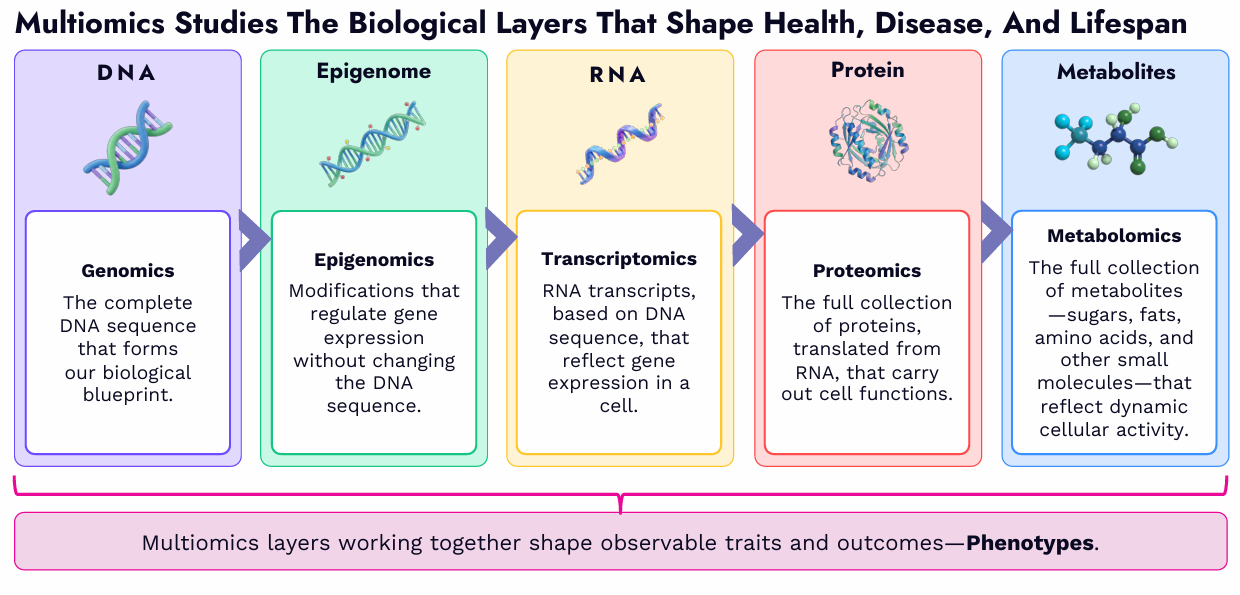
Wood Sister emphasizes, "You must pay attention to sequencing technology; this is the starting point." Biological data has one of the highest entry barriers among all industries, and breakthroughs in sequencing technology have made it possible for researchers to acquire and analyze large amounts of biological data at a lower cost. The so-called multi-omics refers to a technology system that analyzes multiple biological data layers simultaneously, including five major technologies: DNA, epigenomics, RNA, proteomics, and metabolomics.
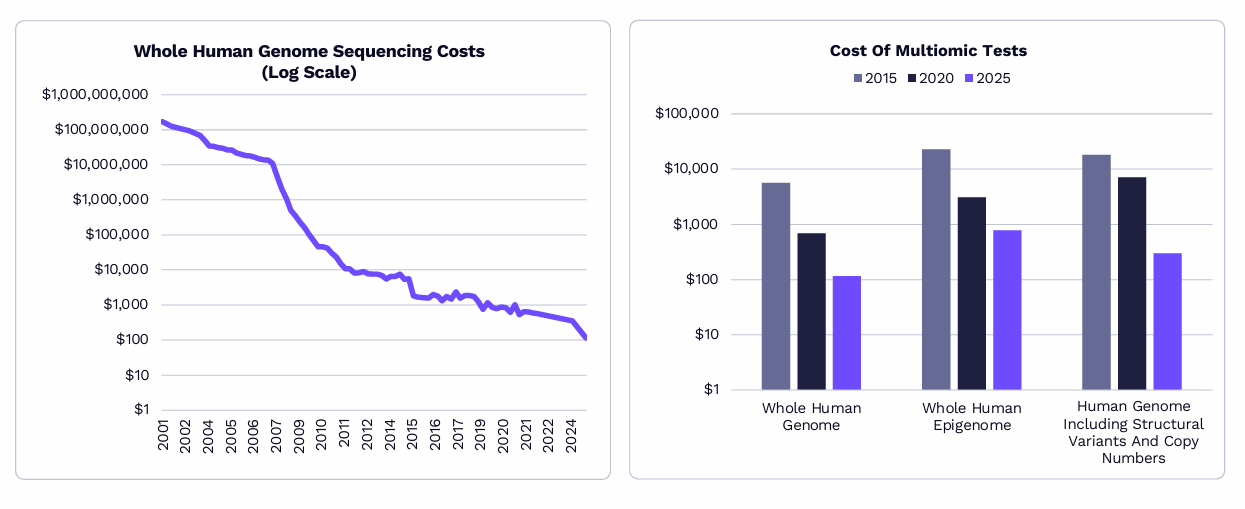
Currently, the cost of multi-omics sequencing is decreasing exponentially, showing a trend akin to a "Moore's Law" for biology. ARK predicts that by 2030, the cost of sequencing the entire human genome may decrease by about tenfold, down to $10 (currently around $100).
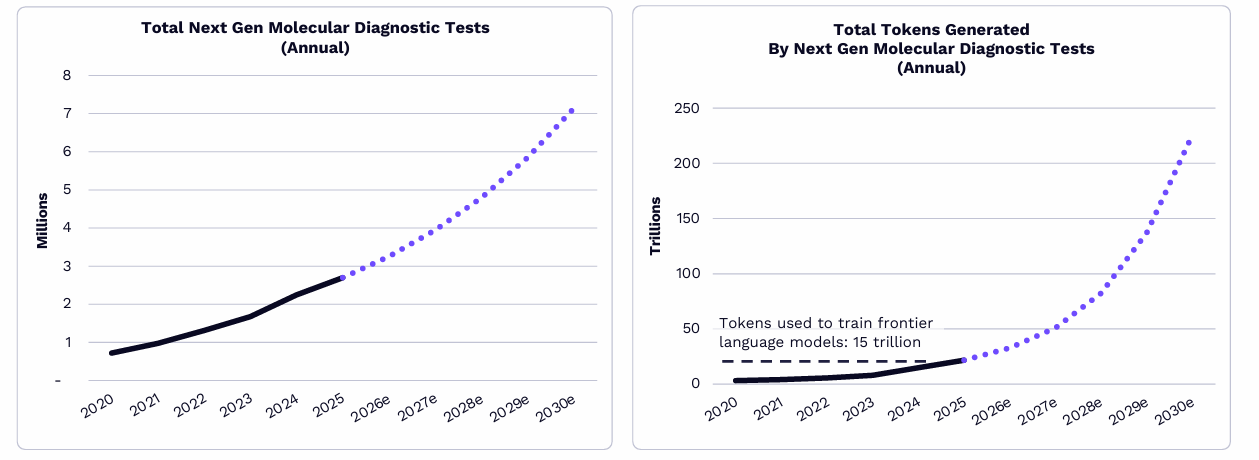
Accompanying this is a explosive growth in molecular testing data, with data volume projected to increase tenfold by 2030.
It is important to note that the growth of data volume is happening so rapidly that the scale has surpassed the data amount required by general AI companies like OpenAI, Google, Anthropic, and xAI for training large language models (150 trillion tokens).
Moreover, the decrease in sequencing costs not only leads to a data explosion but also forms a powerful technological flywheel: more biological data—better models—better tools—better diagnostic tools and drugs.
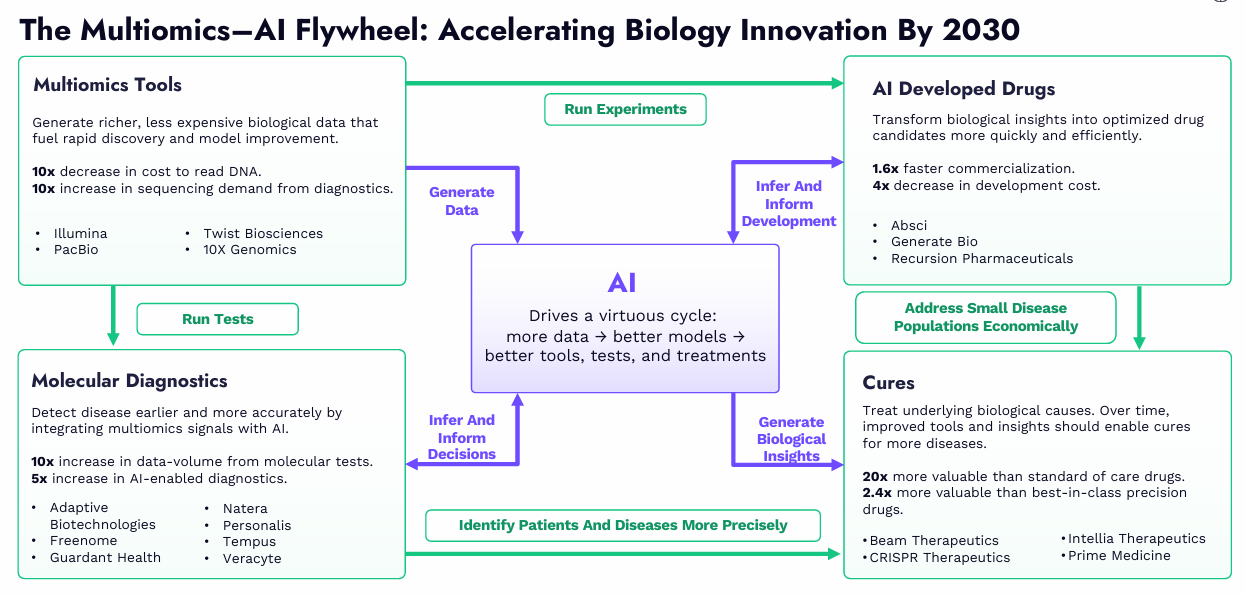
ARK predicts that by 2030, the healthcare sector will present the following scenario: the cost of whole-genome sequencing will decrease tenfold, the demand for sequencing generated by diagnoses will increase tenfold; the volume of molecular detection data will increase tenfold. AI-driven diagnostic technology will grow fivefold; drug development costs will decrease fourfold, and commercialization speed will increase by 1.6 times; therefore, the biggest investment opportunities will appear in platform companies capable of integrating data, algorithms, and therapies, as well as companies that achieve breakthroughs in key technologies such as gene editing, cell therapy, and AI drug development.
Not stopping at life sciences alone, over time, the development of multi-omics technology will bring advancements to agriculture, materials science, and even computing.

AI fundamentally rewrites drug development. It is well known that drug development follows a "double ten law," meaning that a drug costs one billion dollars and takes about ten years to reach patients. However, in reality, the calculated figure far exceeds this double ten law: developing a drug requires $2.4 billion over 13 years. Furthermore, the lengthy development process also eats away at the patent period of the drugs, adversely impacting the revenue after the drugs are launched. ARK predicts that AI-driven drug development could shorten the time to market by about 40%, reducing it from 13 years to 8 years, while lowering the total cost of drugs from the current $2.4 billion to $700 million, a decrease of about 70%.
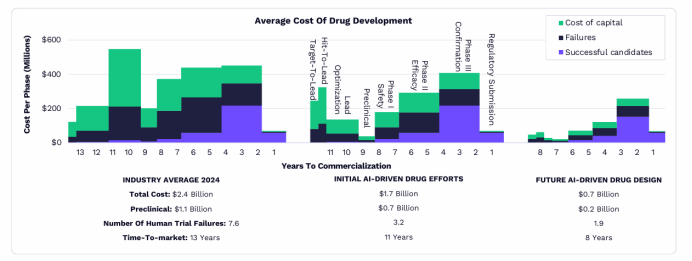
Additionally, the failure rate of drug development will further decrease. The failure rate in Phase 1 clinical trials will drop from 43% to 25%, while the combined failure rate for Phase 2 and 3 trials will decrease from 65% to 35%. More importantly, the report points out that the value growth of AI drug development is compounded, including not just cost reduction but also accelerated time to market and extended patent protection for revenue.
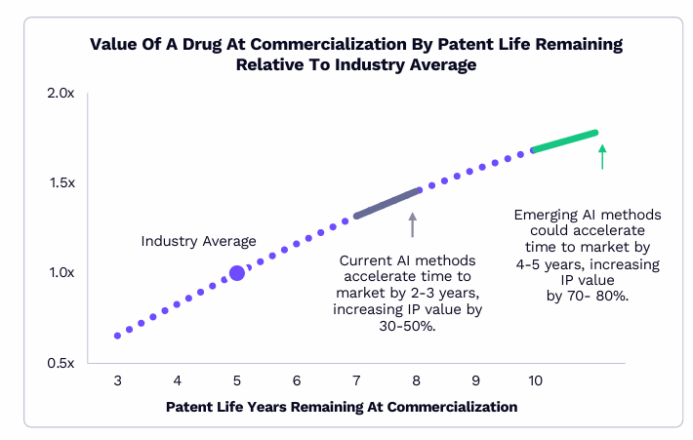
Currently, AI has shortened the R&D cycle by 2-3 years, increasing patent value by 30%-50%; if the cycle is shortened to 4-5 years in the future, patent value could increase by as much as 70%-80%. This efficiency advantage directly translates into cash flow; cumulative cash flow from AI drugs can reach about $4 billion, four times that of traditional drugs.
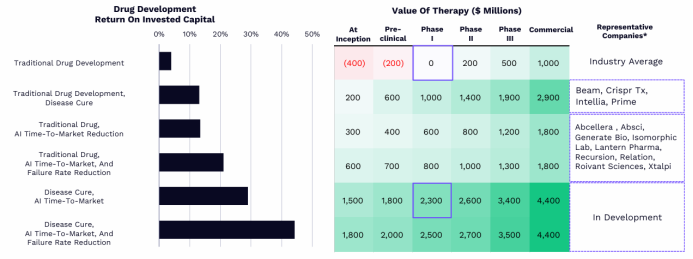
Additionally, AI drugs can generate approximately $3 billion in cash flow within the time window before traditional drugs have recouped their costs, greatly improving the return on investment (ROI). Furthermore, ARK believes that the shift from treatment to cure signifies a high value placed on the advancements brought by technologies such as gene editing.
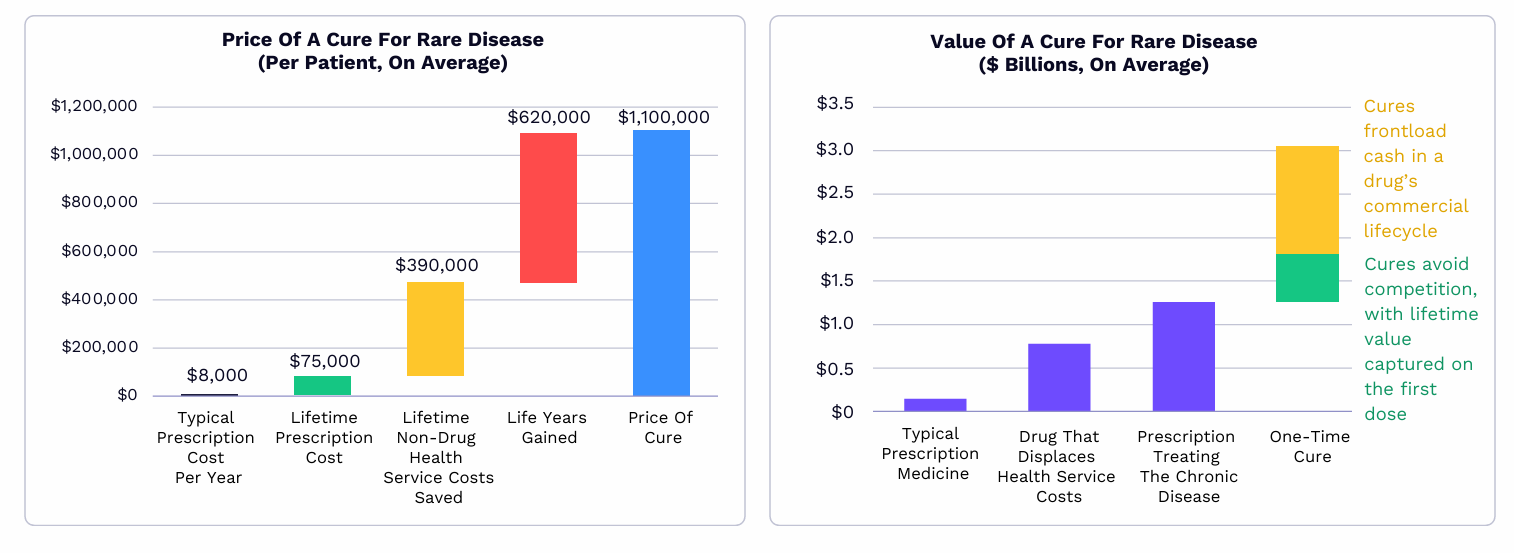
While the one-time cure cost may exceed $1 million, the value can reach 20 times that of traditional chronic disease medications, because it eliminates the lifetime medication costs.

Longevity technology, a $12 trillion opportunity
In the report "Big Ideas 2026," ARK has for the first time introduced longevity technology (Longevity) as an independent module. This signifies an important evolution in its research perspective: with the maturity of multi-omics, AI, and gene editing tools, scientists are extending their focus from treating diseases to actively intervening in the aging process itself. Nowadays, the average life expectancy has significantly increased from 46.5 years in 1950 to 73 years in 2023.
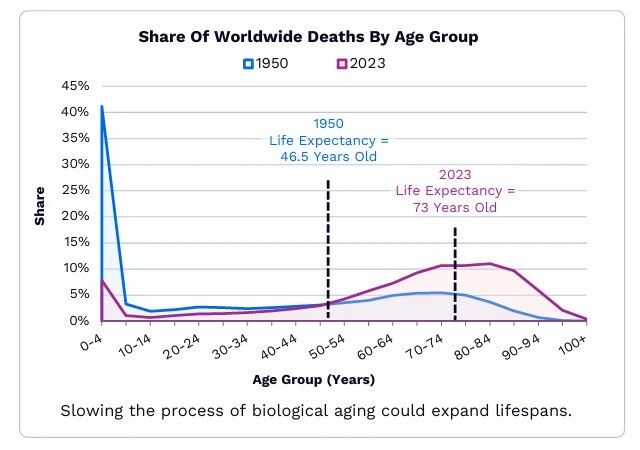
In the past century, medical advancements have mainly focused on combating specific diseases, such as cancer, thus prolonging average lifespan, but have not addressed the fundamental biological processes of aging. Therefore, the new goal of longevity technology is to directly intervene in the biological roots of aging, addressing the cellular and molecular changes leading to functional decline, such as DNA damage, mitochondrial dysfunction, and epigenetic drift. By integrating multidimensional data and utilizing AI to establish epigenetic clocks and cellular reprogramming, various technologies are effectively monitoring and reversing aging processes.
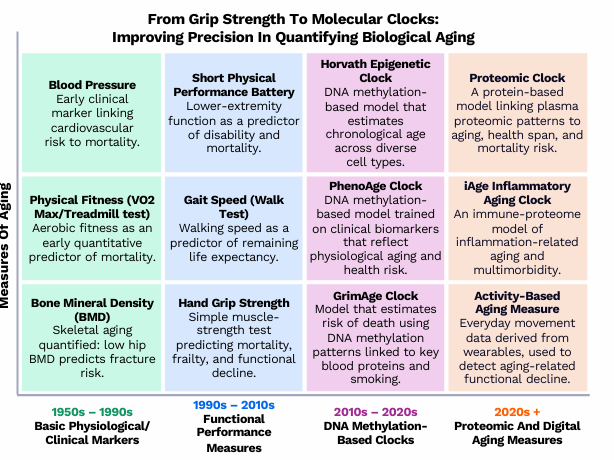
This is not only about living longer but also about living well.
Based on this, the report attempts for the first time to quantify the economic potential of longevity technology, presenting a highly impactful viewpoint.
Calculating at $100,000 per healthy year of life, there is a potential market opportunity of $12 trillion (1.2 quadrillion) in the U.S. alone through increased longevity!
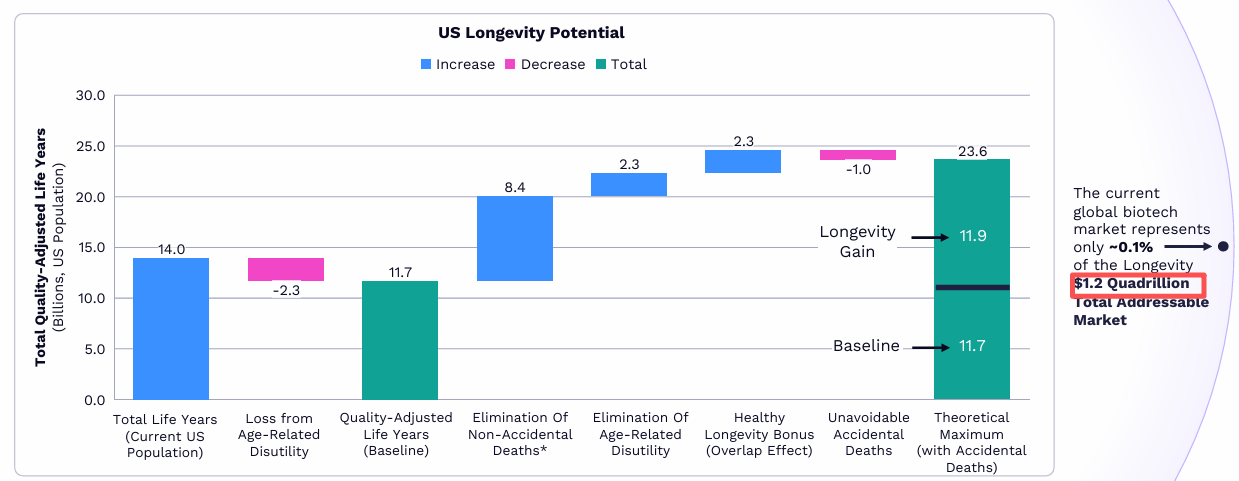
In comparison, the current global biotechnology market only occupies 0.1% of this potential market. Worldwide, the surge in longevity tech startups and investments has formed an active ecosystem. A wave of longevity tech companies has emerged, garnering the attention of Silicon Valley billionaires, such as Altos Labs, Retro Biosciences, Juvenescence, New Limit, etc. In summary, the report outlines a future scenario driven by technology and data, where the efficiency revolution and paradigm shift in the healthcare sector are nurturing the next generation of gigantic investment opportunities.
免责声明:本文章仅代表作者个人观点,不代表本平台的立场和观点。本文章仅供信息分享,不构成对任何人的任何投资建议。用户与作者之间的任何争议,与本平台无关。如网页中刊载的文章或图片涉及侵权,请提供相关的权利证明和身份证明发送邮件到support@aicoin.com,本平台相关工作人员将会进行核查。


