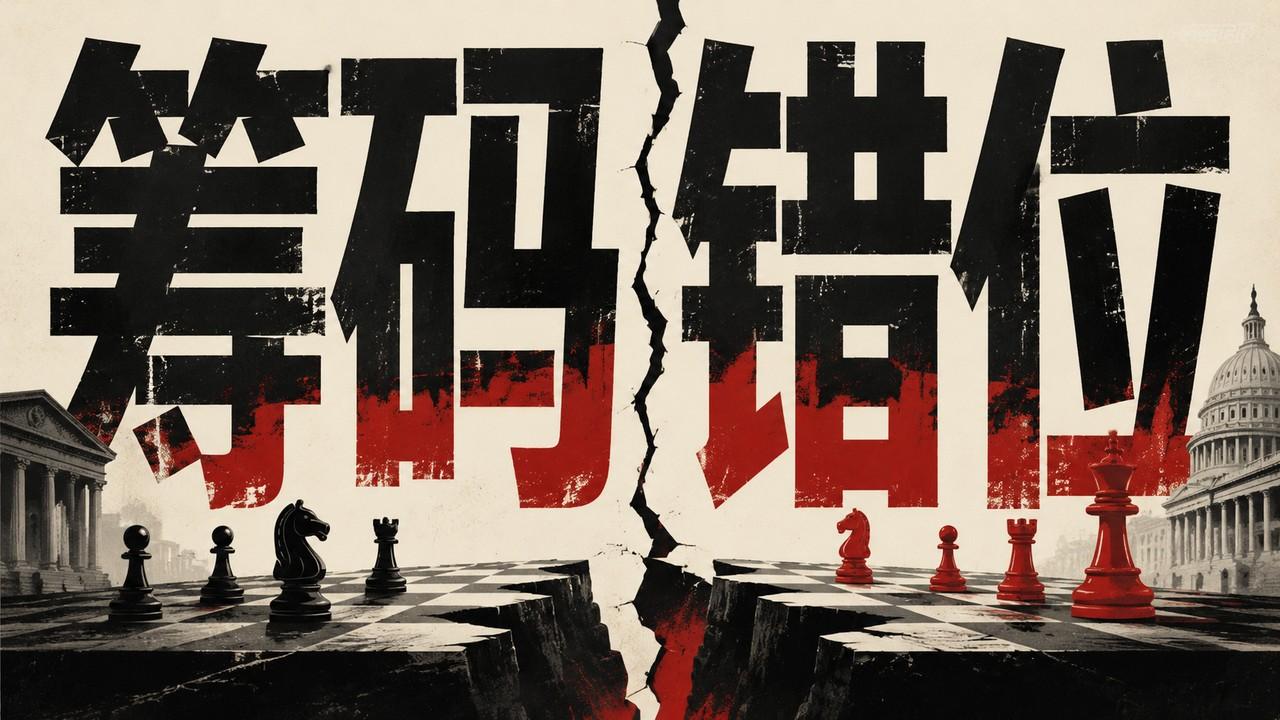
At the beginning of May 2026, two characters at opposite ends of the global market narrative spoke up: on one side was Cathie Wood, founder and CEO of Ark Invest, who insisted that the forces of innovation and AI-driven deflation are accumulating, expecting that inflation data in the next 6–9 months will be lower than market expectations; on the other side was Michael Burry, who gained fame for betting on the real estate bubble before the subprime crisis and is seen as a prototype of "The Big Short." He warned that the current surge in U.S. stocks driven by AI sentiment resembles the final stages before the 1999–2000 dot-com bubble burst, with stock prices having clearly deviated from economic data logic. Their disagreement was magnified by a bizarre macro backdrop: international oil prices had risen significantly in the past three months, but the U.S. yield curve continued to flatten, which is not commonly seen in traditional cycle experiences. Wood interpreted this to mean the Federal Reserve had not monetized this round of energy shocks, while Burry viewed this misalignment as a signal of late-stage bubbles. Around May 9, 2026, various Chinese financial and crypto media outlets such as Odaily Planet Daily, Golden Finance, and Deep Tide TechFlow focused on this debate, as the narrative surrounding AI had become a core driver of sentiment in both U.S. stocks and the crypto market. This confrontation between "AI deflation" and "AI bubble" not only reshaped investors' imaginations of inflation and policy paths but also buried the seeds for a new round of severe pricing volatility in long-duration tech stocks and crypto assets, which are extremely sensitive to interest rates.
AI Cost Reduction and Efficiency: Cathie Wood Bets on Deflation
On the other side of this macro disagreement, Cathie Wood reiterated her old stance in a somewhat contrarian tone: innovation and AI are quietly accumulating deflationary pressures. In early May 2026, she publicly judged that the inflation data released in the next 6–9 months is likely to repeatedly fall below current market expectations. In her narrative, AI is not a new round of bubble fuel pushing prices higher, but rather a systematic machine driving down costs—model training costs have fallen significantly recently, and more crucially, inference costs are decreasing even faster, which means that with the same computing power and human resource budget, companies can produce more and iterate faster. The expansion of output is not matched by a proportional increase in costs; productivity increases in her view are destined to translate into mild or even significant drops in prices.
Wood does not stop at technological optimism; she also attempts to embed this "AI deflation" logic into the current macro mix. She mentioned that oil prices have risen significantly in the past three months, which traditionally should have pushed up inflation expectations and raised long-term interest rates, but the U.S. yield curve has continued to flatten. She interpreted this as the Federal Reserve not monetizing this energy shock and the market not betting on a new round of accelerating inflation. Within this framework, the drastic cost reductions and productivity leaps brought by AI will directly erode companies' marginal pricing power in the absence of strong monetary loosening, forming structural deflationary pressures. For her, this is not just a macro set of numbers but a bet on the asset pricing path—once inflation falls below expectations and the interest rate center is forced to shift downward, there will be room for a downward adjustment in the discount rates of growth stocks and various long-duration risk assets. In her eyes, AI does not bring the flames of a bubble, but rather a slowly yet immensely powerful deflationary technological chill.
Burry Sounds the Alarm Again: The AI Market Resembles the Millennium
While Wood paints AI as a prolonged deflationary chill, Michael Burry focuses on the other end of the same timeline. He stated frankly that the current AI-driven surge in U.S. stocks “reminds me of the final stages before the burst of the internet bubble in 1999–2000,” with a familiar script: the story grows grander, prices rise faster, but true profits and economic growth are gradually left behind by the narrative. In his description, “stock prices no longer react according to the logic of economic data but are more driven by emotions and topics related to AI.” Macroeconomic data still conveys complex or even contradictory signals, while the trading floor is left only with a collective imagination of “AI.”
His warning quickly resonated across global markets largely due to his experience identifying and betting on the U.S. subprime bubble around 2008—at that time, he stood in opposition to traditional consensus, but was proven correct by the facts, establishing an image of being exceptionally sensitive to asset bubbles within the investment community. In early May 2026, when this analogy of “resembling the millennium” was cited by several Chinese financial and crypto media outlets, Wood’s optimism about deflation and Burry’s alarm about bubbles were juxtaposed on the same page, with the AI narrative no longer just a growth parameter in valuation models but reevaluated as an emotional trigger that could drive up or even distort asset prices.
Technical Deflation and Asset Bubbles: How Do Contradictions Coexist?
The same set of macro data is dismantled into completely opposite stories by Wood and Burry. In the past three months, oil prices have risen significantly, and traditionally, this should lead to a steeper yield curve, reflecting heightened inflation expectations and strong nominal growth; however, the reality is that the U.S. yield curve has continued to flatten. Wood seizes this “divergence,” concluding that it’s the result of the Federal Reserve not monetizing the energy shock and demand not being amplified by stimulus, indicating that the forces of innovation and AI-driven deflation are building in the background. For her, the steep decline in AI model training and inference costs signifies that the marginal cost of output is being reduced, and productivity gains will gradually be reflected in inflation data that is lower than expectations over the next 6–9 months, with the flatness of the yield curve being a financial side reflection of this deflationary shock.
Burry, however, reads another clue from the same yield curve: when oil prices rise but do not lead to a steeper curve, it indicates that the market does not fully buy into the growth and profitability of the real economy, but the stock market continues to rise under the influence of AI themes, and this misalignment itself is a sign of bubbles. From his perspective, stock prices no longer fluctuate along the logic of economic data but are tugged by AI-related narratives and emotions, with high-growth tech stocks and crypto assets—risk assets with high sensitivity to interest rates and inflation expectations—becoming amplifiers of sentiment. While AI lowers costs and outputs deflationary expectations at the real level, at the asset level, it is packaged as a story of “unlimited growth,” leading to the natural emergence of simultaneous technical deflation and asset bubbles, with macro signals being absorbed and reinforced by both narratives, ultimately evolving into entirely different investment conclusions within the same cycle.
Which Side Will the Crypto Market Stand On?
In Wood's deflation script, crypto assets inherently stand on the side of “loose expectations.” The market has long placed them in the same basket as high-growth tech stocks: the lower the interest rates and the more suppressed the inflation expectations, the easier it is for these long-duration, high-volatility risk assets to profit through valuation expansion. If AI truly lowers inflation data as Wood describes over the next 6–9 months, and the monetary policy constraints are loosened ahead of the market, then funds will instinctively seek high-beta targets, and crypto assets may be lifted back onto the spotlight through dual leverage from both interest rates and risk appetite, similar to past rounds of easing cycles.
However, in Burry's script, the spotlight is also a cliff. Historical experience speaks for itself: when the macro environment leans toward looser policies and inflation expectations are suppressed, high-beta assets are more likely to attract funding; once the bubble bursts and risk appetite sharply contracts, these assets will equally bear the earliest and most severe retraction. Burry’s comparison of the current AI market to the finale of 1999–2000 aims to remind that when prices decouple from economic data and are solely driven by emotional narratives, the backlash of sentiment will also transfer along the same chain to the crypto market. Around May 9, 2026, Odaily Planet Daily, Golden Finance, Deep Tide TechFlow, and others focused on amplifying this divergence of “AI Deflation vs. AI Bubble,” indicating that the AI narrative has become a common emotional anchor for both U.S. stocks and crypto: even the slightest movement of macro signals can amplify price fluctuations. For today's crypto investors, the real choice is not simply to pick a side between Wood or Burry, but to treat AI, inflation, and macro policies as variables in the same cycle chain and reassess their cycle length, risk premium, and acceptable valuation fluctuations in different scenarios.
How Should Investors Position Themselves Between Deflation and Bubbles?
The real disagreement between Wood and Burry does not lie in whether AI itself is important, but in the different weights they assign to "long-term value" versus "short-term valuation paths": Wood bets on inflation data being lower than expected over the next 6–9 months, believing that the deflationary dividends brought by AI efficiency will ultimately reflect asset prices; Burry focuses on the current valuation range pushed up by sentiment, likening it to the final sprint before the burst of the 1999–2000 dot-com bubble. The latest statements from both have been amplified by the media in May 2026, serving as a left-right reference point, but for individual investors, it is more critical to learn to deconstruct—acknowledging the sustainability of AI as a technological trend while being wary of the price noise generated by market sentiment in the short term, maintaining their assumptions and review frameworks amid conflicting viewpoints from major influencers. In the coming months, investors can dynamically track this “AI narrative chain” along three dimensions: first, whether the inflation data path continues to be below expectations as Wood suggests; second, whether the yield curve flattens further or steepens again to gauge macro pricing preferences; third, whether the sentiment fluctuations in the stock market and crypto market around AI themes are expanding or contracting. Along this line, inflation data, yield curve, and sentiment fluctuations will serve as the coordinate system for every investor to repeatedly calibrate their positions.
Join our community to discuss together and become stronger!
Official Telegram community: https://t.me/aicoincn
AiCoin Chinese Twitter: https://x.com/AiCoinzh
OKX Benefits Group: https://aicoin.com/link/chat?cid=l61eM4owQ
Binance Benefits Group: https://aicoin.com/link/chat?cid=ynr7d1P6Z
免责声明:本文章仅代表作者个人观点,不代表本平台的立场和观点。本文章仅供信息分享,不构成对任何人的任何投资建议。用户与作者之间的任何争议,与本平台无关。如网页中刊载的文章或图片涉及侵权,请提供相关的权利证明和身份证明发送邮件到support@aicoin.com,本平台相关工作人员将会进行核查。