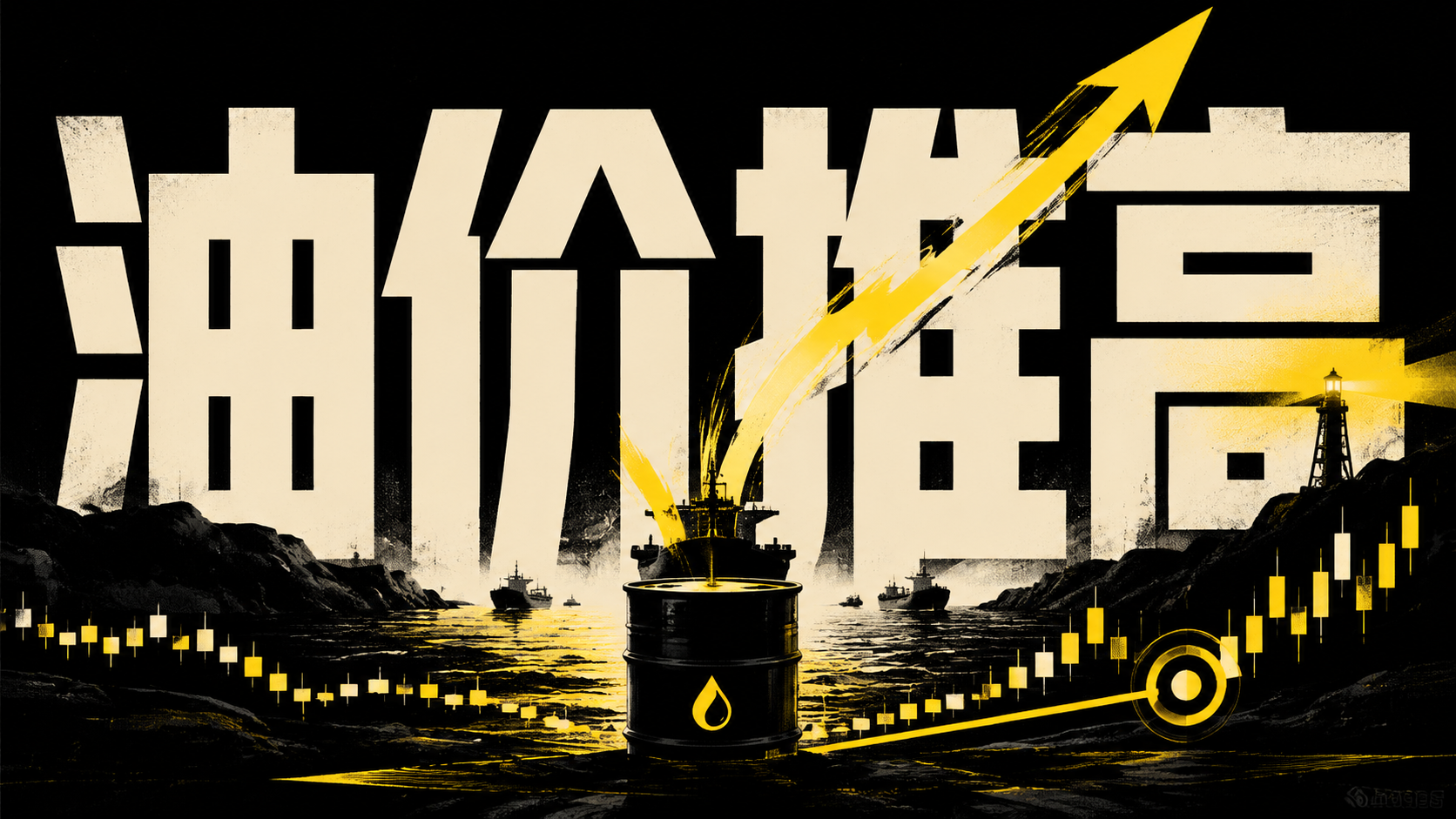
On May 8, 2026, the Strait of Hormuz once again became the focal point of global attention: first, the Iranian Islamic Revolutionary Guard Corps confirmed earlier that day there was a "sporadic conflict" with American warships in this critical waterway, and within about two hours, multiple gunfire sounds were reported near the strait, with unexplained explosions occurring in the Iranian Sirik region close to the shipping lanes; almost simultaneously, senior Iranian lawmakers warned through the media that from now on, American maritime blockade measures would face military responses from Iran, indicating that the long-awaited standoff in the Persian Gulf was pushed to a more public and uncompromising stage. The problem is that this narrow waterway accounts for about one-third of global maritime oil trade, and any "accidental escalation" could quickly amplify in the market into a trigger for rising oil prices, renewed inflation expectations, and forced rewrites of interest rate paths across countries. Each repricing of energy risk premium would ultimately reflect back on the strength of the dollar, real interest rates, and valuations of risk assets, including every chip on the chain. Under the shadow of such geopolitical fire, whether BTC and ETH will be treated by funds as "digital safe-haven assets" to hedge against inflation and sanction uncertainties, or whether they will be the first high-risk chips thrown overboard amid rising liquidity-tightening expectations, is the core of this fierce market game far from the sounds of gunfire in the strait.
Loaded in Hormuz: The Cost of Choking the Oil Arteries
The Strait of Hormuz is already the most fragile throat of the global energy system, with about one-third of global maritime oil trade passing through here. As soon as someone pulls the trigger in this waterway, the entire global oil price pricing model needs to be rewritten. On May 8, 2026, from the confirmation by the Iranian Islamic Revolutionary Guard Corps of a "sporadic conflict" with American warships in the strait waters, to multiple gunfire reports within two hours near Hormuz, and the unexplained explosions in the Iranian Sirik region close to the shipping lanes, the question of whether the incident was accidental or intentional became less important for traders; what mattered more was: would the shipping lane be accidentally bombed or closed, and would oil tankers and insurance companies choose to detour or halt operations directly?
At the macro level, this uncertainty will first be written into the "risk premium" of oil prices: even if the physical flow is not temporarily interrupted, the war zone surcharge on shipping insurance and the increase in freight rates would effectively add a layer of invisible tax to every barrel of crude oil, while the distant months of the futures curve will start to reflect the probability distribution of supply disruptions. Once oil prices are pushed up by geopolitical premiums, the transmission chain is clear—global inflation expectations rise, central banks around the world are forced to reprice their monetary policy paths, real interest rates adjust alongside the dollar's movements, and growth expectations are revised down under the pressure of "high costs + high interest rates," ultimately compressing the valuation elasticity of all risk assets, including the discount rates and risk premiums corresponding to on-chain assets like BTC and ETH that are seen as having high beta exposure.
Inflation Expectations and Interest Rate Games: Wall Street Repricing Risks
When gunfire and explosion reports come from the Hormuz area multiple times in a short period, Wall Street's first reaction is not the situation itself but rather how the oil price shock directly enters the inflation and interest rate models. Energy prices already hold significant weight in the main inflation indicator basket; if the risk of key shipping lanes being obstructed is priced into the oil price curve, the market instinctively raises inflation expectations for the upcoming quarters. Historically, every sudden rise in oil prices has been accompanied by a reimagining of the inflation path and the trajectories of major central bank interest rates: funds that were originally betting on "high interest rates are coming to an end" are forced to include "higher terminal rates and maintaining high levels for longer" in their scenario analysis, pushing back the previously expected easing pace. This shock occurs against the backdrop where the global economy has not fully emerged from a high-interest-rate environment, which means central banks have less policy space; if the oil price premium lingers, it will create a sharper game between "continuing to pressure inflation" and "crushing growth."
On the trading level, the combination of "high oil prices + high interest rates" first raises the required return rate for all risk assets: the stock market requires lower valuation multiples, credit spreads must give way to macro uncertainty, and crypto assets, being high beta exposures, correspondingly face steeper risk premium curves. If the market believes that central banks will still firmly hedge against the inflation uptrend brought by rising oil prices, both nominal and real interest rates will rise together; a stronger dollar will affect the relationships of BTC, ETH with traditional assets like US stocks and gold, thus exerting familiar pressures—more attractive risk-free yields and a stronger dollar diminish the relative appeal of holding on-chain assets as "stores of value," leading some funds to withdraw from the crypto circle back into interest-bearing assets and cash dollars. However, if the situation evolves into a typical "stagflation" narrative: growth expectations are revised down, yet central banks hesitate to continue raising interest rates due to recession fears, and inflation stubbornly sticks at high levels, the market will adjust both stock and bond valuations downward while reassessing the hedging roles of BTC and ETH under prolonged inflation and geopolitical uncertainty; each directional choice of real interest rates and the dollar index will become key trigger points for repricing the risk premiums of these two asset classes.
Bombardment on the Market: Is BTC Gold or High Beta?
When multiple gunfire sounds are reported near Hormuz within two hours, and shortly after senior Iranian lawmakers just declared military responses to American maritime blockades, the first reaction on the screen is often not "digital gold," but "cut everything first." In such sudden shocks, BTC tends to be classified as a high beta risk asset alongside the Nasdaq: leveraged funds long on futures, carry trades, and quantitative portfolios may be forced to deleverage to satisfy margin and redemption demands, uniformly wiping out high-volatility asset positions, with the liquidation chain amplifying selling pressure, leading to prices that are more closely aligned with "liquidity discount" rather than an assessment of long-term narratives.
However, after this round of passive squeezing is completed, the narrative will re-contest dominance: if the market sees the Hormuz incident as significantly raising oil prices and medium to long-term inflation risks, the two faces of BTC that previously showed "synchronization with the Nasdaq" and "periodically emerging independent safe-haven trends" will once again be brought out for comparative pricing. In traditional markets, geopolitical escalations often push up volatility indicators such as the VIX and rearrange asset correlation structures; applied to the market, this will mean a decline in leverage demand for crypto futures, a compression of funding rates and basis, a general upward revision of implied volatility in options, and widening premiums for tail calls and puts. Initially, BTC's correlation with US stocks will spike during the deleveraging phase, and only later, under the narrative of "anti-inflation" and "hedging geopolitical risks," will it have the opportunity to reprice itself toward a closer correlation with gold; what truly determines whether it is gold or high beta will be the repositioning of funds in terms of volatility and correlation after this conflict.
Miners and Dollar Assets Under Energy Shock
If the Hormuz risk premium truly pushes up oil prices, the first thing to reshape will be the hash power map. Energy costs are a core variable in Bitcoin mining expenses, and once oil, gas, and fossil fuel-based electricity prices rise, marginal cost-intensive mines will be forced to shut down, with hash power migrating to areas with lower costs like hydropower and nuclear power. For Middle Eastern miners dependent on cheap oil and gas for power, this means profits are squeezed and cash flows become more sensitive: when prices are under pressure, they are more likely to passively sell coins to lock in electricity costs, adding cyclical selling pressure to the spot market; on the other hand, the side with ultra-low-cost energy may increase their "BTC inventory" during volatility, using mined coins as assets to hedge against fluctuations in their local currency and energy revenues. This divergence in miners' financial structures will, in the medium term, change BTC's margin of safety and circulation rhythm through the concentration of hash power and miners' selling rhythm.
The other link is on the balance sheets of oil-producing countries. Rising oil prices typically improve the fiscal and current account of resource-rich nations, theoretically increasing their "ammunition" for allocating dollar assets, but when conflict overlaps with sanction risks, economies like Iran that have long faced energy and financial constraints will reassess between "buying more US Treasuries" and "reducing dependence on the US system." On one side, there is the continued reinvestment of incremental oil revenues into traditional dollar assets, reinforcing the dollar's position as a global pricing anchor, creating stronger nominal interest rate constraints on BTC and ETH; on the other side, there will be more reliance on on-chain channels to bypass the banking system, using crypto assets and previously reported cross-border tokens to complete value transfer and trade settlement, amplifying the marginal demand for dollar-denominated tokens like USDT and USDC in the region, treating them both as substitutes for bank deposits and using BTC/ETH as collateral moves that can be executed under sanction threats. The truly significant observation is whether structural turning points in the miner selling pressure curves and the net inflows of dollar tokens and mainstream coins toward Middle Eastern addresses will occur simultaneously to resonate with oil prices and sanction expectations.
Oil Price Curve, Risk Aversion Sentiment, and Next Steps for the Crypto Circle
The Iranian Revolutionary Guard Corps confirmed a conflict with American warships in the waters of Hormuz, and the cause of the Sirik explosion remains unclear. These two solid evidences escalate geopolitical tension from mere threats to substantive friction; next, the pricing of crypto assets will be rewritten along three macro channels: the first is the oil price itself and its term structure—if the market starts to pay higher forward premiums for the risks of passage through Hormuz, whether the oil price curve rises overall or has a high-low pattern will directly reflect the subjective pricing of future import-induced inflation; the second is the resulting inflation expectations and real interest rate paths, with the more stubborn the oil price risk premium, the less room central banks have to maneuver between "anti-inflation" and "anti-recession"; directional abrupt changes in real interest rates and the dollar index will become more likely; the third is the combined effect of these factors on the risk premium requirements for BTC and ETH: in scenarios of rising real interest rates and a strong dollar, BTC and ETH are more likely to be perceived as high beta positions to reduce, while during periods of prevailing long-term inflation anxiety, they may be re-labeled with either discounts or premiums as "digital gold," which will be reflected in the phase switching of correlations with US stocks and gold. What needs to be closely monitored in trading is not individual surges or declines, but structure: whether the put/call skew of BTC and ETH options continues to lean towards protecting downside or speculating on an upside break; whether the total supply of dollar-denominated tokens is expanding or contracting; if there are directional changes in net inflows across Middle Eastern addresses and others; and whether, during new rounds of repricing of the oil price term structure and the dollar index, BTC's correlation with traditional safe-haven assets experiences synchronized shifts again—these variables will determine whether the market interprets the conflicts in Hormuz as a brief risk reduction or the starting point for pricing the long-term geopolitical premiums on crypto assets.
Join our community to discuss and grow stronger together!
Official Telegram community: https://t.me/aicoincn
AiCoin Chinese Twitter: https://x.com/AiCoinzh
OKX Welfare Group: https://aicoin.com/link/chat?cid=l61eM4owQ
Binance Welfare Group: https://aicoin.com/link/chat?cid=ynr7d1P6Z
免责声明:本文章仅代表作者个人观点,不代表本平台的立场和观点。本文章仅供信息分享,不构成对任何人的任何投资建议。用户与作者之间的任何争议,与本平台无关。如网页中刊载的文章或图片涉及侵权,请提供相关的权利证明和身份证明发送邮件到support@aicoin.com,本平台相关工作人员将会进行核查。