Original link:ARK INVEST:From Binance To Beyond: CZ Predicts Crypto’s Next Phase
Original translation: CryptoLeo(@LeoAndCrypto)

CZ and Cathie Wood (“Wood姐”) do not have much in common, but every interaction generates industry ripples. Their only remaining association is based on the crypto industry: Wood姐 has long been bullish on Bitcoin, and her Ark Invest has published multiple reports assessing Bitcoin's future prospects; CZ is the creator of the mainstream exchange in the crypto industry and also maintains a long-term bullish outlook on Bitcoin.
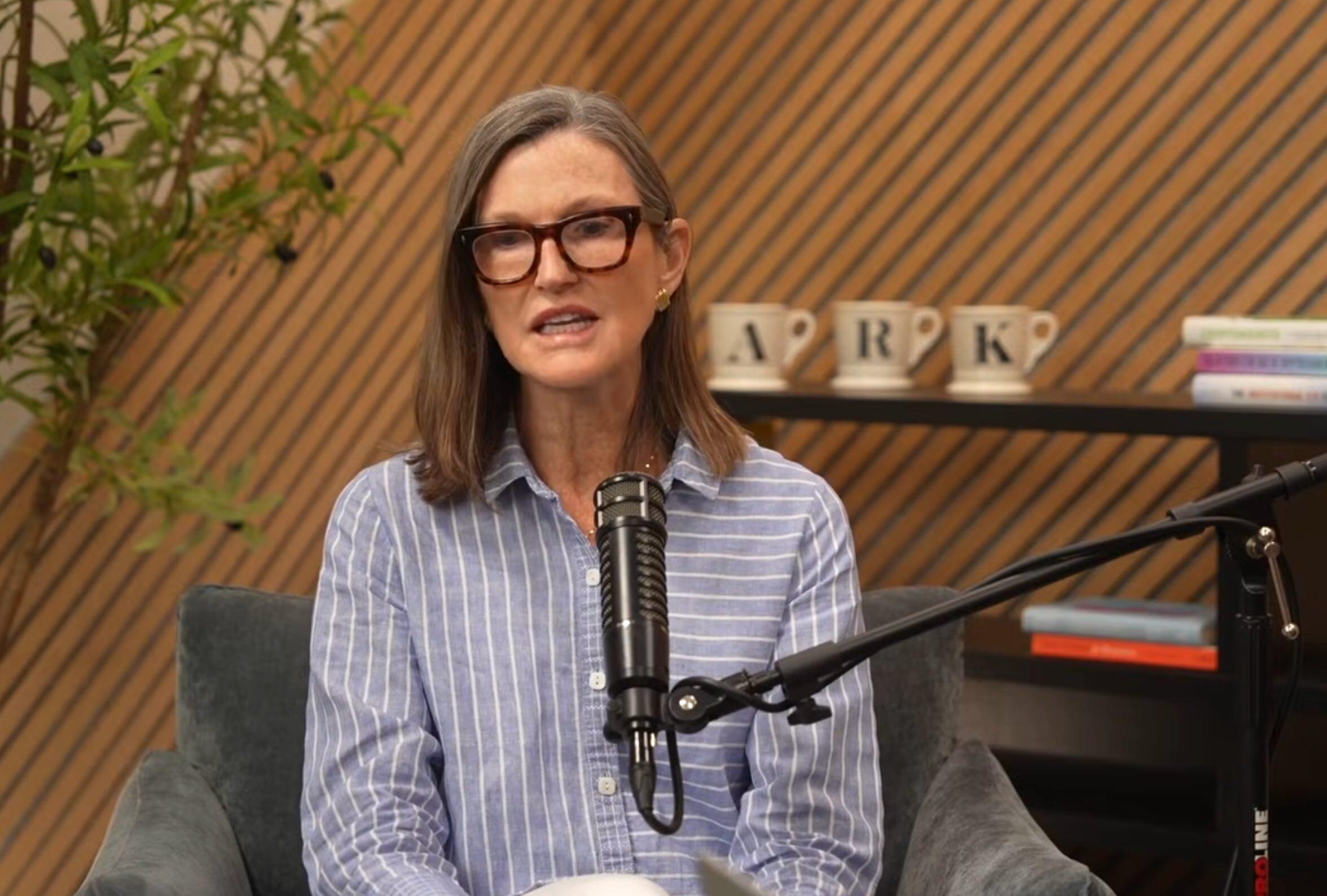
Recently, CZ made his first appearance on Wood姐's Ark Invest FYI podcast (click to watch). CZ shared insights about Binance and his views on the crypto industry; Wood姐 also recommended CZ's newly released book "Life at Binance" to the audience, stating that CZ's story is inspiring. Additionally, at the end of the podcast, Wood姐 mentioned the "1011" market event, clarifying that the drop was not triggered by Binance, but by tariff panic. The following content is a streamlined summary from Odaily Star Daily.
Traditional Finance Fuels Bitcoin, AI, Stablecoin, and Tokenization Development
Wood姐: Which areas do you think are developing slower/faster than you expected?
CZ: First, I thought crypto payments would have developed by now, but they haven't. Most people are not using cryptocurrencies for payments, and many merchants are unclear about the convenience of crypto payments, which are like Visa or Mastercard.
In the past year, the pace of institutional participation in cryptocurrency in the US has been very fast. The Biden administration has hindered crypto innovation, and many builders in large crypto projects have been sued by the SEC. People have turned to meme coins, while truly practical applications are rarely developed. However, I believe that the current crypto development is not in a vacuum, just slower than I expected. I hope US regulations supporting cryptocurrencies can be passed quickly, so we can see more of such development and innovation.
Many things have turned out differently than I expected, but over time we will fill the gaps and continue to develop.
Next, the rise of stablecoins and the popularity of AI agents, I believe AI will provide assistance in many areas. First, AI agents trade at volumes much higher than humans, and AI will use cryptocurrencies. They will not use traditional financial systems for payment, as crypto is more convenient. In addition, I believe AI will accelerate development speed; AI coding can drastically increase the speed of writing code, and while it is not fully automated yet (maybe it will be soon), AI can also help people build applications faster, such as easier-to-use wallets, more secure wallets, and faster chains.
The development of stablecoins has also exceeded my expectations. Back in 2014, when Tether was just starting out, and even in 2017 when Binance supported USDT, I thought stablecoins were just a stopgap for holding value pegged to fiat during market downturns. Another interesting thing is that I didn't expect gold trading to be so active in the crypto industry. I remember Binance launched gold tokens about two months ago, and now Binance has become the largest gold trading venue outside of traditional markets, with gold accounting for as much as 10% of contract trading volume, crazy! Moreover, Binance recently launched oil trading, and we have seen the integration of traditional assets and crypto, a trend that originally stemmed from the tokenization of assets like stocks.
Wood姐: Larry Fink probably foresaw asset tokenization two or three years ago, which also provided ideas for traditional finance. (Even during the Biden administration) why have these traditional assets gained such a large scale in the crypto industry in a short time?
CZ: I believe Larry certainly has his own connections, especially in the traditional financial market. The messages conveyed by Larry are seen as primary information by leaders around the world, other financial institutions, and traditional institutional investors. He has established connections with global leaders. Additionally, he is forward-looking, believing everything will be tokenized, and there will be sufficient trading volume. Frankly, although I had worked in the traditional finance sector, my understanding of the currency market is not as profound as Larry's. I was originally a technician; his understanding of the industry and his support have greatly propelled asset tokenization. What surprised me is that Binance now has over 300 million users, who actually have demand. I previously mentioned that the crypto field currently lacks high-quality assets; there haven't been many significant projects in the past four years, and people can only trade meme coins, which is just one category. Now, when tokenized assets are available for global crypto investors to trade, such as gold and oil, due to geopolitical tensions, asset volatility will increase, and the trading volume of quality assets like gold and oil will also rise; it's just a matter of time.
Wood姐: Do you think traditional finance accepts cryptocurrencies because they believe it will reduce costs and eliminate friction? Or do they accept cryptocurrencies because they see this technology stimulating more financial activity?
CZ: That's a great question; I believe they see the potential of cryptocurrencies. The trading volume on Binance or other crypto exchanges/chains is there, and the potential is great, so they must catch the trend. On the other hand, this new technology also reduces transaction fees and costs. So, profits may decrease in the short term, but trading volume will increase. Ideally, if you reduce fees by 50%, your trading volume could be 2 times, 5 times, or even 10 times what it was before. As this technology develops, fees will continue to decrease. If you don't lower fees, you will lose market share. Traditional finance has realized this, and that is another factor driving them to adopt crypto: charging fewer fees from customers to attract more customers.
Wood姐: Yes, when we enter a technology-driven disruptive period, the traditional world usually resists it. But now they seem to be accepting new technologies. Perhaps it's because, as you said, not accepting will result in a loss of market share. But in comparison, crypto-native participants are more likely to be the winners since they are less constrained; how do you see that?
CZ: I think there exists a very delicate balance. Some CEOs of large traditional financial companies might think, I will not stay in this company for too long, maintaining the status quo is enough. They just want to do their jobs well. But the next CEO might think, I will be in this position for another five or ten years; I hope the company can take a long-term perspective. Furthermore, public companies typically have shorter time frames and need to release earnings reports every quarter. So, there is always a balance between short-term and long-term thinking. However, if a company only focuses on short-term thinking without adopting a long-term strategy, they will incur losses.
As you said, crypto-native companies do not have that burden; they are still startups. They will adopt innovative strategies. Private companies usually have a longer-term vision than public companies. So, adopting crypto in the short term might be detrimental to public companies, but in the long run, the trend of crypto adoption will continue. Whoever adopts better technology that saves costs and improves efficiency will come out ahead; failing to do so will negatively impact them. Thus, even if the CEO of a large traditional financial company does not change in the next two years, they will eventually lose a significant amount of business and be forced to change.
Blockchain technology and AI are rapidly integrating, and the speed of AI development is faster than any other technology we have seen, providing feedback more quickly. CEOs may think that if they do not use AI and blockchain, they may be fired within a year. In the internet era, if a financial company’s CIO does not consider cloud computing, they might be fired. If the CTO does not consider AI, they will soon be at risk. If the CEO does not consider blockchain, they might also be eliminated. Perhaps we will soon reach that stage.
Everything Exchange: Keep an Open Mind and Embrace All Integrations
Wood姐: Regarding Binance, there are so many competitors in the market, and they also have substantial resources; I want to know how you have maintained your industry-leading position over the years?
CZ: There are several different reasons. First, we have always prioritized user protection over our profits. So whenever there is an emergency, we first protect users. Users also know this. Second, we are fortunate that our business coverage is broad. In the past decade, regulatory uncertainty has been quite severe. Some trading platforms may be restricted by the countries they belong to; if that country supports cryptocurrency, they do well; if that country is against it, they do poorly.
Binance goes where it is supported. Binance attracts a small portion of users from each country or countries that support cryptocurrency, and these users add up to a large number, and having a large number provides the best liquidity. When you have the best liquidity, users will choose you, triggering a network effect. Up until now, we have kept the company’s costs at a very low level; Binance has a few offices, all small ones, which do not waste much money. Our remote work also keeps our costs very low, and I really hope Binance can maintain the feeling of a startup, even though it is now a massive team.
Moreover, there is a trust issue in the cryptocurrency industry, especially for CEX. We have long ranked first; we have large trading volumes, and we have always been very safe, which has established trust. Some similar companies in the US have very high costs and fees, but American users have no choice but to use those platforms, which has virtually formed a monopoly in their own market. I believe the US should open up to global competition, and prices will come down. Consumers will have more choices, which will also increase the penetration of cryptocurrency in the US, benefiting current US companies.
Wood姐: How do you view the future of cryptocurrency exchanges like Binance and Coinbase? We have discussed other asset categories going on-chain; do you think the "all-purpose exchange" Coinbase, which we often hear about, will actually trade all asset categories on Coinbase? For example, there are prediction markets like Kalshi and Polymarket emerging; how do you view the future development of these exchanges?
CZ: The industry may evolve in several different ways. Everyone wants to be an all-purpose exchange that trades everything. This will largely happen. Binance is now trading oil and gold, which I couldn't even imagine a year ago. Coinbase is likely to do the same thing, followed by other exchanges. Binance has also recently integrated with prediction markets, and I believe other exchanges will do similar things; some exchanges may even launch their own prediction markets if they get approved.
With the emergence of new technologies, a platform cannot exclude middle players; you don’t need so many different platforms. We dislike using the word "centralized," but that is what centralization/concentration is—the network effect. At the same time, there are regional differences and user differences. For instance, non-technical users entering the crypto space may prefer to use CEXs rather than DEXs. However, as technology becomes more sophisticated and regular people (non-tech users) can use self-custody wallet tools more easily and securely, they might turn to DEXs. Therefore, it depends on which side develops faster. If suddenly 10% or 20% of the global population turns to cryptocurrencies, then the scale of CEXs will rapidly expand, while DEXs will remain stable for a while. However, if people gradually and increasingly turn to DEXs, then we might see the development speed of DEXs outpace that of CEXs. Currently, when using DEXs, you still need to handle wallets, addresses, etc., which may be a bit complicated for some people. Most non-technical users do not want to deal with these. Thus, it is difficult to say which direction it will go.
I believe that with the SEC announcing a positively encouraging regulatory stance towards DEXs, the US may loosen policies and trading categories, and the CFTC also seems very supportive of the derivatives market.
Exchanges need to think about how to integrate with this or simply launch derivatives markets. I think all of this could happen, and the US currently has a regulatory policy advantage. We may see exchanges in a certain region developing faster than in other parts of the world under favorable regulations. It’s hard to say, but for Binance, I encourage Binance to maintain an open mind and be open to all open places.
Coinbase has a great opportunity. You have invested in Coinbase, and they have performed excellently over the past 14 to 15 years, enduring all regulatory issues in the US. I think for a long time, multiple exchanges will continue to coexist.
The Stablecoin Space May Flourish
Wood姐: Regarding regulation and the US, we are still waiting for more clarification, especially on stablecoin yields; how do you view this issue? I know you and Tether, or Binance and Tether, have maintained a very close relationship over the years. We know Tether is unlikely to yield interest in the short term; how do you see this situation?
CZ: There is a small correction here; in fact, Binance has no relationship with Tether. Binance simply launched USDT early on, which aided Tether’s growth. We have no business relationship, no equity stakes, no revenue sharing, and even no commercial contracts.
I personally believe stablecoins should generate yields for users, but Tether will not do that in the short term. Since they are the early stablecoin giant, they already dominate the market even without doing so. But they also leave room for competition, as other emerging stablecoins are offering yields.
Regarding stablecoin yields, there are various ways to accomplish this. I think it is meaningless to say that stablecoins cannot provide benefits to users. Regulations could stipulate that stablecoins cannot offer yields, but people will find other ways. There have been discussions before, such as activity-based rewards, right? You can set up different types of accounts, different activities, different staking methods; there are always many different ways to pay people yields. If you are a business wanting to reward users, there are many different ways to do that.
I don't see how yield provision could be completely restricted. A business wanting to offer zero-fee trading can be seen as providing yield to users to some extent. At the same time, I realize we want to integrate with traditional finance, but we don't want to completely disrupt or destroy them, so we need to give them time to respond to decide on regulation.
However, soon, there will be stablecoins in the US or elsewhere offering good yields to users while also being easy to trade; such stablecoins will prevail. Currently, Tether dominates, but USDC is also significant, and USD1 is growing quite rapidly. We are also seeing other stablecoins outside of the US growing quickly. So I believe the stablecoin field is an important part of cryptocurrencies, whether it's low fees, user rewards, or any business that can provide better returns to users; they have a significant advantage. The competition will be fierce, and if the US does not allow stablecoin yields, international stablecoins may stand out in the short term.
Wood姐: Very interesting. I have discussed this issue; for example, people worry that traditional institutional deposits will flow to stablecoins. Do you think this concern is reasonable, or is it more like banks spreading fear?
CZ: I think there is some reason to be concerned. On one hand, we are just putting assets in a relatively safe place, but it can generate interest, which is one way. However, once you go down the interest rate route, people will demand higher rates, and the way to achieve higher rates is to invest the assets into higher-risk investments. Compared to banks, which operate on a fractional reserve basis, banks invest a significant amount of money elsewhere, and they may not be able to retrieve funds in time, so bank runs are very frightening for banks.
So far, most cryptocurrency exchanges and even stablecoin issuers maintain a 1:1 reserve of customer funds, and some of the top exchanges are undergoing audits. So, my personal view is that we should preserve this tradition in cryptocurrencies, which is valuable, whereas this does not exist in the traditional finance industry. Cryptocurrency exchanges and stablecoin issuers should maintain a 1:1 peg and keep a 100% reserve. Of course, they can also generate yield in other ways. For the yields we generate, if legally permissible, I actually encourage companies to pass them on to users, and it is very likely that more people globally will use these stablecoins unless they are prohibited from holding them. Fundamentally, users will consider rewards, economic benefits, ease of use, and security in stablecoins.
Wood姐: When it comes to the stablecoin and cryptocurrency ecosystem, is there a conflict where only a few large stablecoin issuers can prevail? You also mentioned earlier that in the early stages, we will see many stablecoins; what do you think the final result will be? Is it winner takes all, or the opposite?
CZ: It may be winner takes all. But in the short term, we will still see more competition rather than consolidation. Historically, issuing stablecoins has been quite difficult. Before the Trump administration, governments worldwide were quite hostile toward cryptocurrencies. For years, every time Tether disclosed its bank accounts, those accounts would be closed. So, when the US government tried to shut them down, Tether somehow managed to maintain a bank account with significant assets, which seems like a very difficult skill to master. To this day, I still don’t know how they did it, which might be the reason for their massive scale. Now I believe that this barrier no longer exists; anyone can issue stablecoins—you can open a bank account, get the bank to support you, be audited, and get a 1:1 backing; the threshold for issuing stablecoins has been greatly lowered.
The trick to promoting stablecoins is how to get your stablecoin accepted and used by everyone. This is a challenge in marketing and growth that many companies can overcome, especially if they can provide better incentives. So in the short term, we will see many different stablecoins emerging, and we only discussed dollar-pegged stablecoins; many other countries will want to issue stablecoins pegged to their local currencies. Currently, dollar-pegged stablecoins enhance the US dollar's dominance globally, and every country wants to see its currency used as much as possible. In addition, dollar-pegged stablecoins typically use US Treasuries as backing, which is a way to indirectly sell US Treasuries to global crypto users. Most other countries also want to do the same, as every country wants to sell its own government bonds. Many countries have told me that they want to raise more funds and attract more investments into their territories.
Using stablecoins to sell bonds is an indirect but very effective means. Thus, in the short term, we will see more stablecoins appearing. Whether this approach will be adopted in the long term depends on network effects.
Wood姐: Why haven't we seen non-USD denominated stablecoins yet? For instance, there are euro stablecoins, but they are small in scale; there are also Mexican peso stablecoins, but none of these are as efficient as USDT or USDC, or users may not want to use local currencies and prefer to hold dollars?
CZ: Based on my limited understanding, I think the main reason is cost. From rumors I've heard from other stablecoin projects, the cost of issuing euro stablecoins is quite high, requiring very large insurance policies and extensive capital allocations. Startups find it challenging to achieve this, and the market is not yet fully matured; most people are keen to trade dollar-pegged stablecoins. This is a “chicken or the egg” problem. In Mexico, the issue may lie in banking access; different countries have slightly different problems.
Hong Kong has just issued two stablecoin licenses to HSBC and Standard Chartered, but banks usually act very cautiously and slowly; they may not have the same cryptocurrency characteristics as some native crypto stablecoins. So far, other fiat stablecoins have not gained traction, so dollar-pegged stablecoins have a significant advantage right now. Still, other stablecoins are also working hard, and we will wait and see.
Quantum Computing Threat Not Imminent
Wood姐: CZ, you have some very interesting views on quantum computing. I know you have seen content like "Quantum Thread" and "Bitcoin"; we are all in the crypto industry, and Binance is a large holder of these cryptocurrencies. Do you think we are overly worried about quantum computing?
CZ: First of all, I am not an expert in this field and don’t know more than others. I recently spoke with some young tech people. My intuition is that Bitcoin will receive a proper upgrade; if not, I hope it can be frozen, destroyed, or otherwise handled before quantum computing can break it. I think this may be more of a philosophical community voting issue. People, especially enthusiasts of Bitcoin, do not want centralization. I also think the statement by Google's quantum team is somewhat exaggerated, similar to advertising. There is an old saying: people are usually overly optimistic about what can be achieved within a year but underestimate what can be achieved in ten years. If your team is currently researching quantum computing, they are making good progress, but they predict for 2029, so those predictions are usually somewhat optimistic.
We do need to address quantum computing, but I am not too worried; more computational power is always good. We already have quantum-level encryption algorithms; this is not an unanswerable question; we just need to coordinate.
I do not know who will coordinate this; perhaps it will be the Bitcoin core developers. More likely, some other blockchains may upgrade first. Other blockchains may be more centralized. Vitalik can provide suggestions for Ethereum, and Sun Yuchen made some suggestions for Tron yesterday. Maybe some other protocols will upgrade first, and then we will deal with Bitcoin.

Misunderstanding Between Wood姐 and Binance Resolved, CZ Remains Bullish on Bitcoin
Wood姐: Before we finish, I want to hear your views on the current situation of Bitcoin, whether the four-year cycle theory holds; are we experiencing this cycle and preparing for the next one? Do you think Bitcoin will reach new highs again? Are you still bullish on Bitcoin? Also, I want to clarify that I previously mentioned in a news program that Binance triggered the 1011 crash, but in fact, Binance did not cause the flash crash; I think everyone understands that the market was then affected by tariff issues causing increased volatility, but we have moved past the impact of that event.
CZ: Firstly, thank you for saying that. That quote of yours was widely quoted by Chinese media, and then people complained that Binance caused the 1011 crash; they clipped video segments. I am very glad you can clarify this now, just like you are doing in the podcast; some things were taken out of context. But it’s okay; I believe we have moved past the impact of that event.
The 4-year cycle or non-4-year cycle, there are still two forces at play; I do not know which will prevail first. We saw Bitcoin decline in 2026, which aligns with the four-year cycle. 2022 was also a winter, 2021 was a bull market, and 2025 will also be a bull market. However, there are also two other things that are very favorable for cryptocurrencies: President Trump views the stock market as his performance indicator, and he will do everything possible to boost the stock market. When the stock market performs well, people have more disposable cash. They will diversify their investments into the cryptocurrency space, causing cryptocurrencies to rise.
With increasing geopolitical tensions, gold performs well, and although gold prices are currently unstable, the gold market is very active, so the Bitcoin market should also be active. In recent days, Bitcoin prices have risen again. I think a good stock market will be very favorable for Bitcoin and the entire cryptocurrency market. This momentum might be very strong before the midterm elections; Trump will do everything he can to maintain the stock market, even though I don't know him personally and have never spoken to him, the US market has a considerable influence on other markets, including the global cryptocurrency market.
I still very much hope that this year might be different; this recovery could happen faster than past bear market recoveries. We may have passed the most difficult times; PS, this is not financial advice.
Wood姐: I do believe that traditional financial institutions support this rising trend because institutions have been trying to learn and understand the Bitcoin four-year cycle theory. They have been waiting for a pullback, and now based on our data, they seem to be starting to act, with a higher frequency of actions compared to the past few years.
CZ: Yes, regarding institutional investors, your viewpoint is very accurate. Most institutional investors, once entering the market, are much slower in decision-making. They have various complex processes to go through, and once they enter the market, they won’t short out in a month; they need a month to buy a billion dollars' worth of Bitcoin and hold it for years. Therefore, most institutional investors are long-term holders; their purchase of ETFs stabilizes prices. I remain optimistic about Bitcoin's future.
At the end of the podcast, the Ark Invest host also promoted CZ's new book, asking where CZ could obtain his new book, to which CZ replied, Amazon.
Recommended Reading:
Ark Invest Releases Bitcoin Valuation Model: BTC Expected to Start at $500,000 Each in 2030
Ark Invest's "Big Ideas 2026" on Crypto: BTC Market Value Expected to Rise to $16 Trillion by 2030
Old Case Reevaluated: The 1011 Crash Deriving the Exchange and Ecosystem Opinion Wars
免责声明:本文章仅代表作者个人观点,不代表本平台的立场和观点。本文章仅供信息分享,不构成对任何人的任何投资建议。用户与作者之间的任何争议,与本平台无关。如网页中刊载的文章或图片涉及侵权,请提供相关的权利证明和身份证明发送邮件到support@aicoin.com,本平台相关工作人员将会进行核查。


