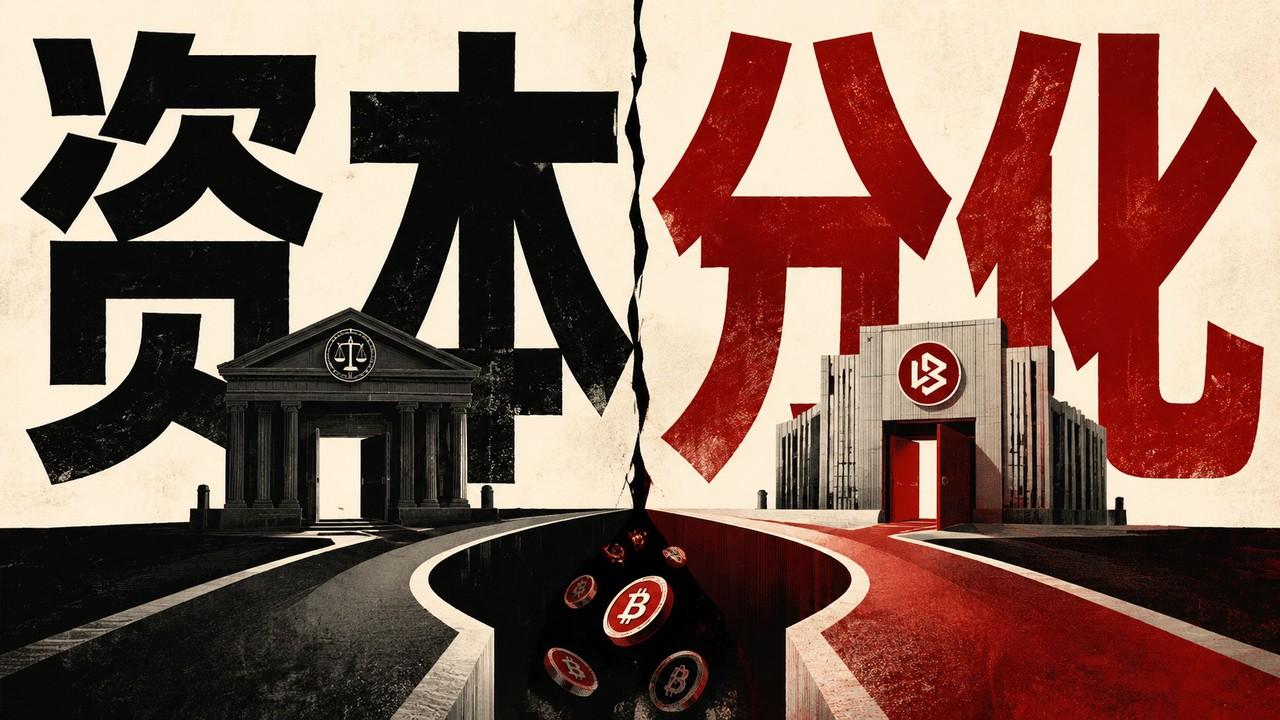
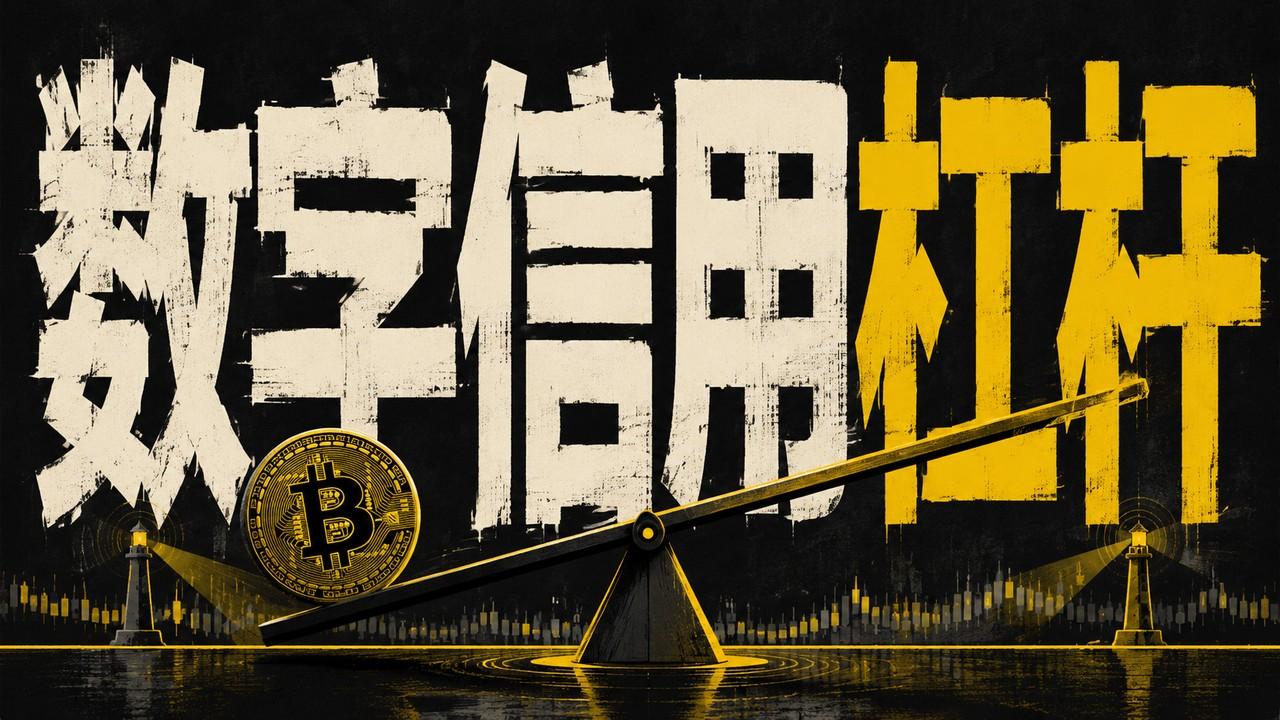
On May 7, 2026, an invisible "fluctuation switch" was pressed. Max Layton, the global commodities research director at Citigroup, reminded clients that oil prices would continue to swing wildly as long as it was unclear whether Iran and Trump could reach an agreement; the entire oil market was being pulled by news and geopolitical sentiment. At the same time, reports indicated that the three major U.S. stock indices opened slightly higher on this day, with gains capped at about 0.5%. Risk asset sentiment was mildly bullish, yet there hung a string that could be pulled at any moment by oil prices. During the same time window, institutions and regulators revealed their cards: Bitwise announced the takeover and launch of the first tokenized crypto basis/arbitrage fund USCC, with itself as the investment manager, Superstate providing the technological infrastructure, and its chief investment officer publicly stating that "eventually every fund under its wing will be tokenized," betting the future of traditional asset management on the blockchain; on the DeFi side, Lido disclosed the progress of the EarnETH vault following a security incident with the Kelp protocol, initiating first-loss protection through Snapshot governance voting, with the first-loss mechanism fully covering user losses, completing a risk management closed loop with a compliant on-chain decision; at the regulatory and technological boundary, U.S. Senator Elizabeth Warren sent an open letter to Meta CEO Mark Zuckerberg, calling for increased transparency regarding payment and token-related plans and warning that they could impact the competitive landscape and financial stability. Under the backdrop of uncertain oil prices intertwined with accelerated asset tokenization, the game between traditional finance, crypto institutions, and regulators is clearly escalating.
Citigroup Bets on News-Driven Oil Market Volatility
Looking at the current oil market through this timeline, Max Layton's judgment was almost like issuing a military order to traders to "watch the news." On May 7, 2026, he clearly pointed out that until the key question of whether Iran and Trump could reach an agreement was clarified, oil prices were expected to continue to fluctuate wildly, emphasizing that the current oil market would be highly driven by relevant news, with geopolitical factors re-emerging as the dominant variables in commodities. The briefing did not provide specific prices or declines for Brent or WTI; the related figures are still pending verification, which underscores one point: at this moment, what matters more is not a certain price level itself but which headline might suddenly rewrite the market's imagination regarding future supply and demand and sanction pathways.
This pattern of "news-driven volatility" will first reflect through risk appetite channels onto broader assets. On that day, the three major U.S. stock indices opened slightly higher, with gains all within about 0.5%, indicating that amidst high uncertainty in oil prices, the overall risk asset sentiment had not been crushed, leaning more towards exploratory optimism. For the crypto market, the briefing also did not provide specific prices or trading data for any cryptocurrencies; we cannot deduce the precise correlation between oil prices and cryptocurrency prices from the numbers, only capturing structural clues through sentiment and narrative: on one side is the volatility expectation ignited by geopolitical news at any moment, on the other side is the ongoing struggle between institutions and regulators over tokenization and new fund frameworks. In the absence of a verifiable price pathway, what is truly being traded is more about the different versions of future macro storylines rather than a calculated target range.
Bitwise Launches Tokenized Basis Fund
On the same day that the macro narrative was being rewritten repeatedly, Bitwise turned its attention to finer financial structures—announcing the launch of the first tokenized crypto basis/arbitrage fund USCC. This fund did not start from scratch but took over the previously managed product of the same name by Superstate, with Bitwise stepping into the limelight as the investment manager, while Superstate retreated backstage to provide underlying technical support: the former is responsible for squeezing every percentage point of risk-return space between basis and arbitrage strategies, while the latter is responsible for minting fund shares as on-chain certificates, converting "positions" into digital securities that can be recorded and settled on-chain. Unlike many on-chain products aimed at retail investors, USCC opted for private placement, open only to accredited investors, wrapping tokenization within the shell of traditional compliant asset management, merging a familiar private placement framework with a novel on-chain vehicle.
Bitwise's chief investment officer Matt Hougan, while introducing USCC, threw out a more long-term script—stating that in the end, every fund under the company would achieve tokenization. For the traditional asset management industry, this statement points towards an almost entirely digitized and programmable product catalog; for the on-chain world, it signifies that the yield curves previously confined within spreadsheets and custodial accounts will be split into trackable, settlement-ready, and even DeFi-interactive certificates for accredited investors. According to market reports compiled by AiCoin, within the same time frame, the performance of crypto-related U.S. tokens diverged, with CRCL rising and CIFR falling, indicating that the capital markets are also making directional choices around the theme of "tokenized asset management," while USCC appears to be Bitwise's first official signature betting on this direction.
In the Shadow of the Kelp Vulnerability, Lido Protects Users’ First Loss
As tokenized funds pave the way on one side, on the other, the well-established DeFi liquid staking protocol is responding to a sudden security test. After a security incident with the Kelp protocol, Lido Finance announced that its EarnETH vault connected to Kelp was affected, requiring related positions to be managed through an established risk control framework. EarnETH already embedded a first-loss protection mechanism; when this "buffer" is consumed below a 1% threshold, the rules dictate that team decisions can no longer be unilateral but are instead left to community governance to decide how to share the losses. Surrounding the issue of "whether to continue providing a backstop for users," Lido initiated a vote on Snapshot, with the proposal reaching the quorum and passing, meaning that user losses will be fully covered by Lido Earn's first loss fund, and ordinary participants will not need to bear the direct costs of this security incident. Lido also stated that the EarnETH vault would reopen once the Kelp protocol is restored, but did not provide a specific timetable.
This pathway for addressing the situation—from the disclosure of the event, triggering the first loss threshold, to the Snapshot voting and execution of results—almost completely demonstrates how on-chain governance can intervene in risk management in a closed loop: risks are first preset in the product structure's "first loss layer," and as the buffer approaches its limit, holders then decide through voting how to allocate risks between the protocol and users. For Lido, choosing to have the first loss fund absorb the entire impact is a decision favoring brand reputation over capital costs; for the broader DeFi ecosystem, this serves as a clear and traceable on-chain signal—complex yield products can no longer rely solely on vague "high yield high risk" disclosures but can be required to provide semblances of first loss mechanisms, threshold triggers, and public governance in combination, thereby regaining user trust gradually lost in an environment rife with security incidents.
Warren Probes Meta's Payment Plans
At the same time that the on-chain world is clarifying risk with voting and first loss mechanisms, the U.S. political scene has turned its focus towards another end of power concentration. Senator Elizabeth Warren sent an open letter to Meta CEO Mark Zuckerberg, specifically demanding that the company disclose the details of its payment and possibly token-related plans, directly pointing out the current "insufficient transparency" in disclosures. In the letter, she was not satisfied with a vague statement of "exploring innovative business," instead calling for Meta to outline specific business structures, how to integrate with existing payment systems, and the boundaries and control arrangements regarding data usage and asset custody.
Warren's concerns are less a critique of a single product than a premonition of a set of potential consequences. She warned that payment or token products reliant on Meta's existing user base and data advantages could reshape the market competitive landscape, amplify the erosion of user privacy, and have an irreversible impact on the integrity of payment systems and financial stability. Notably, current discussions around Meta have not entered the realm of specific product approvals but have concentrated on systemic risks and consumer protection, continuing the long-standing vigilance of the U.S. Congress over large technology companies' forays into financial and crypto businesses, and sending a clear signal: as capital and technology drive payment tokenization, Washington is preparing to make its regulatory questionnaire longer and more detailed.
Seeking a New Order Between Volatility and Regulation
Bringing the perspective back to the events around May 7, 2026, this series of signals is compressed into the same time window: Citigroup's commodities department reminds us that oil prices will continue to fluctuate wildly under news-driven conditions until it is clear whether Iran and Trump can reach an agreement; Bitwise wraps traditional basis/arbitrage strategies in a token shell with USCC while publicly viewing "the tokenization of all funds" as the endgame; on-chain, Lido utilizes first-loss protection for EarnETH in the Kelp incident and provides a model for DeFi risk control and governance through Snapshot to backstop users; Washington, through Warren's letter to Meta, integrates the involvement of large tech companies in payments and token businesses into the narrative of potential "systemic risks." The macro market, traditional asset management, on-chain protocols, and tech giants have thus been drawn into the same narrative chain of regulation and risk, with a new order yet to be formed. The key variables to keep an eye on will be how geopolitical negotiations redefine oil price expectation curves, the compliance and operational outcomes of tokenized funds in actual implementation, whether large protocols like Lido can continue to close the risk management loop in the next security incident, and whether U.S. regulators choose to extend the questionnaire or gradually converge on enforceable rules amidst trial and error.
Join our community to discuss and become stronger together!
Official Telegram community: https://t.me/aicoincn
AiCoin Chinese Twitter: https://x.com/AiCoinzh
AiCoin On-chain: https://aicoin.com/hyperliquid
AiCoin Exclusive Hyperliquid Benefits: https://app.hyperliquid.xyz/join/AICOIN88
AiCoin Exclusive Aster Benefits: https://www.asterdex.com/zh-CN/referral/9C50e2
免责声明:本文章仅代表作者个人观点,不代表本平台的立场和观点。本文章仅供信息分享,不构成对任何人的任何投资建议。用户与作者之间的任何争议,与本平台无关。如网页中刊载的文章或图片涉及侵权,请提供相关的权利证明和身份证明发送邮件到support@aicoin.com,本平台相关工作人员将会进行核查。