Original author: David George
Original translation: Felix, PANews
Editor's note: The current AI "doomsday theory" seems to have become mainstream opinion, with panic over "AI taking jobs" and "unemployment" spreading globally. People from all walks of life are proposing strategies to address the disruptive innovations that AI is about to bring. However, a16z general partner David George writes that the "doomsday theory" is simply absurd, lacking evidence and imagination, and failing to understand humanity. Below is the full text.
The "permanent underclass" theory proposed by AI panic theorists is not convincing. This is not a new phenomenon; it is merely a repackaged version of the "lump of labor fallacy."
The "lump of labor fallacy" claims that the total amount of work that needs to be done in the world is fixed. It assumes a zero-sum game between existing workers and anyone or anything (whether it is other workers, machines, or today's AI) that might do the same work. If the total amount of useful work that needs to be done is fixed, then if AI does more, humans must necessarily do less.
The problem with this premise is that it contradicts all our understandings of people, markets, and economics. Human needs and desires are far from fixed. Keynes predicted nearly a century ago that automation would lead to a 15-hour work week, but it turned out that Keynes's prediction was wrong. His assertion that automation would create "surpluses of labor" was accurate, but instead of sitting back and enjoying the ride, we found new and different productive activities to fill our time.
Of course, AI will definitely eliminate some jobs and compress certain positions (and there is evidence that this may already be happening). The landscape of the labor market will change, as always happens with each revolutionary technology that emerges. However, the idea that AI will cause permanent unemployment across the entire economy is poor marketing hype, bad economics, and a display of ignorance towards history. On the contrary, increases in productivity should lead to an increased demand for labor, as labor becomes more valuable.
Here are our reasons.
"Is humanity doomed?" Don't kid around
We agree with doomsayers that cognitive costs are plummeting. AI is becoming increasingly proficient in tasks that were until recently considered exclusive domains of the human brain.
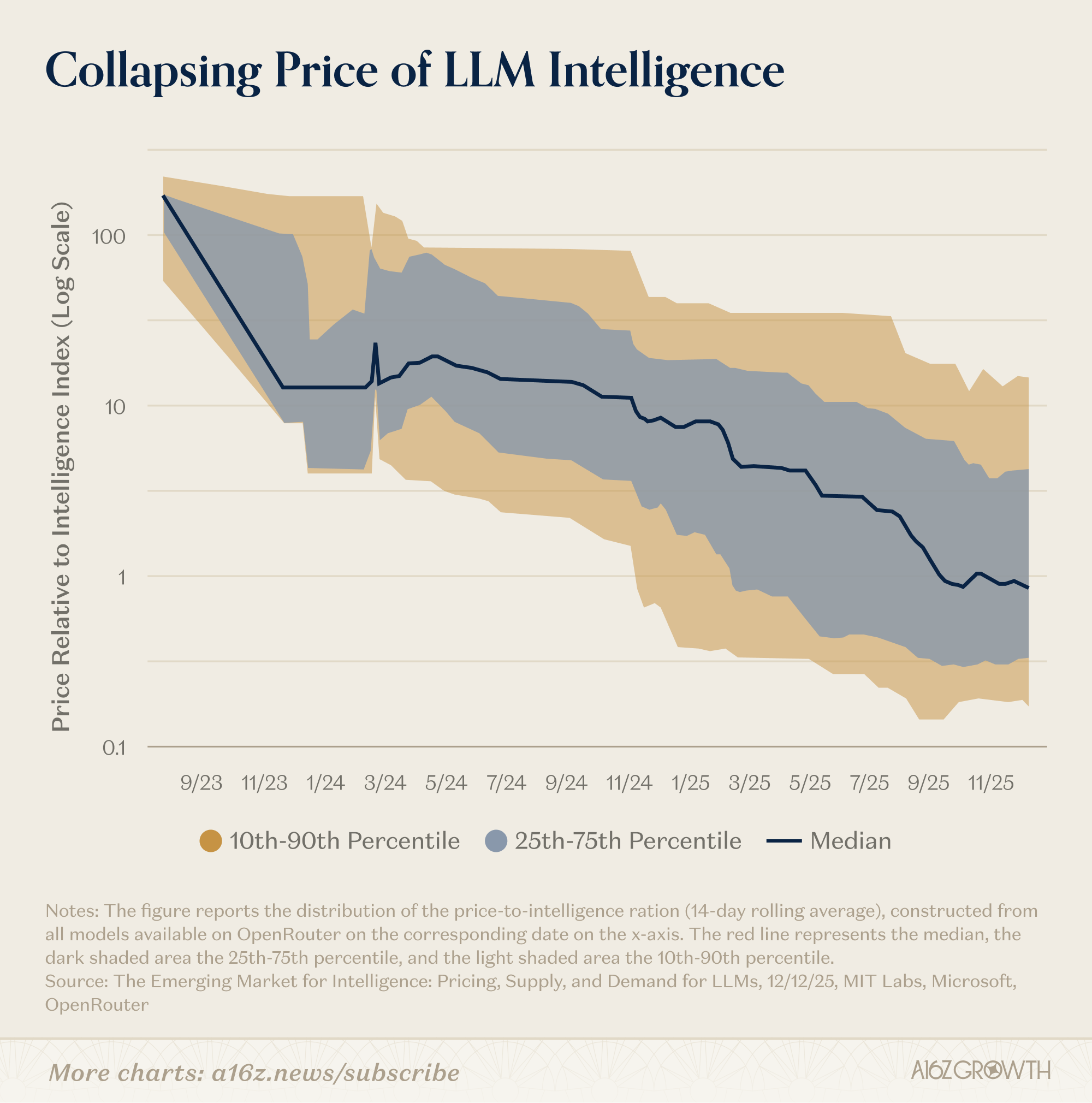
Doomsayers claim: "If AI can think for us, then humanity's 'moat' will disappear, and our ultimate value will go to zero." Humanity is done for. Clearly, we have completed all the thinking we need or want, and now AI will take on more and more of the cognitive load, leading to the gradual obsolescence of humanity.
However, the fact is: precedents (and intuition) indicate that when the cost of a powerful input decreases, the economy does not stagnate. Costs decline, quality improves, speed increases, new products become viable, and demand expands outward. Jevons's paradox is proven once again. When fossil fuels made energy cheap and abundant for the first time, we didn't just render whalers and lumberjacks unemployed; we also invented plastics.
Contrary to the views of doomsayers, we have every reason to expect AI will have a similar impact. As AI takes on an increasingly larger cognitive load, humans can free up their hands to explore grander new domains than ever before.
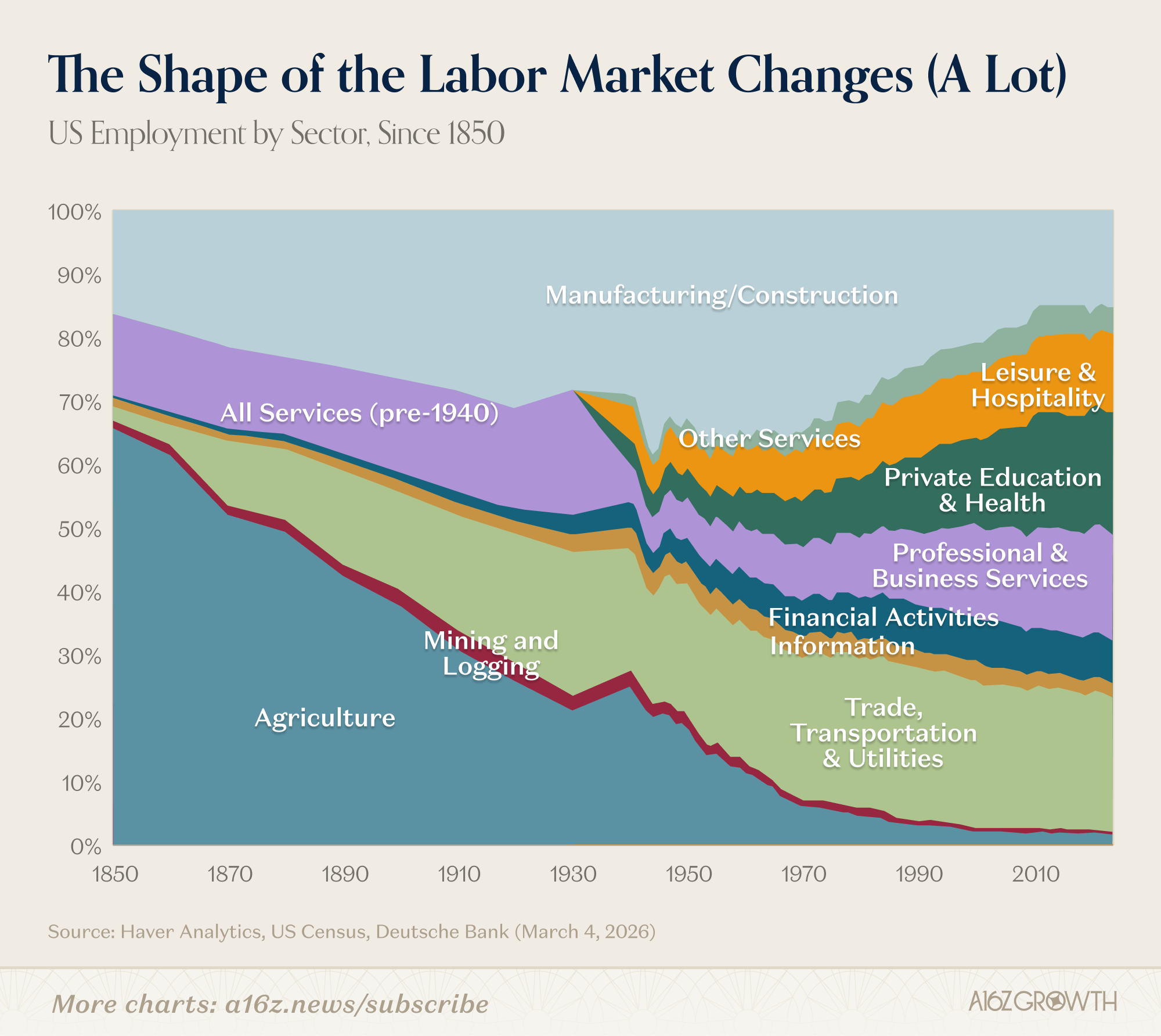
History shows that technological transformation must expand the economic pie.
Every "dominant economic sector" has been replaced by succeeding sectors of larger scale... which in turn further expands the economic scale.
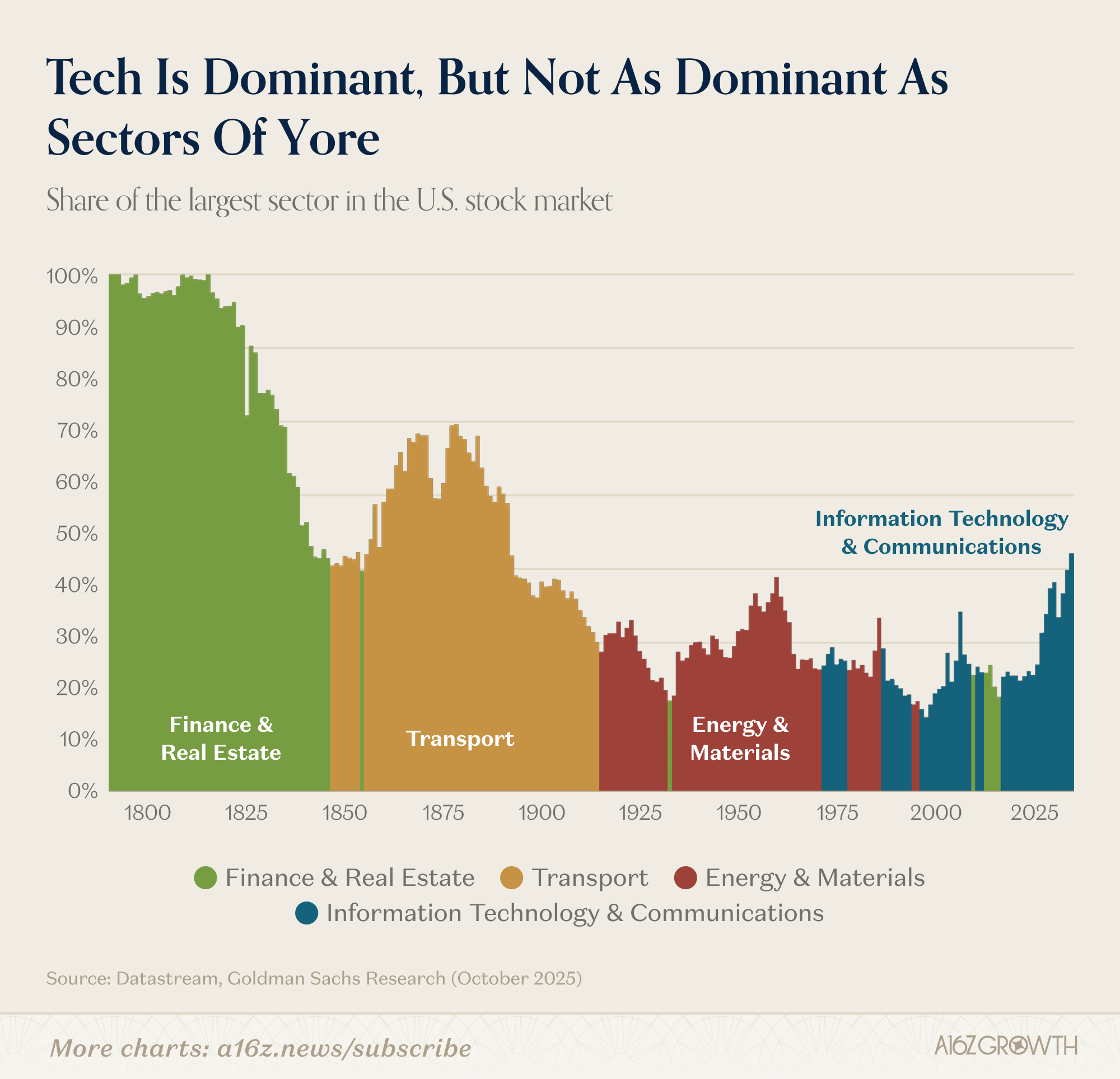
Today's technology scale far exceeds finance, railroads, or industry, yet it still represents a small part of the overall economy or market. Increases in productivity are far from a zero-sum game; instead, they are a powerful positive-sum game force. Delegating so much work to machines will ultimately result in a larger, more diversified, and more complex economy and labor market.
Doomsayers wish you to ignore the history of innovation and only focus on the sharp decline in cognitive costs, treating it as the whole truth. They see task replacement and then stop thinking.
"We will increase cognitive output tenfold, but we won't do more thinking; instead, we will pat our bellies and go for lunch early, and others will do the same." This notion not only reflects a serious lack of imagination but also an absence of observation of basic facts. Doom proponents label this "realism," but this is simply not possible.
The failure of Luddites
(Note from PANews: Luddites refer to a social movement initiated by the working class in early 19th century Britain, opposing the industrial revolution by destroying industrial machines to protest worsening working conditions and unemployment)
Now let's look at what happened when the massive leap in productivity swept through the economy.
Agriculture
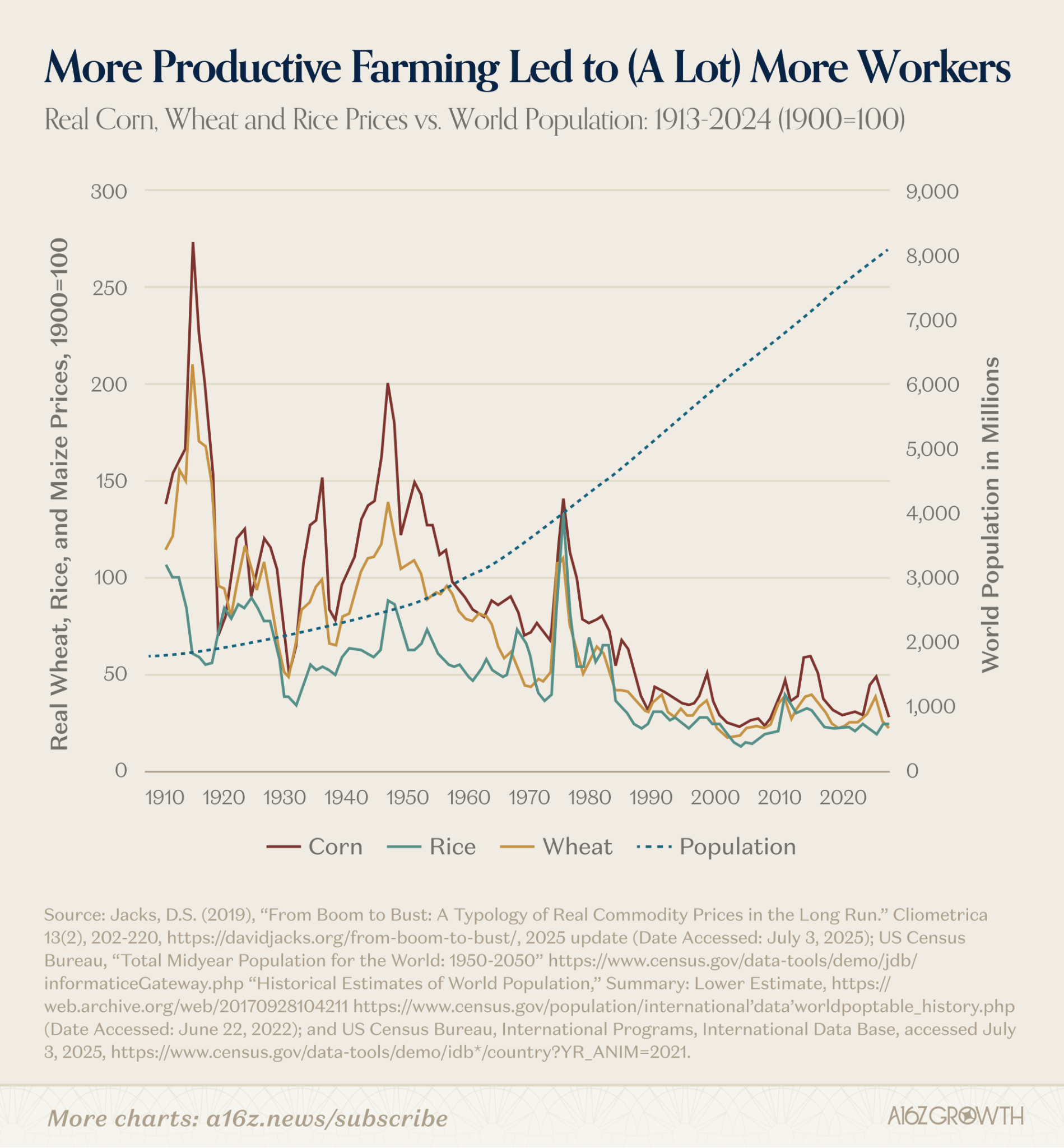
In the early 20th century, before the widespread adoption of agricultural mechanization, about one-third of the U.S. workforce was engaged in agriculture. By 2017, this proportion had dropped to about 2%.
If automation were to lead to permanent unemployment, then tractors should have completely destroyed the labor market. However, that is not the case; agricultural output nearly doubled, supporting significant population growth, and these workers did not face permanent unemployment. Instead, they flocked into industries, factories, shops, offices, hospitals, laboratories that were previously unimaginable, and ultimately entered the service and software industries.
So, indeed, one could say technology disrupted the career prospects of ordinary farm workers, but at the same time, it released a surplus of global labor (and resources) and spawned a brand new economic system.
Electrification
The development of electricity shares a similar trajectory.
Electrification was not merely the swap of one energy source for another. It used independent motors to replace drive shafts and belts, forcing factories to reorganize around entirely new workflows, and spawning entire new categories of consumer and industrial goods.
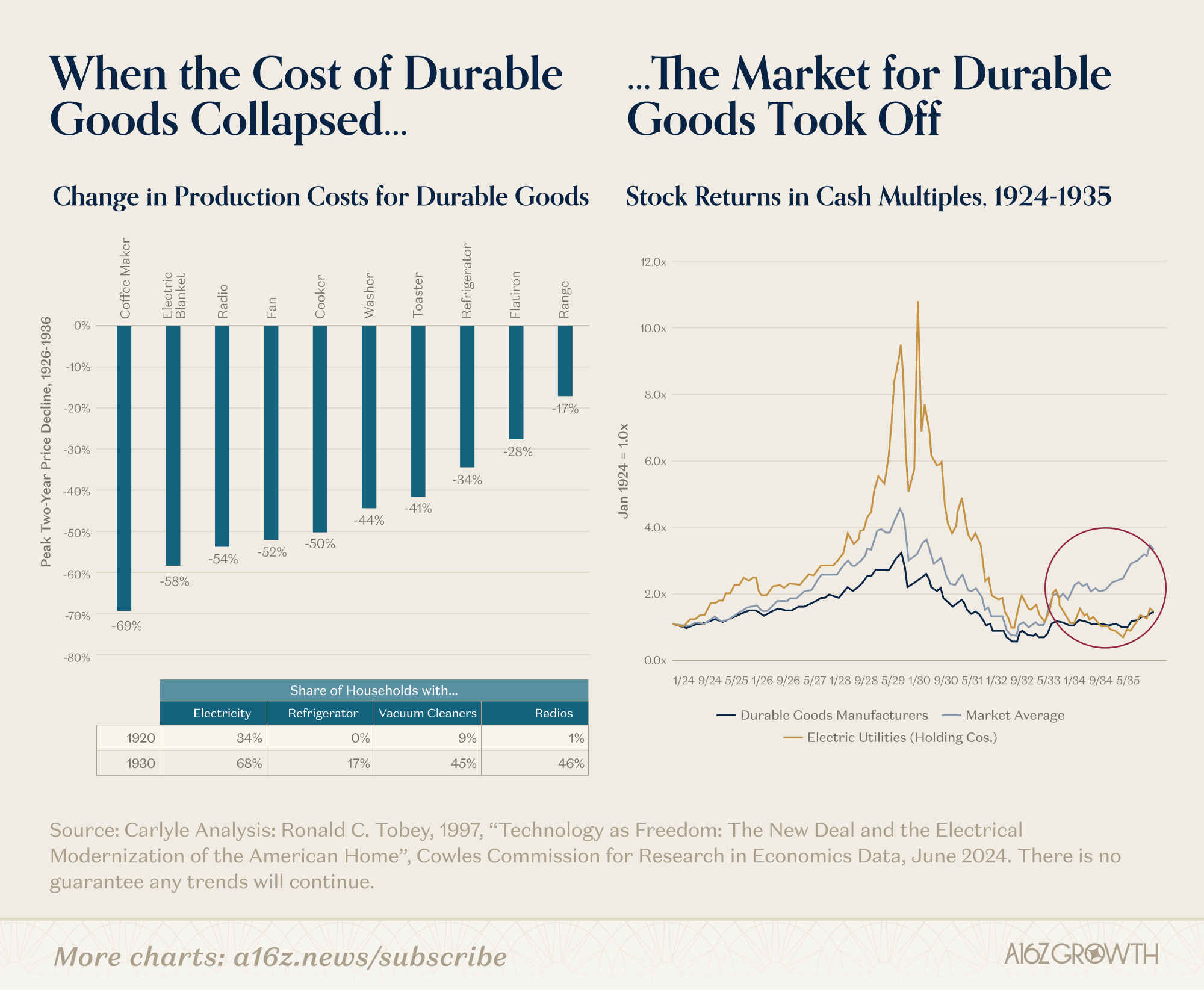
This is precisely what we expect in the different stages of technological revolutions, as documented by Carlota Perez in her book "Technological Revolutions and Financial Capital": huge up-front investments and financial benefits, a dramatic reduction in the cost of durables, and subsequent generational booms for durable manufacturers.
The productive advantages of electricity did not materialize overnight. In the early 20th century, only 5% of U.S. factories used electrically powered machinery, and less than 10% of households were electrified.
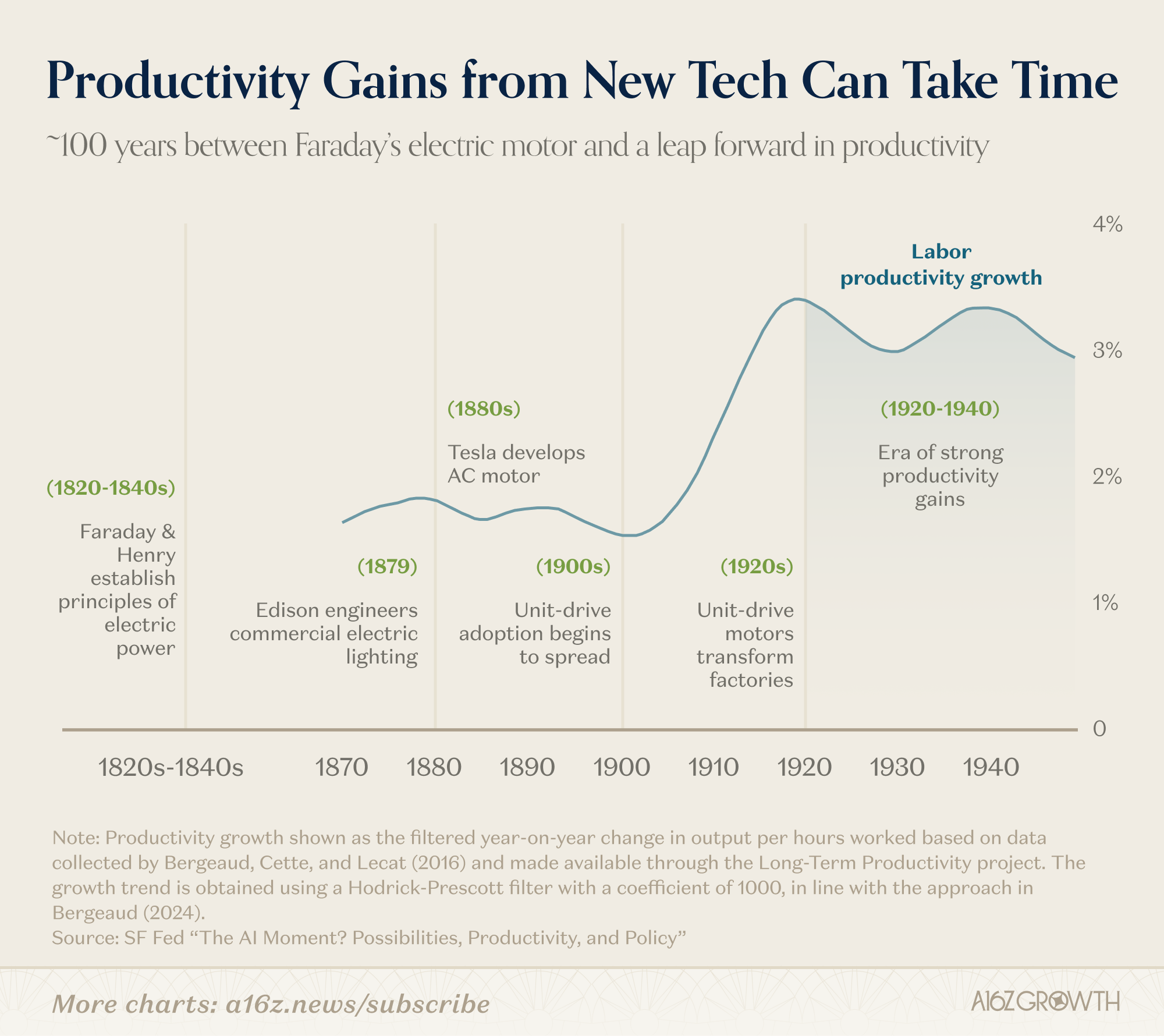
By 1930, electricity supplied nearly 80% of the power for manufacturing, and labor productivity doubled in the following decades.
The increase in productivity not only did not weaken the demand for labor but rather brought about more manufacturing jobs, more salespeople, more credit, and more business activity—not to mention the cascading effects of labor-saving devices like washing machines and cars, which enabled more people to engage in high-value work that was previously out of reach.
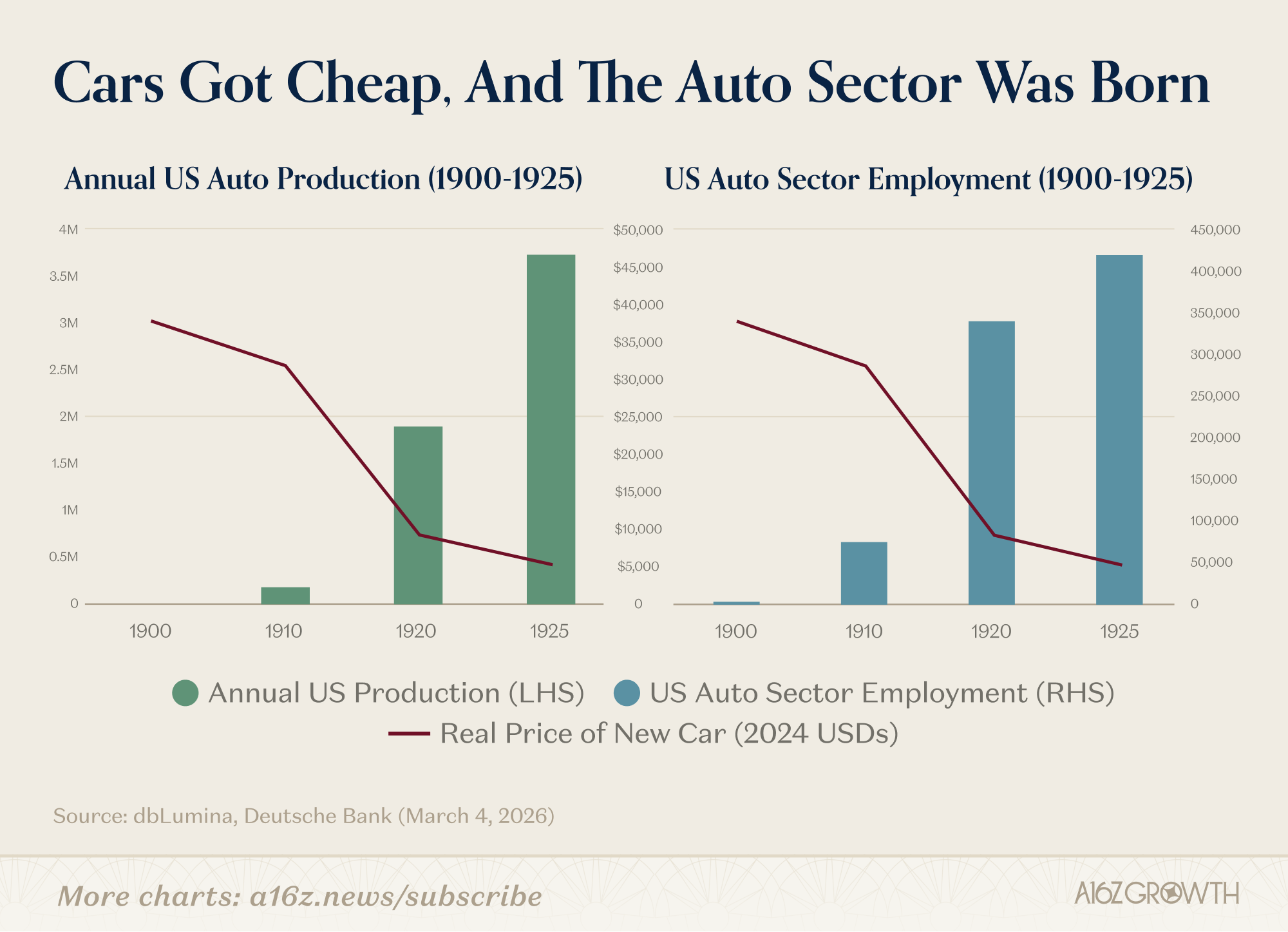
As car prices fell, both car production and employment soared.
This is the true role of general-purpose technology: it reorganizes the economy and expands the boundaries of useful work.
We have seen this scenario repeat time and time again. Did VisiCalc and Excel end the careers of bookkeepers? Absolutely not. The significant efficiency gains from computing technology instead resulted in a surge in bookkeeping professionals and spawned an entire financial planning and analysis (FP&A) industry.
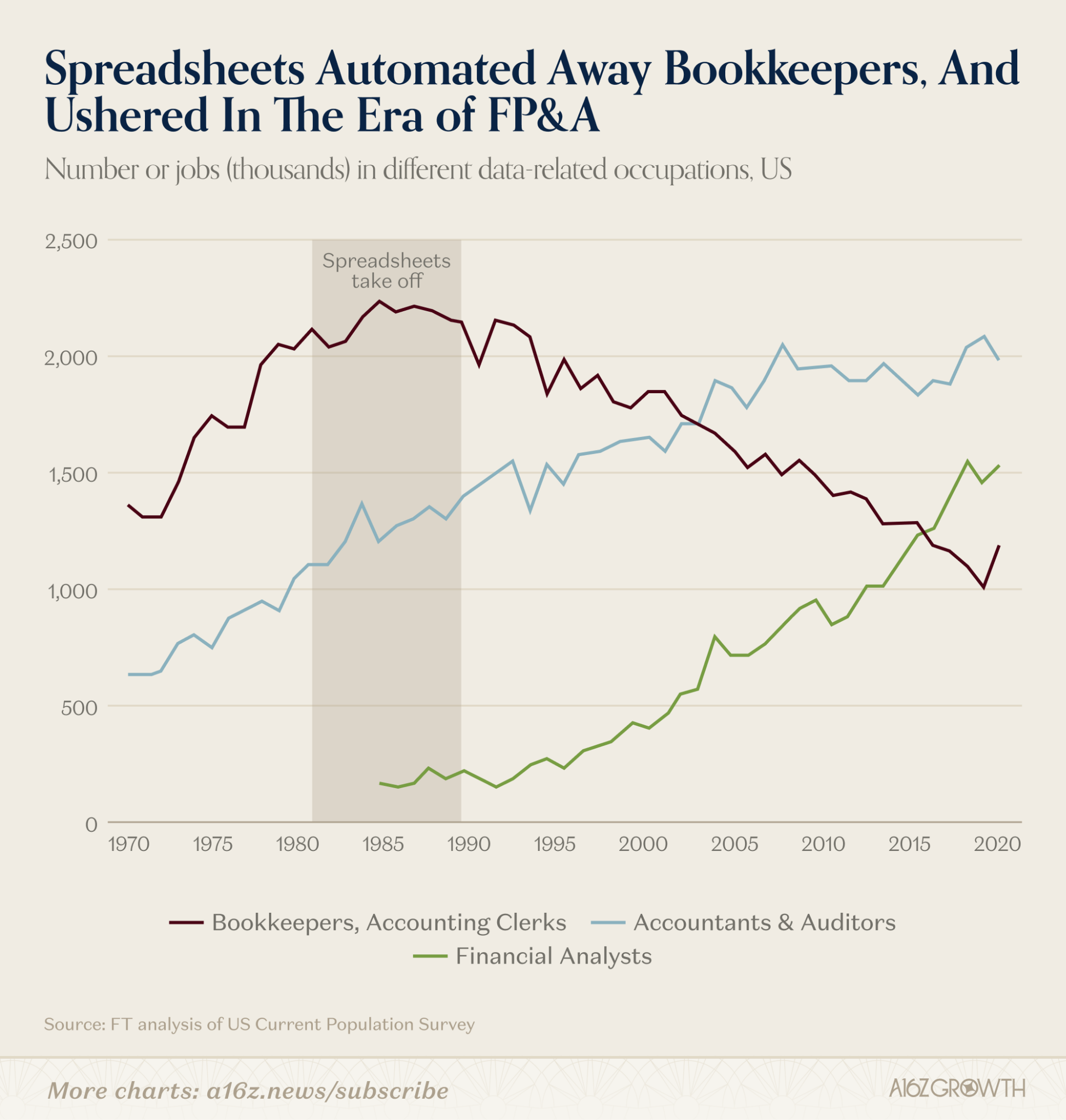
We lost about 1 million "bookkeepers," but gained about 1.5 million "financial analysts."
New jobs in the service sector
Of course, job replacement does not always drive employment growth in related economic areas. Sometimes, productivity gains translate into new jobs in completely unrelated sectors.
But what if AI means that some people become extremely wealthy while others are left far behind?
At least, these super-rich must spend their money somewhere, as they have done before, starting entirely new service industries from scratch:
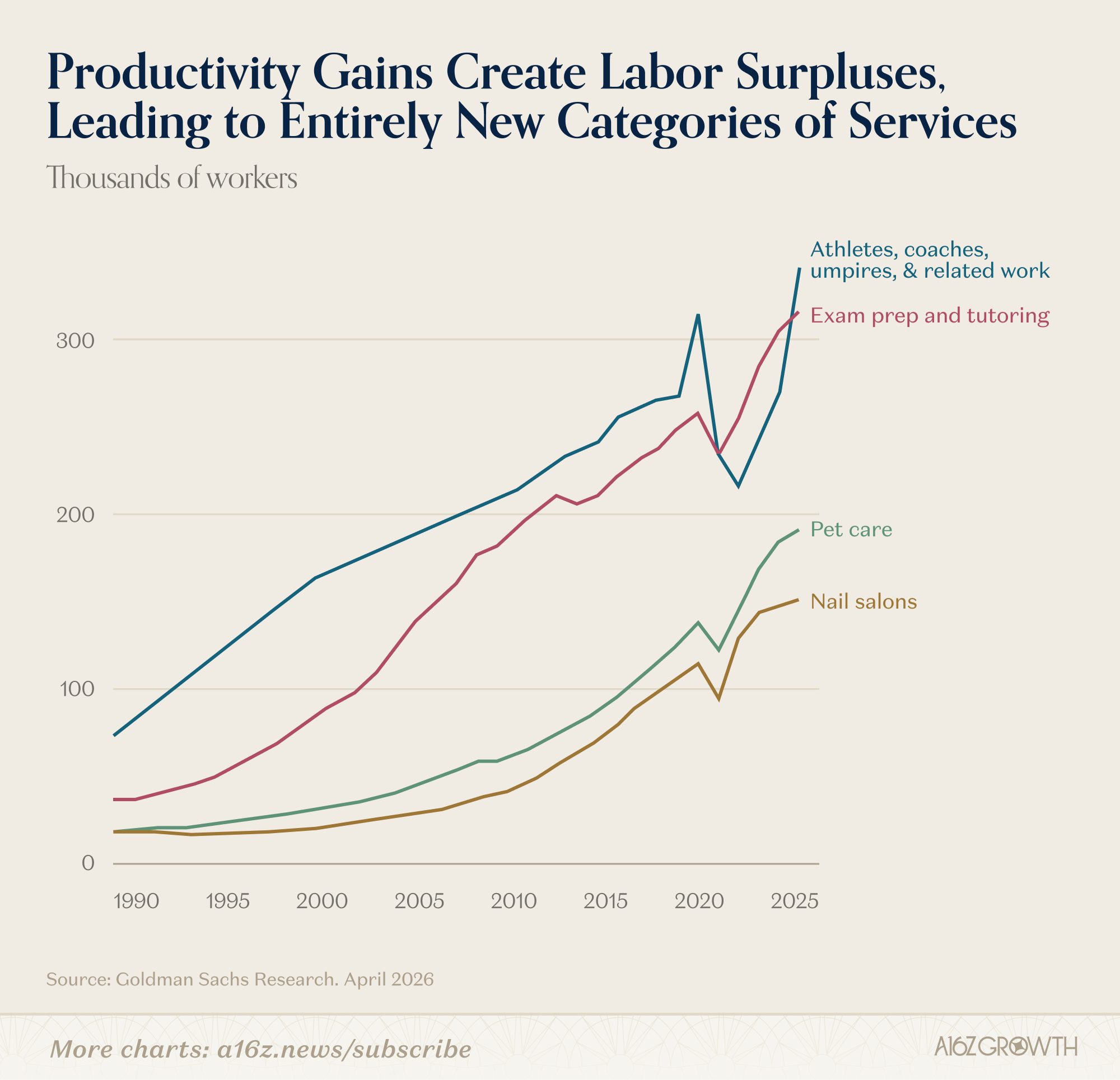
Massive increases in productivity and the resulting wealth creation have spawned entirely new fields of work, and without income growth and an increasing labor supply, these fields might never have emerged (even though they were technically viable long before the 1990s). No matter what people think about the service industries serving the wealthy, the outcome ultimately benefits everyone because the increase in demand leads to a significant rise in median wages (thus creating more "affluent" individuals).
Stripe's in-house economist Ernie Tedeschi provides a comprehensive case showing how technology has disrupted, transformed, and reshaped the travel agency profession.
Did technology reduce the demand for travel agents? The answer is yes.
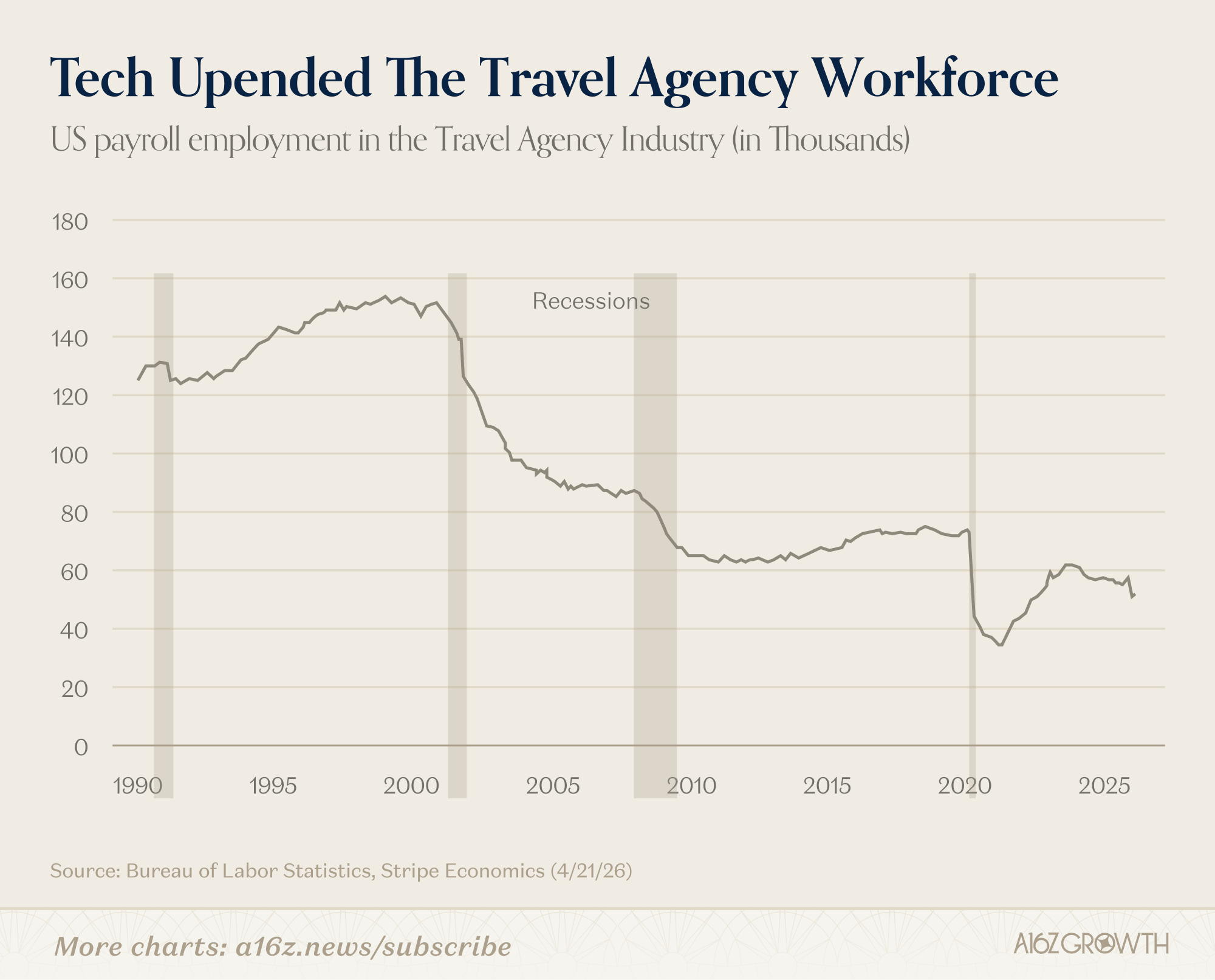
The number of travel agency employees today is about half that of around 2000, almost certainly due to technological advancements.
So, does this mean technology has killed jobs? The answer is no, as travel agency employees did not face permanent unemployment as a result. They found work in other areas of the economy, and the overall employment rate of the working-age population is basically unchanged from 2000 (adjusted for population aging).
Meanwhile, for those who remain in today's tech-enabled travel industry, productivity increases mean higher wages than ever before:
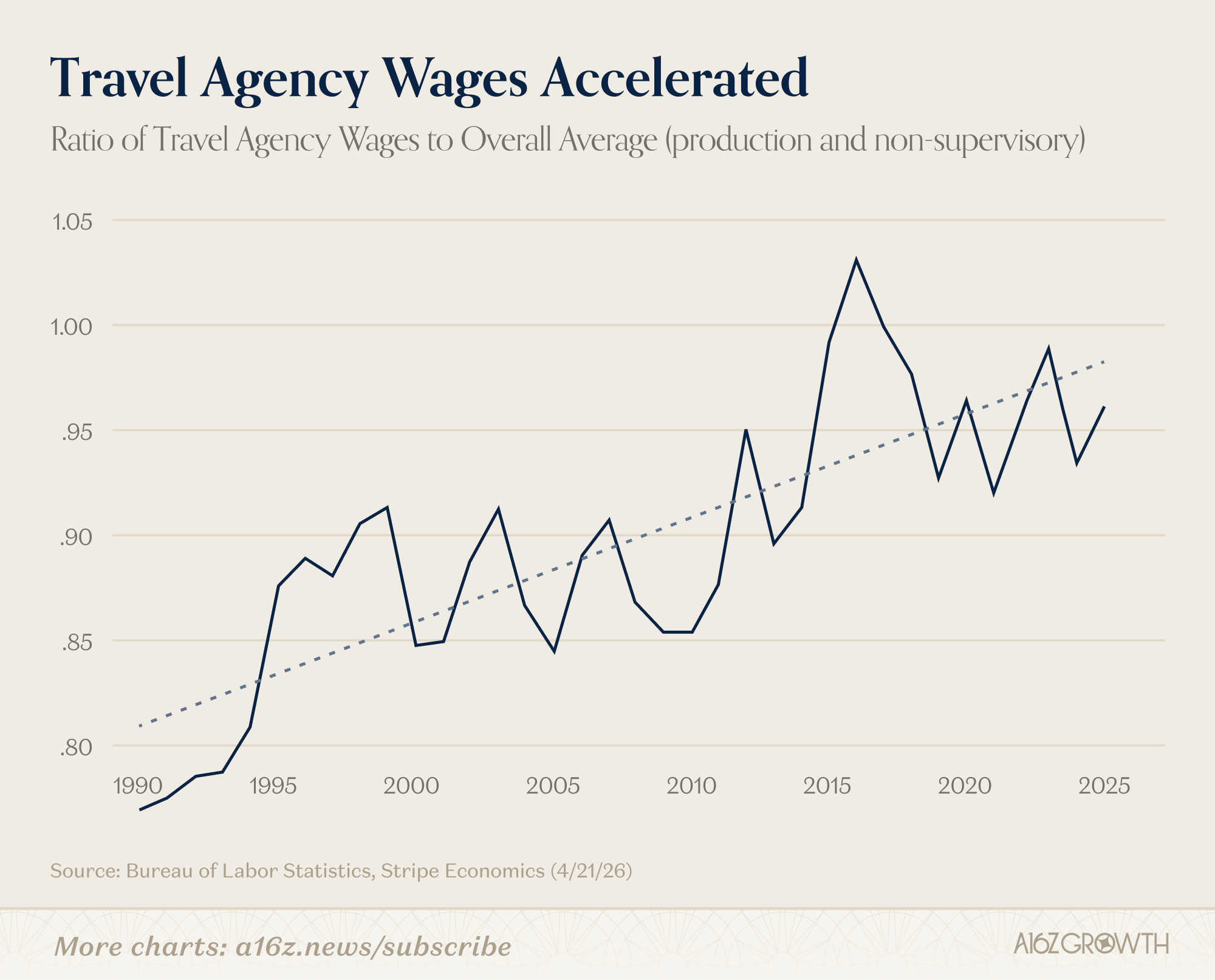
"In the peak year of 2000, the average weekly salary of travel agents was 87% of the overall average weekly salary. By 2025, this ratio has reached 99%, which means that during this period, the wage growth of travel agents has outpaced that of other private sector workers."
Therefore, even if technology indeed impacted travel agency employment, overall, the employment rate of the working-age population remains the same, and the situation of the remaining travel agency professionals is also better than ever.
Augmentation > Replacement (and Unseen Job Opportunities)
The final point is very important and again indicates that doomsayers tell only a small part of the story.
For certain jobs, AI poses a survival threat. Indeed. But for other jobs, AI acts as a multiplier: making those jobs more valuable. For every job facing the risk of AI replacement, other jobs are expected to benefit from it:
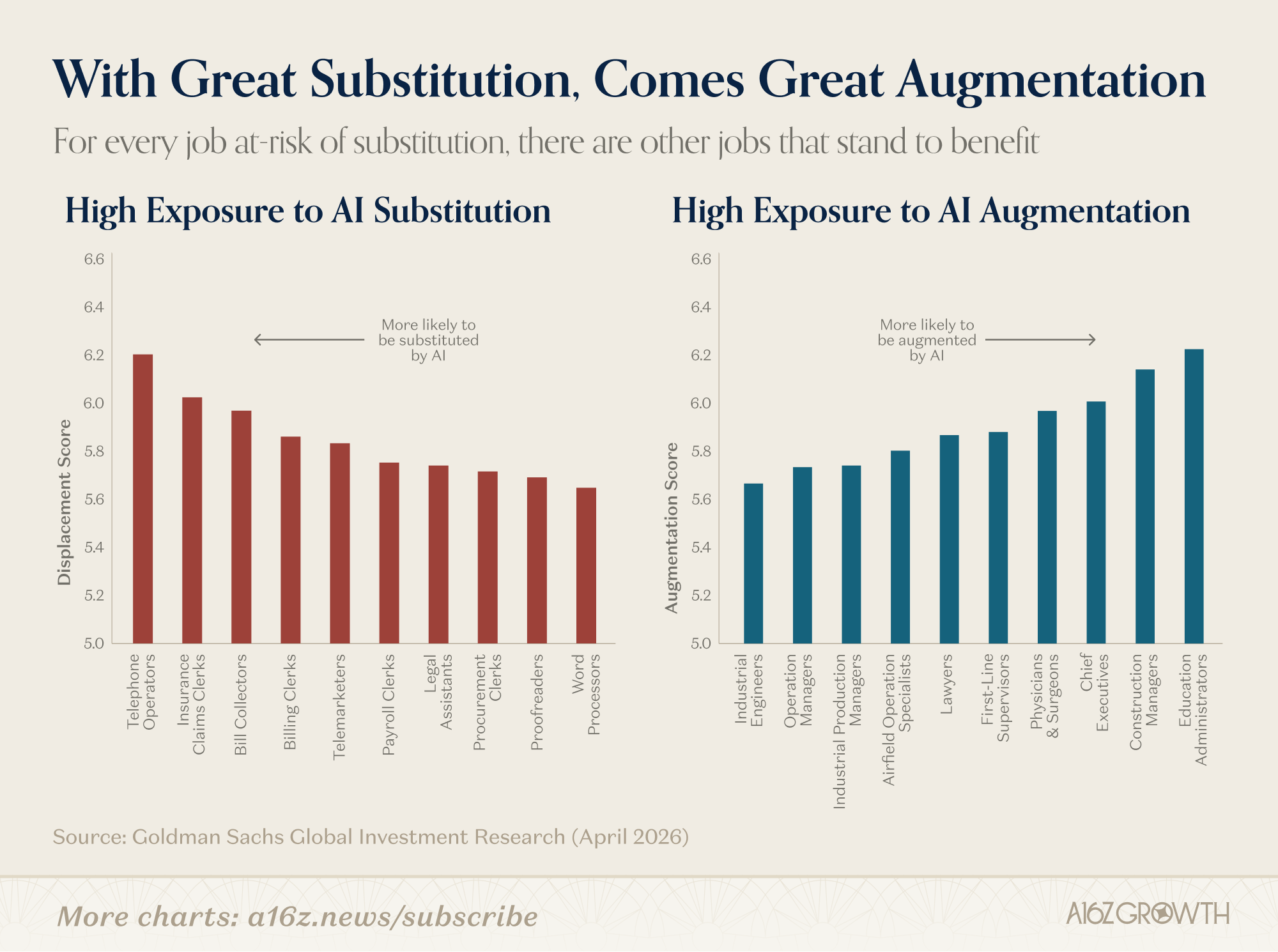
Goldman Sachs estimates that the "AI replacement" effect is far less significant than the "AI augmentation" effect.
It is worth mentioning that management teams seem more focused on augmentation than replacement:
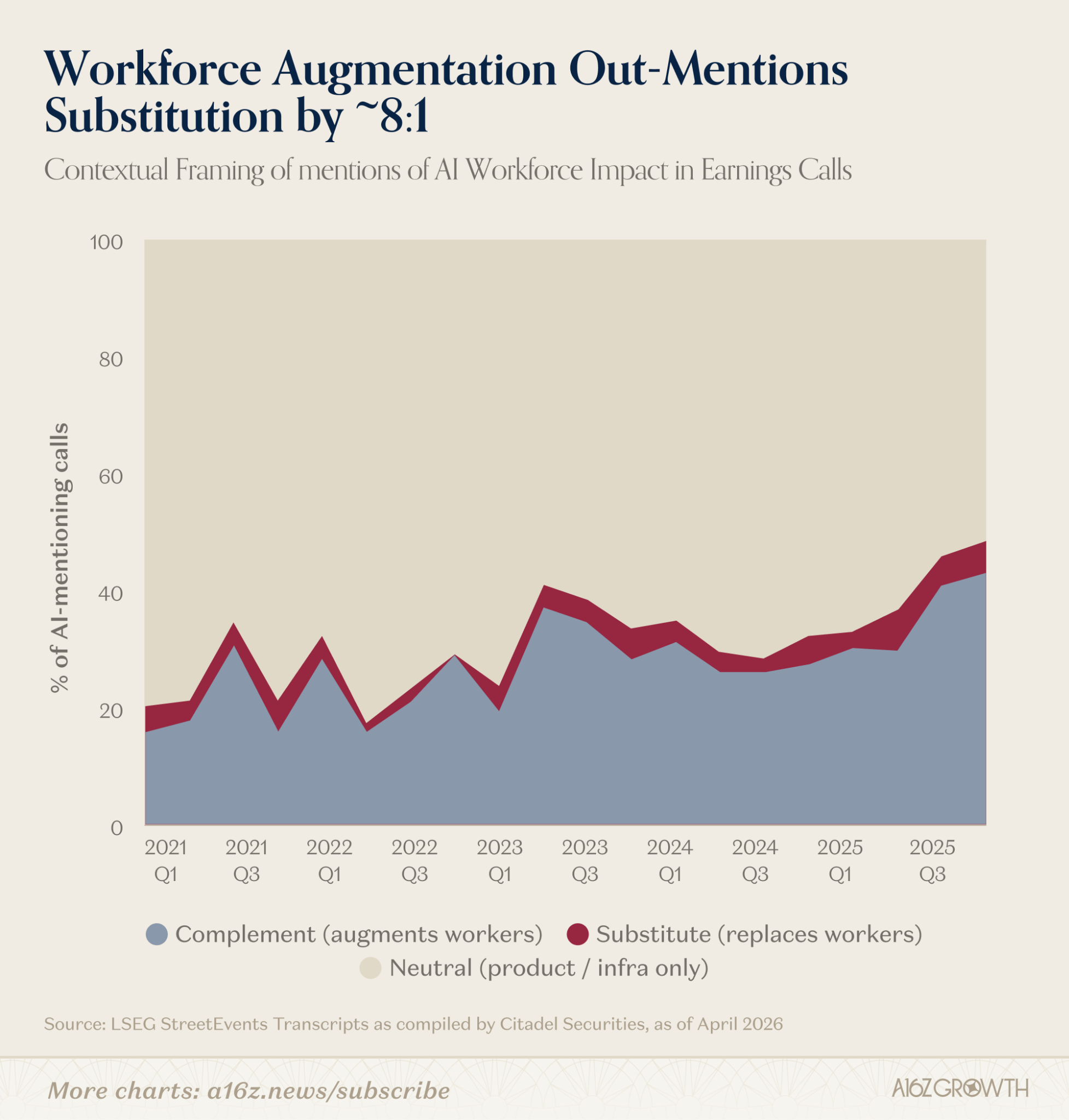
So far, in earnings call conferences, the number of mentions of "AI as an augmentation feature" is about 8 times more than mentions of "AI as a replacement feature."
Although Goldman Sachs did not even include software engineers in their list of "augmented" talent, they are perhaps the best example of AI-augmented talent.
AI is a multiplier for coding. Not only has git push frequency surged (so have the number of new applications and new business creations), but demand for software engineers seems to also be rising:
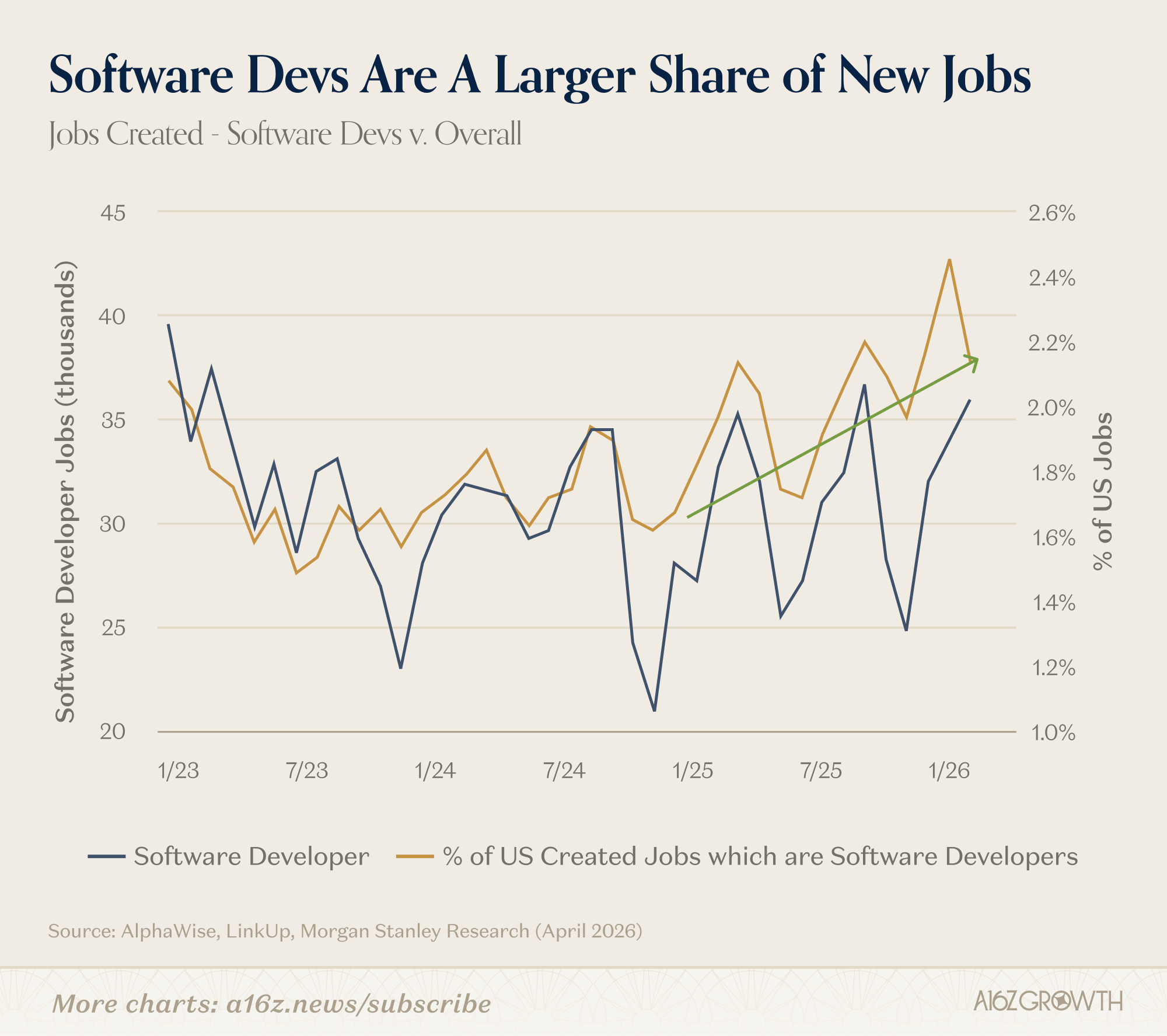
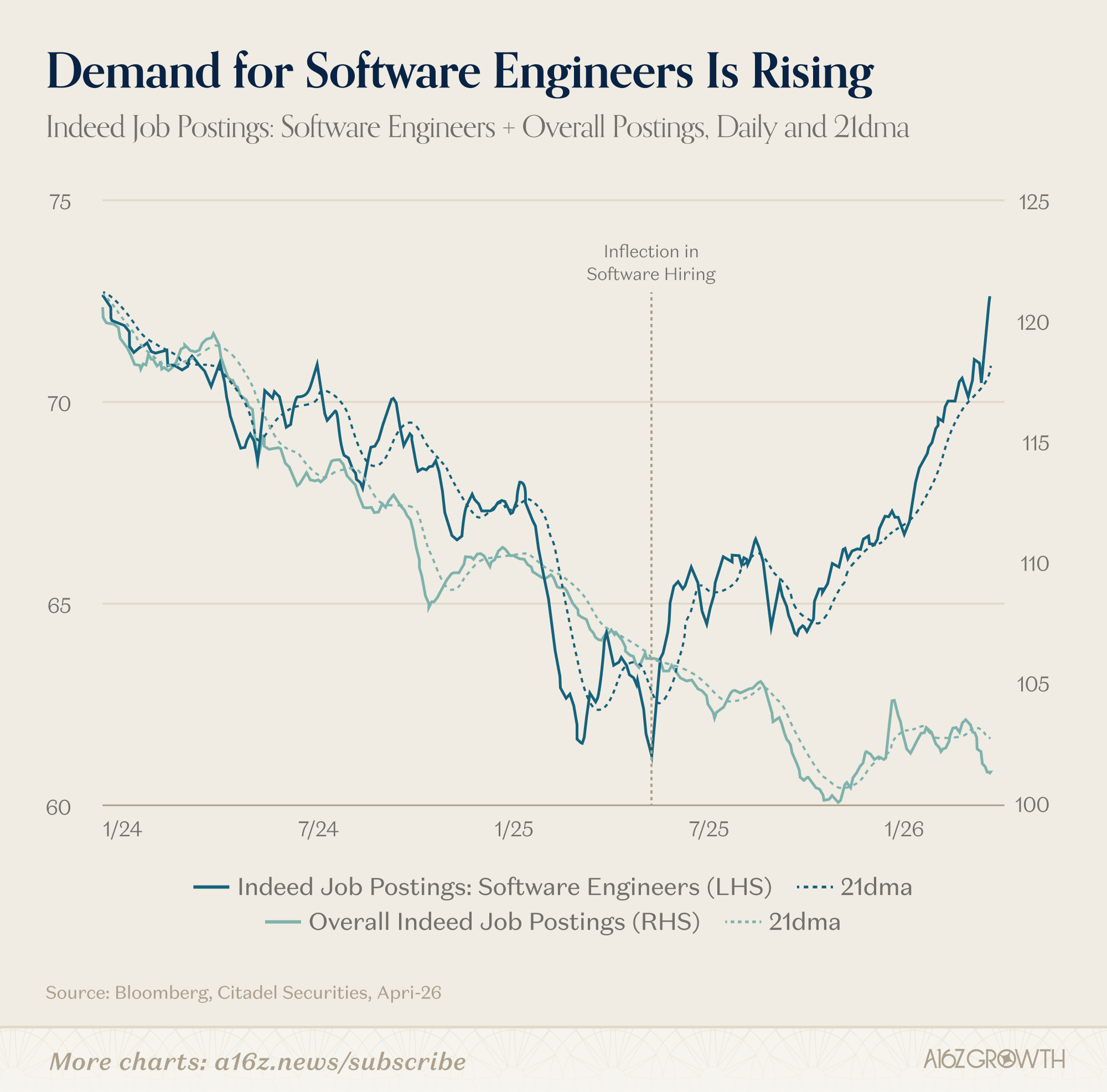
Since the beginning of 2025, software development positions have been growing continuously (both in numbers and as a percentage of the overall job market).
Is this related to AI? Frankly, it might be too early to draw conclusions now, but AI can undoubtedly enhance the efficiency of software engineering, not to mention that AI has become a focal point for executives at every company.
Given that everyone is trying to explore how to integrate AI into their business, it is no surprise that companies are ramping up hiring, which no doubt will enhance the value of some employees rather than diminish it.
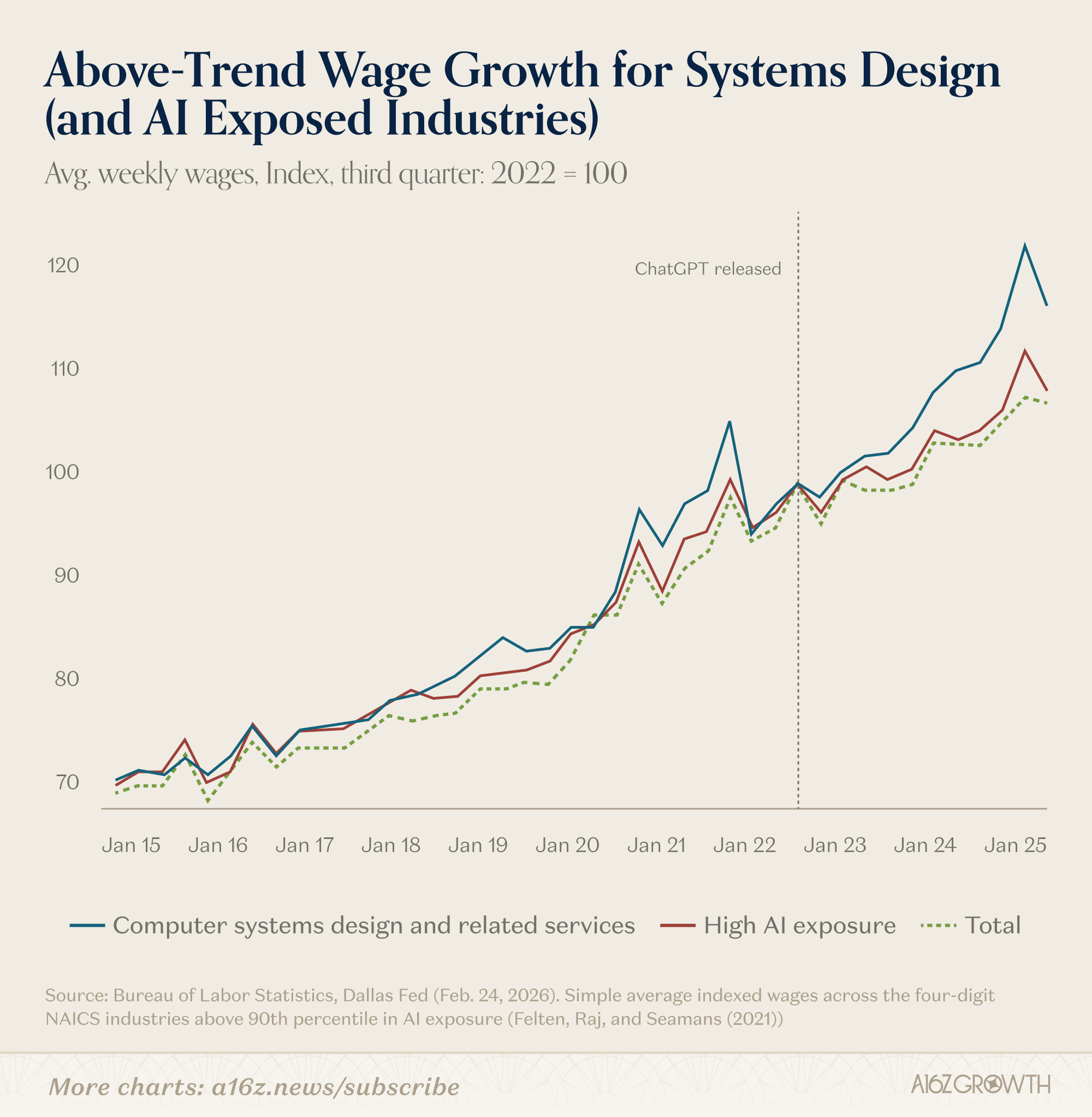
The proliferation of AI seems to be driving wage growth above average levels (especially in the field of systems design).
Currently, this growth might still be somewhat limited, but it is still in the early stages. As expertise expands, opportunities will also increase. In any case, this is not the data that those "doomsayers" want you to see.
Meanwhile, according to Lenny Rachitsky (founder of Lenny’s Newsletter and a platform for communication among tech insiders), the number of project manager job vacancies continues to rise (after previously declining significantly due to interest rate fluctuations), currently surpassing any time since 2022:
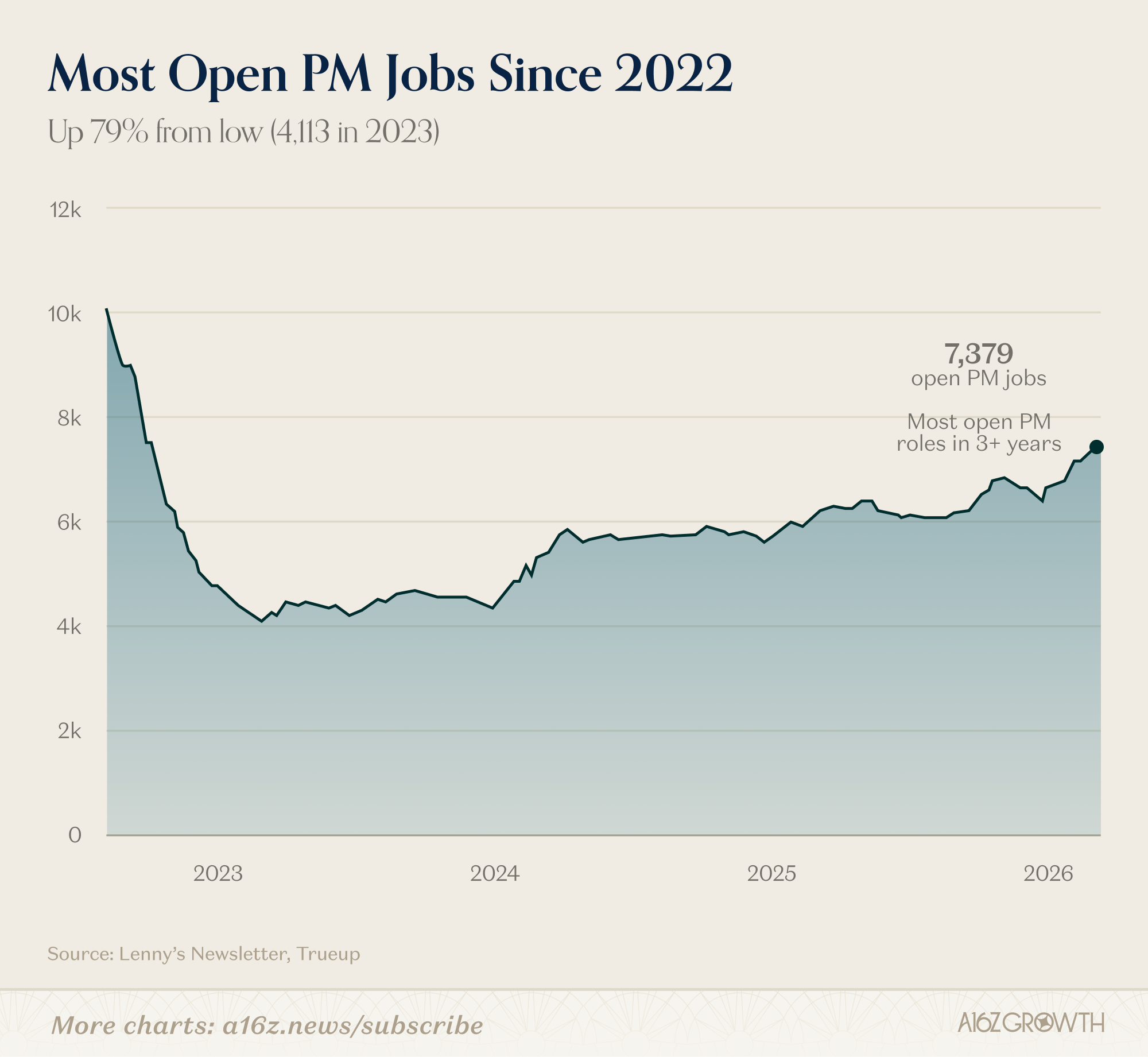
The growth in hiring of software engineers and product managers strongly supports the correctness of the "lump of labor fallacy." If AI completely replaced human cognitive abilities, then one might think "the number of engineers needed by product managers would decrease," or one might say "the number of product managers needed by engineers would decrease," but that is not the case. We see sustained demand for both types of talent, because the key is that people's efficiency has improved.
This is why the empty rhetoric of doomsayers is essentially a lack of imagination. They only focus on jobs that will be automated away, while ignoring the demand for entirely new job categories that will soon be created, which we have not even conceived of yet:
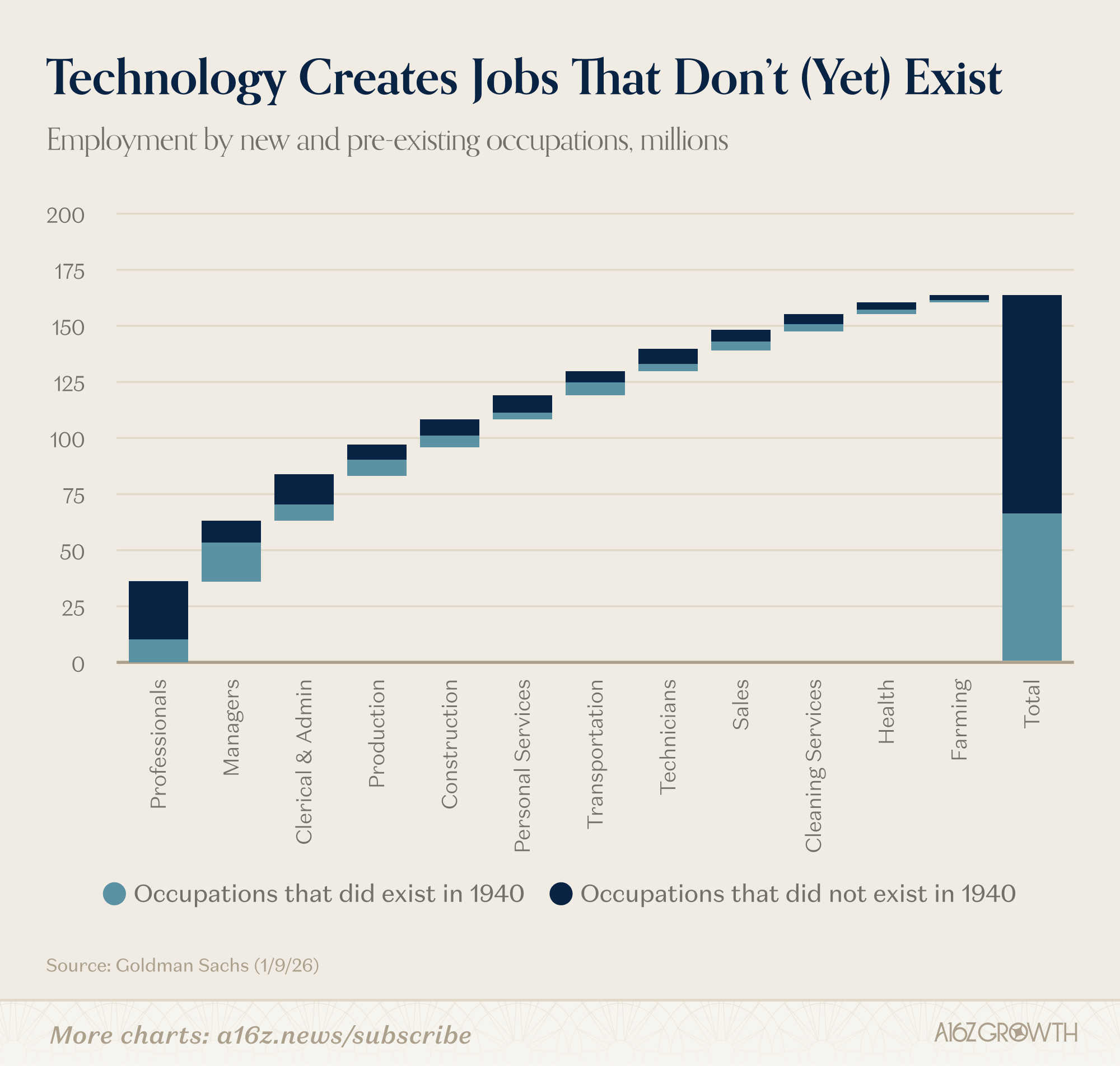
Most jobs created since 1940 did not even exist in 1940. By 2000, it was easy to imagine that travel agents might go out of business, but to envision a mid-market technology services industry built around "cloud migration" would be much more difficult, as the spread of cloud computing was still at least a decade away.
What is the current situation?
So far, the discussion has primarily focused on theory and precedents, as both support the optimists:

Right. Each increase in productivity leads to growth in demand or a reallocation of surplus resources to other areas of the economy. This means more jobs, many of which will see a significant increase in value, and even unheard-of positions. If this time is different, then those "doomsayers" must provide more compelling arguments than mere hollow talk.
"Job replacement" is certainly not the end of civilization (in fact, quite the opposite), and this statement makes sense. Human nature is to be restless. After we complete one job, we seek another.
However, setting aside theory and precedents, what do actual data show about AI and employment? Although we are still in the early stages (for better or worse), the existing data does not support the views of doomsayers. If anything has changed, it is "no significant change," but there are emerging data pointing in the opposite direction: AI has created more job opportunities than it has taken away.
First, starting with some academic studies. This is not an exhaustive literature review but just a few examples from recent papers:
- "AI, Productivity, and Labor: Evidence from Business Executives" (NBER Working Paper 34984): "In summary, these results suggest that while AI adoption has not yet led to significant changes in total employment, it has already begun to reshape the distribution of tasks and occupations within firms. In particular, routine clerical and administrative activities seem more easily replaceable, while analytical, technical, and managerial tasks are more often described as being augmented by AI."
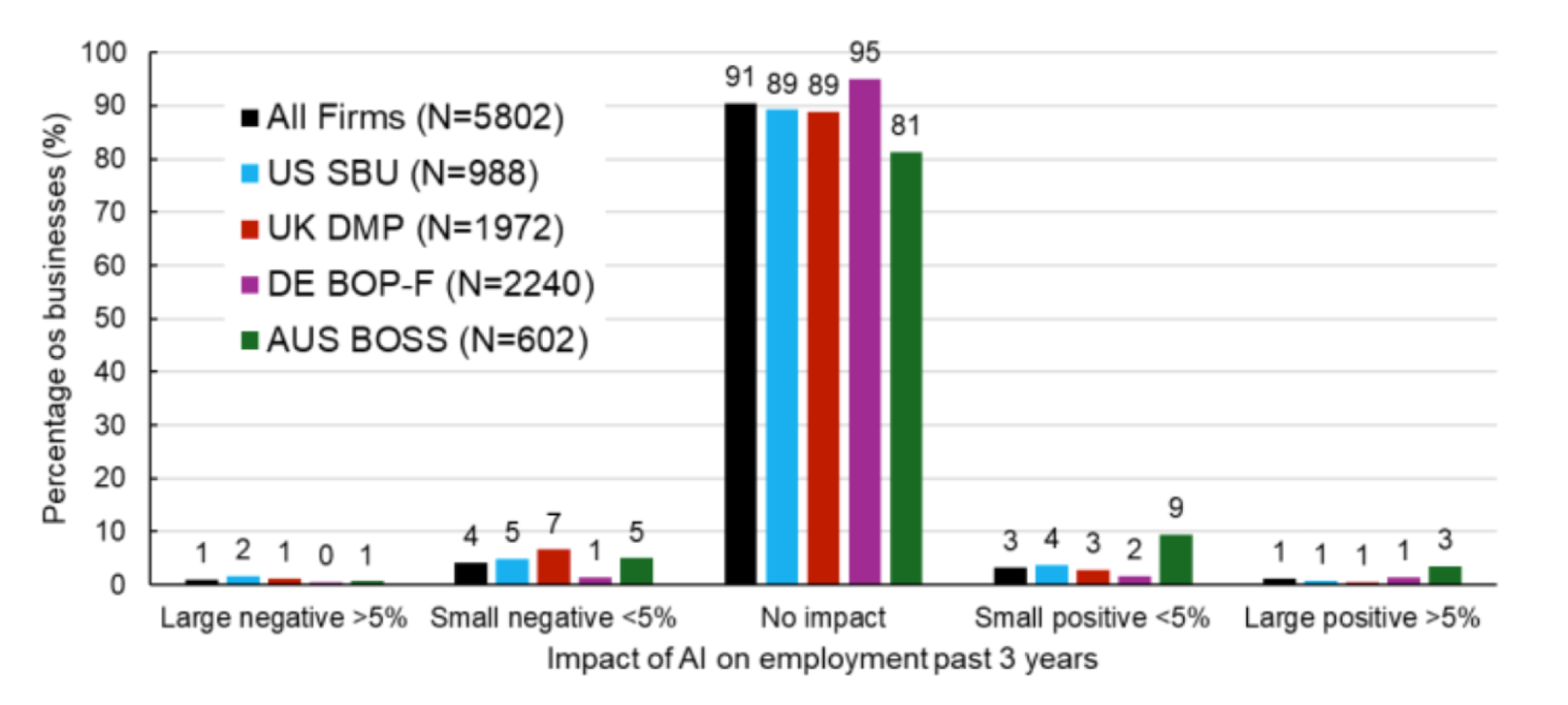
- "AI in Business Data" (Atlanta Federal Reserve Bank Working Paper 2026-3): "In four surveys, an average of over 90% of businesses estimated that AI has had no impact over the past three years."
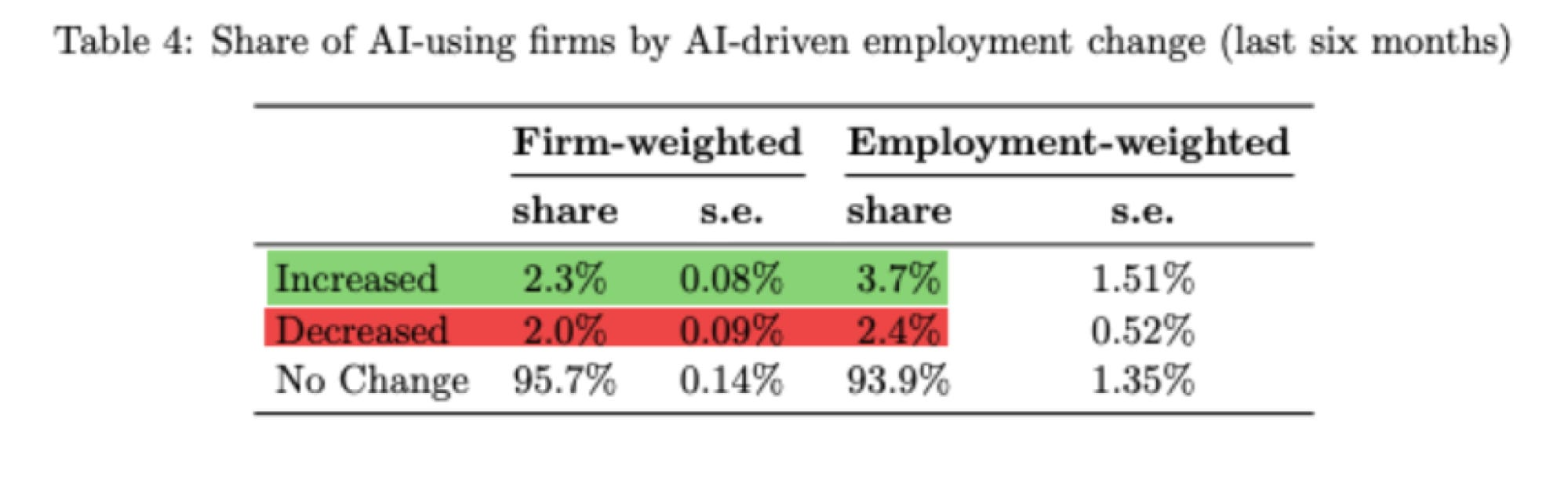
- "The Microstructure of AI Diffusion: Evidence from Firms, Business Functions, and Employee Tasks" (Census Bureau Economic Research Center, Working Paper CES 26-25): "The employment changes driven by AI remain limited, with only about 5% of firms using AI reporting an impact on employee numbers: the proportions of firms reporting increases (2.3% weighted by firm, 3.7% weighted by employment) and decreases (2.0% weighted by firm, 2.4% weighted by employment) are nearly equal."
- "Tracking AI's Impact on the Labor Market" (Yale Budget Lab, April 16, 2026): "Despite widespread anxiety about the impact of AI on today's labor market, our data suggest that this is largely speculative. The picture of AI's impact on the labor market presented by our data largely reflects stability rather than significant disruption at the economic level."
The conclusions repeatedly emphasized by the latest research are "no overall change, but evidence suggests that a redistribution of work and tasks is occurring." In some cases, the net impact of AI implementation on hiring is even positive.
However, the assertion of "no change" has a significant exception. Researchers from Stanford University, the Dallas Federal Reserve Bank, and the U.S. Census Bureau have found (to varying degrees) that entry-level positions with "high exposure to AI" are becoming increasingly difficult to find. However, before anyone concludes that "AI is killing entry-level jobs," it is worth noting that these researchers also found that entry-level positions have increased in situations where AI plays an auxiliary role (and have also increased in areas where AI has had no effect at all).
Yet, even if we temporarily assume that AI is "killing" some entry-level positions (as opposed to being impacted by broader cyclical hiring trends and "aging in place"), from a larger macro perspective, the data clearly indicate that the overall impact of AI on employment is essentially zero.
This may be the most concise summary of AI's impact on employment:
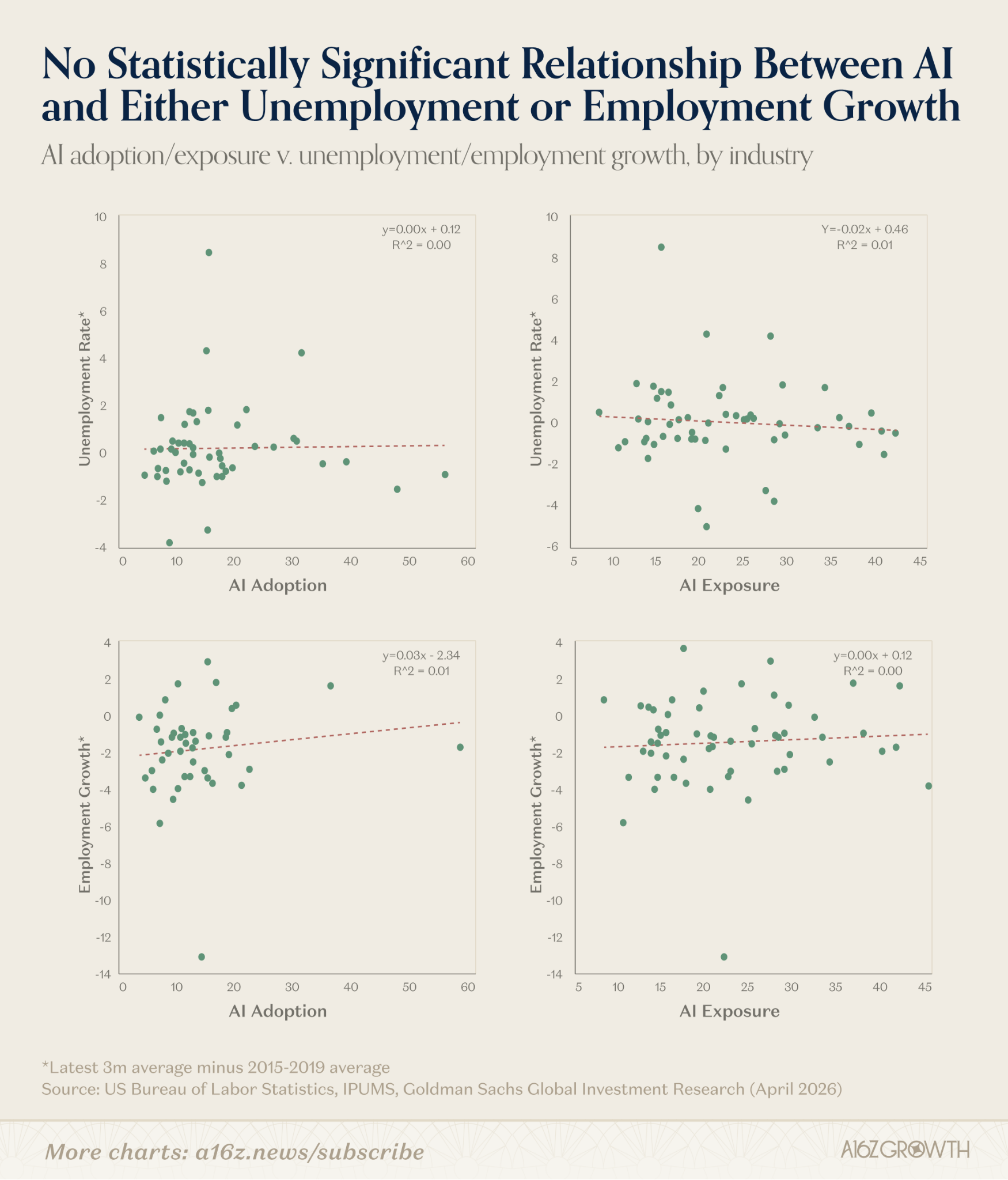
"There is still no statistically significant relationship between AI and unemployment or job growth."
Perhaps there is a certain preference for AI-augmented positions and some driving force for AI-replacement roles:
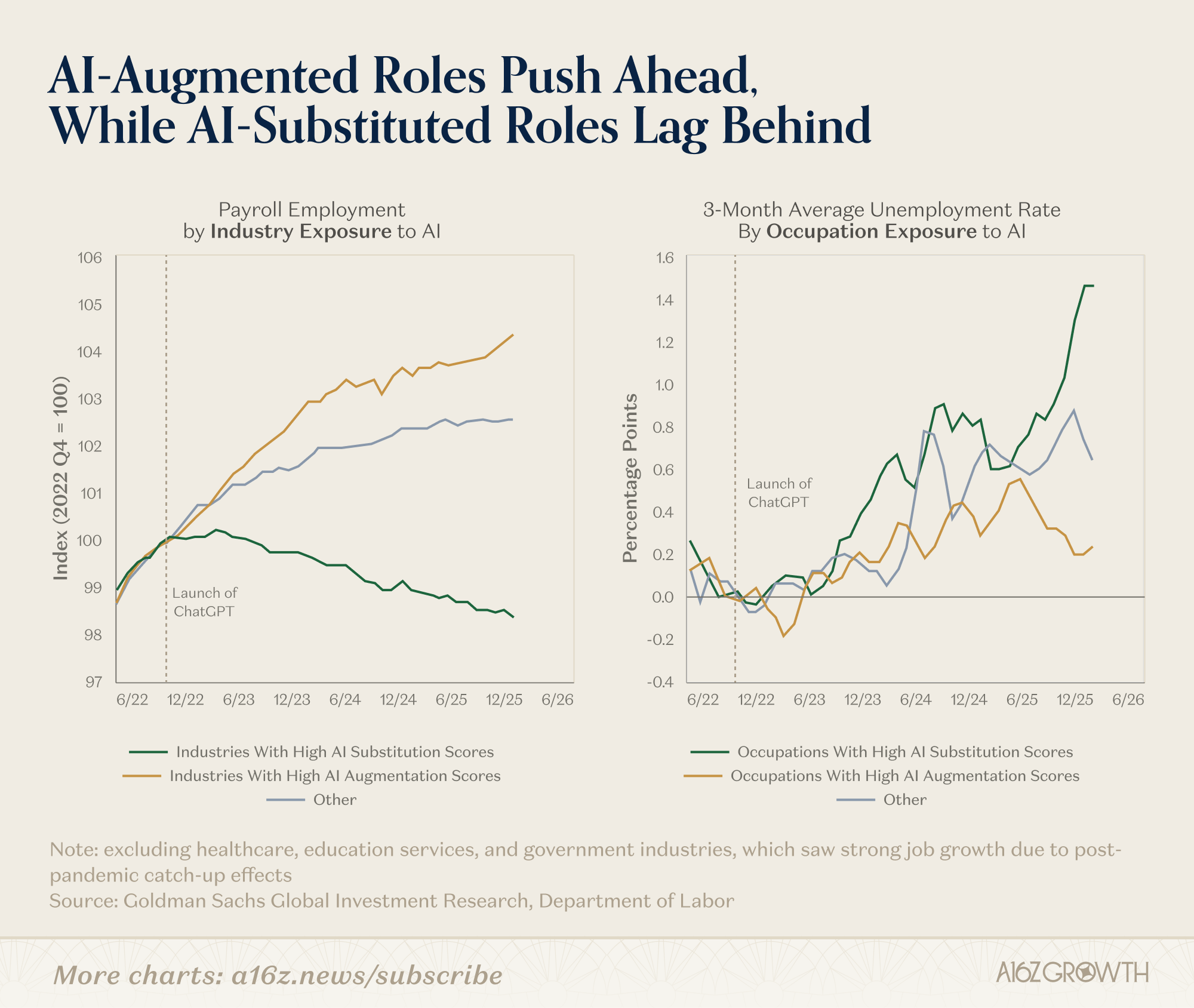
For "AI-augmented" industries, hiring growth seems to be stronger (with lower unemployment rates), while the situation is exactly the opposite for industries at high risk of "AI replacement."
In other words, the overall situation is neutral, but it is not static: some jobs disappear, some jobs emerge, some jobs decline in value, while others increase in value. At this rate, job postings for developers will surpass pre-pandemic levels in less than two years. AI may have already single-handedly saved San Francisco's job market.
This is our starting point: AI will undoubtedly eliminate or compress some positions (and businesses), but to think this is the end of the story is misguided. The labor market's adjustment (ultimately leading to growth rather than widespread unemployment) is precisely the expectation we should have for this transformative technology. This has happened before and is almost certain to happen again (and it appears to be starting already).
Knowledge work is just beginning
This may sound like a cliché, but it is true: this is not the end of knowledge work; on the contrary, it is just the beginning.
Automation strips away repetitive tasks and elevates human work to higher levels. The reason is simple: humanity desires expansion. When a scarcity disappears, people evolve towards higher purposes. When food prices go down, we increase spending on housing, healthcare, education, travel, entertainment, amenities, pets, security, beauty, and longevity.
The labor market is no different. New jobs are constantly emerging because human ambition never stops, and conquering old frontiers reveals new ones that need to be conquered.
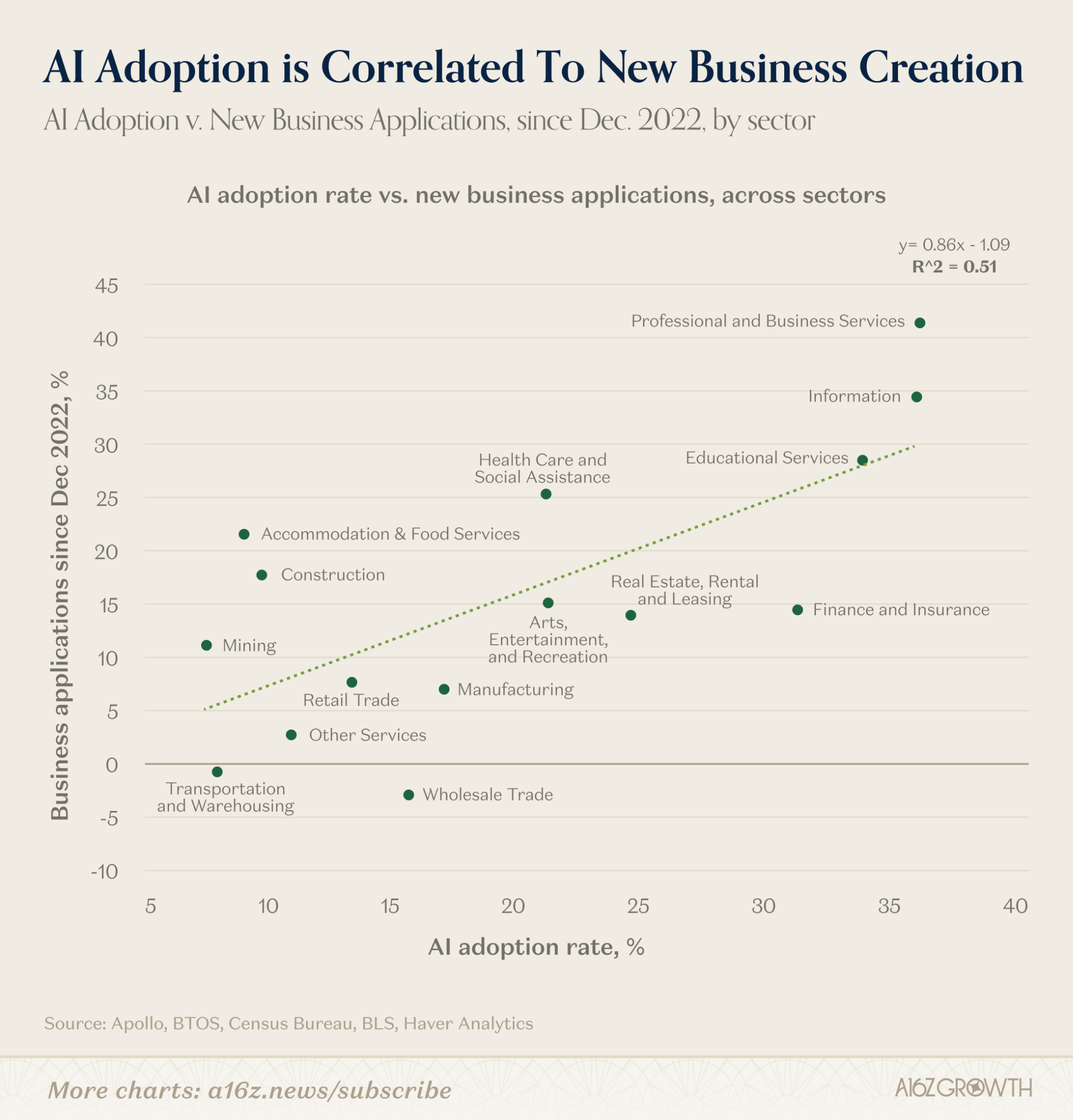
The emergence of new enterprises has exploded, and there is a substantial correlation with AI adoption:
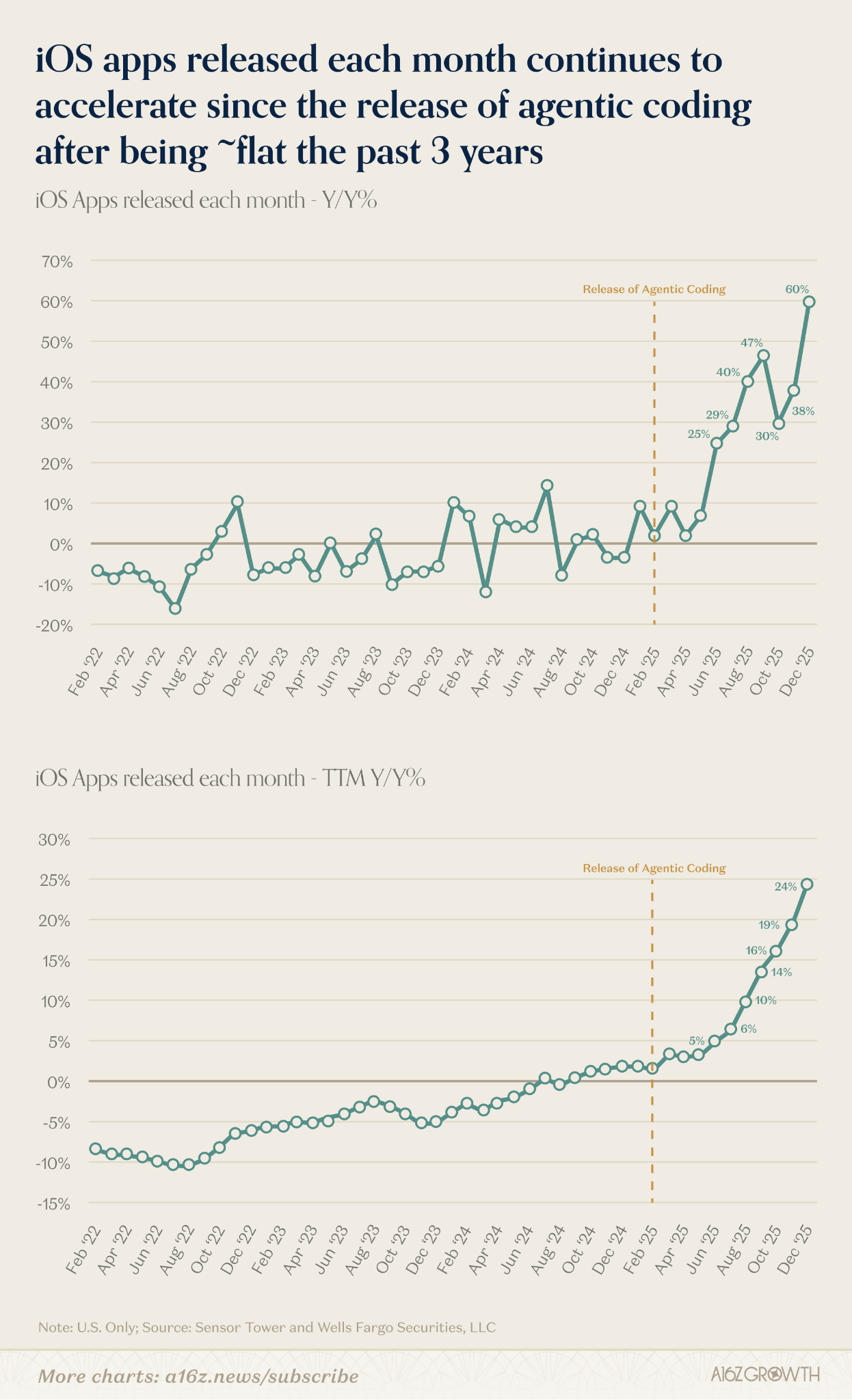
The pace of new applications hitting app stores has increased by 60% year-on-year:
We should not view the modern economy as a museum of yesterday's jobs. Instead, it is a creative resource allocation machine, continuously birthing new jobs, new tasks, new goals, and new inventions.
Robotics has largely been viewed as science fiction due to the high demand for computational power in dynamic environments. But AI is bringing a whole new robotic industry into view:
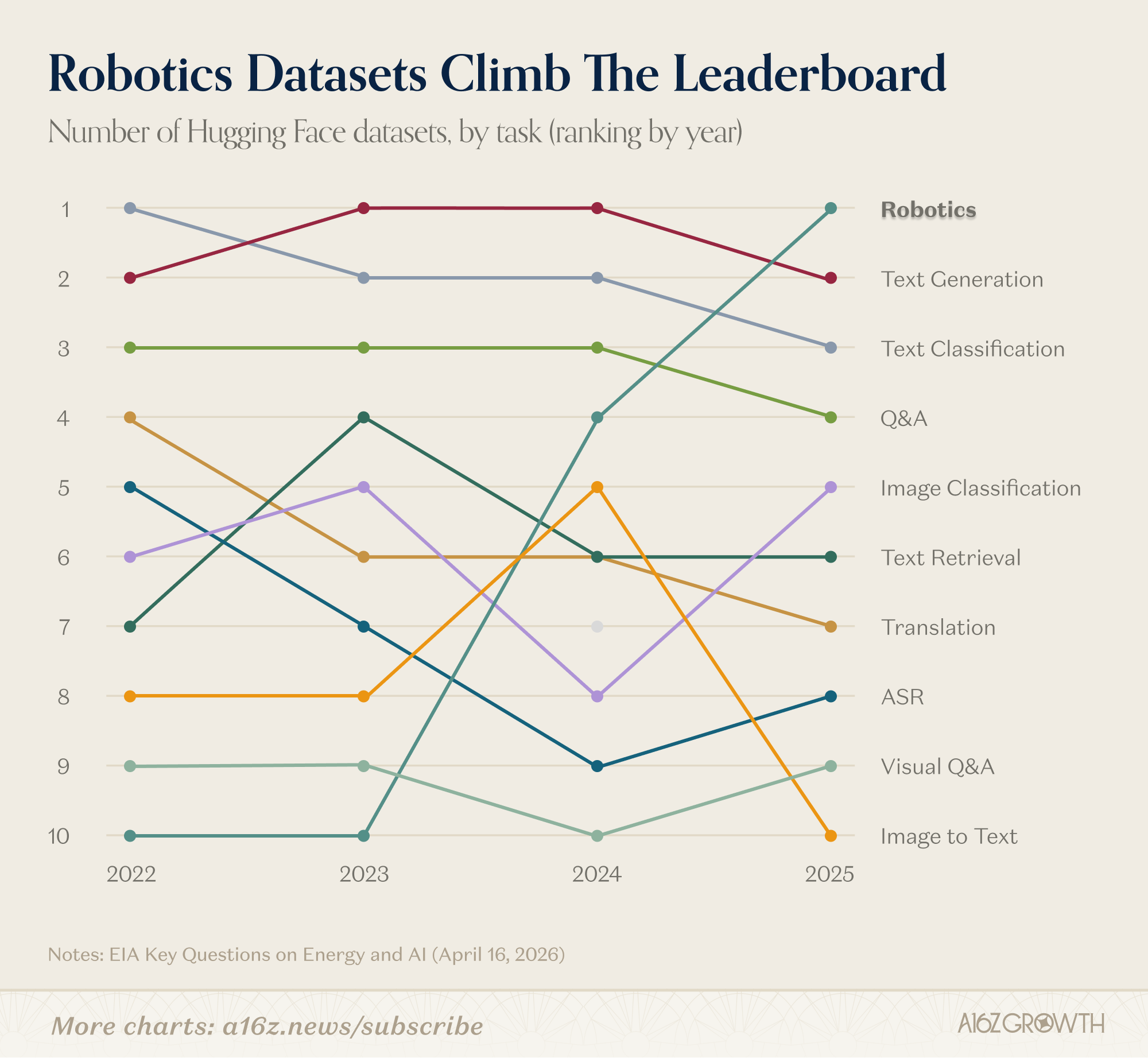
Robotics-related datasets have exploded, jumping from tenth to first place in just two years.
Before AI can truly take effect, there are many jobs in the robotics field that currently go unnoticed.
Again, this does not mean all jobs will escape unscathed. The U.S. Bureau of Labor Statistics (BLS) predicts reductions in positions for customer service representatives and medical transcriptionists, and perhaps this decrease has already begun:
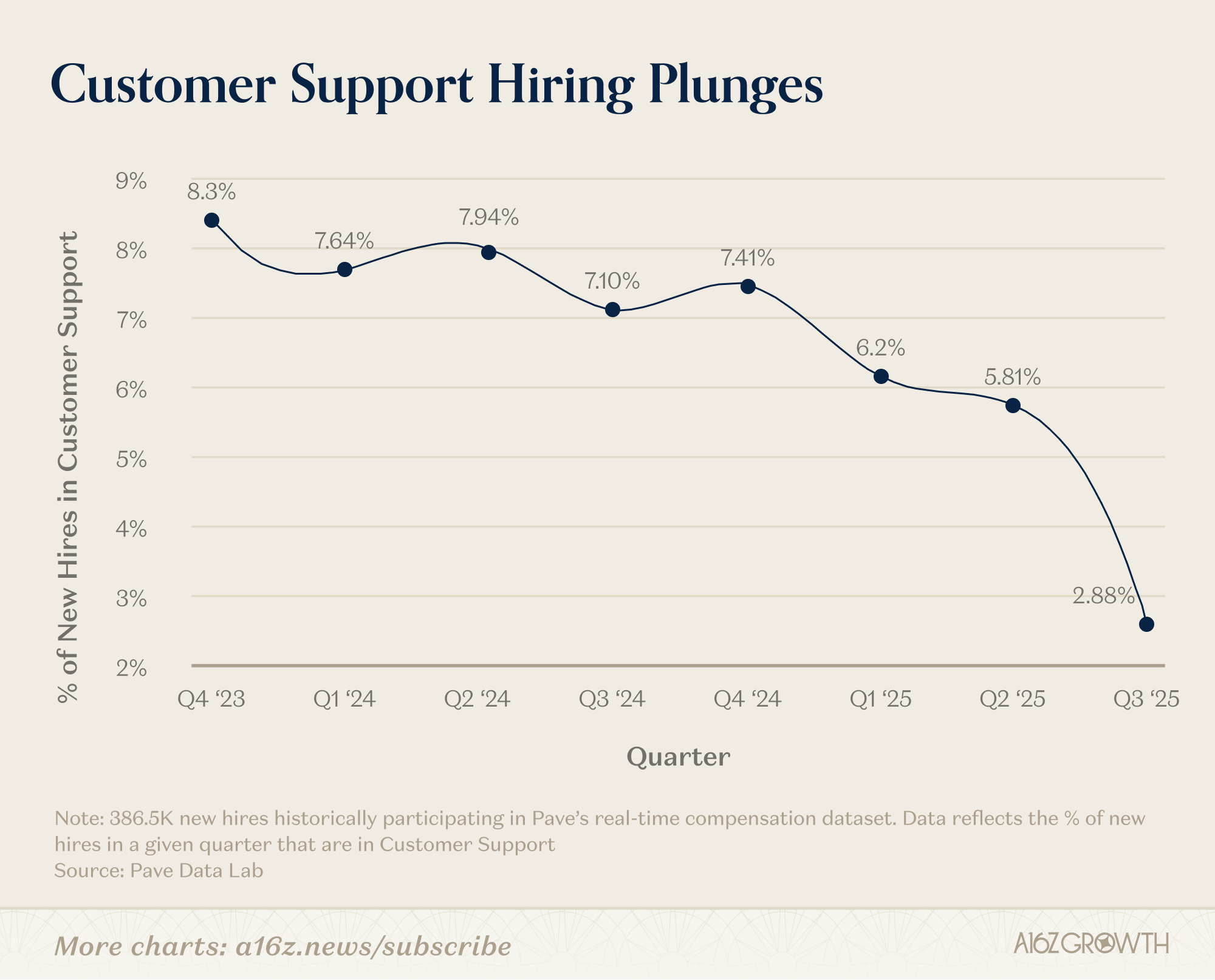
Some jobs will disappear, and some will shrink. The economy will go through adjustments and a painful transition period, and productivity gains may take time to gradually benefit the entire economy (with ups and downs). We should understand these changes and strive to make them as smooth as possible, including actively pursuing job retraining.
The aim of productivity improvements is to eliminate arduous labor, and this time is no different. However, the claim that AI will lead to employment doom only holds if one assumes that human needs and aspirations suddenly stop the moment AI becomes affordable. This is absurd. Personally, I do not subscribe to the "robot apocalypse" narrative, and I believe I am not alone in this view:

Macroeconomically, the future is not one of unemployment; we will not retire in fat-head leisure, zipping around on electric scooters, enjoying Netflix.
The future represents cheaper intelligence, larger markets, new companies, new industries, and higher levels of human work. The amount of work is not fixed, nor is cognitive capacity; there has never been a fixed value in the past. AI is not the end of work; rather, it is the beginning of a richer intelligent age.
免责声明:本文章仅代表作者个人观点,不代表本平台的立场和观点。本文章仅供信息分享,不构成对任何人的任何投资建议。用户与作者之间的任何争议,与本平台无关。如网页中刊载的文章或图片涉及侵权,请提供相关的权利证明和身份证明发送邮件到support@aicoin.com,本平台相关工作人员将会进行核查。


