In the process of looking at the market for support and identifying resistance, chip distribution is the most insightful tool for understanding market sentiment. It helps us clear the chaotic fluctuations of market trends, directly pinpointing the areas where funds are truly aggregated, allowing us to see the consensus price recognized by the entire market. Compared to the ordinary trading volume that only reflects the transaction volume over a time interval, it can accurately locate the traces of funds at specific price levels, ensuring that every key judgment is traceable and no longer reliant on gut feelings to predict market movements.
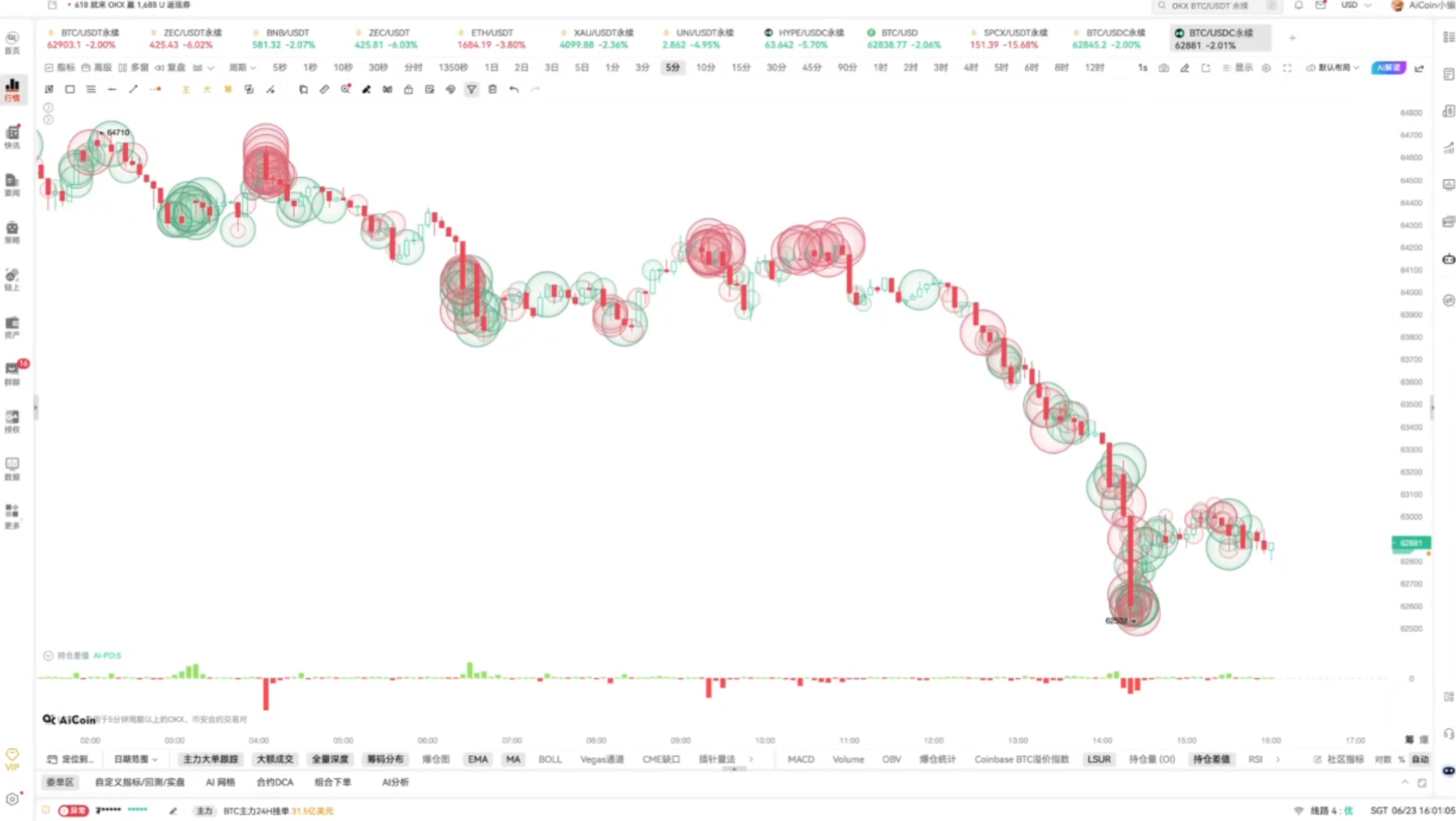
Chip distribution is an exclusive feature of the Pro version of the platform, which we can easily access in the indicator library. The new interface can directly search for “chip distribution” to open it. In the classic interface, selecting the settlement heatmap will show an intuitive bar display of chip distribution on the right side of the K-line. The number of chip rows set determines the price accuracy. For daily market observation, 50 rows are sufficient to clearly determine support and resistance. Pursuing too many rows could make it cumbersome. The area with the deepest color in the interface represents the concentration of 70% of the current page's transaction volume, indicating the core trading range of the market, while the slightly shallower area covers 90% of the transaction volume. We can view the strength comparison of buying and selling volumes or examine the overall transaction volume to assess support and resistance; the default display mode fully meets all daily market observation needs.
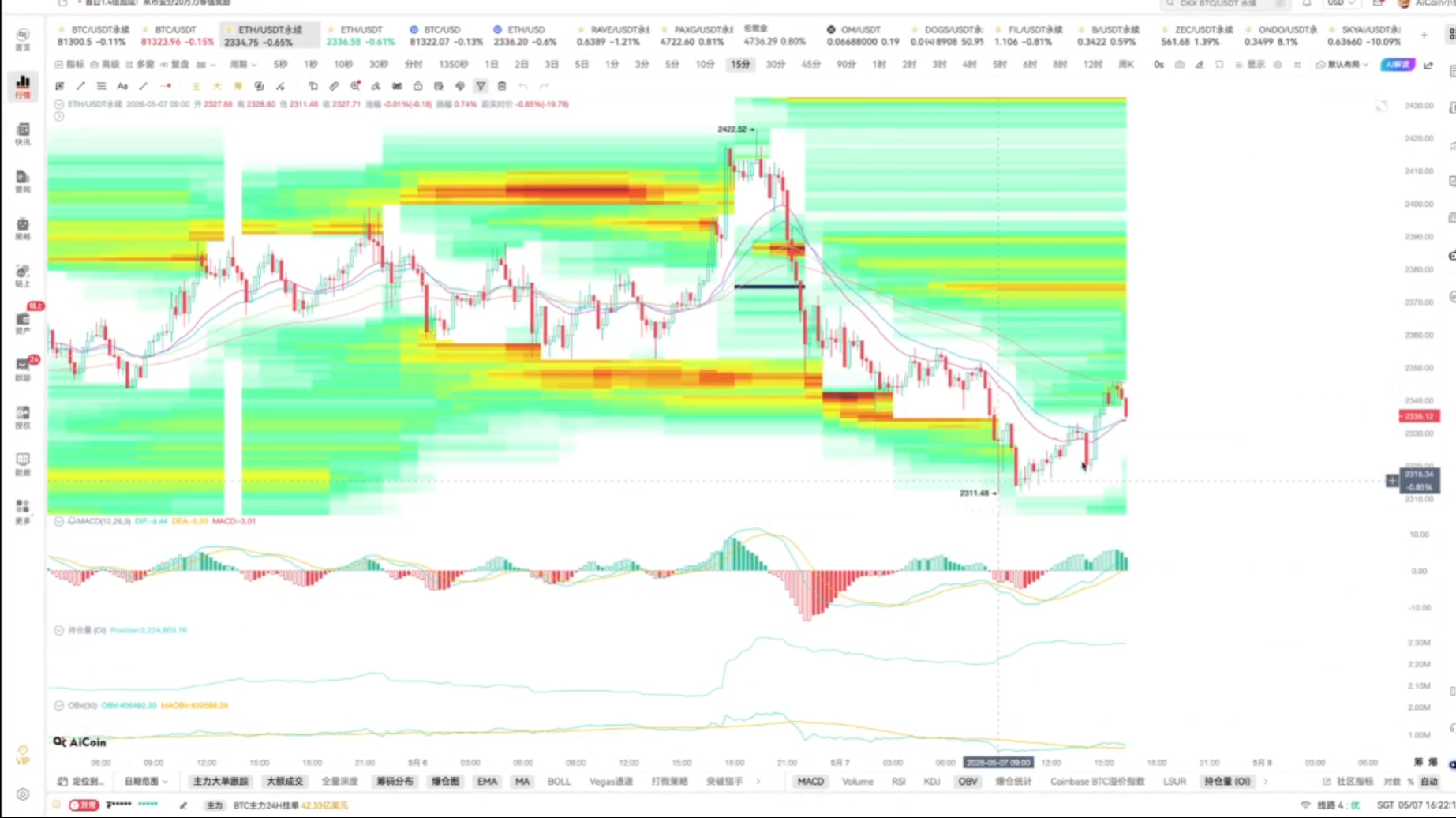
The most critical reference in chip distribution is the POC control point, which is the price level where the market transactions are densest and also the key point where fund consensus is strongest. The market will repeatedly test this position. When the price is above the POC, it becomes a solid support level; conversely, when the price is below the POC, it turns into a difficult resistance level to break through. Especially when altcoins break through historical POC levels, it often indicates a high probability of a strong upward acceleration, which is a very clear bullish signal.
Accompanying the POC are the VAH value area high and VAL value area low, which together form the upper and lower boundaries of the 70% chip dense area. When the price fluctuates within the narrow range between VAH and VAL, the market is likely to maintain a consolidating trend. Once the price effectively breaks above VAH, it signifies a breakthrough of the core trading area’s resistance, which can easily trigger a rapid upward trend. Conversely, if it effectively breaks below VAL, it will enter an area with fewer chips, and after losing trading support, a rapid decline is likely to occur.
In practical market observation, we focus on two key patterns: volume piles and vacuum zones. A volume pile is a peak of concentrated trading volume. It gathers the cost price of many holders and serves as a natural strong support/resistance level in the market. Whenever the price approaches a volume pile, the actions of stop-loss, increasing positions, or closing positions will concentrate, making the effects of support or resistance particularly obvious. This is also a crucial basis for our entry and defense judgments. A vacuum zone is a price area with extremely low chip distribution and scarce transactions, usually formed after a rapid price rise or fall. There is almost no market consensus here, nor is there the entanglement of stuck positions and support positions. Once the price enters a vacuum zone, it is very likely to unfold a clean, one-sided trend.
When using chip distribution, the choice of period directly impacts the accuracy of the judgment. For short-term trading, observe the chip peaks from 3 days to one week's K-line; for medium-term trading, refer to chip data from two weeks to one month; and for long-term layouts, look at chip data from periods longer than one month. The longer the period, the higher the reference value of the support and resistance levels formed by the chips. The criteria for judging whether a price breakout is effective are simple: only when the price closes firmly above the chip peak or POC is it considered a true effective breakout. If the price touches this level but fails to stabilize, a pullback is likely to occur. The logic for judging a breach of key levels is the same; only closing confirmation of a broken position is considered an effective bearish signal.
Chip distribution is applicable to all spot and contract cryptocurrencies, with no category restrictions. For altcoins, closely monitor the breakthrough of historical POC levels, as the upward momentum may be stronger. For mainstream coins, refer to long-term chip peaks for more stable support and resistance effects. When used in conjunction with the settlement heatmap and large order data, the accuracy of key position judgments improves significantly. In liquidity-concentrated areas, the probability of price touching these levels is also higher.
In fact, using chip distribution to capture key positions is not complicated. By firmly grasping the three core concepts of POC defining the strongest consensus, volume piles finding support and resistance, and vacuum zones judging acceleration, one can say goodbye to the confusion of blindly guessing support and resistance. This allows a clearer view of the real traces of market transactions through chip distribution, ensuring that every decision to enter a position, take profit, or stop loss is based on solid financial data, firmly seizing key opportunities in the market.
This article only represents the author's personal views and does not represent the platform's stance or perspective. This article is for informational sharing only and does not constitute any investment advice to anyone.
免责声明:本文章仅代表作者个人观点,不代表本平台的立场和观点。本文章仅供信息分享,不构成对任何人的任何投资建议。用户与作者之间的任何争议,与本平台无关。如网页中刊载的文章或图片涉及侵权,请提供相关的权利证明和身份证明发送邮件到support@aicoin.com,本平台相关工作人员将会进行核查。