DeSci’s hard part begins where molecule generation ends.
An AI agent reportedly designed a peptide candidate for ADHD-related research in 24 hours, ran computational screening, and selected it for initial wet lab follow-up expected to cost thousands of dollars. BIO traded as the proxy for that narrative.
The important point is the cost compression at the front of the pipeline. Open source protein models, binding tools, public bioactivity databases, and cheaper lab work are making candidate generation faster and more accessible.
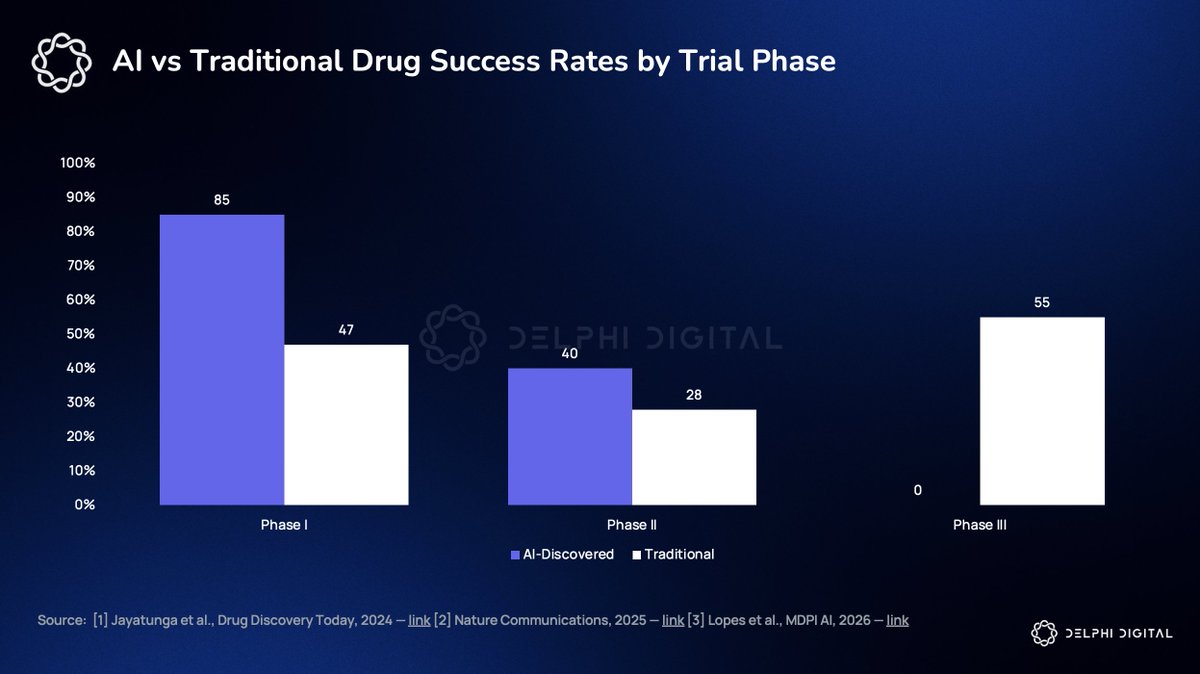
The wall starts immediately after. A candidate still needs preclinical data, dosing work, IP clarity, regulatory review, and human trials. Phase I can show whether a drug is safe enough to keep studying, but efficacy still has to be proven later.
This is where token markets and biotech timelines diverge. Narratives can reprice in hours. Drug programs need years of data before the asset can be valued with confidence.
A durable DeSci model would attach capital to defined experiments, credible rights, technical oversight, and staged funding as validation improves. Most of the category is still short of that bar.
免责声明:本文章仅代表作者个人观点,不代表本平台的立场和观点。本文章仅供信息分享,不构成对任何人的任何投资建议。用户与作者之间的任何争议,与本平台无关。如网页中刊载的文章或图片涉及侵权,请提供相关的权利证明和身份证明发送邮件到support@aicoin.com,本平台相关工作人员将会进行核查。


