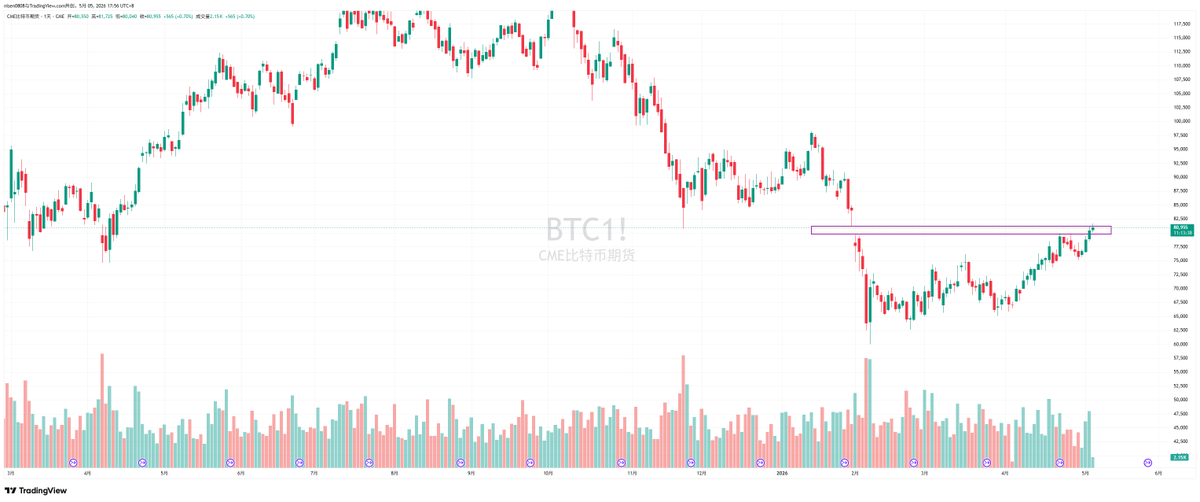
Previously, we talked about the probability of filling gaps. Now, the gap between $79,660 and $81,210 for BTC was generated on February 2, 2026, and was completely filled by May 5, 2026, taking three months. I have statistically found that the probability of filling gaps within a year is the highest; beyond a year, it's uncertain.
As of now, the short-term gaps for Bitcoin have all been filled, and what remains are:
One is the gap between $20,330 and $21,110 on March 10, 2023, which has not been filled.
The other is the gap between $9,665 and $9,850 on July 24, 2020, which has not been filled.
I calculated a rough probability from the historical gap data from the Bitcoin daily line at CME.
1. The historical gap filling rate is approximately 96%.
2. The probability of filling the gap within a week after it occurs is around 57%.
3. The probability of filling the gap within two weeks after it occurs is around 66%.
4. The probability of filling the gap within three weeks after it occurs is around 85%.
5. The probability of filling the gap within one year after it occurs exceeds 90%.
The gap with the longest duration in my statistics is the one from December 28, 2020, which was not filled until June 13, 2022, taking 18 months to fill.
Although I always say filling gaps is a metaphysical matter, the probability of such gaps being filled is indeed quite high.
So for this trade, I initially bought the spot at $78,000, hoping that this gap would be filled within three weeks. In the end, I waited a full three months. At the current price of $80,600, that gives an annualized return of 13.3%, which is somewhat acceptable.
免责声明:本文章仅代表作者个人观点,不代表本平台的立场和观点。本文章仅供信息分享,不构成对任何人的任何投资建议。用户与作者之间的任何争议,与本平台无关。如网页中刊载的文章或图片涉及侵权,请提供相关的权利证明和身份证明发送邮件到support@aicoin.com,本平台相关工作人员将会进行核查。


