In 2018, BTC fell from $20,000 to $3,000, and the ICO bubble burst.
That year, Uniswap was founded.
In 2022, Terra collapsed, Three Arrows Capital went bankrupt, and FTX shut down.
That year, Hyperliquid began construction.
Many things that truly change the industry are created during the coldest times in the market.
Now, a new opportunity may be emerging:
a16z + 1kx lead the investment
The founders were involved in the decentralized auction design of Flashbots and CoW Swap
The goal is to reconstruct on-chain trading infrastructure
This project is @poddotnetwork
▌What has Hyperliquid proven?
Before discussing Pod Network, we must talk about Hyperliquid.
Because the success of Hyperliquid has already proven several very important things.
First, a dedicated L1 route is feasible.
Second, there is real demand for traditional financial assets on-chain.
Lastly, and most importantly, on-chain order books are not a fantasy.
Hyperliquid has proven that on-chain trading can achieve daily trading volumes of tens of billions of dollars. The market is there, the users are there, and the demand is there.
But Hyperliquid is not the endpoint; it is not the final form of on-chain trading.
The emergence of Pod is precisely an attempt to fill this last piece of the puzzle.
Hyperliquid is fast, but each transaction still requires nodes to reach consensus and package them into blocks.
Pod has done something extremely bold: completely discarded "consensus" and "blocks".
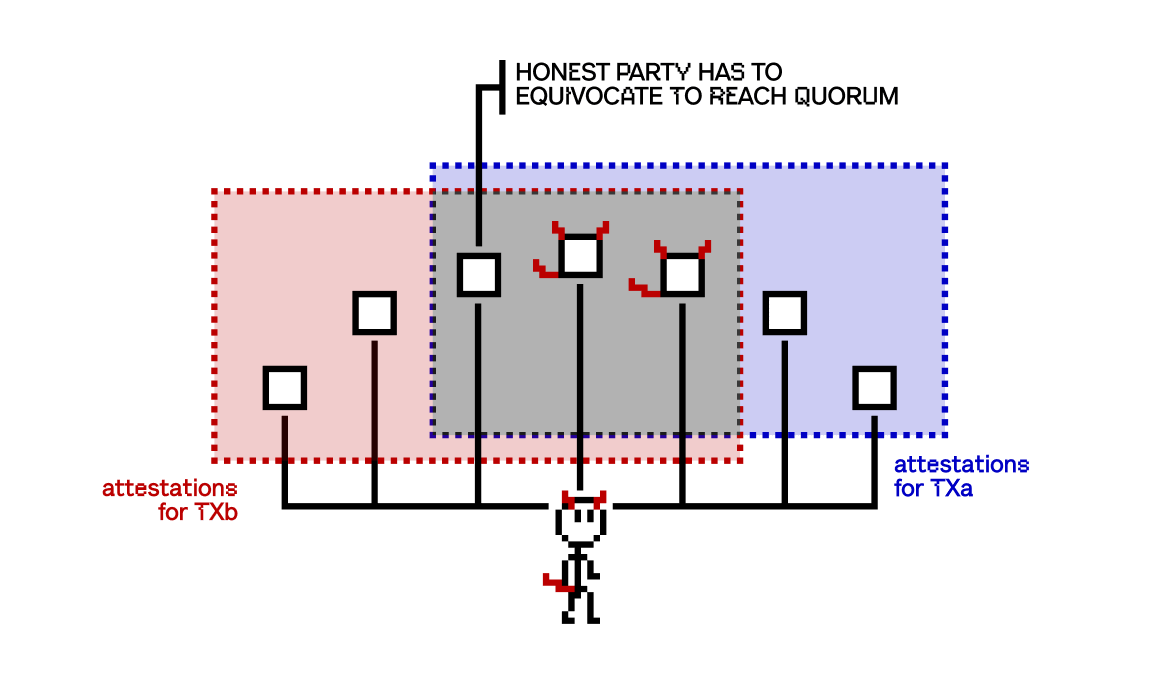
Its architecture is called stream-based no consensus. Each validator independently receives transactions, independently verifies, independently timestamps, and independently signs proofs. Validators do not communicate or coordinate with each other. Once the client collects n-f proofs, the transaction is finally confirmed.
Hyperliquid relies on speed to combat MEV, while Pod relies on mathematical fairness.
As a participant in the architectural design of Flashbots and CoW Swap, Pod's founder Shresth Agrawal knows better than anyone that as long as there is ordering power, there is room for "harvesting" profits.
To address this, Pod introduced a batch auction mechanism with a window of every 10 milliseconds. During this window, whether you are a large player or a retail trader, regardless of how many milliseconds faster you are, everyone's transaction price is completely consistent.
CoW Swap has proven that batch auctions are feasible in small-scale scenarios. But Pod is the first to implement it at the protocol layer. It is not a patch at the application layer, but starts from the consensus architecture, eliminating the speed advantage from the market structure.
▌Who is doing this? Why them?
CEO Shresth Agrawal, a former participant in the Paradigm Scholar program, has worked at ParaSwap and Common Prefix. The architecture of Pod directly comes from his research back then.
CTO Alex Brezas has over ten years of full-stack engineering experience, also from Common Prefix.
In terms of financing, Pod has completed a $10 million seed round, led by a16z and 1kx, with participation from Lemniscap, BBF, and others.
▌What stage are we at now?
Pod is entering a phase of parallel product landing and ecosystem construction.
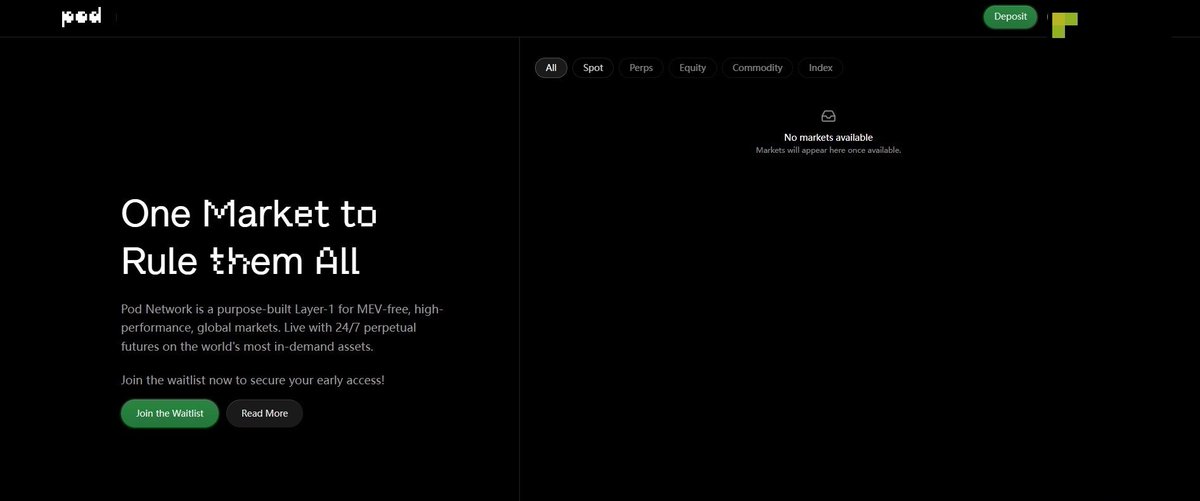
The waitlist is already live. The mechanism is simple:
Deposit USDC on Arbitrum (on-chain custody, withdraw anytime, no lock-up period)
The amount deposited + the number of referrals determine the ranking
The higher the ranking, the earlier the access to testnet permissions and mainnet early access
After the mainnet goes live, the USDC on Arbitrum will be directly migrated to use on the Pod network
Participation link: http://pod.pro/k/iamyourchaos
免责声明:本文章仅代表作者个人观点,不代表本平台的立场和观点。本文章仅供信息分享,不构成对任何人的任何投资建议。用户与作者之间的任何争议,与本平台无关。如网页中刊载的文章或图片涉及侵权,请提供相关的权利证明和身份证明发送邮件到support@aicoin.com,本平台相关工作人员将会进行核查。


