"What Happened to Intel from 20 to 100, Still Want to Get On Board?"
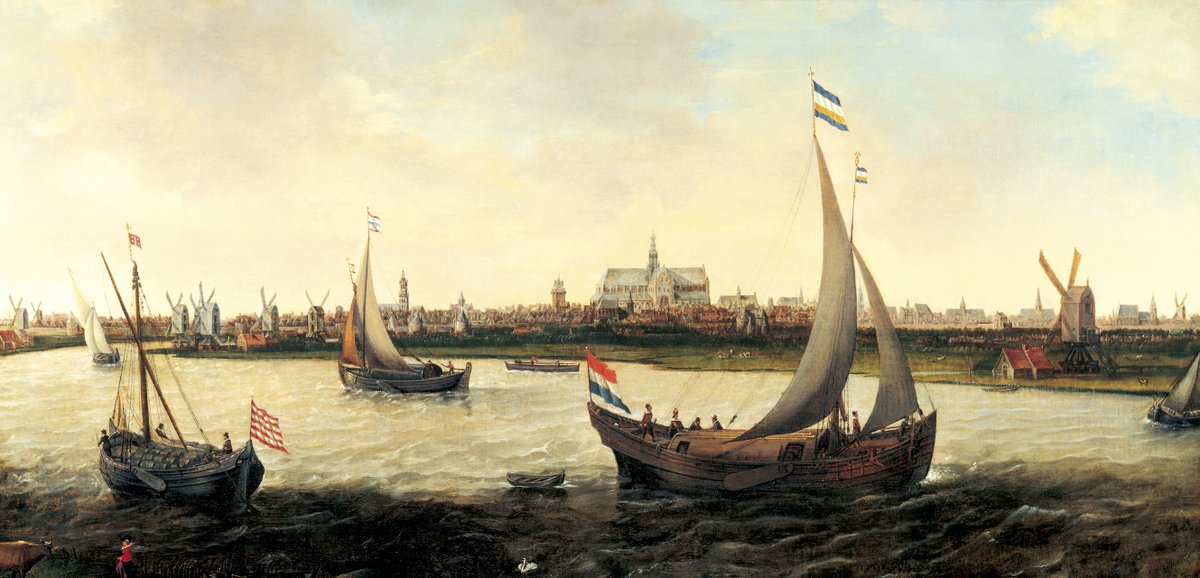
July 19, 1599, Port of Amsterdam.
Eight ships left the Netherlands in 1598 with 500 sailors, heading to the East Indies. No news came for two years— according to the probabilities of the time, shipwrecks, plagues, pirates, and getting lost were enough to sink all investments. In fact, only one of the four ships from the first expedition returned, and out of 89 crew members, only 17 survived.
Yet in July of that year, four ships returned safely, carrying 600,000 pounds of pepper, 400,000 pounds of cloves, as well as nutmeg, cinnamon, and sandalwood—worth nearly four times the cost of the voyage. All the original investors instantly became wealthy.
This return directly led to a significant event three years later—the establishment of the Dutch East India Company (VOC), which publicly offered shares to society, marking the first time humanity encountered "the stock market."
The most captivating aspect of the Age of Exploration was that people were willing to invest exorbitant amounts and wait for years, even decades, betting that a ship would return laden with riches in the future. Some became enormously wealthy while others lost everything—what determined the outcome was not the size of the ship nor the amount invested, but whether the ship could actually come back.
In the past year, Intel's stock price soared from $20 to $100. On April 24, it surged by 24% in a single day—this was the largest increase for the established company founded in 1971 in 38 years. However, focusing only on the stock price misses the true essence of this story—this is a ship that has already set sail from the port, funded by the government, with bets from giants, but still in the midst of the ocean. Its return depends on the upcoming yields, customers, orders, and the ramp-up of several factories—and none of these have been completed as of today.
Four major events triggered this dramatic surge:
First, in August 2025, the U.S. government exchanged $8.9 billion for a 9.9% stake, along with Nvidia's $5 billion and SoftBank's $2 billion investments in September, which eliminated Intel's "bankruptcy discount" all at once;
Second, the demand for AI servers and AI PCs has renewed the pricing power of CPUs;
Third, the yield and shipping pace of the 18A process have finally shifted from "storytelling" to "providing numbers";
Fourth, Intel's position in the chip bill, defense projects, and supply chain security has begun to be revalued by the market as a scarce national strategic asset.
Intel has emerged from the most dangerous phase:
2025's total revenue is roughly stable, with a GAAP gross margin of 34.8% (Non-GAAP 36.7%), and operating cash flow rebounding to $9.7 billion;
In the first quarter of 2026, revenue year-on-year grew by 7%, with a GAAP gross margin of 39.4% and Non-GAAP 41.0%, and management stated that the 18A yield is "higher than internal expectations."
However, at the same time, Intel Foundry still incurred a loss of $10.3 billion in 2025, and the external foundry revenue for the first quarter of 2026 was only $174 million, with this increase of $143 million from the same period last year mainly coming from Altera after its spin-off in Q3 2025, changing status from internal to external customer—this was not a substantial breakthrough in new external foundry contracts. As the most anticipated part of Intel, its "strategic significance" has been validated, but the "business closed loop" is still not fully operational.
At this juncture, I took another serious look at INTC—I won't stop paying attention just because it has risen significantly; I think it is worthwhile to study what deserves research, our opportunity is emerging.
免责声明:本文章仅代表作者个人观点,不代表本平台的立场和观点。本文章仅供信息分享,不构成对任何人的任何投资建议。用户与作者之间的任何争议,与本平台无关。如网页中刊载的文章或图片涉及侵权,请提供相关的权利证明和身份证明发送邮件到support@aicoin.com,本平台相关工作人员将会进行核查。


