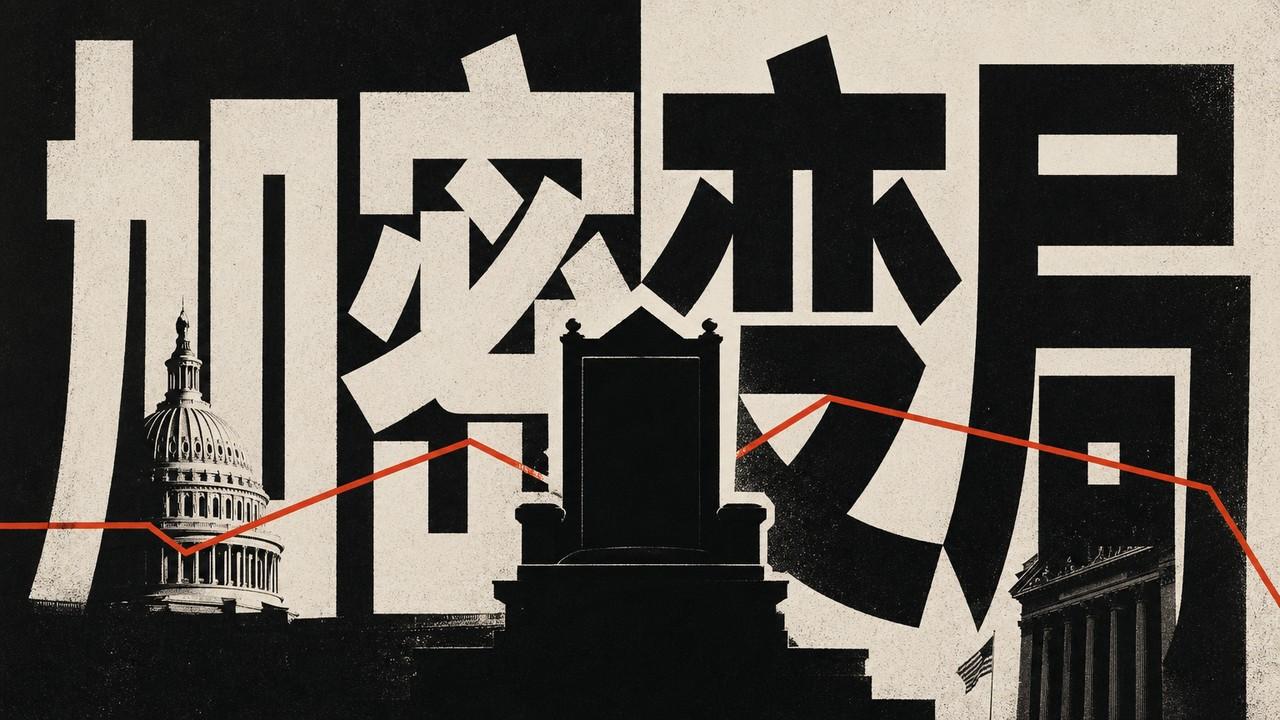
In 2026, a decision from the Foreign Investment Security Review Office of the National Development and Reform Commission suddenly brought back a deal that was already at the end of its capital story back to the regulatory scene: Meta's plan to spend approximately $2 billion to acquire Manus was legally prohibited and required to be withdrawn, with reasons pointing directly to international environment, key technology, and data security. For Meta, this was not just a temporary pause on a financial asset acquisition in AI, but rather a collision with the new red lines drawn by China in a new round of technological competition.
Manus, which was halted, is itself a typical "Chinese story." It was developed by the Chinese company "Butterfly Effect" and a Chinese engineering team and was dubbed by the media as the world's first general artificial intelligence: after its official launch in 2025, it almost "went viral overnight," quickly stepping into the spotlight of the global tech circle. However, not long after the hype began, Manus relocated its headquarters to Singapore in the same year and ceased operations within China—this meant to investors that it was one step closer to the international merger and acquisition market, and some experts summarized it as a form of "shell relocation arbitrage."
Thus, the contradiction became specific and sharp: on one side is the official reiterated stance of “generally open to foreign investment,” while on the other, the scrutiny standards for foreign acquisitions involving key technologies and data security are becoming increasingly tight. The Manus case has been viewed by many media and experts as a demonstrative case of foreign investment security review in the AI field, posing a simple and crude question: when global capital knocks on the door of “general intelligence” made by Chinese engineers, just how far should this door be opened?
At the same time, in the crypto industry, far from regulatory documents, another set of terms is becoming popular: Jason Karsh, the new CMO of the Stellar Development Foundation, proposed "get rich slow," calling for the industry to shift from short-term speculation and "hype cycles" to a path focused on trust and long-term value. The Manus case shows us how regulation reshapes the boundaries of cross-border tech mergers and acquisitions with "security," and the rise of "get rich slow" signals the technology and capital world: If trust is the truly scarce asset, then, from AI to crypto, is the relationship chain among technology, regulation, and funds also being forced to be rewritten?
$2 Billion Acquisition Slams on the Brakes: Why China Said No to Manus
When Meta's approximately $2 billion acquisition of Manus entered the final stage of negotiations, it was not the sentiment of the capital market that hit the brakes but a decision from the Foreign Investment Security Review Office of the National Development and Reform Commission. In 2026, this office initiated a foreign investment security review of the transaction based on relevant regulations, ultimately concluding that it was “legally prohibited and required to be revoked,” with the official rationale summarized as involving “international environment, key technology, and data security.”
These three keywords outline the profile of risks in the eyes of regulators. First, Manus's positioning itself—developed by the Chinese company “Butterfly Effect” and a Chinese engineering team, referred to by the media as “the world's first general artificial intelligence”—naturally falls into the category of “key technology.” Second, as an AI product that “went viral overnight” and rapidly gained global popularity, the user behavior, corpus, and interaction data that Manus has accumulated and can reach, when placed in the context of cross-border mergers and acquisitions, is no longer just commercial assets but sensitive resources directly linked to “data security.” Third, the counterpart in the deal, Meta, is an international tech giant with significant influence in global information distribution and social networking; in the current context described by officials as "complex and changeable international environment," such a transfer of control can easily fall into the national security perspective.
Procedurally, the Foreign Investment Security Review Office is already responsible for reviewing foreign acquisitions that may impact national security; result-wise, this time it chose to give the most stringent answer—clearly prohibiting and requiring revocation. This made Manus one of the few AI project foreign acquisitions publicly stopped by officials, also positioning the terms “key technology” and “data security” firmly at the center of the capital narrative.
Experts' interpretations added policy-level footnotes to this “veto.” Multiple media outlets referenced viewpoints stating that this case indicates that China is generally still open to foreign investment, but will remain cautious regarding investments in key and sensitive areas. In other words, the door is still open, but there’s an added security check at the entrance, and what needs to be “repeatedly screened” has already been clearly exemplified: projects like Manus that stand at the forefront of AI, combining technological height and data density, will inevitably be examined under a magnifying glass.
This is also why the Manus case is viewed by many observers as a meaningful sample. On one hand, it reminds multinational tech giants that in the face of AI assets stemming from China, simply treating acquisitions as “market behavior” is no longer realistic; on the other hand, it also sounds alarm bells for companies going overseas—some experts characterize Manus's path of first completing R&D in China, then relocating to Singapore, and finally being acquired by Meta as “shell relocation arbitrage” and judge that attempts to bypass domestic security reviews through foreign structures “will ultimately not achieve the intended purpose.”
In light of this demonstrative effect, any future cross-border mergers and acquisitions touching on AI core algorithms, general model capabilities, and large-scale data resources will instinctively be scrutinized. Even if the transaction amount is far less than $2 billion, as long as it touches the two labels of “key” and “sensitive,” it will be difficult to avoid the spotlight of security review. For global capital, the signal emitted by the Manus case is already clear enough: cross-border mergers and acquisitions related to AI are no longer just games of valuation, synergy, and exit return; they must also take “whether they can pass security review” as a prior constraint into account.
From Overnight Sensation to Relocation Abroad: Manus's Choices and Maneuvers
Before “safety review first” became a consensus, Manus had already gone through an almost textbook-like upward trajectory: born in China, it “went viral overnight” in 2025, and then hurriedly moved itself out of the country.
The story of Manus begins with the Chinese company “Butterfly Effect” and a team of Chinese engineers. It was described by the industry as the world's first general artificial intelligence; even before formally entering the market, it had already caught the eye of tech media. After the product launched in 2025, the description of it as having “gone viral overnight” is not an exaggeration—Manus became the name that had to be mentioned in the global tech sphere and capital market: a symbol of cutting-edge technology and a concentrated carrier of future valuation imagination.
According to the path familiar to many entrepreneurs, the next step should have been to continue growing in the local market, leveraging first-mover advantages to consolidate the market, and then slowly discussing capital and acquisitions. However, Manus chose a more aggressive route: in 2025, the company moved its headquarters to Singapore and simultaneously ceased operations in China. For a general AI product developed by a Chinese team that has just gained global popularity, this action's signal is not hard to interpret—it actively cut itself off from direct connections with its Chinese local business, packaging itself as an “overseas operating AI company.”
In hindsight, this step has been summarized by many experts in four characters: “shell relocation arbitrage.” In these experts' interpretations, “shell” refers to changing the registered location and adjusting corporate structure to present a new Singapore entity to the capital market; “relocation” means transferring core businesses and contract arrangements as much as possible offshore for easier connection with international capital and complex transaction structures. From this perspective, Manus's path resembles a calculated strategy: taking the general AI assets developed in China and packing them into a shell more readily accepted by global tech giants and international capital.
It is crucial to emphasize that “shell relocation arbitrage” is a judgment and term from some experts, not any official designation. Similarly, the viewpoint from experts is that attempting to leverage relocations and shell changes to evade regulatory scrutiny in sensitive areas “will ultimately not achieve the intended purpose”—especially when the target involves key technologies and data security; regardless of how cleverly structured, it is challenging to escape sovereign regulatory scrutiny.
The proposed acquisition of Manus by Meta for approximately $2 billion pushed this maneuvering into the spotlight. Relocating to Singapore, ceasing operations in China, and then selling the whole company to an international tech giant—the intuition behind this combination is clear: completing the transaction in a seemingly “neutral” third place might reduce the likelihood of Chinese regulatory intervention in procedure. However, in 2026, the Foreign Investment Security Review Office of the National Development and Reform Commission still included this transaction under their security review based on relevant regulations, focusing on international environment, key technology, and data security, ultimately prohibiting the transaction and requiring its revocation.
From a business logic perspective, Manus aimed to use the “go overseas first, then get acquired” approach to gain a higher valuation and reduce resistance; from a regulatory logic perspective, the decision authority does not depend on where the company shell is registered, but rather on the nature of the general AI technology itself belonging to what kind of “key” and “sensitive” categories. Manus thought it had circumvented that doorway, only to find it closing again at the gate of security review.
Relocating Abroad Without Detachment: Compliance Traps for AI Teams in Cross-Border Mergers
Manus believed that moving licenses, servers, and teams to Singapore constituted a successful “detachment”: relocating in 2025, halting business in China, earning a spot as an overseas AI company on paper, and then being acquired by Meta for approximately $2 billion seemed to place several layers of “safety distance” between it and Chinese regulators. The real turning point was the moment the Foreign Investment Security Review Office initiated its review; they weren't looking at the Singapore business license but rather three more challenging dimensions: the source of technology, data attributes, and their sensitivity in the current international environment.
Technically speaking, Manus is the world's first general artificial intelligence developed by the Chinese company “Butterfly Effect” and a Chinese engineering team, which means its key algorithms, model capabilities, and R&D accumulation are closely tied to China's domestic landscape; asset-wise, it encompasses a complete set of general AI technology and related data. These “invisible” assets fall precisely within the jurisdiction of the Foreign Investment Security Review Office—this office is responsible for reviewing foreign investments that may impact national security, including transactions acquiring assets with sensitive properties. The result was that despite Manus having moved out of China and ceased operations domestically, the moment the Meta transaction came into view, it was still included in China's foreign investment security review, ultimately facing prohibition and a requirement for revocation.
This is also the hard wall that the “shell relocation” model collided with in the Manus case. Formally, the entity shifted from a Chinese company to a Singapore company, and operationally delineated itself from the Chinese market, but the source of key AI technology and the data attributes linked with it were not “cleansed” in the process. The core concern for regulatory bodies is whether this foreign merger would transfer technology assets with key and sensitive properties to an overseas giant, not where the shell company is registered in which jurisdiction. For this reason, some experts refer to Manus's route as “shell relocation arbitrage” and judge that such attempts to avoid regulation through relocation “will ultimately not achieve the intended purpose”—Manus's experience offers a real-world footnote to this judgment.
In the media and expert discourse, the Manus case is viewed as a “demonstrative case” for China's foreign investment security review in the AI sector: on one hand, China remains generally open to foreign investment, welcoming international capital in innovation; on the other, as long as it touches key technologies and data security, the regulatory framework will become significantly tighter. This new reality of “going overseas without detachment” establishes higher structural design and compliance thresholds for all tech companies with a Chinese background planning to go overseas or even be acquired in the future.
In the future, Chinese AI teams considering similar transactions must first confront a preceding question: even if the company structure and business landscape has become highly internationalized, as long as core technology derives from China or has previously accumulated data with sensitive attributes in China, they must predict whether they would fall under the scope of China's foreign investment security review. This will directly force transaction structures to be designed around “sensitive assets” from the outset—determining which assets can enter the acquisition scope, which need to be divested or operated separately, and how to balance global business collaboration with security review red lines.
Secondly, data governance is no longer merely a matter of business efficiency but will become a prerequisite for transactions to succeed. If AI companies do not differentiate collection and usage boundaries for data of different origins and sensitivities early on, they will find it challenging to clarify to any regulatory body “which data will accompany the transaction and which will not” when facing cross-border mergers, naturally making it much harder to mitigate resistance to security review.
Lastly, compliance planning will shift from a “mandatory lesson at the time of transaction” to being a “pre-existing variable influencing product development and overseas path design.” For many teams expecting a “go overseas first, then sell at a high price,” Manus signals a direct message: in an era where AI becomes a critical technological asset, simply relying on relocation and shell changes will find it increasingly difficult to achieve rapid liquidation through a single successful overseas acquisition. The real test lies in whether it is possible to integrate technological paths, data governance, and cross-border compliance into design along a longer time horizon, in a trustworthy manner to connect with global capital.
From Rags to Riches Myth to Slow Wealth Accumulation: The Shift of Trust in AI and Crypto
The story of Manus can easily be read as a compressed version of a “rags to riches script”: developing a globally explosive general artificial intelligence in a short time, quickly relocating to Singapore, connecting with international giants, and ultimately completing a high-value liquidation through an approximately $2 billion acquisition. Some experts label this pathway as “shell relocation arbitrage,” implying that if the core of technology and business lies in China, expecting to “detach” it through a foreign shell and sell it to the global capital solely as a financial asset, this operation is increasingly difficult to perceive as a “normal exit” in today's environment.
This weariness toward “arbitrage” is not limited to AI regulation alone. The crypto industry has faced a turning point as well regarding the short-term narrative of “getting rich quick.” Jason Karsh's proposed “get rich slow” is quite representative: he openly emphasizes that if the crypto industry wants to achieve mainstream status, it must distance itself from short-term speculation and cycles of continuous hype, shifting the narrative focus to generating long-term value, with establishing trust as the true key path. The conclusions of research briefs resonate with this—short-term speculative narratives centered on “getting rich quick” are failing, and an increasing number of institutions are actively embracing the “get rich slow” model oriented toward long-term value and trust.
Placing Jason Karsh's discourse back within the context of the Manus case reveals that both point toward the same underlying logic: technology can be cutting-edge, and valuations can be dazzling, but if the whole path is interpreted as designed around cross-border arbitrage and evasion of scrutiny, then both regulators and public opinion will instinctively tighten their trust. Manus being categorized as “shell relocation arbitrage” reflects this negative perception—what results from short-term maneuvering is not acumen but a discount on identity credibility.
In an era where AI and crypto gradually intersect, this “trust discount” will be amplified. AI models govern data and key technologies, while crypto protocols carry value and incentives; once combined, external demands for compliance, transparency, and sustainability will only rise. For businesses, “getting rich slow” is not merely self-persuasion on an emotional level but rather an operational strategy:
● On compliance, assume from the outset that one will be examined under the microscope of cross-border review; product structure, equity arrangements, and data governance paths must withstand repeated queries from different jurisdictions, and not rely on relocation or shell changes as a "fix" afterward.
● On transparency, clarify technology boundaries, data flows, and user rights in verifiable ways, allowing regulators and mainstream users to understand how you make money and what responsibilities you bear, rather than merely seeing price premiums resulting from layers of structured design.
● On narrative, shift from discussing “how long it takes to get rich” to focusing on “how to continually create value over ten years,” enabling investors, partners, and regulatory bodies to assess you on the same timeline, rather than being ensnared in a gamble that must be realized within a few months.
“Get rich slow” does not deny profits and exits; it emphasizes that in an era where key technologies and data are regarded as strategic resources, the truly successful AI and crypto companies must learn to earn money over a longer timeline—exchanging long-term verifiable value and compliance records for more stable institutional and social trust. The Manus case informs those still enamored with “shell arbitrage” and the myth of overnight riches: when regulators begin to delineate red lines through demonstrative cases, choosing to move more slowly and steadily is often the only path viable for long-term success.
After the Regulatory Red Line: The Next Steps for China's AI and Crypto
What truly stings the market about the Manus case is not just that a proposed acquisition of approximately $2 billion was halted, but that it showcases the trade-offs shown by regulation on key AI and data assets: even high amounts of foreign capital, even after the project has relocated overseas, even under significant short-term capital and public pressure, China remains willing to “press the stop button” directly on issues involving international environment, key technology, and data security. In the words of experts, the prohibition and revocation decision made recently by the Foreign Investment Security Review Office of the National Development and Reform Commission in 2026 is seen as a case with “demonstrative significance”—overall open to foreign capital, but with harder and clearer bottom lines in sensitive areas.
For entrepreneurs and investors, what is actually being deemed as “outdated” is an entire set of strategies. Starting from China, Manus moved its headquarters to Singapore in 2025 and ceased operations domestically before ultimately reaching a $2 billion acquisition agreement with Meta; this path has been summarized by some experts as “shell relocation arbitrage”: attempting to package China’s background, key technologies, and data assets into a single overseas transaction to bypass safety concerns in China. The halting of the Manus case does not simply reflect a failure of a project; it serves as a collective warning against this pathway—within the realms of AI and crypto, simple “shell relocation” and “short-term arbitrage” can no longer be regarded as safe options.
This also explains why “compliance” and “long-term value narratives” are transforming into new competitiveness. On one hand, specific dates for the Manus prohibition decision, details regarding whether the transaction partially completed, project financing structures, etc., have yet to be revealed in authoritative information, leading the market to passively accept outcomes amid speculation; this alone reminds participants that in a highly uncertain informational environment, any arbitrage path designed based on rumors could vanish in an instant when a regulatory document lands. On the other hand, industries within technology and crypto are also self-correcting—research briefs and institutional opinions continuously mention the shift from short-term “getting rich” to long-term value and trust-oriented “get rich slow” as a more sustainable consensus.
Looking beyond Manus, AI and crypto assets with a Chinese background will, once touching cross-border mergers and large transactions, see game rules leaning more towards “preemptively avoiding mines” rather than “reactively remedying.” Future transaction designs may need to address three preparatory aspects: first, security reviews should be prioritized, treating foreign investment security reviews as a core constraint at the negotiation’s outset instead of relying on luck afterward; second, clear data boundaries should be designed from product and structural levels, ensuring ownership and control of critical information, key models, and essential infrastructure are interpretable and separable from a regulatory perspective; third, cooperation models should be innovated further to seek frameworks that can connect global capital and market while respecting all parties' regulatory red lines, rather than simply packaging a company and IP into an offshore shell for an overall sale.
Within such a framework, the so-called “getting rich slow” is no longer just a motivational phrase but the only viable path to wealth under hard constraints: accepting the existence of regulatory red lines, establishing cross-border collaboration within a compliance framework, and rebuilding trust networks between nations around AI and crypto assets using long-term verifiable technological accumulation, robust data governance, and transparent governance structures, bit by bit. The Manus case is merely the first $2 billion to be paused, but the real story is just beginning—those teams willing to give up shortcuts and extend their timelines are likely to truly enjoy the compounding benefits of “getting rich slow” above future stricter security review systems.
Join our community to discuss together and grow stronger!
Official Telegram community: https://t.me/aicoincn
AiCoin Chinese Twitter: https://x.com/AiCoinzh
OKX Benefits Group: https://aicoin.com/link/chat?cid=l61eM4owQ
Binance Benefits Group: https://aicoin.com/link/chat?cid=ynr7d1P6Z
免责声明:本文章仅代表作者个人观点,不代表本平台的立场和观点。本文章仅供信息分享,不构成对任何人的任何投资建议。用户与作者之间的任何争议,与本平台无关。如网页中刊载的文章或图片涉及侵权,请提供相关的权利证明和身份证明发送邮件到support@aicoin.com,本平台相关工作人员将会进行核查。