Written by: Will A-Wang
What impressed me the most about this year's Hong Kong Blockchain Week in April was not any particular panel, but a scene.
Around 10 PM, in a tea restaurant in Wanchai, four or five people were crowded around a table, eating beef chow fun while discussing what each of them would do next. A friend who previously worked on stablecoin payments said their team had fully shifted to AI; another person involved with on-chain data mentioned that half of his efforts were now focused on helping AI companies build data pipelines.
No one talked about coin prices, no one discussed narratives, and even the term Web3 hardly came up.
What I felt at that moment was not surprise, but a strange sense of familiarity—these same people had sat at the same table three years ago, discussing DeFi, NFTs, and blockchain games. They were still those same individuals, just as excited and dedicated.
After running through the Hong Kong carnival and Bangkok Money 20/20, one phrase kept spinning in my mind: the most crypto-savvy group is becoming the least crypto-savvy.
What is left after the decline of Web3? After visiting these two stops, I think I have my own answer.
1. Hong Kong: Familiar Faces, Strange Topics
Let’s start with Hong Kong. At this carnival, the cryptocurrency projects were noticeably fewer, and the bustling atmosphere of handing out T-shirts and promoting narratives from previous years has subsided.
This year's official theme was "Mountain, Wind, Cloud, Sea," which clearly indicated a farewell to the hype surrounding cryptocurrencies. If this phrase had been stated three years ago, there would have been boos from the audience. But this year, no one found it strange because everyone was no longer talking about coins, arriving at an unspoken agreement instead.
Walking around the exhibition, the faces were familiar: OKX Wallet, TRON, ZA Bank, HashKey, NewFire. But the topics they discussed had changed, focusing heavily on two terms: RWA and AI.
RWA continued last year's hype, but to be honest, everyone knows who is genuinely working on projects and who is just putting on a show. One judgment I think stands: For Hong Kong, RWA essentially means the productization of wealth management and investment—bringing real assets onto the blockchain for more efficient and easier cross-border distribution. This is precisely what Hong Kong excels at: institutional design and financial productization. As the bubble recedes, Hong Kong feels more comfortable—those disturbances that never belonged to it have finally dissipated.
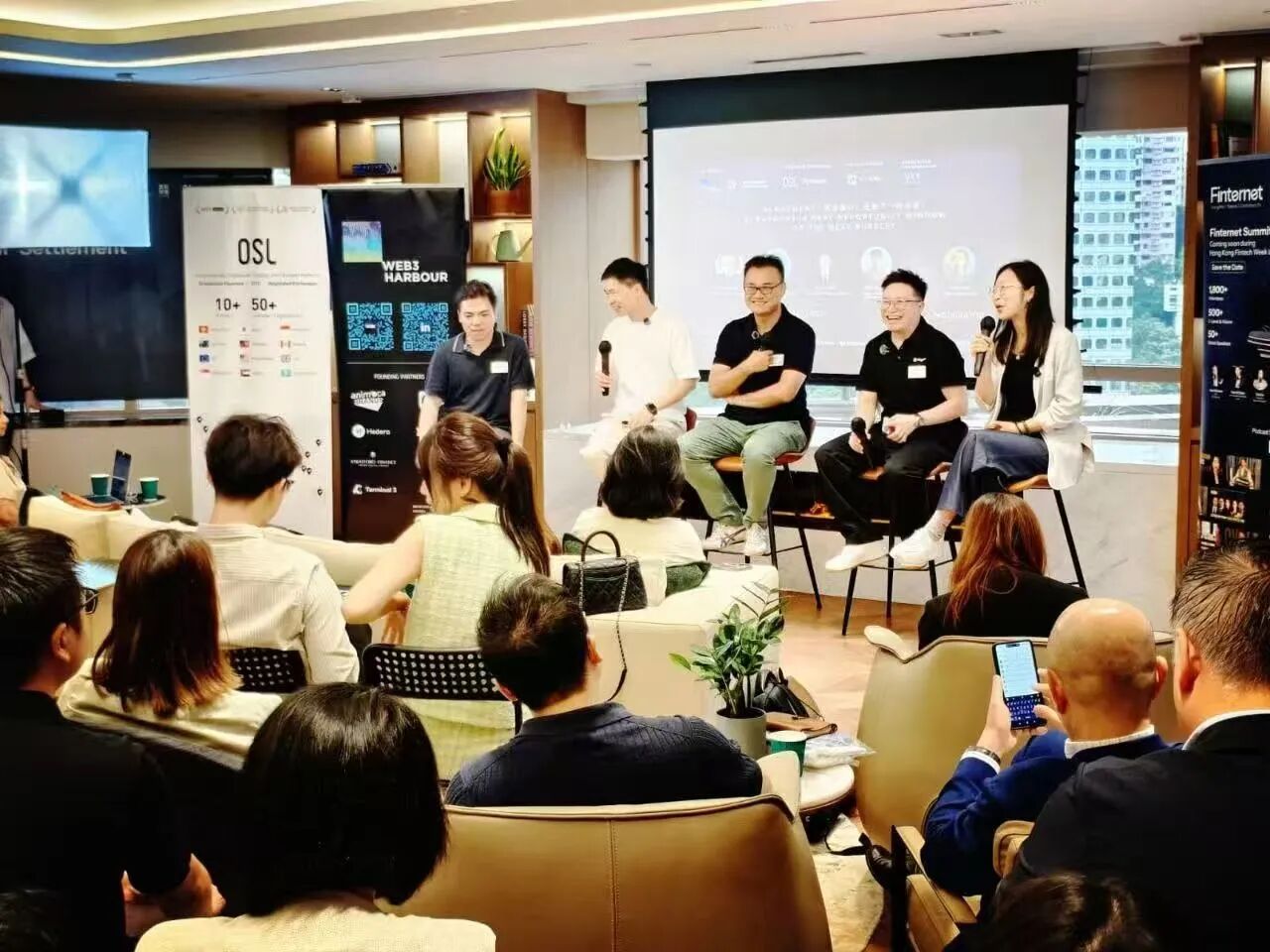
The discussion on AI was even more interesting. Almost every panel talked about the combination of AI and Web3, but after listening to several sessions, I honestly found that most discussions remained at the level of "these two things should be combined." As for how to combine them and what problems to solve, no one could explain clearly.
My feeling is that Web3's embrace of AI is not because it has figured things out, but because if it doesn’t embrace it, there are truly no stories left to tell. Furthermore, those guests on stage probably know they are just making an effort. But survive first, as this has always been the survival philosophy of this circle.
There were actually no new updates on Hong Kong dollar stablecoins. Licenses have been issued, but after asking around, the two major banks each have their own pace and are not rushing to make a big fuss, resulting in a realization that it seems like nobody cares.
But what truly struck me were the people in the audience. The busiest individuals in the venue were not the guests but those casually dressed, wearing exhibition badges, bustling around in the networking area—doing business development, managing communities, creating content, and helping projects connect resources. They did not have impressive resumes and did not necessarily speak "professionally," but their understanding of the industry has grown through countless dinners and setbacks. This understanding is not gleaned from reports; it is earned through time.
For an industry to weather the cycles, one cannot just look at how many star companies are at the top but must also consider how many individuals are willing to continue grinding in the absence of applause.
The foundation of Web3 still exists. But what is running on top of that foundation has completely changed.
2. Bangkok: The Trojan Horse of Stablecoins
Flying from Hong Kong to Bangkok, the atmosphere shifted dramatically.
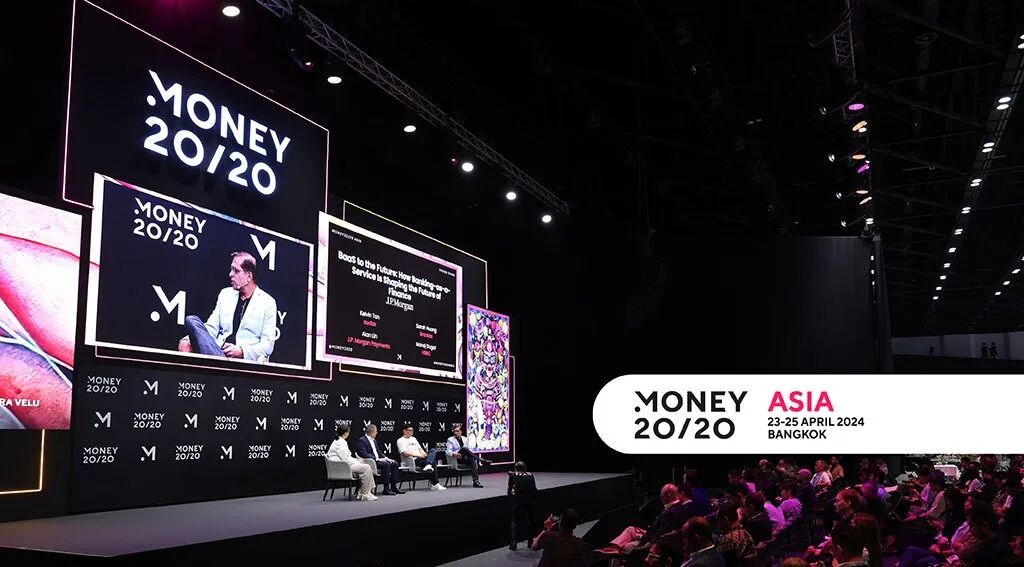
Money 20/20 is a pure fintech B2B exhibition, and the entrance fee is not cheap; everyone appears to be dressed as if they are about to meet clients. The panel area often has empty seats, but the adjacent business meeting area is full from opening to closing.
What surprised me was that stablecoins and crypto-native companies comprised about one-third of the exhibitors. OSL, Circle, Ripple, Fireblocks, Cobo, Pyth…at least a dozen, many of whom were showcasing for the first time. Money 20/20 even added a special area called Intersection this year, which focuses on the convergence of TradFi and DeFi—stablecoins are no longer in the marginal corners of fintech exhibitions; they are part of the main agenda.
However, interestingly—none of these one-third crypto companies were selling cryptocurrencies at their booths.
They were all selling payment pathways, settlement channels, asset custody. Some exhibitors defined themselves as "Web 2.5 finance"—one foot in crypto and the other in traditional payments. The businesspeople coming in did not care what underlying chain was being used; they wanted three things: fast delivery, low cost, and compliance.
I spent two afternoons in the meeting area, and at the adjacent table, I heard the word "stablecoin" every ten minutes. No one discussed coin prices; the conversations revolved around how to establish links, how to onboard merchants, and whose solutions were compliant. Those attending were all individuals looking to implement their businesses.
During one panel, the host directly challenged the guests on stage: Brazil’s Pix already allows instant free transfers; what are you doing with stablecoins? The response on stage was straightforward—Pix solves domestic issues, but cross-border remains unsolved. This might be the most honest positioning of stablecoin payments: they do not replace local payment systems but fill the gap in cross-border transactions that traditional finance has consistently failed to address.
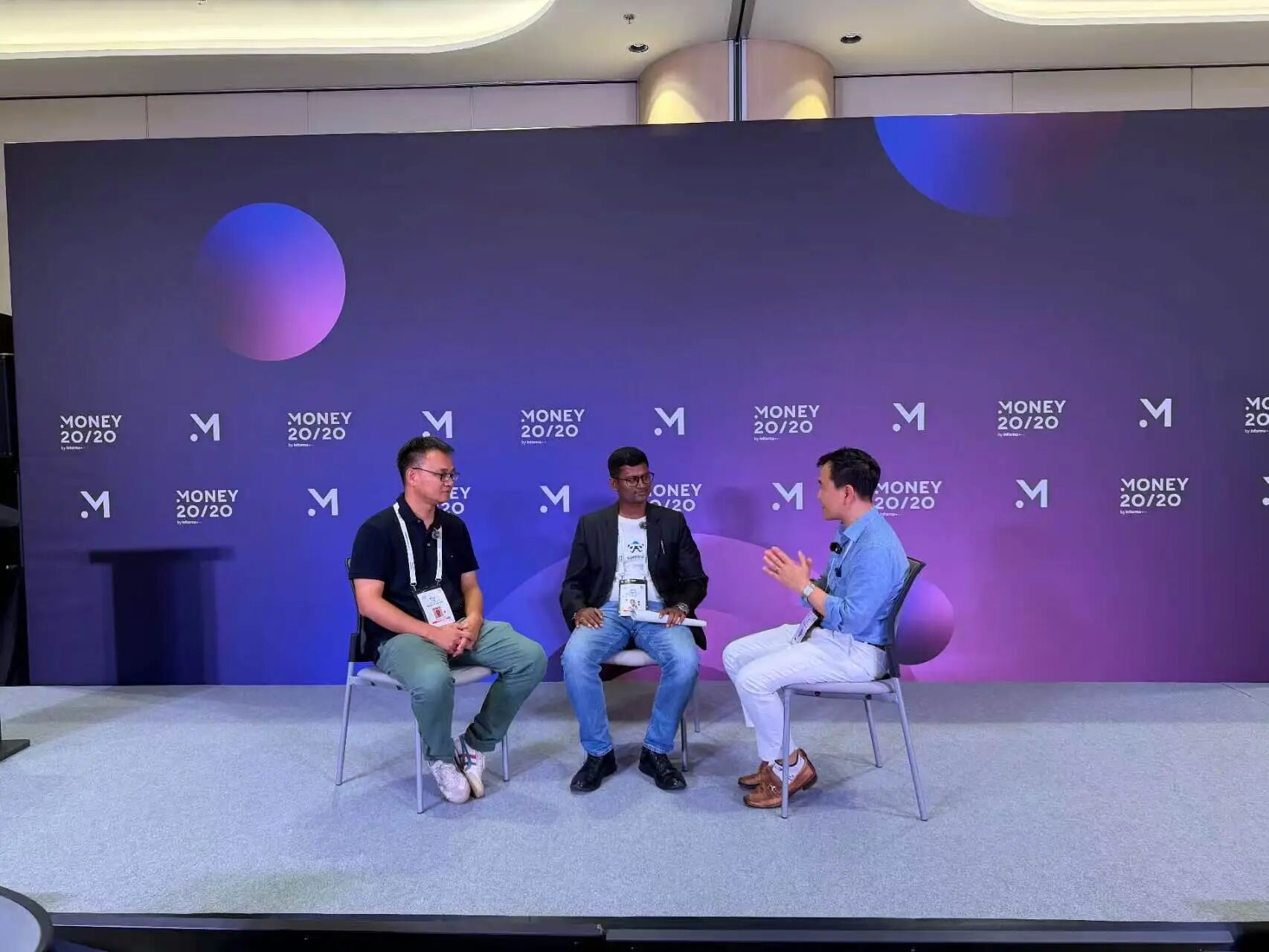
Thanks to an invitation from Finternet, I had an interview with Sumsub, which left a deep impression. This company, which specializes in KYC/KYB, initially served Web3 projects—exchanges, wallets, DeFi protocols. But now their biggest new clients come from Web2: payment institutions, banks, and overseas companies. The massive customer base from Web3 actually provides them with endorsement, allowing them to smoothly penetrate the traditional financial market. Web3 gave them the experience, and Web2 is the real market.
You see, this is the footnote to my earlier statement: the most crypto-savvy group is becoming the least crypto-savvy. Stablecoins are no longer "entering" traditional finance; they have completely integrated—they blend in so well at the exhibition that it’s hard to distinguish which company is a stablecoin company and which is fintech. Even if those traditional financial institutions do not engage in stablecoin businesses themselves, their clients will force them to adopt.
Stablecoins did not storm into traditional finance through the front door. They slipped in through the back door, and by the time the people in the castle realized it, the path had already been laid out.
3. AI Label Inflation
The path is laid, but new labels are stuck on it.
At the Bangkok exhibition, I counted that about eight out of ten booths I passed had AI or Agentic printed on them—Agentic Payment, Agentic Wallets, Agentic Banking.
I carefully selected a few products to ask: What is your AI module’s most mature use case? The answers were vague, generally pointing to A2A (Agent-to-Agent) future scenarios. As for real transaction volumes, everyone deftly avoided giving numbers.
One company that had been involved in stablecoin payments in previous years made a choice many in their minds were thinking but hadn’t done yet. When the infrastructure layer is already crowded, building a pathway means getting squeezed in with a bunch of similar pathways. Rather than waiting for the water to come, they chose to switch to a river that has water, targeting payment solutions in the hot AI industry. It’s not just about labeling AI; it’s about providing services to AI. Compared to the vague A2A concepts at the exhibition, this is a much clearer thought: rather than waiting for agents to pay for themselves, first solve the payment pain points that AI companies face today.
But returning to the AI trend at the exhibition, this scene indeed resembles Web3 in 2021—the infrastructure is ahead, while killer applications remain uncertain. However, there is one difference: in 2021, needs were fabricated from thin air to find users, whereas today's agentic payments at least have a real premise—AI agents are indeed growing exponentially; they will eventually need to pay and receive payments themselves. The question is not whether the demand exists but when it will arrive and in what form.
In the window period of "when will it arrive," sticking on labels is the safest choice.
What if it does arrive?
4. After the Path is Laid, What Next?
Looking at Hong Kong and Bangkok together, a clear division emerges.
Hong Kong is focused on financial productization—RWA, wealth management, asset management, competing in product design and distribution channels while integrating the operational thinking of the crypto sphere. Bangkok is focused on payment pathways—stablecoins for cross-border settlements, competing on compliance licenses and local channels. When these two paths converge, they reflect what remains in blockchain after the decline of Web3—financial infrastructure.
It’s not the profit festival of DeFi Summer, nor the FOMO from NFTs. It’s pathways laid down, licenses obtained, and partnerships formed.
Boring, but real.
The big promise of Web3 back in the day was to "decentralize everything." Once the tide recedes, what survives are the patches and extensions of the centralized financial system. The revolution of crypto punks never occurred. But the pipelines have been laid into the castle walls—this, in itself, may prove to be more enduring than a revolution.
The path has been laid, but three questions remain unanswered:
- Is there still time for stablecoin infrastructure? There are already too many companies doing infrastructure at the Bangkok exhibition, and the space for differentiation is rapidly narrowing. New entrants do not need to build more pathways; they need to find out what flow should run in those pathways—whoever can embed stablecoins into high-frequency essential scenarios will be the winner in the next phase. It’s not the pathway builders but the users of the pathways.
- Application solutions are the direction. The infrastructure layer is robust enough, and value is starting to shift toward the application layer. Companies that paved broadband in the 2000s made the first wave of money, but the real big business came later from platforms like Taobao and WeChat. Stablecoins are approaching that tipping point.
- What about Agentic Payment? I have been tracking this field for a while. Visa, Mastercard, and Stripe are all making moves, and the x402 protocol is being advanced. But the gap between protocols and implementation is not technological but based on trust frameworks and a sufficiently large landscape of cross-border transactions; otherwise, it will remain at the level of demos and panels.
- But to be fair, when stablecoins were first discussed for cross-border payments in 2021, they probably also received the same treatment—"The concept makes sense, but it’s too early for implementation." Five years later, stablecoins have integrated into the capillaries of traditional finance. Agentic payments may be at a similar stage. However, this round of opportunity will likely be much shorter.
5. In Conclusion
On the return flight, what kept coming to my mind was not the content of those panels but that table in the tea restaurant.
One has shifted to AI, another is helping AI companies build data pipelines, while the rest are still discussing how to connect stablecoin payments to more merchants. Three years ago, they talked about a different world, but one thing hasn’t changed—they are still present, still working, still jumping into the pool.
The most unique aspect of the Web3 circle is not how cutting-edge the technology is but how it inherently attracts such individuals—no matter how cold the water is, they jump in without hesitation. The track may change, narratives may shift, but this wild sense of participation will not disappear. It has merely changed its attire.
After the tide recedes, the revolution did not happen. But the most crypto-savvy group, with their gameplay, speed, and survival instincts, is now infiltrating larger battlefields like traditional finance, AI, and cross-border payments. They no longer shout slogans, but they are more dangerous than before.
Because this time, they are wearing suits.
免责声明:本文章仅代表作者个人观点,不代表本平台的立场和观点。本文章仅供信息分享,不构成对任何人的任何投资建议。用户与作者之间的任何争议,与本平台无关。如网页中刊载的文章或图片涉及侵权,请提供相关的权利证明和身份证明发送邮件到support@aicoin.com,本平台相关工作人员将会进行核查。


